Written by: Gandalf, Techub News
Introduction
Recently, there has been a notable adjustment in the global semiconductor sector, raising concerns in the market about whether the "AI trend has peaked." Meanwhile, several international investment banks have expressed a markedly different stance: they not only view this pullback as a buying opportunity but also have significantly raised the target prices for many chip leaders, focusing on the "AI super cycle" before 2028. This reflects a re-evaluation of the medium- to long-term prosperity of the chip industry and provides ordinary investors with a window to reassess the value of the sector.
Key Summary
J.P. Morgan believes that the recent pullback in semiconductor stocks is a buying opportunity, as the AI-driven chip cycle remains strong, and meaningful "overcapacity" is unlikely before 2028. The emphasis is on semiconductors and equipment rather than purely conceptual AI stocks.
Goldman Sachs has also significantly raised the target prices for several technology companies, including SanDisk, Western Digital, Applied Materials, Qualcomm, AMD, and Seagate Technology, reflecting its optimistic judgment on the demand for AI-related storage, computing power, and equipment.
Bank of America Merrill Lynch and other institutions have significantly raised their long-term expectations for the global semiconductor market, believing that AI visibility has extended to 2028, and that equipment and storage will be the main beneficiaries.
Integrating the views of multiple institutions, the current pullback in chip stocks is seen as a "healthy adjustment," providing a window for medium- to long-term funds to position themselves at lower levels, but individual stock differentiation is intensifying, and it is necessary to pay more attention to fundamentals and valuation matching.
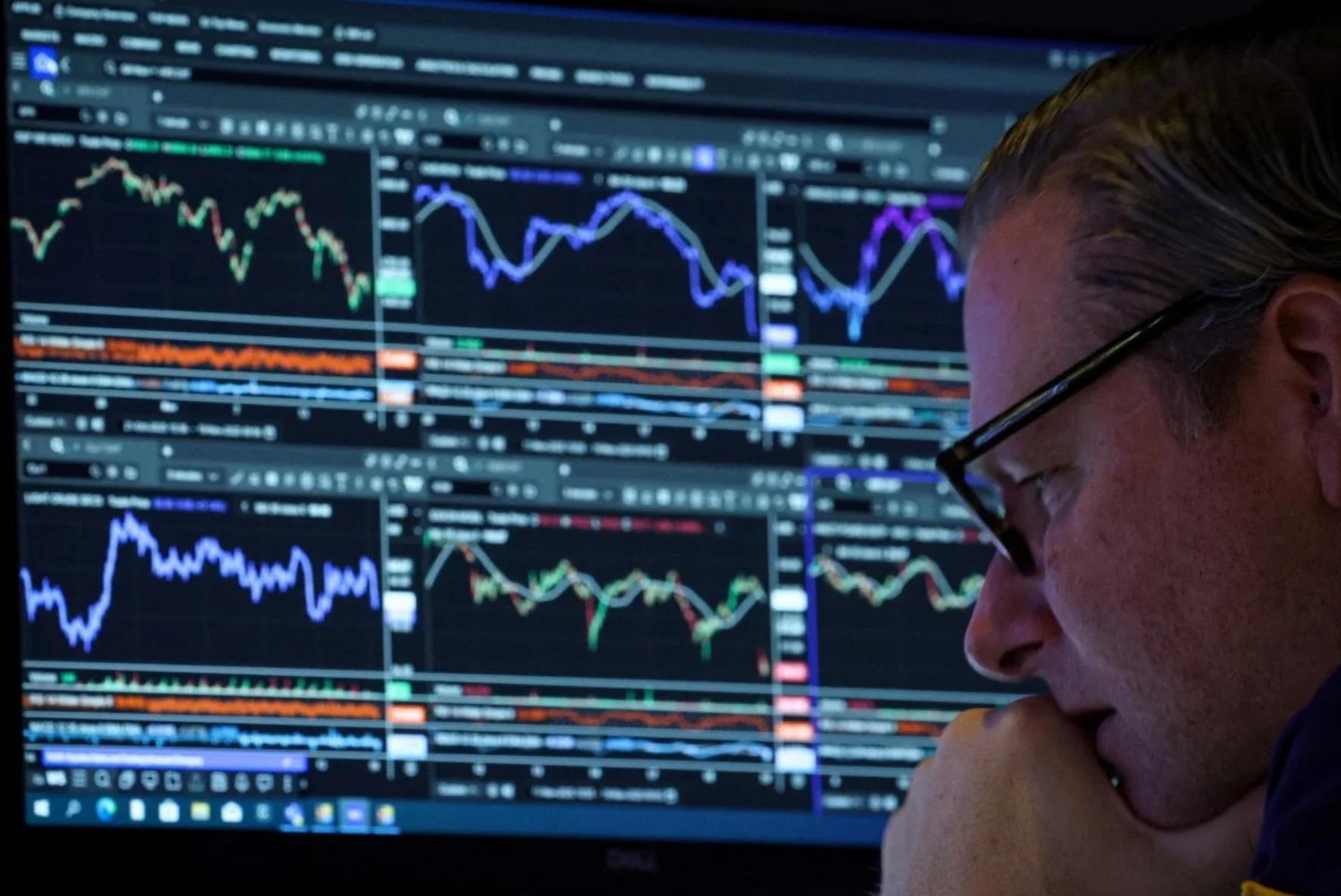
J.P. Morgan: The pullback in chip stocks is a buying window, and the AI cycle is expected to continue until 2028
J.P. Morgan's latest strategy report indicates that the recent adjustment in the global semiconductor sector should be viewed as a buying opportunity, rather than a signal of the end of the trend.
The bank believes that, supported by demand driven by artificial intelligence, the upward cycle in the chip industry remains strong, and significant new supply is unlikely before 2028, thus providing a window for positioning during the current pullback.
The report shows that J.P. Morgan's asset allocation sequence in the technology sector is "semiconductors outperform large cloud providers, and large cloud providers outperform high-risk AI concept stocks."
Their view is that during the early stages of AI infrastructure construction, chip manufacturing and related equipment are more directly benefited from the surge in computing power demand, while some backend applications and purely conceptual AI projects face risks of inadequate valuation and profit matching.
J.P. Morgan also expects that as concerns about stagflation gradually ease, global market participation will further expand in the second half of 2026, and market upward momentum is likely to spread from a few AI sectors to more industries and regional markets.
Goldman Sachs significantly raises target prices for multiple chip leaders
In line with J.P. Morgan's optimistic industry view, Goldman Sachs has recently also raised the target prices for several semiconductor and related technology companies.
According to Goldman Sachs' latest report: SanDisk's target price was raised from $120 to $220; Western Digital from $40 to $65; Applied Materials from $52 to $65; Qualcomm from $145 to $180; AMD from $45 to $64; Seagate Technology from $70 to $96.
Goldman Sachs pointed out that the adjustments are based on a re-evaluation of the demand for storage, computing power, and equipment driven by AI, with the long-term profit forecasts of some companies significantly raised, causing the valuation center to shift upward.
Under the influence of the generally higher target prices, American storage stocks have recently seen a significant intraday surge, with several stocks at the forefront of gains.
AI Super Cycle: Demand visibility extends, and supply expansion pace is controlled
Not just J.P. Morgan and Goldman Sachs, many institutions are emphasizing the profound impact of the "AI super cycle" on the semiconductor industry.
Bank of America Merrill Lynch's latest research believes that the visibility of demand for AI-related chips has extended to 2028, and that there will not be severe oversupply of storage chips before this date, leading to expectations that industry pricing will maintain at relatively healthy levels.
The report raises the expectation for the global semiconductor market size in 2030 from $2.3 trillion to $2.7 trillion, indicating that the compound annual growth rate from 2025 to 2030 is expected to be about 28%.
Among them, AI data center systems, storage chips, and wafer manufacturing equipment are seen as the main beneficiaries, and the forecast for global wafer manufacturing equipment spending in 2028 has also been raised to $250 billion, an increase of about 23% from previous expectations.

From the latest perspectives of multiple investment banks, the current adjustments in chip stocks are seen more as a "healthy pullback," providing an opportunity for medium- to long-term funds to reposition.
The core logic is that AI demand is still accelerating, while upstream capacity expansion is limited by capital expenditure, technological iteration, and geopolitical factors, leading to a tight overall supply-demand pattern that supports industry profitability and valuation centers.
In terms of specific allocations, institutions generally prefer "infrastructure" directions such as semiconductor equipment, storage, and high-performance computing chips, followed by cloud computing platforms and some AI application targets.
For ordinary investors, short-term stock price volatility is still unavoidable, but if they agree with the judgment that "the AI-driven chip super cycle has not peaked," then phase-based pullbacks may be seen as a time window for carefully selecting quality targets and gradually positioning for medium- to long-term opportunities.
Conclusion
In the context of AI becoming the core of the new wave of technological competition, fluctuations in the semiconductor industry are often amplified into signals of "trend reversal," but from J.P. Morgan and Goldman Sachs to Bank of America Merrill Lynch, many institutions offer a more optimistic medium- to long-term judgment: the demand outlook has stretched from one year to three to five years, while supply expansion is restrained by capital, technology, and policy, and the fundamental support for chip stocks remains. For investors, what truly needs to be vigilant is not each short-term adjustment, but losing strategic discipline in a high-volatility environment—being daring to make long-term positions within reasonable valuation ranges while also recognizing the individual stock differentiation arising from rapid industry changes, avoiding misunderstandings that the "AI super cycle" means that all related stocks can be bought indiscriminately and without restraint.
免责声明:本文章仅代表作者个人观点,不代表本平台的立场和观点。本文章仅供信息分享,不构成对任何人的任何投资建议。用户与作者之间的任何争议,与本平台无关。如网页中刊载的文章或图片涉及侵权,请提供相关的权利证明和身份证明发送邮件到support@aicoin.com,本平台相关工作人员将会进行核查。


