Author: Jae Chung
Translated by: Deep Tide TechFlow
Deep Tide Introduction: Manifold's early advantage came from arbitrage between centralized and decentralized exchanges, while giants like Jump and Tower remained firmly entrenched in centralized exchange infrastructure, providing a window for small teams to slice the cake from on-chain inefficiencies. This founder's account dissects how a zero-experience team selects tables, finds edges, and iterates quickly, which has strong reference value for practitioners looking to enter quantitative or on-chain trading.
Why Start a Quantitative Trading Firm?
In 2021, I slept very little. Naturally, I wanted to find a way to make money while I slept.
I dreamed of having robots print money for me while I lay comfortably in bed.
As a naive 21-year-old, I thought: how hard could this be?
All my advisors told me it was a stupid idea. I had no idea who my competitors were (Jump, Tower, Jane Street), and I had zero experience in this field.
They were right.
Before founding Manifold:
I entered the crypto industry in 2016/17 as a white-hat hacker.
I operated validator nodes for several years.
I made some lucky trades and investments during DeFi summer and NFT frenzy.
None of these were related to quantitative trading. In fact, I didn’t even know what “alpha” was!
But as usual, I didn’t listen to my advisors. Five years later, I’ve made some progress in this area (right shoku?), but my 21-year-old self was very stubborn and liked to learn the hardest way.
Early Stage
Many people think quantitative trading is:
Finding patterns
Making money
I used to be one of them. But the reality is far from that.
Some of our early iterations of trading strategies were quite embarrassing.
We tried everything: arbitrage, spread capturing, basis trading, statistical arbitrage, yield farming, and even deep learning!
At first, none of them worked. Trading is a zero-sum game. If there are enough people who play the same game better than you, there won't be any flesh left on the bones.
We had to find our own advantage. But what would it be?
Selecting Tables
Most top firms have an advantage in one of the following areas:
Speed/Latency (trading infrastructure)
Proprietary data/order flow
Research/Alpha generation
On centralized exchanges, these have already been completely dominated by companies like Jump and Tower.
They have deployed state-of-the-art low-latency infrastructure across all major exchanges (Binance, OKX, Bybit, Coinbase, etc.). They have fee levels we cannot achieve because we don’t have their scale of trading volume. They have clients providing them with generous order flow and data.
Our trading and research infrastructure was at best beginner level, and we didn’t have an army of engineers and researchers to fight on their territory.
We had to find a different game and establish an advantage there.
I realized our advantage had to be in DeFi, specifically on decentralized exchanges.
At the time, most blockchain foundations were spending significant capital incentivizing people to provide passive liquidity to decentralized exchanges. Most decentralized exchanges don’t have order books but use an AMM (Automated Market Maker) model, where trades execute along pricing curves.
In simple terms, decentralized exchanges need a unique trading system that manages market data (price, liquidity range/slippage) and order submission (trade execution/confirmation).
Top firms had not yet been aggressive in this game, possibly because: a) it deviated from their robust infrastructure; b) this market is smaller compared to classic centralized exchanges; c) there was regulatory uncertainty surrounding decentralized exchanges; d) they were already making a lot of money elsewhere.
The talent requirement was also more suited to our team. We had a unique combination: crypto-native engineers familiar with smart contracts (essential for on-chain execution) working alongside quantitative researchers from more traditional backgrounds (Citadel, Tower, etc.).
For example, one of our later star hires was originally a data engineer at an insurance company. Privately, he was also a personal MEV seeker, running his atomic arbitrage strategy on the Polygon blockchain on a small scale. Before he joined, I communicated with him through his anonymous email 0xaddress@protonmail, and when I looked at the transaction history of his bot address on the blockchain explorer, I could see his potential.
Before shifting the entire team’s focus to decentralized exchanges, I first validated the idea: I built a simple on-chain trading system entirely in TypeScript that executed an arbitrage strategy between centralized exchanges and decentralized exchanges (Binance/FTX versus the top ten liquidity blockchains). We referred to this as CEX-DEX arbitrage.
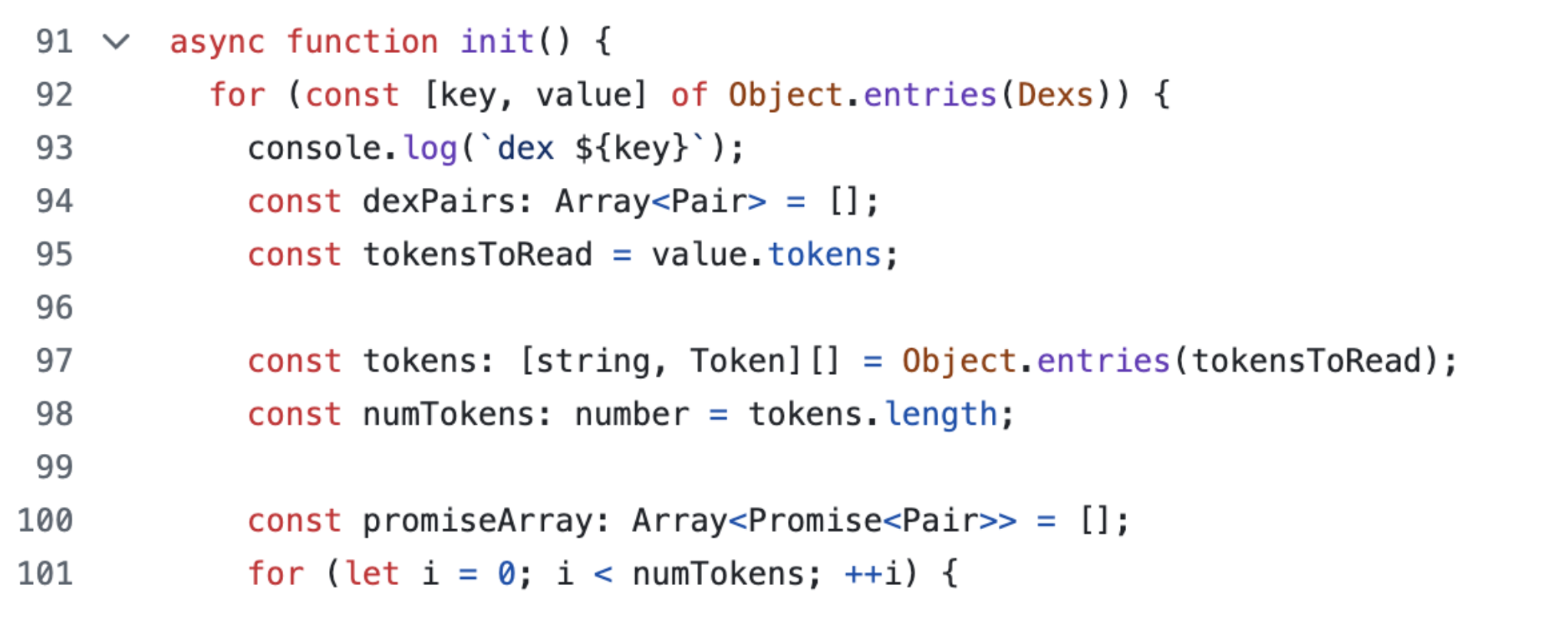
This opportunity exists because blockchains can "block" transactions for a period of block generation time (ranging from 200 milliseconds, 1 to 2 seconds, or even several seconds). This is inherently slower than each quote from a centralized exchange, hence there will always be some leading-lagging relationship. The majority of liquidity on decentralized exchanges is passive/aged liquidity, not actively managed by bots, so price differences arise between trading venues since price discovery primarily occurs off-chain.
Even with such a rough prototype and insensitivity to latency, the strategy managed to capture real arbitrage opportunities, and it was profitable even after fees!
After months of research with no progress, I finally saw a glimmer of potential.
Finding Advantages
One exciting aspect of this strategy is that it worked to some extent even while still in the prototype phase.
It's rare for a prototype to run successfully for an arbitrage strategy. By definition, arbitrage is the risk-free profit lying on the ground. Typically, there will always be someone who can grab it faster than you (at a better price), and the opportunity either disappears or becomes less clear.
We already knew there were several different ways to improve the strategy:
Rewriting the TypeScript system into another language (for speed)
Adding more decentralized exchanges for each chain and including more chains (for more arbitrage opportunities)
More precise mathematical calculations (position size, slippage)
Fee optimization (to increase the profit margins of each trade)
Our centralized exchanges were far from top fee levels, and rates could be even lower as the volume increased
Additionally, there were some creative ways to reduce the Gas fees for each on-chain transaction (blockchain fees)
Better on-chain execution technology (to improve the fill rate)
Inventory optimization (to improve return rates, capital efficiency, and runtime)
From here, everything hinged on execution.
The benefit of high-frequency trading is that the market provides you with immediate feedback. When you implement something and run the strategy, you almost instantly get a binary black-and-white result: does it improve profitability? This gives us a very fast feedback loop between "engineering implementation—turning into dollars."
Interlude:
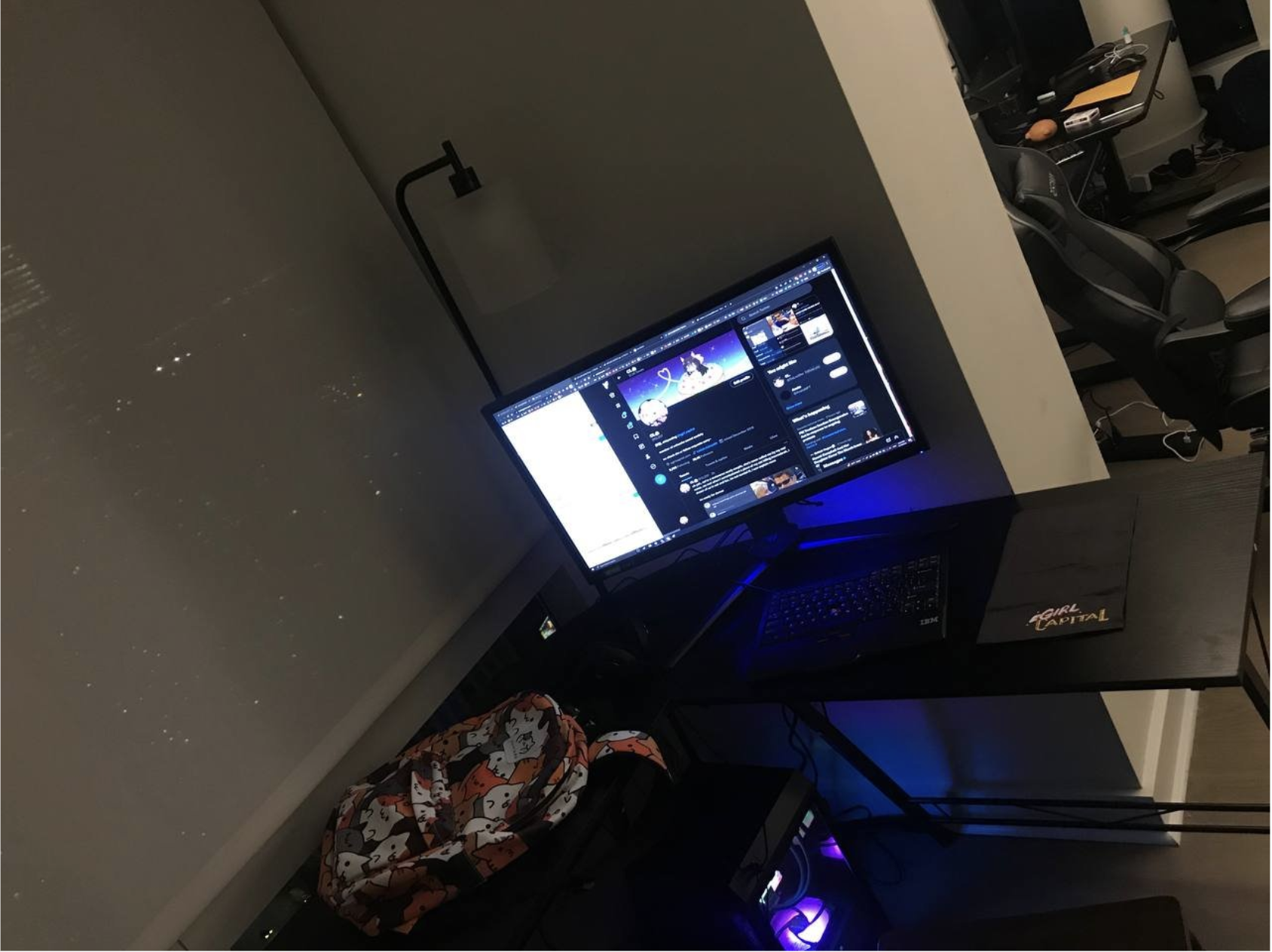
I remember on December 24, 2021, Sid (my co-founder) and I were in the apartment office coding all night. Both of us had no weekends or holidays. Ironically, founding Manifold forced me to work more and sleep less.
Amid constant keyboard clatter, neither of us noticed Christmas arrived. It wasn't until around 1 a.m. that I looked at the time and said, "Sid, today is Christmas!"
Thirty seconds later (I thought he completely ignored me, but he actually forgot and continued working), he replied, "Oh. Merry Christmas."
Then we continued writing code.
Looking back, this is probably my favorite office, where everything began.
Enhancing Advantages and Monetizing Them
This article has been longer than I imagined. I need to practice writing more concisely.
To save time, I will delve into just a few points on how we improved CEX-DEX arbitrage to make it more profitable.
If you're not interested in the nitty-gritty of trading, you can skip this part. But perhaps some of these techniques will inspire you to find and improve your own advantages in another market or even a completely different field. I will try to explain in words rather than mathematical formulas and code.
As we made the aforementioned general improvements, CEX-DEX arbitrage began earning over $10,000 per day, deploying only a few million dollars. Our early focus was on making the new system (written in Go + Solidity) good enough to scale across multiple chains, with 10-20 DEX per chain. We also started integrating new decentralized exchanges that adopted the UniV3 tick pricing model. These DEXs are more efficient due to concentrated liquidity, with smaller price slippage. As the scale expanded, our CEX trading fees decreased as trading volume tiers increased. With more capital, we also added more trading pairs to our trading pools.
Evolving Game
As we picked the low-hanging fruit, we noticed competition began to grow rapidly. On some chains, we could no longer trigger arbitrage at a 10 basis point spread because other bots were willing to trigger trades at lower prices. This game evolved from simply "detecting arbitrage and executing" to requiring a bit higher technical sophistication. This kind of bot had pushed out the initially manual click arbitrageurs.
Quick example:
ETH on Binance is $2,000.
ETH on Quickswap on Polygon is $2,001.
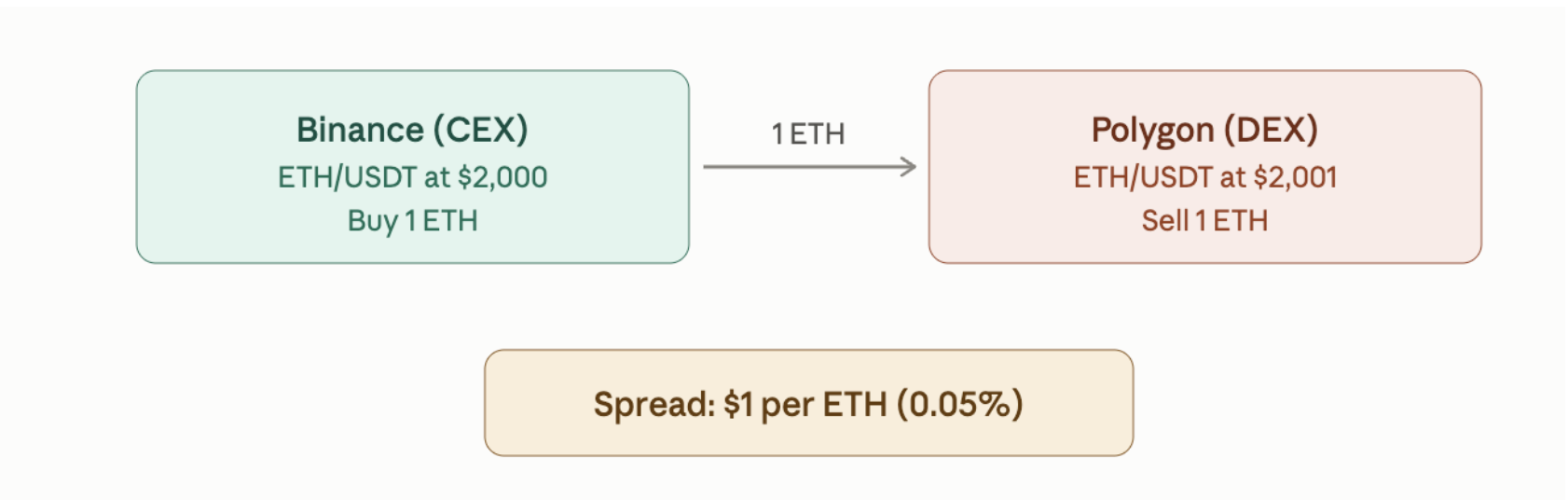
The spread is 2,001/2,000 = 0.05% = 5 basis points.
A bot (assuming costs and slippage are deducted) is set to trigger any arbitrage opportunity at a 5 basis point spread. It would sell ETH on Polygon and buy ETH on Binance, restoring the price to approximately parity.
This means that our bot would never see the arbitrage opportunity because another bot would close the spread before ETH on Polygon turned into $2,002, which is the 10 basis point spread we wanted.
Of course, everyone has different costs for executing each arbitrage trade. It depends on several factors: a) their fee structure on centralized exchanges; b) whether they are taking or making market orders (limit orders are usually cheaper, sometimes with rebates); c) their gas fees (blockchain fees for processing transactions, discussed later).
We began encountering other companies like Wintermute. We had to conduct priority gas auctions (PGA) for a set of bot addresses to bid higher on specific trades. This technique came from the MEV (Miner Extractable Value) space. You continuously re-submit specific trades at higher priority gas fees to increase priority within a given block.
To participate in these auctions, you must:
Almost accurately know how much you can earn from a trade to derive your exact willingness to pay
Have reliable infrastructure to land trades within one block after spotting an arbitrage opportunity
Know which addresses you are competing against and quickly understand whether you won (or lost) the auction
Different blockchains have similar or adjacent technologies depending on their trade ordering and submission architecture. Blockchains are constantly changing rules and mechanisms, attempting to allow value to accumulate more to users, protocols, or the chain itself. Arbitrageurs must continuously adapt to these changes.
Gas Optimization
The total gas fee for submitting on-chain transactions is approximately a function of the required amount of gas for the transaction multiplied by the gas price. The gas price depends on the current network congestion.
Gas prices/priorities play a role in PGA-style auctions. As long as you can land a trade within one block, there is not much room for further optimization here.
However, significant gas reductions can be achieved through gas optimization. This linearly reduces transaction costs on-chain.
Among many techniques, one interesting technique we employed is efficient packing of slots. The Ethereum Virtual Machine (EVM) stores data in 32-byte (or 256-bit) slots. By placing smaller data types next to each other, we allow Solidity to pack them into one slot. This significantly reduces the execution cost of read/write (SSTORE and SLOAD).


As you can see, the zero padding in our transactions is significantly reduced. This decreases the overall size we need to pay for transactions, thus lowering our total transaction fees.
Now, we can seize those opportunities that are "invisible" to those with high gas fees because they only become profitable through optimizations like these. For example, one arbitrage trade can net us a $1 profit after deducting fees but might net zero for those who are unoptimized. We would close the spread before other bots see the opportunity.
This also allows us to bid higher for trades to "win" arbitrage while maintaining profitability. Over time, winning more arbitrages means not only more profits but also increased trading volume. This accumulates into more advantages: better fee tiers on CEX, as well as capturing larger arbitrage on single trades.
Capital Efficiency
With more optimizations and improvements, we scaled this strategy as much as possible. We expanded the scope by integrating more chains, DEXs, and trading pairs. The larger the trading scope, the higher the capacity. It makes sense to deploy most capital into CEX-DEX arbitrage. This strategy yields an annual return exceeding 100%, with no down days.
But even though our capital grew rapidly with profits, we knew the strategy still had more capacity. How could we make more with existing funds?
The issue at the time was that CEX-DEX arbitrage required funds to be spread across various venues. It also requires you to prepare inventories across several different trading pairs.
To give a simple example. If you are arbitraging ETH/USDT between Binance and Arbitrum, you need to have ETH and USDT prepared at both venues. Suppose you initially placed $500,000 of ETH and USDT at both venues, and Binance had a premium. You would eventually sell ETH on Binance while buying ETH on Arbitrum. If the premium persists, you might quickly run out of ETH on Binance. Meanwhile, you deplete your USDT on Arbitrum due to buying ETH.
Centralized exchanges offer margin services that allow you to leverage some positions and continue trading when inventory becomes unbalanced. But on these chains, if the inventory is depleted, the bots stop arbitraging. To keep them running, we had to rebalance: transfer excess USDT from Binance to Arbitrum and excess ETH from Arbitrum back to Binance.
However, even if we could rebalance 24/7, we would still miss out on substantial profits. Arbitrage profits concentrate during times of high market volatility, as spreads widen. During these moments, a $500,000 inventory can run out in seconds. Withdrawal times from exchanges can extend from about 5 minutes (already slow) to even longer during high volatility. This means our bots cannot arbitrage at the most profitable moments.
Our first thought was to create an automated system called Hydra, which would continuously move funds using cross-chain bridges and CEX withdrawal APIs. We wanted the system to identify excess assets in certain venues and use them to supplement other venues that were short on assets. But this also didn't work as expected. Cross-chain bridges are highly unreliable. Assets can get lost or disappear, and we had to manually trace which bridge failed when. Bridging also often takes too long, and we still miss out on volatile market periods.
Then came Hydra v2. We stopped relying on bridging and instead created our on-chain spot margin system by integrating Aave (or similar protocols if unavailable). Aave is a lending protocol natively deployed on most major chains.
The idea was simple. In the previous example, if we purchased ETH on Arbitrum, we would ultimately hold excess ETH. Meanwhile, USDT would decrease. The system would identify the surplus ETH, lend part of it on Aave, and take out USDT against it as collateral.
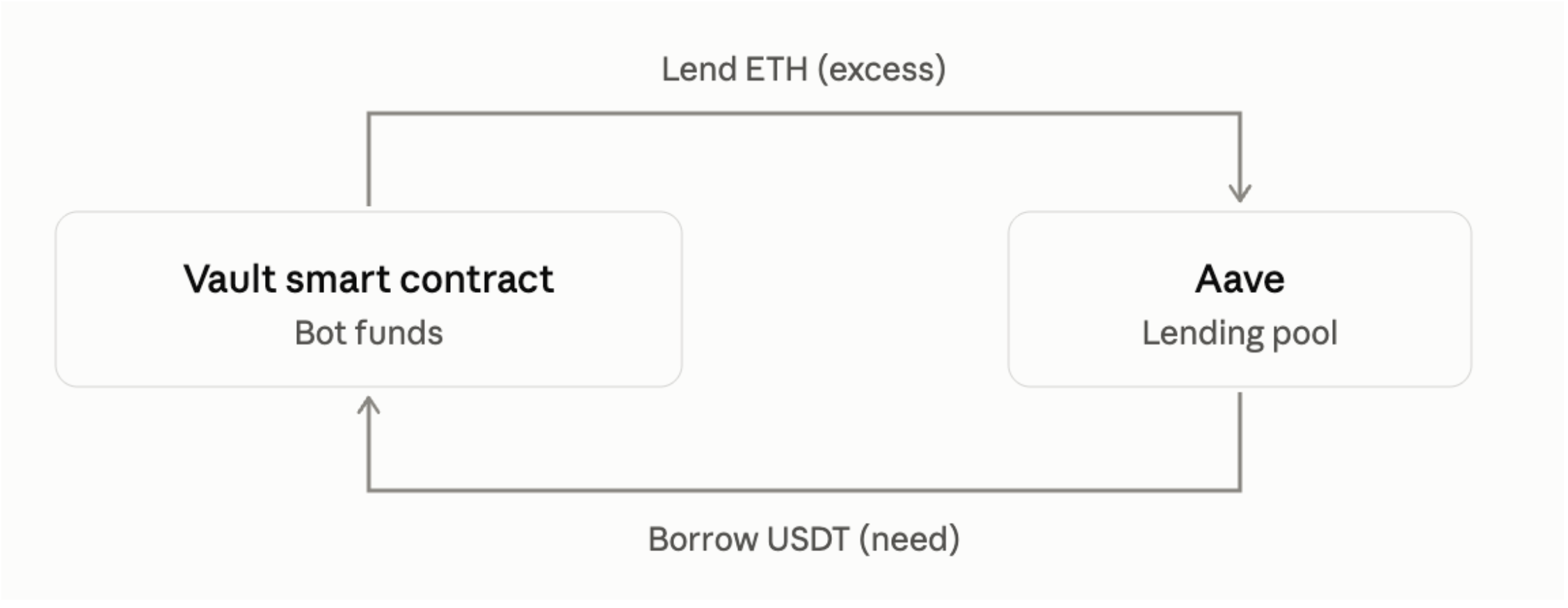
Although simple to implement, Hydra v2 had one of the biggest impacts on our PnL (Profit and Loss) at that time.
Looking back, it would have been impossible to think of all these techniques at once, even though none of the improvements were rocket science. If the initial prototype had failed badly, perhaps we wouldn’t have kept innovating for long. But once we had a live strategy, we constantly iterated. We monitored fill rates and profitability and quickly identified areas for improvement or optimization based on market feedback. This feedback loop helped accelerate our growth.
What I learned is that when you face numerous mysterious barriers at the beginning, it’s challenging to crack a game. Being among the top players (the frontier) and understanding the fundamentals makes it much easier to stay ahead. Especially in markets, the choice of tables/games and execution is equally important.
Lifecycle of Alpha
CEX-DEX arbitrage was the primary source of profit for a long time. During its heyday, it could generate six figures a day when faced with high market volatility. We built the infrastructure to be general enough to connect to new chains within an hour. This often made us one of the earliest arbitrageurs on some new chains, extracting enormous spreads during the least efficient times.
But like almost all alpha, it decays over time. Particularly with arbitrage, competition compresses spreads to levels where profit margins are greatly reduced. Imagine two companies in the previous PGA example, with gas optimization and CEX fee levels being exactly the same. Since the cost of each trade is the same, they would eventually drive the PGA bidding up to their own lowest profit levels. By the end of 2025, CEX-DEX arbitrage will no longer be that once-crazy high-yield strategy.
Fortunately, there were stable high-yield strategies operating in the background. Over time, we were able to reinvest time and capital into other trading strategies that were more profitable.
I could write more about the other crazy ideas we came up with in the subsequent years, but that’s another story. CEX-DEX arbitrage still holds a special place in my heart, as it gave us a legitimate starting point and anchored us to establish our position.
免责声明:本文章仅代表作者个人观点,不代表本平台的立场和观点。本文章仅供信息分享,不构成对任何人的任何投资建议。用户与作者之间的任何争议,与本平台无关。如网页中刊载的文章或图片涉及侵权,请提供相关的权利证明和身份证明发送邮件到support@aicoin.com,本平台相关工作人员将会进行核查。


