Author: KarenZ, Foresight News
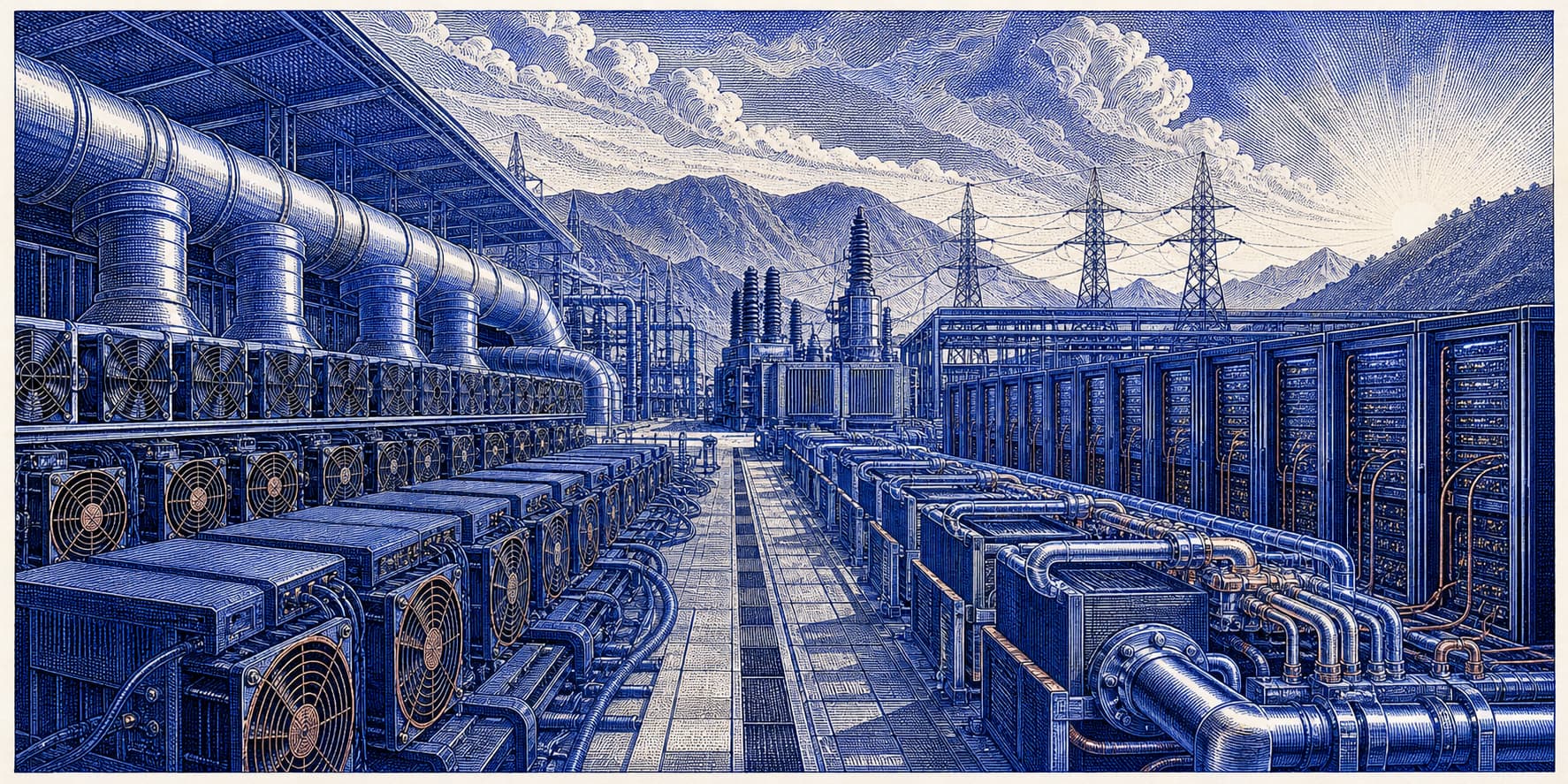
In the mining site, the loudest sound still comes from the mining machines; however, in the second quarter financial reports, the AI business of most crypto mining companies is becoming increasingly prominent.
MARA reported a net loss of $611.3 million for the quarter, which included an unrealized loss of $343 million in the fair value of Bitcoin. On the other hand, Core Scientific's high-density hosting revenue increased from $10.6 million in the same period last year to $136.7 million, becoming the company's main source of income.
On one side, there is the contraction in mining revenue and the fair value loss of held coins caused by falling coin prices; on the other side, there is the long-term rent recognized after the delivery of data centers. This set of financial reports presents two scorecards: one belongs to the Bitcoin mining machines that are still generating income, while the other belongs to the gradually ramping AI data centers.
The market is not lacking in ten billion-dollar contracts. What needs to be verified next is how much capacity the mining companies have delivered, how much rent they have confirmed, and ultimately how much profit remains after deducting construction inputs, depreciation, and interest.
Mining more does not mean earning more
The most direct pressure in the second quarter comes from the price of Bitcoin.
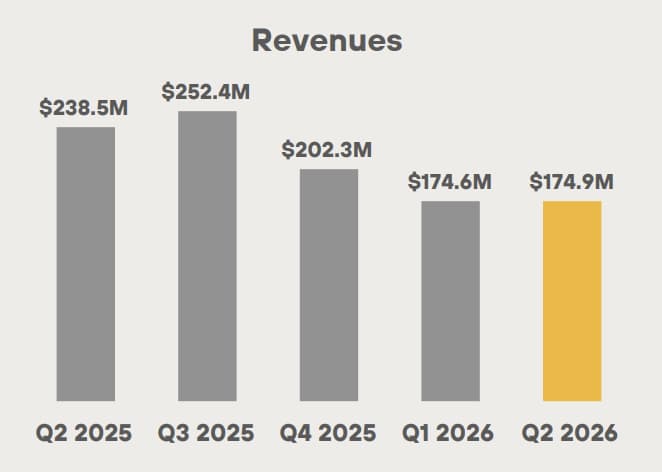
MARA mined 2,422 Bitcoins in the quarter, slightly more than the 2,358 Bitcoins mined in the same period last year, but revenue still decreased by 27% year-on-year to $174.9 million. MARA's net loss for the quarter was $611.3 million, which also included an unrealized loss of $343 million in the fair value of Bitcoin. In other words, the increase in production can only offset part of the price drop and cannot fully maintain revenue.
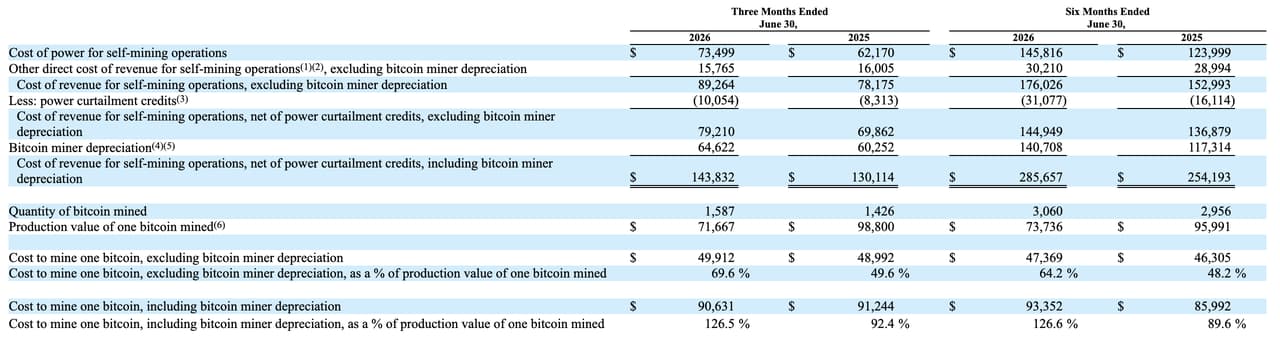
The situation at Riot Platforms is even more typical. The company produced 1,587 Bitcoins in the second quarter, an increase of about 11% year-on-year, but its mining revenue fell from $140.9 million to $113.7 million, mainly due to the decline in average Bitcoin prices and an increase in overall network hash rate. The production value per Bitcoin decreased from $98,800 to $71,667, while the mining cost per Bitcoin, excluding machine depreciation, increased from $48,992 to $49,912, leading to the cost's share of production value rising from 49.6% to 69.6%.
This does not mean that the mining model is no longer viable; rather, scale, machine efficiency, and electricity prices must work together. American Bitcoin mined about 932 Bitcoins in the second quarter, with a quarter-on-quarter increase of about 14%; its mining revenue was approximately $67 million, with a quarter-on-quarter increase of about 8%. Its mining cost per Bitcoin was around $36,500, with a gross margin close to 50%.
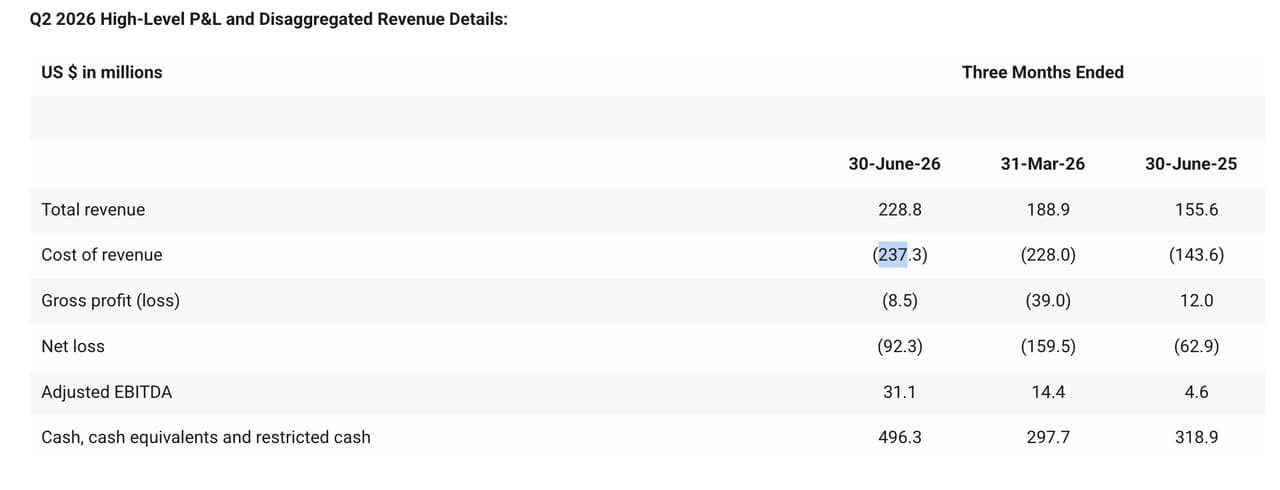
Bitdeer, on the other hand, shows another side: hash power and production can expand rapidly, but profits may not come in synchronously. The company mined 2,694 Bitcoins in the second quarter, compared to 565 in the same period last year; total revenue increased by 47% year-on-year to $228.8 million, with self-mining revenue at $168.4 million. However, the company's cost of revenue for the quarter reached $237.3 million, resulting in a gross loss of $8.5 million and a net loss of $92.3 million. When looking only at production and revenue, it is easy to overlook that electricity, depreciation, and expansion costs have already exceeded current revenue.
AI revenue is already emerging, but companies are not at the same starting line
What truly changes the industry landscape is that some mining companies have already shifted from "selling mined Bitcoins" to "renting out power and data centers."
Core Scientific is one of the most notable examples in this regard. The company's total revenue in the second quarter was $164.2 million, of which high-density hosting revenue reached $136.7 million, accounting for about 83% of total revenue; self-mining revenue was only $21.5 million. In the same period last year, Core Scientific's hosting revenue was only $10.6 million. This means that its main source of income has shifted from mining to data center hosting, rather than just announcing a long-term project.

TeraWulf has experienced a similar structural change. The company had revenue of $44.73 million in the second quarter, of which HPC leasing revenue was $31.93 million, accounting for about 71%, and digital asset revenue was $12.83 million. By contrast, in 2025, TeraWulf's total revenue of $168.5 million was still 90% (approximately $150 million) from mining, although at that time it had first achieved HPC leasing revenue ($16.9 million). The company has clearly stated that capital allocation and operational focus will mainly revolve around HPC data centers, and some of the original mining site infrastructure is also being transformed.
Riot's transformation is still in the initial stages. Its total revenue in the second quarter was $174.2 million, an increase of 14% year-on-year; of this, data center revenue was $23.2 million, while mining revenue was still $113.7 million. Notably, Riot's data center revenue includes $4.9 million in leasing revenue and $18.3 million in customer data center construction revenue, both of which are revenue that has truly entered the current financial report, but are currently not sufficient to replace the mining business.
Cipher Digital reminds the market that "starting construction" and "already generating HPC revenue" are two different things. The company's revenue in the second quarter was approximately $24.84 million, all from Bitcoin mining, with an adjusted EBITDA of negative $30 million and a net loss of $267.5 million. Cipher only began to deliver the first batch of capacity for the Black Pearl project in early August, and therefore this revenue has not yet reflected in the second quarter.
Hut 8's revenue in the second quarter increased from $41.3 million in the same period last year to $74.9 million, of which $72.5 million was classified under computing business. However, this classification also includes ASIC computing, AI cloud, and traditional cloud services, meaning that the entire $72.5 million cannot be directly labeled as AI revenue. Of course, Hut 8's net loss for the second quarter was still reported as $177.1 million, of which $138.6 million was due to unrealized losses from digital assets.

AI big contracts are making headlines, but revenue realization still takes time
The most common misinterpretation during the transformation process of mining companies is treating the total value of long-term contracts as already realized income.
Core Scientific disclosed that it had rented out around 1.1 GW of customer power capacity, corresponding to over $24 billion in potential contract revenue, but its confirmed hosting revenue for the second quarter was still $136.7 million; TeraWulf signed a 20-year initial contract worth approximately $19 billion with Anthropic after the quarter, but the company's HPC leasing revenue for the second quarter was only $31.9 million; Riot signed a 191 MW data center lease with an initial value of about $9.1 billion after the quarter, while its data center revenue for the second quarter was $23.2 million.
These figures are not in conflict. The total contract value represents potential earnings over the entire base lease term and typically enters the financial statements on a quarterly basis after the data centers are constructed, delivered in phases, and begin incurring rent. Project delays, changes in construction costs, financing arrangements, and client compliance can all affect the actual recognition pace. Therefore, when comparing the AI business of mining companies, at the very least, three things need to be clarified: how many contracts were signed, how much capacity was delivered, and how much revenue was confirmed in the quarter.
Net profit also cannot be read in isolation from accounting items. For example, Core Scientific reported a net loss of $1.1553 billion in the second quarter, primarily impacted by changes in the fair value of warrants; Cipher recorded a net loss of $267.5 million, which included $150.5 million in fair value losses on warrants; while MARA's losses were influenced by the revaluation of Bitcoin prices. By contrast, Bitdeer's gross loss in the quarter reflects that revenue costs have already exceeded revenue and is of a different nature.
Mining companies are differentiating into three types
The second quarter financial reports show that publicly traded mining companies can no longer be measured by the same standard.
American Bitcoin still focuses on increasing hash power, boosting production, and lowering costs per unit; Core Scientific and TeraWulf have a substantial proportion of hosting or HPC revenue entering the current financial reports; Riot, Cipher, and other companies are at an intermediate stage of gradually delivering new projects.
Keel Infrastructure takes a more thorough approach. This company, renamed from Bitfarms, has completed the shutdown of its Bitcoin mining operations in the U.S., with revenue of approximately $30.43 million in the second quarter, a decline of 50% year-on-year due to falling Bitcoin prices and the closure of cryptocurrency mining operations in the Moses Lake area of the U.S. in April 2026; adjusted EBITDA was negative $23.7 million. The company has chosen to become a developer of HPC infrastructure, but the new business has not yet formed a revenue scale sufficient to replace mining.
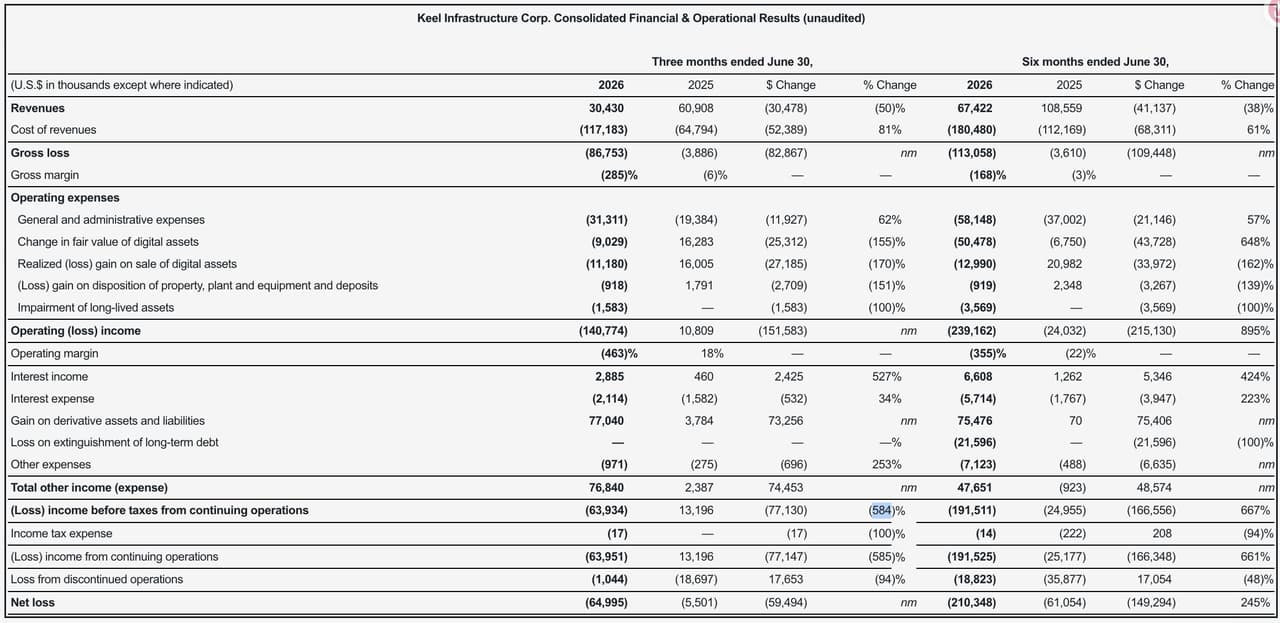
Therefore, what is truly noteworthy this quarter is not whether mining companies are all discussing AI, but rather how far they have progressed: some are still relying on mining machines to boost production, some have begun to charge monthly data center rents, while others are experiencing a transition period where old revenues are disappearing, and new revenues have yet to bridge the gap.
The mining machines are still roaring, but what will determine the next stage of financial performance is who has stable power, who can deliver data centers on time, and who can turn a long-term contract into current revenue.
免责声明:本文章仅代表作者个人观点,不代表本平台的立场和观点。本文章仅供信息分享,不构成对任何人的任何投资建议。用户与作者之间的任何争议,与本平台无关。如网页中刊载的文章或图片涉及侵权,请提供相关的权利证明和身份证明发送邮件到support@aicoin.com,本平台相关工作人员将会进行核查。


