The teleprompter operator who has accompanied Trump for ten years is surprisingly predicting the content of Trump's speeches in the prediction market.
Written by: Nicky, Foresight News
On July 16, reports from CNBC and ABC stated that a long-time teleprompter operator for U.S. President Trump is under investigation by federal regulators for allegedly using insider information to place bets on a prediction market platform. The White House has suspended him.
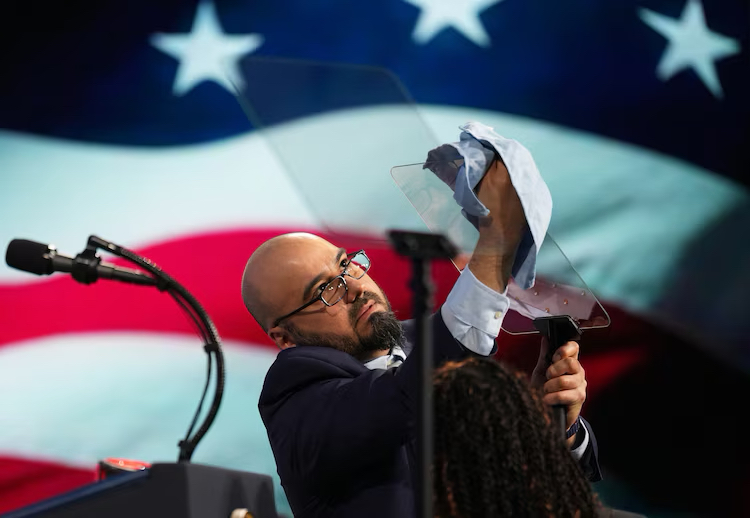
On March 27, 2026, in Miami Beach, Florida, Perez cleans the teleprompter before Trump speaks at a summit on future investment initiatives.
The individual in question, Gabriel Perez, has been operating the teleprompter for Trump since 2016. He typically has the last contact with and adjustments to the president's speeches among all assistants, and he even receives real-time modifications from Trump himself. According to insiders cited by ABC and CNBC, investigators from the Commodity Futures Trading Commission (CFTC) found that Perez traded on more than 12 of Trump's public speeches over approximately three months, covering events such as the State of the Union address, the Davos World Economic Forum speech, prime-time addresses, and Medal of Honor ceremonies.
He utilized foreknowledge of the speech content to bet on the Kalshi platform's "Mentions" market regarding whether specific words, phrases, or topics would be spoken, sometimes even withdrawing bets mid-speech when Trump skipped parts of the script.
Perez's trading was detected by Kalshi's monitoring system in March of this year, with the trading patterns not aligning with typical buying and selling behaviors, and were additionally flagged by market makers through reporting channels. The platform subsequently froze the account, retained almost all profits, and referred the case to the CFTC. Kalshi's enforcement director, Robert DeNault, stated through CNBC that the monitoring team quickly flagged these trades, with the platform cooperating with regulators and submitting the evidence collected.
CNBC reported that Perez accumulated over $90,000 in profits, but most of the earnings have been frozen by Kalshi. Perez is currently in settlement negotiations with the CFTC and may face the return of all profits and a ban from engaging in similar trades. The Manhattan federal prosecutor's office has been made aware of the situation but has decided not to initiate a criminal investigation.
White House press secretary Karoline Leavitt confirmed at a press conference that Perez has been placed on unpaid administrative leave, is no longer in charge of operating the teleprompter, and will not continue working at the White House. According to CNBC, Leavitt revealed that Trump is aware of the situation and considers it "very unfortunate and quite a disgrace," personally making the relevant decisions. Leavitt emphasized that the White House has extremely strict ethical standards and issued a memorandum in March of this year warning staff against using non-public information for trading in prediction markets.
The Perez case is not an isolated incident. In May 2025, California gubernatorial candidate Kyle Langford conducted about $200 worth of trades in related markets during his campaign, making very little profit but ultimately being fined $2,246 and banned from the platform for five years. From August to September 2025, a video editor named Artem Kaptur, who gained advance notice of schedule changes due to his position, was flagged for unusually high win rates, profiting approximately $5,400, and in addition to profit recovery, he was fined $15,000 and banned for two years.
In February 2026, former Congressman George Santos placed bets that he would not attend Trump's State of the Union address while publicly promising to be present, profiting tens of thousands of dollars, after which his account was promptly frozen and turned over to regulatory and judicial authorities. In April of the same year, three congressional candidates were penalized for making small bets in their election-related markets, receiving fines ranging from hundreds to thousands of dollars and bans for five years. Even small profits or uncashed winnings from trading on insider information face platform penalties and regulatory accountability.

Image source: Internet
Another major prediction market platform, Polymarket, has also experienced similar severe violations. According to previous reports from CNBC, U.S. Army Special Forces Sergeant Gannon Ken Van Dyke used confidential information to buy large contracts in related markets while participating in a military operation to capture former Venezuelan President Maduro from December 2025 to January 2026, profiting over $400,000 before being arrested in April this year and facing criminal and civil insider trading charges. In May of the same year, Google software engineer Michele Spagnuolo was indicted for allegedly trading on Polymarket using the company's internal "annual search trends" data from October to December 2025, profiting approximately $1.2 million.
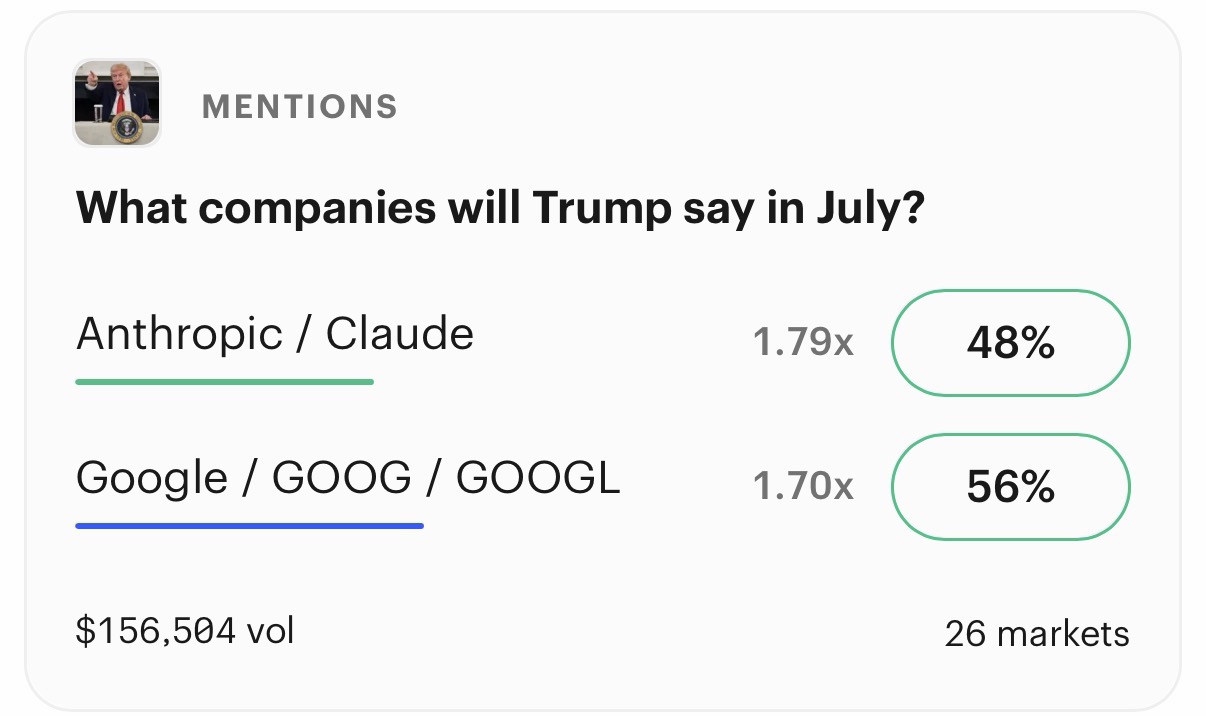
The recurring issue of insider trading in prediction markets stems from the ability of information advantages to be quickly converted into excess returns, and some topic markets have attained significant levels of funding. For example, the Kalshi platform's topic, "What companies will Trump mention in July," has seen trading volumes over $150,000. High liquidity markets provide ample profit space for insiders, while ordinary users are at a disadvantage due to information asymmetry, compromising market price fairness and platform credibility.
In response to these irregularities, platforms and regulators are attempting various measures to curb them. Kalshi has recently updated its policy, requiring traders in specific markets to disclose occupational information and strengthening preemptive measures through KYC procedures, round-the-clock abnormal trading detection, and reporting channels. The platform has conducted over 150 investigations in the first quarter of this year, freezing over 100 potential suspicious trades and referring more than 20 cases to law enforcement agencies.
From a regulatory perspective, the CFTC has repeatedly cited regulations prohibiting the abuse of non-public information and market manipulation in recent enforcement actions, and has worked with the Department of Justice to advance criminal accountability, making trading based on government insider information or corporate data susceptible to charges of fraud, money laundering, and other felonies, as well as years of imprisonment. The White House has also clarified through an internal memorandum that government employees are prohibited from participating in such bets.
免责声明:本文章仅代表作者个人观点,不代表本平台的立场和观点。本文章仅供信息分享,不构成对任何人的任何投资建议。用户与作者之间的任何争议,与本平台无关。如网页中刊载的文章或图片涉及侵权,请提供相关的权利证明和身份证明发送邮件到support@aicoin.com,本平台相关工作人员将会进行核查。


