Author: bankless
Blockchain Compilation: Baihua
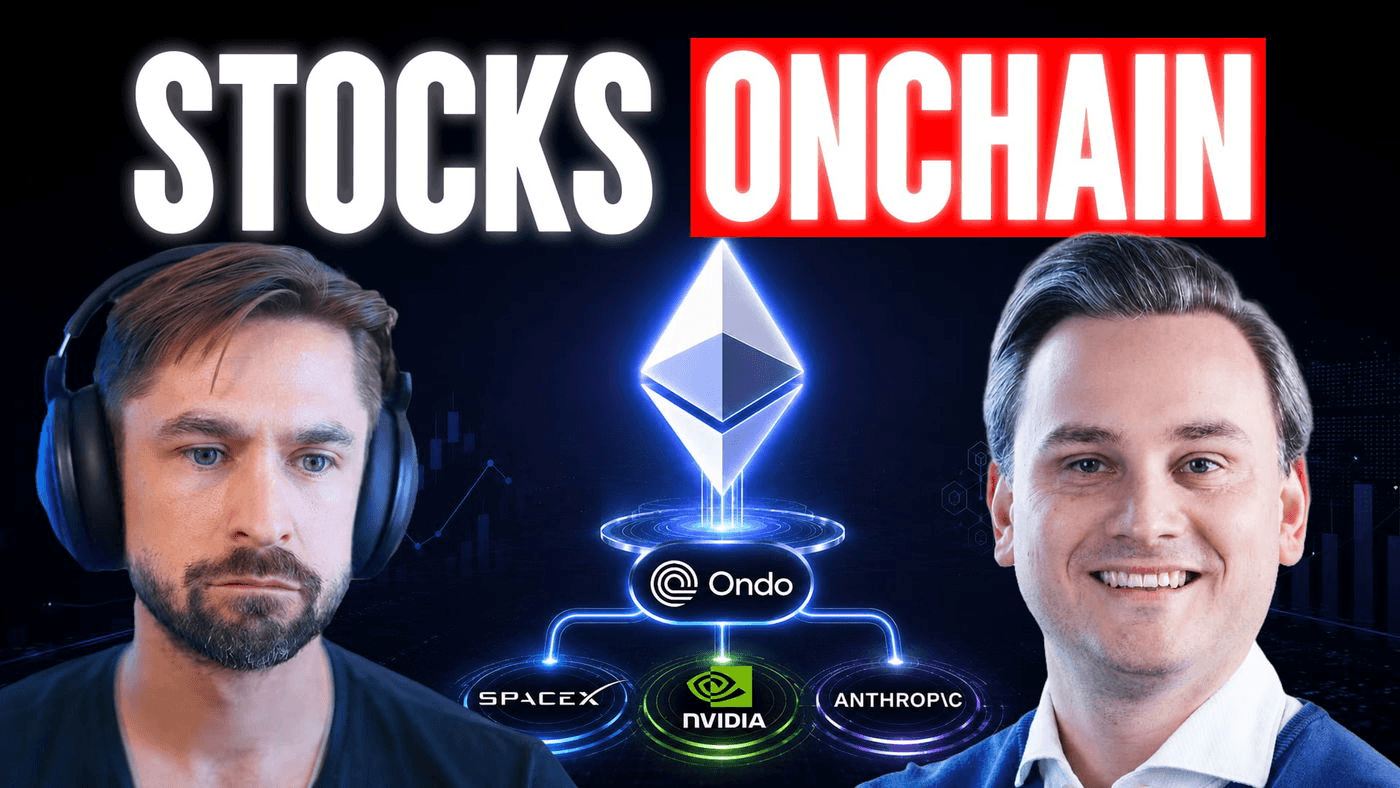
While traditional finance parties are still preparing for the closing bell at four o'clock every afternoon, the on-chain storm of the crypto world further breaks the boundaries of time. This issue of “Bankless” motivates Ian DeBode, a core member of the RWA (Real World Assets) leader Ondo Finance. From the moment of the SpaceX Nasdaq IPO, to minting trades on Ethereum, to disrupting traditional derivative efficiency with a real backing of "perpetual stocks" near 100% capital efficiency, Ondo is using an exciting hybrid architecture of “off-chain execution and on-chain settlement” to completely eliminate trillions of scale underlying assets into the DeFi ecosystem.
This is not just a technical revolution about liquidity, but also a strict harmony between the crypto forces and traditional finance parties (the incumbents). Facing the party council, regulatory relationships, and the tragedy and steadfastness after the unfortunate passing of Ondo's legendary founder Nathan, Ian unveils a panoramic view in the conversation: How to open the next blue ocean of wealth management and asset digitization in the "two feet on the gas" frenzy.
I. The First-Mover Advantage of Early Layout and the Lightning Launch of SpaceX Tokenized Stocks
David: Bankless Nation, I am once again joined by Ian DeBode from Ondo. Ian, welcome back to the podcast.
Ian: Thank you for having me.
David: Ian, real world assets (RWA) are very hot right now. Ondo has been deeply engaged in the real world asset field for a long time. It now feels like the entire crypto world is flooding into your territory. How does it feel to have laid out early when now many companies are just catching up?
Ian: Seeing what we talked about almost three years ago now come to fruition is indeed a surreal experience. It’s very gratifying and affirming. Of course, competition has clearly increased. I feel like every week there is a large crypto trading platform or brokerage launching their own version of tokenized stocks. But seeing everyone enter this space and truly embrace it is very exciting and interesting.
David: Yes, especially with the rise of perpetual contracts. The rise of perpetual contracts in the first half of this year almost coincided with the rise of real world asset trading. While the trading volume of crypto assets and perpetual contracts on crypto trading platforms is declining, trading in real world assets is on the rise.
Ian: Yes.
David: It turns out that people like real world assets. I want to talk about one real world asset that has notably attracted attention this week—SpaceX and its tokenized stocks. On the day of SpaceX's IPO on Nasdaq, Ondo's tokenized SpaceX stocks were also minted on Ethereum. How did you accomplish that so quickly?
Ian: Great question. I think we opened trading about five minutes after the real stock began trading. Clearly, this wasn't our first IPO. We had done one before, and that went smoothly, but this time was smoother. So we knew what to do. You need to pre-deploy tokens and ensure that all market makers and others have integrated the system. Our tokenized stock platform works best with intent-based systems, like OneInch Fusion, UniswapX, CowSwap, etc. We made sure that all these platforms had integrated the token ahead of time. Then once the stock is available for trading, we just need to flip a switch in the system, get the price feed, and ensure we know what the price is. Once that's done, anyone can purchase. So it basically took five minutes, which is why people could buy SpaceX almost at the IPO moment. And for those who bought, I think it has probably gone up about 30% now.
David: Yes, even if it drops by 30%, it doesn’t matter, because you are just providing them with stocks, right?
Ian: Exactly. We strongly support investor choice. It obviously makes me happier when our investors make money, but the ultimate goal is to provide access, and people have the right to use their money as they choose.
David: It might be helpful to briefly review what Ondo's tokenized stocks are and how they work. Did you have SpaceX shares before the IPO? Or how did you manage to switch the switch so quickly and ensure that the token on Ethereum is truly backed by SpaceX stock? How exactly does that work?
Ian: This time we did not do a pre-allocation prior to the IPO. The issue with pre-allocation is that you completely rely on whether you can get an allocation, and these usually go to large institutions and major brokerage platforms. Although Ondo is not small, we are not big enough for that yet. If we try to promise pre-allocations to partners and don’t get them, everyone will be very disappointed. This is exactly what we saw happen with Xstocks, where Bybit, BitGet, BN Wallet, etc., were disappointed because they didn’t get the allocations promised by Xstocks. Therefore, we didn’t try to do that this time. But in the future, we have ways to provide IPO pre-stocks, like for OpenAI, Anthropic, etc., and we are definitely considering it. But our focus right now is always the same: once the IPO happens, once a stock is tradable on Nasdaq or NYSE, we can very quickly tokenize it using our model (in wrapper form) for offshore investors outside the US. So when a stock starts trading on a U.S. national exchange, people can buy it through our platform using the DeFi integration in the form of a wrapper.
II. Unveiling the On-Chain and Off-Chain "Rube Goldberg Machine" Operating Mechanism
David: Perhaps we can slightly describe this "Rube Goldberg machine," how the various components connect. SpaceX IPO, trading on Nasdaq, and then all the lines connect, the light bulbs light up, and the tokens begin trading on Ethereum. What are these puzzle pieces?
Ian: There are on-chain parts and off-chain parts. The on-chain part is the platform where the end investo...
免责声明:本文章仅代表作者个人观点,不代表本平台的立场和观点。本文章仅供信息分享,不构成对任何人的任何投资建议。用户与作者之间的任何争议,与本平台无关。如网页中刊载的文章或图片涉及侵权,请提供相关的权利证明和身份证明发送邮件到support@aicoin.com,本平台相关工作人员将会进行核查。


