Introduction
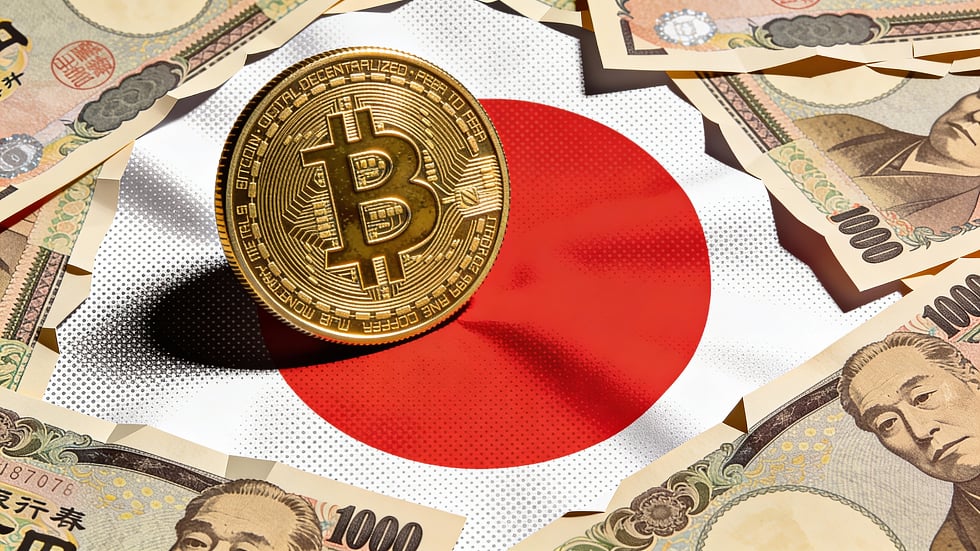
In June 2026, the Bank of Japan announced an increase in the policy interest rate to 1%, marking the first time since 1995 that Japan has raised its policy interest rate to this level. In absolute terms, a 1% interest rate is not particularly remarkable among major global economies; the U.S. federal funds rate currently remains above 4%, and the policy rates of major European economies are similarly higher than Japan's. Therefore, if we observe Japan's interest rate hikes solely from a numerical perspective, it seems insufficient to trigger such extensive global market attention. However, financial markets have always focused not on the level of interest rates themselves but rather on the policy direction and changes in the economic cycle reflected by these rates. For an economy that has long been in a zero or even negative interest rate environment, a gradual increase in the interest rate from negative values to 1% signifies a profound change in the monetary policy framework that has supported its economic operation for thirty years.
In fact, the reason why this interest rate hike by the Bank of Japan has attracted significant attention from global capital markets is not that the Japanese economy itself has once again become a global growth engine, but rather because Japan has long played an exceptionally unique and often overlooked role in the global financial system – that of the world's lowest-cost financing center. Over the past two decades, a substantial amount of international capital has flowed into high-yield assets around the globe by borrowing the extremely cheap yen funds. From U.S. tech stocks to emerging market bonds, from international commodities to the global real estate market, almost all categories of risk assets have benefited to varying degrees from Japan's long-maintained ultra-low-interest environment. In other words, Japan has not only exported cars, electronics, and industrial equipment but has also continuously exported low-cost liquidity to global markets, which has constituted one of the important foundations for the rise in global asset prices over the past twenty years.
Therefore, when Japan enters an interest rate hike cycle, the real concern in the market is not whether Japanese rates will rise further from 1% to 1.25%, but rather a deeper question: as the world's largest source of low-cost financing begins to contract, will the global capital allocation logic built on cheap funding be redefined?
1. Why Japan Has Long Maintained Ultra-Low Interest Rates
To understand the impact of Japan's current interest rate hike, we must first go back to the 1990s and understand why Japan became the most unique presence among major global economies.
In the late 1980s, Japan experienced one of the most famous asset bubbles in history. Driven by loose monetary policy and optimistic expectations, Japan's real estate and stock markets soared, with land prices in central Tokyo reaching extremely exaggerated levels, and the Japanese stock market soaring to a historic high of 38,915 points at the end of 1989. However, the bubble inevitably burst. Entering the 1990s, Japanese real estate prices continued to decline, and the Nikkei 225 index fell over 70% in the following decade, severely impacting the balance sheets of both corporations and households.
Unlike a typical economic recession, the issues arising from the bursting of the asset bubble did not merely include a slowdown in economic growth; more importantly, there was a fundamental change in the risk appetite across society. Corporations prioritized debt repayment over investment, and households tended towards saving rather than consumption, leading the banking system to bear prolonged pressure from non-performing assets. In this environment, even as financing costs continued to decline, it was difficult to reignite economic vitality.
In the face of this persistently weak economic environment, the Bank of Japan began to continuously lower interest rates. According to historical data from the Bank of Japan, the policy interest rate in the 1970s had long hovered between 6% and 9%, but following the economic adjustments after the bubble burst, the interest rate level continued to decline, dropping below 1% by 1995 and officially entering the zero-interest-rate era in 1999. In 2001, the Bank of Japan further introduced quantitative easing policies, becoming the first major central bank to implement large-scale quantitative easing. In 2016, Japan officially adopted negative interest rate policies, reducing the policy rate to -0.1%.
Japan's monetary policy over the past thirty years has not been a typical cyclical adjustment but rather a form of long-term structural easing. In contrast to the frequent interest rate hikes and cuts seen in the U.S. economic cycle, Japan's interest rates have almost consistently shown a unilateral downward trend and have long remained close to zero.
This long-term low-interest-rate environment reflects threefold constraints faced by Japan's economic structure.
The first constraint comes from changes in population structure. According to statistics from Japan's Ministry of Internal Affairs and Communications, Japan's total population has been declining since reaching its peak in 2008, and the proportion of the working-age population has been decreasing. Population aging leads to slower consumption demand growth, a higher propensity to save, and a decline in potential economic growth. When the economy lacks demand expansion brought by an increasing population, investment returns naturally decline, making it difficult to maintain high-interest rates.
The second constraint arises from a long-term low-inflation or even deflationary environment. From 1998 to 2020, Japan's core CPI averaged less than a 1% increase, far below that of major Western economies. In most years, Japanese companies were more concerned about products not selling rather than rising raw material costs. This environment led companies to lack pricing power and the willingness to expand investment.
The third constraint comes from the scale of government debt. According to data from the International Monetary Fund (IMF), Japan's government debt has now exceeded 250% of GDP, marking one of the highest levels among major developed economies. If we calculate based on the current U.S. interest rate of over 4%, Japan's finances would bear an extremely heavy interest burden each year. Thus, ultra-low interest rates not only serve as a tool for stimulating the economy but have gradually become an important foundation for maintaining the stability of the fiscal system.
In other words, Japan's long-term low interest rate is not a goal pursued actively but rather an equilibrium state formed under the combined pressures of low growth, aging, and high debt. Over the past thirty years, Japan's economy has actually relied on ultra-low financing costs to maintain overall operation, and the market has gradually formed a consensus that Japan would remain in the zero-interest-rate era for a long time.
However, this consensus began to loosen after 2022.
2. Why Japan Has Re-entered an Interest Rate Hike Cycle
For a long time, the market widely believed that Japan was the major economy least likely to enter an interest rate hike cycle. Even as the Federal Reserve underwent multiple rounds of hiking and cutting rates over the past decade, Japan maintained interest rates near zero. Therefore, when the Bank of Japan ended its negative interest rate policy and gradually initiated rate hikes in 2024, many investors initially viewed it as a symbolic adjustment rather than a genuine turnaround in monetary policy.
However, over time, the market gradually became aware that there were deeper economic fundamentals behind Japan's recent rate hike.
The first change occurred in the inflation environment.
For more than two decades, Japan's most significant macroeconomic issue has been deflation. Companies worried about falling product prices, while consumers were accustomed to waiting for lower prices, leading to a lack of persistent price rise expectations throughout the economy. However, following the pandemic, the global supply chain restructuring, rising energy prices, and changes in the international trading environment together propelled global inflation, and Japan began to experience continuous price increases.
According to data released by Japan's Ministry of Internal Affairs and Communications, Japan's core consumer price index has exceeded the Bank of Japan's target level of 2% for several consecutive quarters. Although Japan's inflation level is not particularly high compared to Western economies, this constitutes a significant change for a country that has long existed in a low-inflation environment.
However, what the Bank of Japan is truly concerned about is not inflation itself, but whether wages can grow in sync.
Historical experience indicates that if price increases are merely driven by rising costs of imported energy and food, without a concurrent improvement in residents' income, inflation will ultimately suppress consumer demand and thus be detrimental to economic growth. Therefore, the Bank of Japan has long emphasized the importance of the so-called "wage-inflation virtuous cycle."
This cycle began to appear in recent years.
According to results from Japan's spring labor negotiations (Shunto), wage increases in 2024 reached 5.1%, with further increases to 5.2% in 2025 and approximately 5.26% in 2026, marking three consecutive years exceeding 5%, a historic high in decades. Meanwhile, data from Japan's Ministry of Health, Labour and Welfare indicates that nominal wages saw a year-on-year increase of 3.5% in April 2026, with real wages also achieving continuous growth.
The significance of these data goes far beyond surface numbers.
For the past thirty years, Japan has been unable to establish a positive cycle between wage growth, consumption expansion, and corporate profitability improvement. Companies have been unwilling to raise wages due to insufficient demand; residents have been reluctant to consume due to slow income growth; thus, the economy has remained stagnant. The current continuous improvement in wage growth signifies the potential for Japan's economy to finally escape the deflationary mindset.
Additionally, exchange rate factors have also become an important reason for the interest rate hike.
Between 2022 and 2025, the Federal Reserve maintained a high interest rate policy, leading to a widening Japan-U.S. interest rate differential. The exchange rate of the dollar to the yen rose from around 110 to nearly 160 at one point. While yen depreciation benefits export companies, it also significantly raises costs for Japan's imports of energy and food. For a nation heavily reliant on imported resources, ongoing depreciation is not purely beneficial.
Data shows that in 2024, the Japanese government intervened in the foreign exchange market multiple times to stabilize the exchange rate, with cumulative intervention exceeding 11 trillion yen. Nevertheless, the yen remained weak, indicating that relying solely on exchange rate interventions had become difficult to fundamentally change market perceptions of the yen.
Therefore, beginning in 2024, the Bank of Japan gradually ended its negative interest rate policy and entered an interest rate hike cycle, a move not merely to address inflation but as a policy adjustment made under the combined pressures of improving wage growth, economic structural changes, and exchange rate pressures.
More importantly, this change not only affects Japan's domestic economy but also begins to influence one of the most critical funding chains in global capital markets – yen carry trading.
3. Yen Carry Trading: The Invisible Engine of Global Liquidity
From the perspective of Japan's domestic economy, the Bank of Japan raising interest rates from negative values to 1% seems insufficient to provoke such extensive global market attention. However, when one shifts their focus from Japan to global capital flows, it becomes evident that over the past two decades, Japan has played an exceptionally important role – as the world's lowest-cost financing center. The key to understanding this lies in grasping the operational logic of yen carry trading.
Carry trading, at its core, is not a complex principle; it's about using the interest rate differentials between different countries for financing and investment. When the financing cost in one country is significantly lower than in another, funds naturally flow from low-cost regions to high-yield areas, creating cross-border arbitrage opportunities. Over the past two decades, Japan has maintained interest rates close to zero or even negative, whereas the U.S., Australia, New Zealand, and some emerging markets have offered significantly higher yields, creating a tremendous arbitrage space for global capital.
For example, suppose an international hedge fund can borrow 10 billion yen at near-zero cost in Japan, then convert it to dollars to buy U.S. Treasury bonds yielding 4% to 5%. Ignoring exchange rate fluctuations, just the interest differential could yield stable profits. If they further leverage their investment, returns could increase. Thus, for large global investment institutions, Japan's long-term ultra-low interest rate environment is not just a monetary policy phenomenon but a persistent financing advantage.
Since the early 2000s, as Japan's zero interest rate policy became normalized, significant amounts of international capital started using yen as a global financing currency. According to statistics from the Bank for International Settlements (BIS), the yen has long ranked among the top three currencies in global foreign exchange trading volume, with a significant portion of those trades not servicing Japan's real economy but rather catering to international capital allocation needs. For many international institutions, borrowing yen, selling yen, and buying dollar assets have become an extremely mature and highly standardized investment strategy.
In fact, one critical reason carry trading has been able to persist is that the market has developed a stable expectation that Japan will not raise interest rates significantly. In financial markets, interest differential profits alone are not sufficient to guarantee successful arbitrage—exchange rate stability is also vital. If the currency used for financing appreciates significantly, investors may incur losses when converting back to the financing currency. Therefore, for a long time, investors have been willing to continue borrowing yen because they believed that the Bank of Japan would not easily shift from its ultra-loose policy and that the yen would not experience sustained substantial appreciation.
This stable expectation has gradually turned the yen into one of the most important financing currencies globally. In a sense, Japan exports not only goods and capital but also continuously provides liquidity to global markets. When international investors borrow cheap yen to buy U.S. tech stocks, European bonds, emerging market equities, and global real estate, Japan has effectively become a major funding source for the global leverage system.
Looking back at the process of rising global asset prices over the past twenty years, one will find that it has been almost consistently accompanied by an ultra-low financing cost environment. After the 2008 global financial crisis, the Federal Reserve released dollar liquidity through quantitative easing, while Japan maintained a near-zero interest rate environment, providing a continuous source of low-cost financing for global markets. In many international investment bank and macro fund models, Japan's financing cost is even considered an almost permanently existing market condition.
However, any trading system built on long-term stable expectations has a common characteristic: once expectations change, the adjustment process often becomes more violent than the establishment process itself.
In the past, the market was convinced that Japan would never enter an interest rate hike cycle, thus allowing for extensive expansions of arbitrage positions. Today, as Japan has begun to raise rates, the entire arbitrage system must reevaluate its risk-reward structures. This is why every interest rate decision by the Bank of Japan has started to receive heightened attention from global investors.
4. Why Japan's Interest Rate Hikes Affect Global Capital Markets
For many ordinary investors, Japan's share of global GDP has significantly decreased since the 1980s, and Japan's stock market influence in global capital markets is also far less than that of the U.S., raising an easy question: why do Japan's interest rate hikes affect global markets?
The answer does not lie in Japan's economy itself but rather in Japan's special position within the global liquidity system.
The essence of capital markets is the constant flow of funds between different assets. One of the key factors determining the direction of funds is the cost of financing. When financing costs are extremely low, investors are willing to take on higher risks and use more leverage; when financing costs rise persistently, investors tend to reduce their risk exposure and lessen leverage.
For the past twenty years, Japan's long-term ultra-low interest rates have meant that global investors could obtain financing at very low costs. These funds have subsequently flowed into U.S. tech stocks, emerging market assets, commodities, and real estate markets, driving up asset prices. However, when Japan begins to raise interest rates, this flow mechanism could change.
Assuming a global macro fund has been borrowing yen long-term at a cost of 0.25% and allocating funds to U.S. tech stocks, if Japan's interest rate rises to 1%, the financing cost effectively quadruples; if it rises further to 1.5%, the cost increases to over six times. In absolute terms, 1% and 1.5% may not seem high, but for leveraged institutional investors, this means their investment models must be recalculated.
In such scenarios, even if U.S. tech stocks continue to rise, fund managers will reassess their holding risks, as the rise in financing costs implies a decrease in future yields. When more institutions make similar judgments, the market will experience a common phenomenon — deleveraging.
Deleveraging does not simply entail selling off a particular asset; instead, the whole funding chain starts to contract. Investors sell stocks, bonds, and commodity assets, converting funds back to yen to repay loans, thus reducing overall leverage levels. For individual institutions, this is merely normal risk management behavior; but when many institutions engage in similar operations simultaneously, global markets may face liquidity contraction.
In fact, similar situations have occurred in history. During the later stages of the Asian Financial Crisis in 1998 and the 2008 global financial crisis, large-scale unwinding of yen carry trades happened. At that time, the yen appreciated rapidly, forcing many investors to close financing positions, leading to significant volatility in global markets. While the current environment has notable differences from those historical periods, the logic of capital flow remains unchanged.
Hence, the true mechanism by which Japan's interest rate hikes affect global markets is not through trade or economic growth transmission but rather through capital flows and financing costs. When the largest source of low-cost financing globally begins to contract, the entire risk asset system must readjust to a new funding environment.
5. What the Market Truly Fears Is Not 1%, but a Change in Trend
So far, Japan's 1% policy interest rate remains significantly below those in the U.S. and Europe. From this perspective, the market seems to have no reason to express such strong concern over Japan's interest rate hikes. However, financial markets have always been more sensitive to future directions than to current levels.
According to a Reuters survey of economists, most institutions expect Japan's interest rate to reach around 1.25% by the end of 2026, and to approach 1.5% by 2027. Numerically, such interest rates still do not seem high, but the issue lies in what they represent.
Over the past twenty years, global investors have established an almost unbreakable consensus that Japan would not enter a persistent interest rate hike cycle. This consensus not only affects market sentiment but also profoundly impacts investment models, risk pricing, and asset allocation logic. Many arbitrage strategies are viable primarily because of the long-standing existence of this premise.
However, today, Japan is gradually changing that expectation.
If previously the market believed that Japan's interest rate ceiling was 0%, this ceiling has now been broken. The future question is no longer whether Japan will raise rates, but to what extent it will ultimately do so.
For the market, this uncertainty is far more important than the actual interest rate level. Since asset pricing essentially relies on future expectations rather than current facts, once investors begin to believe that Japan might continue to raise rates, they will pre-emptively adjust their asset allocations, and such adjustments often occur before the policies are actually implemented.
Even more noteworthy is that Japan's economy is currently undergoing some changes that have been rare in the past thirty years. Improvements in wage growth, inflation maintaining levels above targets, and enhancements in corporate profitability all indicate that Japan's economy is experiencing structural changes. If these changes persist, it is not out of the question for the Bank of Japan to continue advancing policy normalization.
For global capital markets, what really needs observation is not the next interest rate increase of 25 basis points, but whether the low-interest-rate era formed over the past thirty years is coming to an end. Once the market begins to accept this judgment, the logic of global capital flows may undergo long-term changes.
6. The Fed Still Determines the Final Direction
Although Japan is gradually exiting its ultra-loose monetary policy, when the perspective is further broadened to the global financial system, it becomes apparent that the key variable determining the final direction of international capital flows remains the United States, not Japan.
The reason is that when international capital engages in asset allocation, they focus not on the absolute interest rate level of any country but on the relative yields between different markets. For global funds, while it is indeed important for Japan's rate to rise from 0% to 1%, if the U.S. maintains interest rates above 4%, there still exists an interest differential of over 3 percentage points between the U.S. and Japan. In other words, even though Japan has begun to raise interest rates, U.S. assets still possess considerable attraction for international capital.
This is also why, after Japan's consecutive interest rate hikes and the exit from negative rates over the past two years, the yen has not seen the significant appreciation that the market had expected. According to foreign exchange market data, the USD/JPY exchange rate remained primarily in the range of 150 to 160 between 2024 and 2026. For a country that has ended negative interest rates and raised rates continuously, this performance seems somewhat unusual, but when viewed through the lens of the U.S.-Japan interest differential, the logic becomes clear.
Throughout the last two decades, the core driver of the USD/JPY exchange rate has always been the U.S.-Japan interest differential. When the U.S. enters a rate hike cycle while Japan maintains low rates, capital tends to flow into dollar assets, causing the yen to depreciate; when the U.S. cuts rates while Japan remains stable, the yen often gets support. Thus, exchange rates reflect not just the economic strengths of a nation but rather the global capital's comparison of returns between different markets.
In fact, the Bank of Japan itself understands this well. In recent years, the Bank of Japan has repeatedly emphasized in public statements that its policy objective is not to actively drive up the yen's value but to maintain economic and price stability. From a practical standpoint, even if Japan wishes to improve its exchange rate performance through interest rate hikes, it cannot determine market direction independently. As long as U.S. interest rates remain significantly higher than Japan's, global capital will continue to prefer allocating to dollar assets.
Therefore, the truly noteworthy issue in the coming years is not whether Japan's interest rates can reach 1.25% or 1.5%, but whether Japan's rate hikes and U.S. rate cuts can occur simultaneously.
If in the future the Federal Reserve enters a new round of rate cuts while Japan advances rate normalization, the U.S.-Japan interest differential will narrow significantly. This change could impact global capital flows far more than Japan's interest hikes alone.
Historically, whenever major economies' monetary policies undergo directional changes, international capital reassesses its asset allocation logic. For example, in the mid-2000s, the Federal Reserve's continuous rate hikes strengthened the dollar; after the 2008 financial crisis, the Fed's ultra-loose policies drove global funds towards risk assets. Today, as Japan starts to raise rates and the U.S. gradually enters discussions of rate cuts, this combination has been rare in the past twenty years, necessitating the market to seek new pricing anchors.
For global investors, what may be most important in the coming years is not Japan's interest rate level itself, but the pace of changes in the monetary policy differences between the U.S. and Japan. When the largest provider of liquidity globally tightens, while the most important reserve currency issuer begins to loosen, international capital markets will face a new equilibrium process.
7. Conclusion
Looking back over the evolution of the global financial system over the past thirty years, Japan's long-maintained zero interest rate environment has not only been a domestic monetary policy arrangement but has gradually become an important infrastructure for global capital flows. While the U.S. continues to provide dollar liquidity, Japan has supplied near-infinite low-cost financing to global markets. A large amount of cross-border capital has designated yen as the financing currency to allocate global assets, effectively making Japan an important funding source for the global leverage system. Therefore, Japan's recent interest rate hike signifies not merely an adjustment in a country's monetary policy, but a change in important variables that support global asset pricing.
Currently, even if Japan's interest rates rise to 1% or even reach 1.5% in the future, they will still be at lower levels compared to major European and American economies, thus the market is not worried about Japan entering an aggressive rate hike cycle in the short term. What is truly concerning is that the market consensus formed over the past thirty years – that "Japan will always provide cheap funds" – is gradually being broken. As the largest source of low-cost financing begins its normalization process, the arbitrage trading systems, capital flow logic, and risk asset pricing models built on ultra-low financing costs may enter a period of re-adjustment. This may be the most noteworthy long-term change behind Japan's interest rate hikes.
免责声明:本文章仅代表作者个人观点,不代表本平台的立场和观点。本文章仅供信息分享,不构成对任何人的任何投资建议。用户与作者之间的任何争议,与本平台无关。如网页中刊载的文章或图片涉及侵权,请提供相关的权利证明和身份证明发送邮件到support@aicoin.com,本平台相关工作人员将会进行核查。


