Original Title: "Interactive Brokers' First Battle in 2026: Choosing to Open the Cryptocurrency Market"
Original Author: Ma He, Foresight News
In 2026, Interactive Brokers brought the low-cost, professional execution of traditional brokerage to the cryptocurrency market in just three months.
Interactive Brokers, listed on NASDAQ in 2007, currently has a market value of $113.7 billion. This brokerage platform is known for its low commissions, optimal execution prices, and advanced trading technology, offering diversified trading services in over 170 global markets and more than 200 countries and regions, including stocks, options, futures, forex, bonds, and funds, for individual investors, active traders, and institutional clients.
This traditional giant of the U.S. stock market chose to open a new battlefield in the field of cryptocurrency in 2026.

Current CEO of Interactive Brokers Milan Galik
Interactive Brokers first struck at the funding channel—stablecoins.
In January, Interactive Brokers launched a 24/7 account funding service with stablecoins, where eligible clients can send USDC from personal crypto wallets to a secure address provided by Zero Hash (supporting Ethereum, Solana, and Base networks), with funds automatically converted to U.S. dollars and credited to their brokerage accounts within minutes, available around the clock, including weekends and holidays. In the following weeks, support for Ripple's RLUSD and PayPal's PYUSD will also be added.
Interactive Brokers does not charge deposit fees; only Zero Hash charges a low tiered conversion fee, and clients only need to bear the blockchain network fee.
This directly addresses the limitations of bank operating hours for traditional wire transfers and cross-border delays, allowing global investors to instantly inject dollar-equivalent capital into accounts and immediately engage in multi-asset trading.
Next, Interactive Brokers turned its attention to BTC/ETH trading and recharging.
In February this year, Interactive Brokers launched Coinbase Nano Bitcoin and Ethereum futures, enabling 24/7 trading. On March 25, users can transfer BTC/ETH from external wallets directly into Interactive Brokers' linked crypto accounts without the need to sell first.
This feature eliminates technical barriers, allowing investors to trade crypto assets on the same platform with lower commissions, achieving unified risk management across stocks, options, futures, and crypto.
Furthermore, the company has expanded its crypto presence to the European market.
Through its Irish subsidiary, Interactive Brokers has opened crypto asset trading to qualified individual investors in the European Economic Area. Users can trade 11 major crypto assets, including BTC, ETH, SOL, XRP, and DOGE, alongside stocks, options, futures, forex, bonds, and funds, with this service supporting 24/7 trading.
Now, striking the crypto market is the latest footnote of Interactive Brokers as a traditional brokerage "embracing crypto while maintaining its essence."
As early as September 2021, when Bitcoin had just broken $60,000 and crypto was still seen as a high-risk fringe asset, Interactive Brokers cooperated with the Paxos Trust Company, regulated in New York, to be the first to launch spot trading for four cryptocurrencies: Bitcoin, Ethereum, Litecoin, and BCH. Clients did not need to open a separate crypto account; they only needed to apply for permissions in their existing brokerage accounts to trade 24/7 and withdraw to external wallets. This "low-cost + unified platform" model has always been positioned to serve professional investors, rather than chasing the retail speculation boom.
In the following years, Interactive Brokers steadily expanded its product line. By 2025, through Paxos or Zero Hash, new cryptocurrencies such as Avalanche, Cardano, Chainlink, Dogecoin, Ripple, Solana, and Sui were added, supporting over 11 major assets.
This "first stabilize, then accelerate integration" path reflects the unique logic of traditional brokerages exploring crypto. Unlike pure crypto platforms pursuing traffic and leverage, Interactive Brokers sees crypto as a fundamental component of a multi-asset platform: stablecoins are no longer just "digital dollars," but efficient settlement tracks that can be directly converted into trading funds, margins, or idle capital. The CEO team has repeatedly emphasized that the goal is to "make crypto trading as professional and low-cost as stock trading."
Perhaps Interactive Brokers' underlying intentions are not difficult to understand. Crypto assets are transitioning from early speculative narratives to becoming an important part of institutional portfolio allocations. Clients increasingly need to manage traditional securities, futures options, and digital assets on a unified, professional, and low-cost platform to achieve more efficient risk hedging, liquidity management, and capital allocation. If these services cannot be provided, some high-net-worth and institutional clients may likely move their crypto-related business to pure crypto trading platforms, leading to a decline in overall platform stickiness and capital diversion.
Through innovative measures like 24/7 funding with stablecoins, direct transfers from external wallets, and derivatives, Interactive Brokers has significantly reduced the friction costs of cross-border capital flows and asset migration, and transformed stablecoins into efficient settlement and margin tools, significantly enhancing the mobility and utilization efficiency of client funds. This layout precisely aligns with the company's core competencies—advanced automated trading systems, seamless access to over 100 global markets, and extremely low-cost execution.
As the crypto market shifts from narrative-driven to institutional configuration in 2026, this strategy is showing competitiveness—clients can monitor the impact of stock volatility on crypto positions on the same screen or quickly capture global opportunities with stablecoins, without switching between multiple apps.
The story of Interactive Brokers is essentially a reflection of how an established Wall Street brokerage is reshaping its positioning through technology and execution.
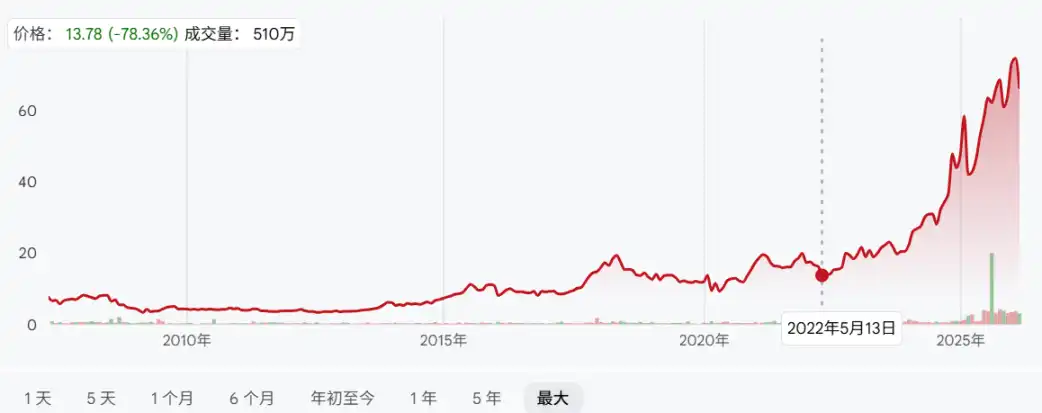
Since Thomas Peterffy founded Interactive Brokers in 1978, the company has focused on developing automated trading systems. According to the latest publicly available Q4 2025 financial report data, the number of client accounts at Interactive Brokers reached 4.4 million, a 32% increase compared to the same period last year. In 2025, over 1 million new client accounts were added, setting a record for the year. The total annual commission income was approximately $2.1 billion (+27%), with overall net income around $6.205 billion (+20%), and strong performance in client average returns (approximately 19.2% for individual clients, about 28.91% for hedge fund clients).
These hard data validate the "low commission + global access + one-stop platform" contribution to long-term returns, solidifying Interactive Brokers' position at the intersection of TradFi and Crypto.
免责声明:本文章仅代表作者个人观点,不代表本平台的立场和观点。本文章仅供信息分享,不构成对任何人的任何投资建议。用户与作者之间的任何争议,与本平台无关。如网页中刊载的文章或图片涉及侵权,请提供相关的权利证明和身份证明发送邮件到support@aicoin.com,本平台相关工作人员将会进行核查。