Original Title: "Myanmar Under Fire: The Dignity of the Dollar, Trapped Youth, and the Underground Financial Market"
Original Author: Joe Zhou, Foresight News
During the Spring Festival holiday in 2026, I traveled to Myanmar for a two-week field research.
Passing through Yangon, Bagan, and Mandalay, I attempted to salvage the true economic, financial, and social survival hues of this country under the shadow of war. As the first record halfway through my journey, this article will showcase the real Myanmar I witnessed.
Just in the first week in Yangon, the high-density information that hit me was far beyond my imagination:
A 9-year-old child dropping out of school to serve dishes, middle-aged men who could be conscripted at any time, youth unable to obtain passports to leave, and foreigners coming here to "buy wives" due to economic disparity...
In Yangon, under the control of warlords, bars and KTVs still maintain the illusion of a vibrant nightlife; while in many other cities in Myanmar, when the curfew arrives at 7 PM, the streets instantly quiet down, as if it were a dead city with no one around.
This is a massive, folded system. War and corruption grow in the cracks, while soaring prices are pushing ordinary people’s lives to the edge.
Myanmar's Fold
To understand this tear, one must first see the threefold "folding" of this country.
There are two Myanmars in this world: one is the Myanmar filtered through the internet, the other is the Myanmar of reality; one is the Myanmar adorned by official data, the other is the Myanmar struggling in the black market.
The first fold is the unfathomable exchange rate crack. Just after landing in Myanmar, I exchanged 2,500 RMB for 1.38 million Kyats at a Chinese restaurant. The official rate boasts 1:300, while the black market rate has already dropped to 1:550.
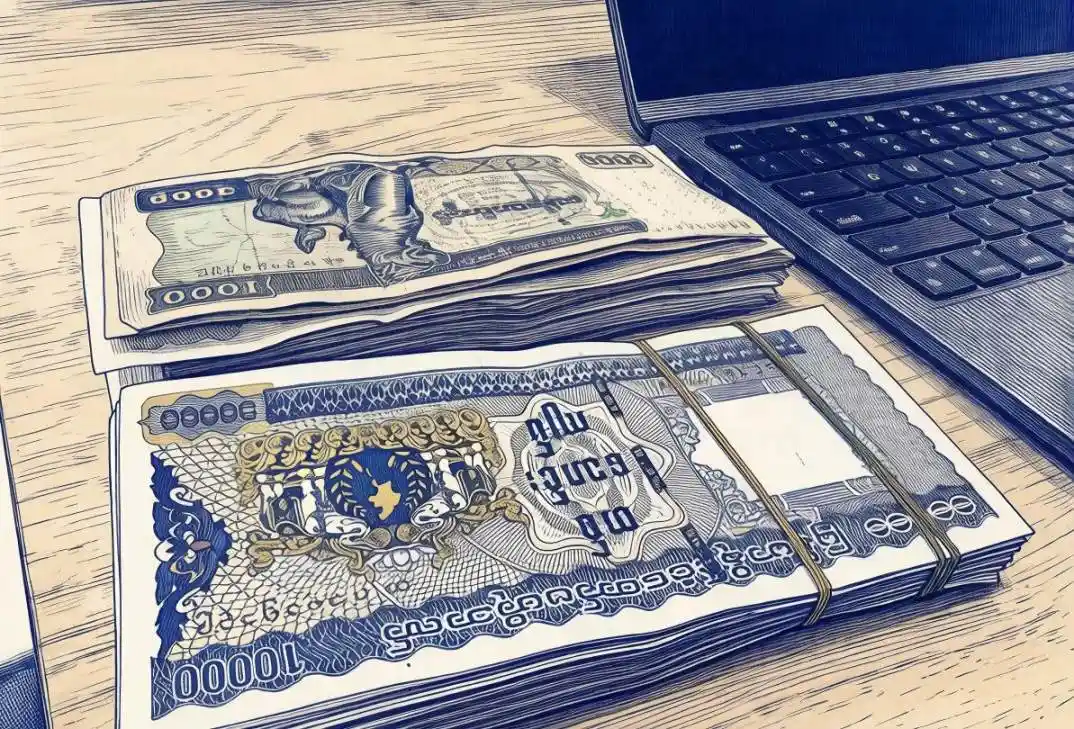
The 1.38 million Kyats that the author exchanged
The country’s exchange rate is virtually meaningless, while the black-market rate is the reality.
The second fold is the cliff-like salary disparity. A waiter serving dishes in Hong Kong earns about 18,000 RMB per month, 8,000 RMB in Shanghai, but in Bagan, Myanmar, this number plummets to a staggering 300 Kyats.
Even within Myanmar, the urban-rural gap remains enormous. A Chinese expatriate who has lived in towns for a long time told me that waiters in big cities can earn between 500 to 800 Kyats per month—this means that even the highest-paid base salary earners in Myanmar only take home a tenth of what their counterparts in Shanghai earn.
The third fold is the demonization from online labels versus the simple reality. On the Chinese internet, Myanmar is simplistically and crudely reduced to synonymous with "kidney theft" and electronic scams. But when you actually walk the streets of Yangon, Bagan, and Mandalay, you find that most people maintain extreme simplicity and peace. While northern Myanmar is indeed dangerous, filled with war and grey economies, fundamentally, those evils have little to do with the vast majority of ordinary Myanmar citizens—in this grand geopolitical and利益meat grinder, they too are the most helpless victims.
The "Dignity" of the Dollar
This underlying economic fracture and insecurity is absurdly embodied in currency.
The underground financial market in Myanmar operates under a strict rule: the dollar cannot be folded, rejecting all bills with marks or damage.
The common understanding in economics that "a $10 bill trodden on still has value" is completely ineffective here. Even a very faint crease will lead to ruthless rejection by traders. Every Myanmar person I encountered who accepted dollars seemed like a merchant holding a magnifying glass to authenticate expensive antiques, holding their breath as they carefully scrutinized every inch and hidden detail of the note.
In stark contrast is the ungracious local currency—the Kyat can be randomly crumpled, stuffed into pockets, even tossed into water for a wash, and still be used; but dollars must remain perfectly crisp. In the subconscious of the locals, damaged dollars are equivalent to insufficient quality gold, facing a penalty of 10% to 20% depreciation.
This almost pathological "cleanliness" is a concrete embodiment of the extreme fragility of this country's financial system. Long-term sanctions and complete financial isolation have led to an extreme rupture between official and black market exchange rates. In this land devoid of any sense of security, the dignity of a green banknote is infinitely elevated, surpassing even that of a sweating, struggling human being.
Five Bottles of Water Are Worth a Day's Wage for an Adult
The collapse of monetary credit directly manifests as rampant inflation. With years of ongoing conflict, Myanmar's prices are already chaotic.
In the memory of a local named Kosla, over the past decade, the prices of most goods in Myanmar have surged about fivefold, while people's wages have only climbed painfully by twofold. The stark numbers are chilling: in 2019, a ride on the JJ Express (the most well-known long-distance bus company in Myanmar) cost 11,000 Kyats; by 2026, the fare has soared to 50,000 Kyats; a bottle of mineral water, which was mostly sold to foreigners, has risen from 200 Kyats to now 800 to 1,000 Kyats.
Prices have quadrupled or quintupled, yet labor has become increasingly cheap. In Bagan, ten years ago, a typical adult server earned 2,500 Kyats a day, now it is 5,000 Kyats (less than 10 RMB). Kosla confirmed that this is almost the standard daily wage for most restaurant servers in Bagan. A service industry boss in Yangon, Veraswami, also revealed a harsh bottom line: the monthly salary of ordinary people in Myanmar is usually only 200 to 300 RMB.
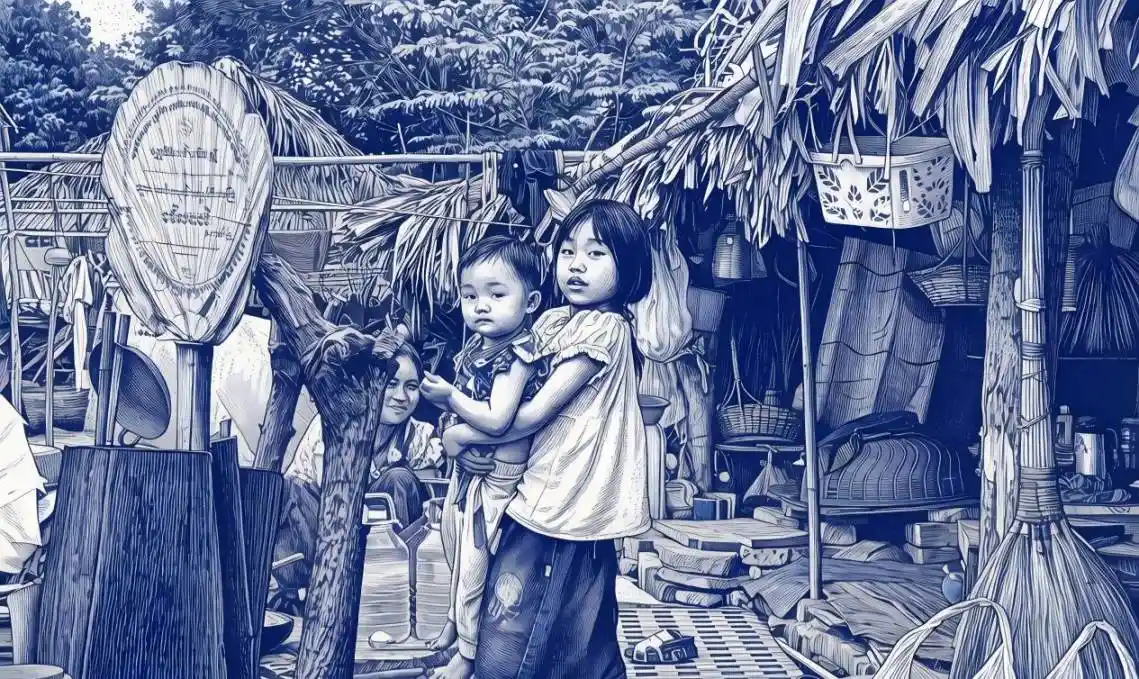
Only heavy manual labor and work in big cities can provide a bit more breathing space. Near a famous pagoda in Mandalay, a construction worker working under the blazing sun told me his daily wage is 30,000 Kyats (less than 60 RMB).
Ordinary people's incomes are stubbornly stagnant. In Myanmar, locals generally cannot afford bottled water. Because just five bottles of the most ordinary bottled water can instantly drain a full day's wages of an adult's hard work.
Myanmar's Children Have Become the "Working Class"
When the meager wages of adults are drained by inflation, the heavy pressure of existence inevitably falls on the next generation.
In Bagan, Kosla calmly recalled his childhood to me. To survive, he began working in a restaurant at the age of 9. Working from 8 AM to 5 PM, he earned a daily wage of 500 Kyats. Only by the time he was 16 did this wage barely crawl up to 2,500 Kyats.
This is not Kosla's personal tear of the times, but a shocking reality that this country still faces today.
Walking from Yangon to Bagan to the largest city in the north, Mandalay, "premature maturity in childhood" is the most common scene on the streets.
In the bustling streets of Yangon, a boy under 15 years old holds a four- or five-year-old brother, knocking on car windows to beg amid exhaust fumes and danger;
In Bagan, children under 10 work in the kitchen of restaurants, underage servers skillfully serve dishes and water, while near ancient pagodas, groups of teenagers can only earn small change by taking photos for tourists; outside temples in Mandalay, children around 10 are busy helping their parents in the incense smoke.
Time here seems to stand still. After more than a decade, whether in remote rural areas or core urban centers, the situation seems unchanged. In this country, childhood is a luxury. Young children are thrown early into the cruel survival game, remaining Myanmar's heaviest and most unresolvable daily reality.
Myanmar Youth: A Generation Unable to Redeem Themselves
And when these prematurely mature children grow up, waiting for them is another cage from which it is hard to escape. For ordinary young people in Myanmar, leaving is an extremely costly redemption.
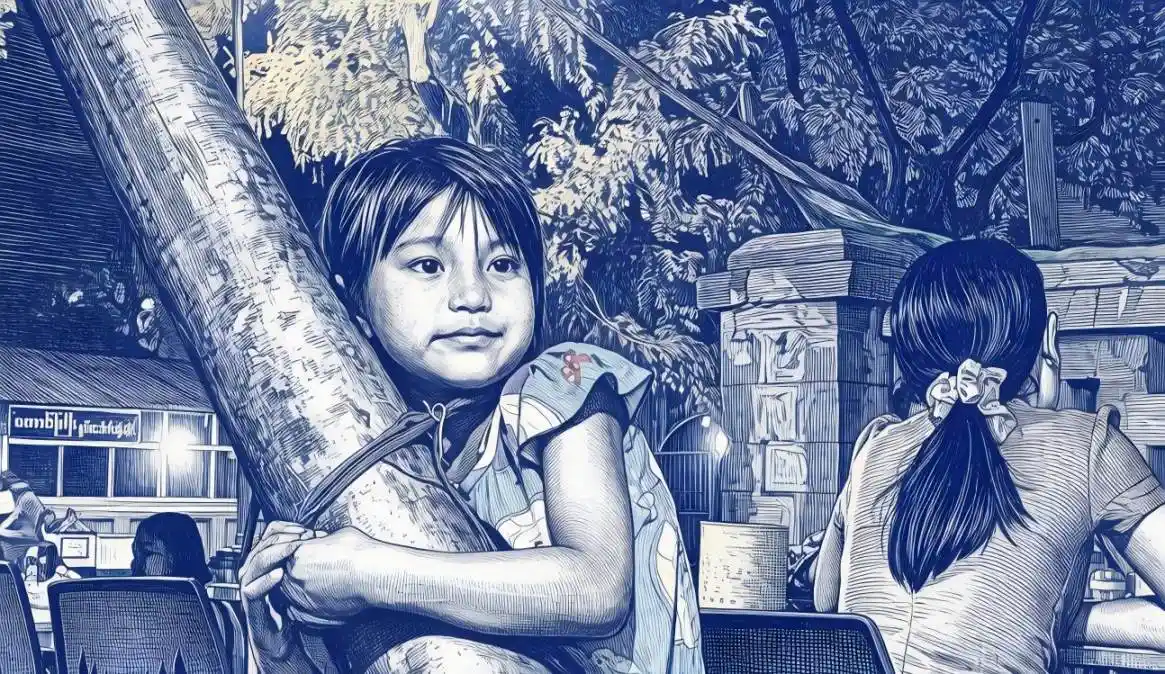
First and foremost is the shackles of the economy. Their meager wages are like a stagnant pool, with all their energy exhausted just coping with soaring survival costs, turning "saving money to go abroad" into an unattainable luxury.
Additionally, the iron grip of power has directly severed the legitimate escape routes for this generation. "If you're over 80 years old, you can leave Myanmar freely; but if you are between 18 and 60, the country will never let you go." A boss in Yangon, Veraswami, conveyed this cruel unwritten rule to me. The government strictly controls youth from leaving the country, and passports have become mere fiction.
When normal channels are completely blocked, the distorted "paths out" begin to fester in the dark.
"Now many people come to Myanmar specifically to 'buy wives,'" boss Veraswami shared with a wry smile about a recent transaction he facilitated: to help a Myanmar wife of a man from another country exit smoothly, he had to navigate and spend 3,000 RMB in bribes. For foreigners, 3,000 RMB might be just an ordinary plane ticket; but for the grassroots people in Myanmar, this represents 15 months of hard labor without eating or drinking.
Even risking their lives to work illegally offers no hope. A monk in Myanmar helplessly told me that many young people attempt to smuggle themselves to Thailand by water. However, with the spread of border conflicts, Thailand not only does not welcome Myanmar refugees but has also begun to crackdown harshly on hiring illegal Myanmar workers.
Unable to leave, unable to stay. Here, the border line is no longer a virtual line on a map but a chasm built by absolute power and extreme poverty.
In Conclusion
The lens freezes on a quiet boy staring out the train window.
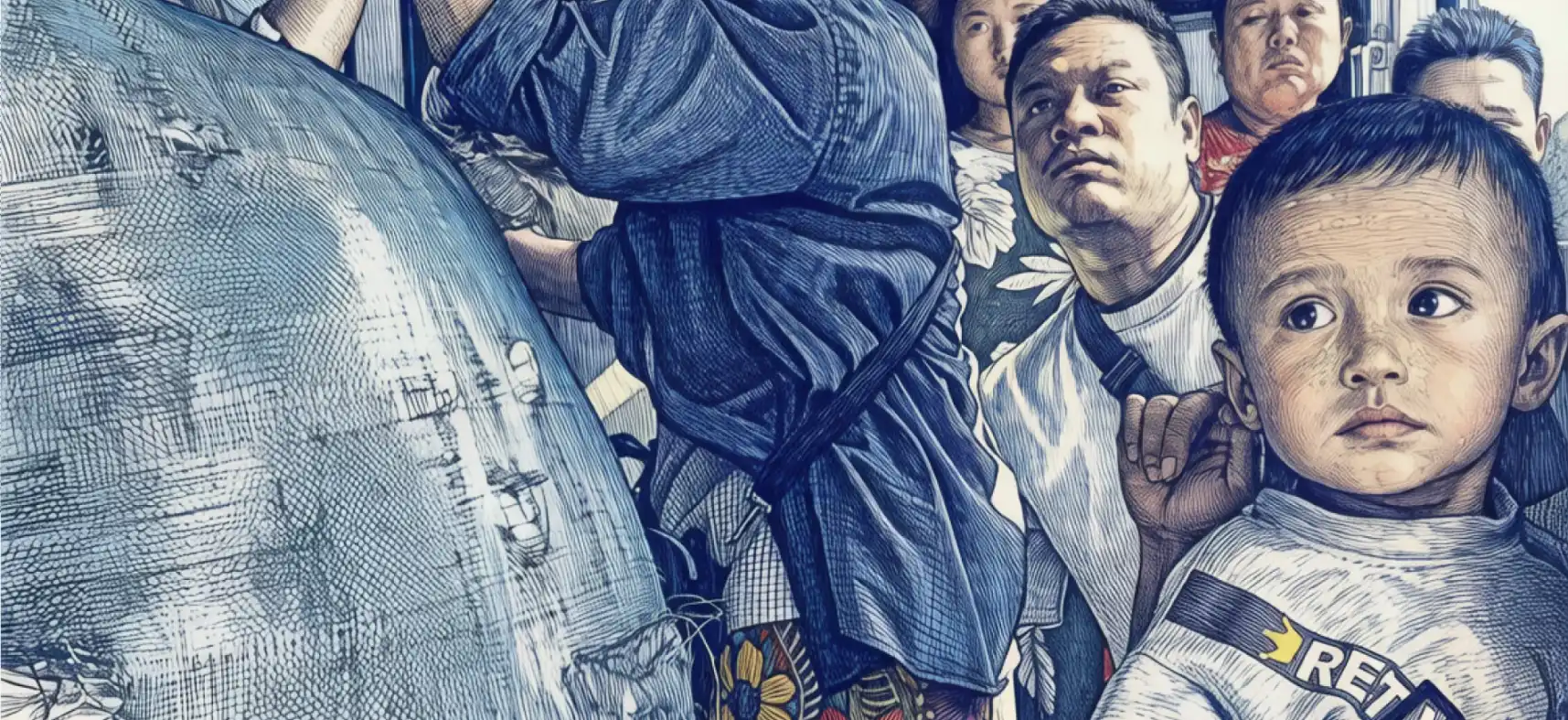
A Myanmar boy on the train
He is a microcosm of countless ordinary boys in Myanmar. Time will relentlessly push him forward, turning him into a youth, then into a man, ultimately inescapably becoming someone like my guide, Kosla.
I once asked this ordinary Myanmar man: "Are you happy?" Kosla did not answer immediately. When I pressed him again, he only evasively said: "We are so busy making a living every day that we have no time to think about happiness."
Only long after, while on a dusty roadside, did he answer this question for the third time and most comprehensively:
"I might die tomorrow. They could take me to be a soldier at any time, to fight on the other side of the river. After 7 PM, if a man is on the streets of Bagan, he could easily end up in prison and then thrown into battle for no reason. I have been working since I was 9, but the speed of wage increases will never keep up with inflation."
"A lifetime. No happiness." he said.
免责声明:本文章仅代表作者个人观点,不代表本平台的立场和观点。本文章仅供信息分享,不构成对任何人的任何投资建议。用户与作者之间的任何争议,与本平台无关。如网页中刊载的文章或图片涉及侵权,请提供相关的权利证明和身份证明发送邮件到support@aicoin.com,本平台相关工作人员将会进行核查。


