Original Title: Did Romania's "King of TikTok" Really Sway a Presidential Election?
Original Author: Simona Weinglass, Bloomberg
Original Translation: Saoirse, Foresight News
In the real world, Bogdan Peschir is a 36-year-old cryptocurrency trader from the fairy-tale town of Brașov in Transylvania. From his home balcony, he has a panoramic view of red-roofed houses, Gothic churches, and the changing seasons on Mount Tampa. On TikTok, he is known as Bogpr, the largest "tipper" on the Romanian platform.
Peschir particularly enjoys spending money on streamers. If you're live on TikTok and do something that attracts his attention, like jumping into a canal or doing a backflip, he might watch and send you animated gifts that scroll across the screen. These gifts range in price from a few cents to hundreds of dollars, and recipients can exchange them for cash. At this scale, digital gifts are no longer just likes from strangers.
Peschir constantly tips, with his follower count approaching 200,000. His ongoing spending allows him to unlock cooler and more expensive gifts: like virtual thunderbirds or fire phoenixes. In the autumn of 2024, he reached TikTok's top level of 50, securing his spot as one of the top tip users in Europe. He also received a rare privilege: the ability to send flying animated pegasuses to streamers he endorses. This is a unique kind of fame, but Romanian prosecutors say it wields significant influence. They arrested Peschir, accusing him of using money and prestige to help a flamboyant far-right candidate win the first round of the Romanian presidential election in November 2024.
The candidate, Călin Georgescu, made a near-instant comeback. Polls three weeks before the election showed him with only 1% support, lacking even qualification to participate in major national television debates. Yet he captured 22.9% of the votes in the first round, outperforming 12 other opponents. Within three days, Romania's Supreme Defense Council announced that the election had been subject to external interference. The officials declassified five partially redacted intelligence documents accusing a "state actor" of intervening in the voting. Germany and the United States pointed to Russia as the country responsible.
The entire operation was carried out online, primarily through TikTok. Tens of thousands of fake accounts created the illusion of Georgescu's popularity, pushing him into everyone's feeds. According to a report from the French government, the hashtag #calingeorgescu was viewed 73.2 million times on TikTok within seven days—an unprecedented level of interest for a country of 19 million people, of which about 9 million use TikTok. Prosecutors said Peschir was also involved: he redirected his tips to promote creators supporting Georgescu and liked and commented on pro-Georgescu content. He wrote in a text to acquaintances: "I’m doing everything I can to give him exposure."
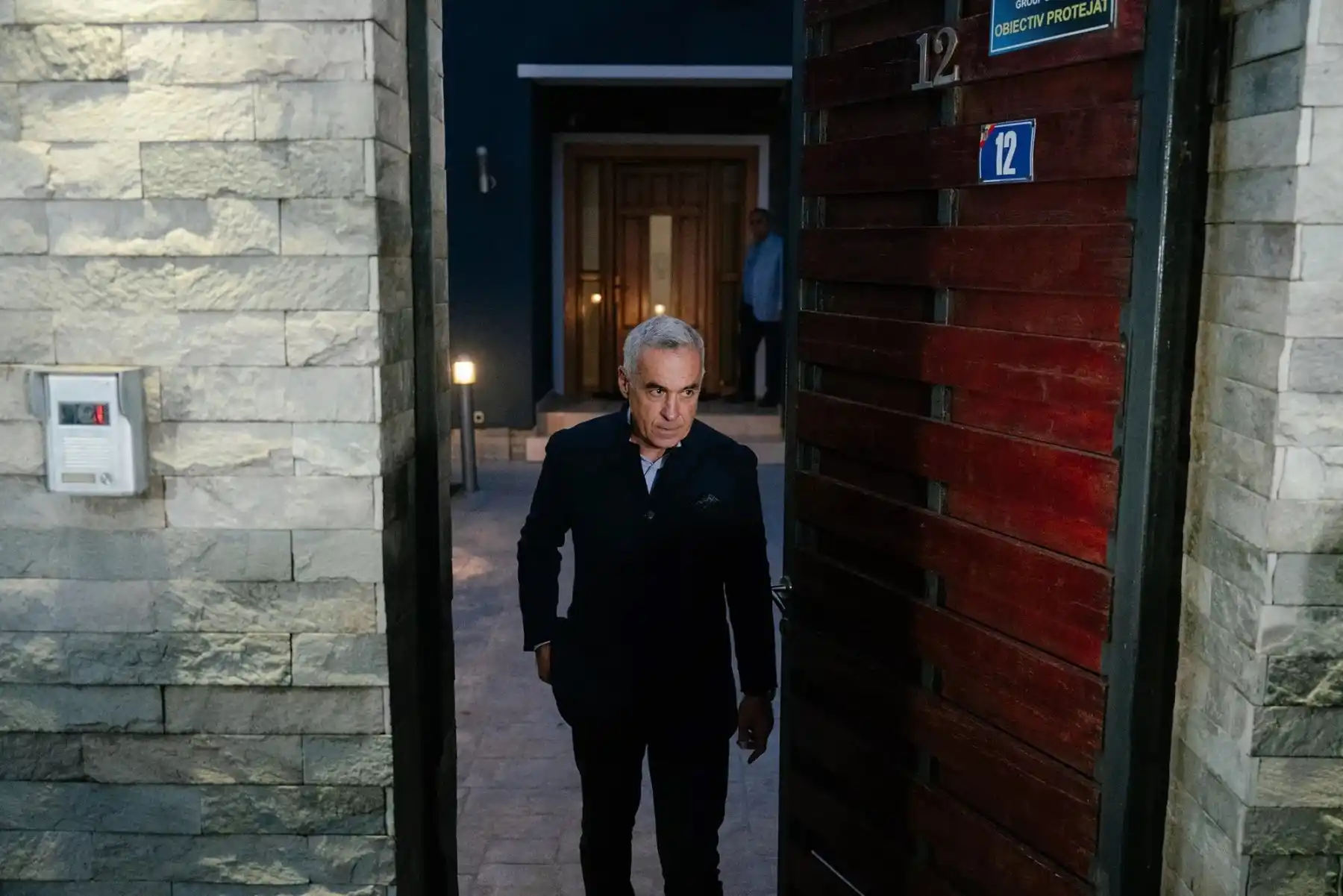
Călin Georgescu, two days after winning the first round of the Romanian presidential election, had just ten days left before his victory was declared invalid.
Photographer: Andrei Pungovschi / Getty Images
Prosecutors suspect that these actions were vital to Russia's overarching plan to support Georgescu's rise to power, and may even have been coordinated efforts. They termed Peschir's role in boosting Georgescu's approval rating as "decisive." Nicușor Dan, the Romanian president elected after Georgescu's disqualification, publicly criticized Peschir. But Peschir has not yet been formally charged. He claims the government’s narrative is absurd: he simply enjoys generously tipping TikTok influencers with his independently earned money, and coincidentally, he is a fan of Călin Georgescu.
For Romania, which was under pro-Soviet dictatorship from 1944 to 1989, claims of Kremlin manipulation of elections are particularly sensitive. The Romanian authorities' response has been remarkably strong, even unprecedented in similar incidents. In December 2024, Romania's Constitutional Court declared the election results invalid, citing violations of electoral laws: first, the "opaque use" of digital technology and artificial intelligence, and second, Georgescu's unreported campaign funding sources. The court announced a re-election for May 2025 and banned Georgescu from running.
In March 2025, Peschir's arrest attracted significant attention. He walked into Bucharest police headquarters wearing a hat, mask, and sunglasses, reluctantly removing them in front of cameras to reveal a neatly styled appearance and sharp features. Prosecutors charged him with "electronically bribing voters" and requested he be detained while charges were solidified. About a month later, he was released. Subsequently, a police drone hovered outside his home balcony for months, and every new laptop he purchased was confiscated by the police.
Prosecutors stated that in the ten months leading up to the election, Peschir spent nearly $900,000 on TikTok gifts, tipping over 250 Romanian influencers. In the final 31 days, he sent gifts worth $381,000 to accounts supporting Georgescu. The government claims this was undeclared illegal campaign donations.
Peschir vehemently denies wrongdoing. "The government has presented no evidence," he said in an email to Bloomberg Businessweek, "this is a completely fabricated story, simply to provide justification for voiding the election." He denies acting under Moscow's direction, stating, "Only God can direct me, and I haven’t taken money from anyone for years."
Police indicated the case is still under investigation. Businessweek has reviewed reports from Romanian intelligence agencies and Peschir's extensive text message records, and has corresponded with him. These messages particularly resemble a window into the bizarre world of social media assisting electoral campaigns. This reclusive individual has unexpectedly become a symbolic figure in what might be the most successful Russian election interference operation of the 21st century.
Bogpr has been active on TikTok since at least 2023, but he truly exploded in popularity in March 2024—eight months before the election. At that time, he sent gifts worth tens of thousands of dollars to Romanian singer Nicolae Guță. According to Peschir himself, that’s when he earned the nickname "King of TikTok" in his home country.
TikTok's economic model revolves around purchasing virtual coins on the platform. In Romania, a coin costs slightly over one cent. Peschir can spend one coin to buy a virtual rose, 30,000 coins for a lion, and 44,999 coins for a "universe." (It’s unclear whether he has purchased the pegasi gift worth 42,999 coins.) Recipients of gifts can convert them into virtual diamonds, which can then be exchanged for real cash—approximately half of what the tipper spent, with the other half as commission for TikTok. (The company refuses to disclose the specific commission rate.)
In the initial months, Peschir's tipping appeared almost unrelated to the election. He responded to fundraising requests, such as for the parents of terminally ill children; he tipped young female streamers who lip-sync without speaking; and he also gave gifts to those simply filming themselves driving or chopping wood.
"I would go live, wear a skirt, play NPCs—non-player characters in games—to attract his attention," said Gheorghe-Daniel Alexe, a Romani hip-hop artist known as Bahoi. According to prosecutors, he received gifts from Peschir worth a total of $2,400. Alexe noted that others would tip as well, but Peschir was on a completely different level.
Very few TikTok creators knew Peschir’s real name or appearance. Alexe recalled that he rarely revealed personal information, only stating that he believes in God and finds joy in generously giving money. "He said, 'I have too much money; nothing can move me because there is nothing to stimulate me,'" Alexe recounted, "only giving can stimulate me."
Peschir's generation grew up during a period of severe social transformation. In 1989, the Ceausescu regime collapsed with the Iron Curtain, ending decades of communist dictatorship rooted in Soviet occupation after World War II. Romania opened up to the West, joining NATO in 2004 and the EU in 2007. In the following years, Romania’s economy soared, transforming from a country known for abandoned children to the second largest economy in Eastern Europe, after Poland. Today, Bucharest, like many European capitals, features street performers, boutique cafes, and co-working spaces. Yet many Romanians have been left behind. According to EU statistics, nearly 30% of the population faces the risk of poverty or social exclusion, the second-highest rate in the EU.
Far-right forces in Romania emerged online as early as the early 2010s. Oana Popescu-Zamfir, director of the Bucharest think tank GlobalFocus Centre, noted that these groups include extreme football fans, hip-hop enthusiasts, anti-LGBTQ activists, and those advocating for the unification of Romani people. They gradually coalesced around a new political party called the "Alliance for the Union of Romanians" (AUR)—nationalistic, nostalgic, and criticized for its authoritarian leanings, with core tenets embracing tradition and Christianity.
Georgescu was a member of AUR, holding a similar worldview with personal embellishments. He described Ukraine as a "fictional country" and referred to leaders of the far-right "Legion Movement," which murdered Jews and political opponents before World War II, as "heroes," claiming he "united thousands under one goal, one belief, national identity, and the purity of Romanians." He also predicted that future humans would communicate telepathically and claimed to have seen aliens. (Georgescu did not respond to requests for comment.)
In mainstream political circles, Georgescu is seen as a peculiar figure. But on TikTok, his persona was radically different. In one video, he swims in a frozen lake, showcasing his muscular arms; in another, he rides a white horse wearing a traditionally embroidered shirt. He calls himself "the son of a farmer" and "the soul of the nation," declaring that the current leadership in Romania is corrupt and has sold the country to foreign companies. He claims to be the last hope for the nation against globalist forces that wish to destroy Christianity and Romania's unique identity. Georgescu’s ideology is broadly referred to as "sovereigntism," pitting ordinary people against elites, national states against the EU and NATO, and tradition against progressivism.
This rhetoric deeply resonated with Peschir. He wrote in texts: "I feel this person was sent by God. Now we have a chance in Romania."
Undoubtedly, in the weeks leading up to the November 2024 Romanian election, strange incidents unfolded. Passwords belonging to staff at Romania's electoral authority were leaked on Russian hacker forums. Romanian intelligence reports indicated over 85,000 cyberattacks targeted the electoral infrastructure, seemingly originating from 33 countries, but the reports suggested this was likely an illusion created by IP spoofing.
Clearly, one or more powerful entities attempted to subvert the Romanian elections while seeking to cover their tracks.
According to French media outlet Mediapart, Romanian intelligence privately informed their French counterparts that they believe these attacks were coordinated by Russia. Reports indicated that one of the attacks has been traced back to APT29, a hacker group under the Russian Foreign Intelligence Service (SVR), also known as "Cozy Bear."
In October 2025, President Dan publicly stated that the government had traced all interference actions, including Georgescu's uncontrolled social media campaign, back to Russia. On October 2, Dan presented Romania’s mid-term investigation results to European leaders in Copenhagen.
The president claimed that Russia’s actions began as early as 2019, when a Russian company started social profiling Romanians. Years later, a surge of Romanian Facebook groups emerged, covering topics like alternative medicine, religion, and recipes, with names such as "The Only True God" and "The Beauty of Romania." Dan stated that these seemingly benign groups were designed to test different narrative strategies on various Romanian demographics.
Romanian investigators found that Russian digital marketers ultimately identified four key themes: "Romanians are most receptive to narratives concerning identity, nostalgia, conspiracy theories, religion, and alternative medicine," stated Romania's Attorney General Alex Florenta at a press conference two weeks before Dan's visit to Copenhagen.
For example, many of these groups featured seemingly AI-generated Romanian individuals claiming they were not ashamed to live in the countryside; others were ordinary Romanians who often lost loved ones but continued to celebrate birthdays.
As the 2024 election approached, many of these groups began posting content supporting Georgescu, beyond recipes, motivational quotes, and heartwarming stories of ordinary people. Meanwhile, a massive influx of videos and images appeared on TikTok. Romanian authorities identified one of the primary sources as a Telegram group named Propagatorcg, where administrators coordinated Georgescu's promotional material, distributed it to volunteers, and provided detailed guidance on what tags to use and how to edit videos, images, and memes to ensure TikTok’s algorithm classified them as original content.
Then, just as hundreds of influencers began posting content related to Georgescu, the third phase of the campaign launched: bot accounts. Two weeks before the election, 25,000 previously dormant TikTok accounts suddenly became active, engaging significantly with content supporting Georgescu. Pavel Popescu, vice-chair of Romania's telecom regulator Ancom, noted that these accounts had independent IP addresses, simulated continuous location shifts as if using real mobile devices, which made them hard to identify as bots, thus making Georgescu's interaction data appear exceptionally authentic to TikTok’s algorithm.
"Anyone can buy 25,000 bots to like their content; that’s not different," Popescu said, "but when you have 25,000 active accounts that follow each other and pour into the live stream as soon as it starts, that’s completely different."
Typically, when a 10,000-follower account goes live, it may have only 500 viewers at the same time. But Georgescu's live viewing numbers far exceeded what would be expected based on his follower count. "Soon, Georgescu appeared in everyone's feeds, and then it exploded like a snowball," Popescu stated. Shortly after the bots appeared, Georgescu became the ninth-largest trending topic on TikTok globally.
At the time of Peschir's arrest, prosecutors alleged that his support for Georgescu's actions occurred in two stages: in the initial months, he built popularity and followers through tipping on TikTok; as the election's first round approached, he began liking and sharing Georgescu's videos and memes. Given Peschir's fame and follower count, this content would spread organically. When Bogpr entered a live stream, users were excited as if they had encountered a celebrity. When he sent large gifts like lions and universes, his ID would appear alongside the animation on the screen, often prompting the streamer to pause and publicly thank him. His reputation for generosity spread, and many who reached out to him mentioned his support for Georgescu.
"Can you give me some money? I’ll do anything," Cristian Gunie, a TikTok user freshly released from jail, texted Peschir a week before the election, "I can distribute flyers for Mr. Georgescu in my community, from morning 'til night."
"Hello, if you go live doing that, I will support you in the live stream," Peschir replied to him. He only sent Gunie one gift: a plane worth $48.88.
In many message exchanges between Peschir and the influencers he funded, there was a striking dissonance: influencers spoke plainly as if they considered being paid to support Georgescu a matter of course, while Peschir's wording was much more cautious.
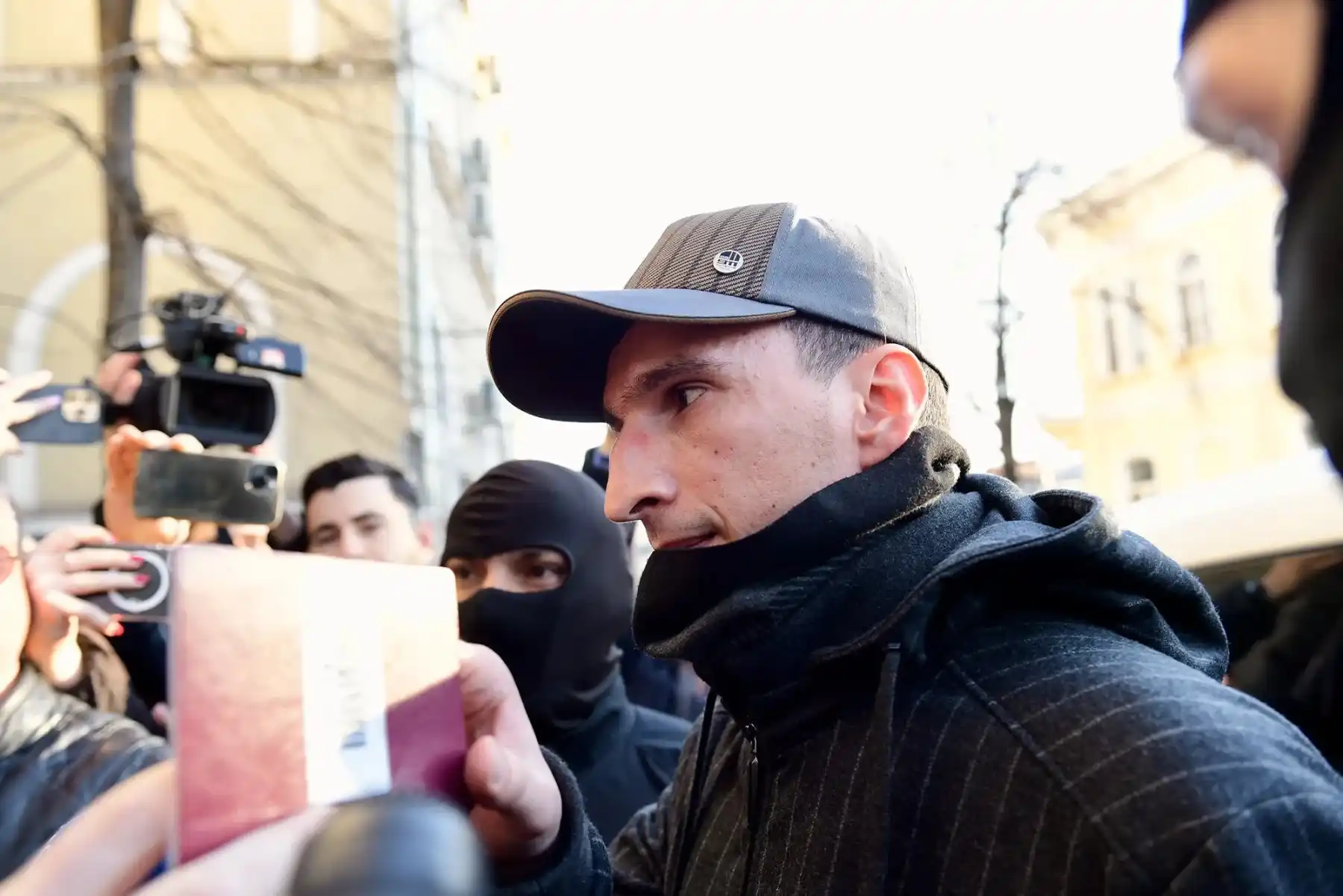
Bogdan Peșchir—known as Bogpr with 200,000 followers on TikTok—was escorted to the headquarters of the Bucharest Prosecutor's Office.
Photographer: Cristian Nistor / Romanian National News Agency
Costel Niculae, known by his TikTok username Costelusclejeanioficial10, was imprisoned for 22 years for murder at the age of 14. His TikTok account features prison stories, singing, and life reflections full of profanity.
Six days before the election, Niculae messaged Peschir, saying he hadn't heard from him in several days. "Aren't you planning to involve me in the campaign?" he wrote, "I can gather many people in my community, plus I have video evidence."
"I have not 'taken' anyone to do anything," Peschir replied, "I just tell people the things I believe are good for the country. I won't pay people to do things."
Niculae was confused: "I don't understand. Why are you leaving me hanging? Did I do something wrong?"
"I’m not leaving you hanging," Peschir answered, "just do what you think is right." After several exchanges, Peschir reiterated, "There is no payment plan whatsoever." He sent Niculae gifts worth a total of $4,207.37.
If Peschir's texts sound as if he has researched electoral laws, it is because he has: investigators found search records on his computer, including "election bribery" and Romanian electoral finance law 334/2006. In Romania, buying votes and candidates accepting undisclosed financial support are both illegal. Prosecutors believe that even without explicit documentation, the implied exchange is understood.
Peschir refused to discuss these texts, stating they might relate to the upcoming trial, making it inconvenient to talk. But he asserted that he genuinely likes Georgescu and hopes he wins, noting that he researched electoral law to avoid breaking the law. "The allegations are like a plot from an Orwellian novel—like a police state accusing you of 'thought crimes' when you have clear evidence against you," Peschir wrote in an email, "it’s utterly absurd."
Cross-border financial investigations may take years, and Romanian prosecutors are known for their secrecy. This might explain why the authorities and officials rarely make public statements, hinting occasionally that Peschir's explanations for his lavish spending on TikTok are unbelievable. (Telecommunications regulatory official Popescu stated, "Who would willingly spend $1 million supporting a person who appeared out of nowhere?") In documents, prosecutors claimed that Peschir deliberately avoided exhibiting a quid pro quo with Georgescu supporters, precisely proving he was engaged in such exchanges. They stated his TikTok gifting before the election season was part of a plan: he was recruiting people into his rapidly expanding network, creating, as court documents described, "a dependency to exploit during the campaign period."
Peschir contends that his seemingly politically unrelated tipping only shows that he has a wide range of interests on TikTok. His lawyer Cristian Sirbu remarked that the client not only tipped Georgescu's supporters but had also given gifts to those supporting his opponents. Sirbu pointed out that Peschir explicitly told others that he gave money not for political purposes.
"But the judge didn't listen at all," Sirbu said, recalling a judge from a hearing last March, "he said that even if (Peschir) tells others not to follow suit, there's a subconscious implication encouraging them to do so. That should go for psychiatric evaluation. I started questioning whether I should check myself into a mental hospital."
The government also stated that following Peschir's arrest, about $7 million identified in his cryptocurrency accounts "does not match the standard of living corresponding to his company's legitimate business activities." This is the closest the government has come to alleging that Peschir has unreported income, or that TikTok tips are not derived from legitimate funds.
However, the current charges against Peschir do not concern the sources of the funds. Until 2023, he worked nearly a decade at a Bitcoin ATM company called BitXatm. Thereafter, he claims to be a full-time cryptocurrency trader. "Most of my investments are made on public decentralized platforms, easily verifiable by anyone with blockchain knowledge," he stated.
Peschir's case is part of a larger investigation into Georgescu's backers. Since his disqualification post-first round victory, Georgescu has been under tight scrutiny. He is accused of glorifying the Legion Movement (which is prohibited under Romanian law) and conspiring to overthrow the government after the election results were annulled. In October 2025, Romania's Attorney General confirmed assistance from at least three foreign entities in investigating Georgescu’s campaign funding sources.
Romanian President Dan acknowledged last fall that securing a conviction against Peschir remains challenging. "We know how [social media influence operations] are implemented," he said, "we know that some evidence—whether concerning fake accounts or proxy companies for paid online ads—points towards Russia. What we don’t know is who designed the entire strategy. Similarly, we know very little about the flow of funds related to Bogdan Peschir."
Peschir has been under arrest for nearly a year. A police source informed Businessweek that the investigation remains ongoing. He has returned home, can travel freely, and has new laptops to replace those that were confiscated. He claims to be working to recover his finances through cryptocurrency trading. He describes himself as a workaholic and introverted, "living a very peaceful, quiet life," mostly staying in the office. "In my little free time, I go to church, spend time with pets, read, or take late-night drives to relax," he said, noting that tipping on TikTok is just another way to relieve pressure.
In December 2024, the Romanian government submitted TikTok to the European Commission to investigate whether it fulfilled sufficient obligations to prevent manipulation of the platform. The investigation's findings have yet to be disclosed.
TikTok acknowledged attempts at election manipulation but disagreed with Romanian authorities' description of the actions. In an email to Businessweek, a TikTok spokesperson stated that the company dismantled multiple manipulation networks targeting Romania between November and December 2024, which did not solely support Georgescu. "Given the wide range of candidates supported, claiming that Călin Georgescu was the sole beneficiary of inauthentic activities on TikTok is inaccurate and doesn't measure the relative gains different candidates received," the spokesperson said.
However, Dan pointed to a singular opponent. "We are facing Russia’s information assault on European countries," he stated in October, defining Russia's alleged interference in the Romanian elections as hybrid warfare.
This term refers to indirect hostilities between states that do not involve violent aggression but aim to subvert targets from within. Western governments often attribute this strategy to Russia, accusing it of interfering in elections, sabotaging infrastructure, and supporting coups. Russia, in turn, denies involvement each time.
For supporters of the government stance, the more unprovable the claims, the better it indicates the conspirators' success in covering their tracks. For skeptics, this rather indicates that the so-called conspiracy is merely a conspiracy theory.
The unprecedented decision to annul the election has left many Romanians dissatisfied. Elena Lasconi, the mainstream candidate who originally was expected to face Georgescu in the finale and placed second, stated that the annulment "shattered the core of democracy—the ballot." In January 2025, tens of thousands marched in Bucharest, with some carrying coffins labeled with the word "Democracy."
At times, Romania's decision to remove Georgescu from candidacy appeared counterproductive. Another sovereignist candidate, George Simion, announced his run. Like Georgescu, he is skeptical of the EU and its aid to Ukraine and claims Russia poses no threat to NATO. Georgescu openly supports him.
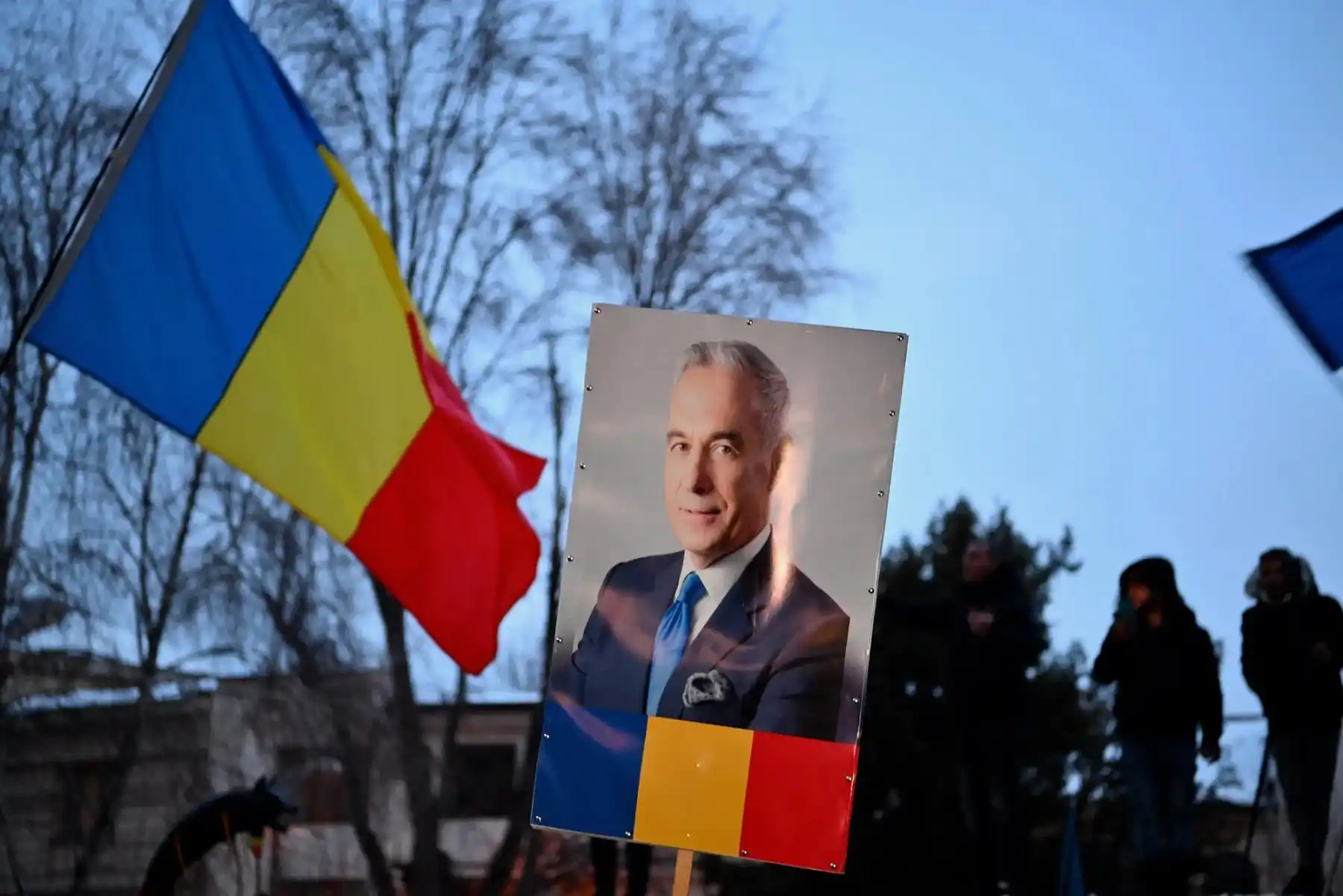
On the day this candidate was taken in for questioning, two months after his brief electoral victory, his supporters gathered together.
Photographer: Alex Nicodim / Anadolu Agency
In the first round of the re-election in May 2025, Simion received 41% of the votes, significantly exceeding the 23% Georgescu had garnered. His final opponent is mathematician and activist Dan, who has served as mayor of Bucharest since 2020. Numerous global media predict that Simion will win. On May 7, Reuters headlined: "Romania's Far-Right Leader Simion Ahead in Final Polls."
On TikTok, Simion has 1.3 million followers, while Dan has only 350,000. Simion posts videos of himself with workers and in churches; Dan shares content of himself enjoying urban life in Bucharest, dining, and sharing household duties with his partner. Simion speaks of restoring dignity and justice for Romanians; Dan unpacks mathematical problems and explains budget balancing. Simion aims to include Romanians in a grand historical movement; Dan discusses rule of law and liberalism.
TikTok, still under EU investigation, showed a conspicuously more proactive response to suspicious activity on the platform during the final election period. Mircea Toma, secretary of state for Romania's audiovisual council (which regulates broadcasting), stated that TikTok doubled its Romanian-speaking reviewers and collaborated more closely with regulatory bodies. "As soon as we flagged content, we could delete it within minutes," Toma remarked, "previously we could never find anyone."
On the voting day of May 18, Romanians again delivered a surprise. Dan defeated Simion with a 53.6% to 46.4% margin. Following the announcement of results at 9 PM that evening, large crowds gathered outside Dan's campaign headquarters near Cișmigiu Park in Bucharest. Voter turnout reached a record 65%, compared to just 53% in the annulled first round. Crowds chanted "Europe, Europe" and "Down with fascism," with many waving EU flags.
The candidate favored by Russia lost, but the political currents reminiscent of Georgescu clearly remained. "Our society is more polarized than ever," stated Romanian journalist Victor Ilie, "because we annulled the election and had a re-election, all the people who voted for Simion and Georgescu do not consider Nicușor Dan to be a legitimate president. On the flip side, those who voted for Dan are overjoyed that the far right did not win, almost idolizing him in an extreme manner. These two groups no longer communicate."
Unquestionably, the person who firmly believes that Georgescu was the true victim of election interference is Bogdan Peschir. "The Romanian election had to be annulled because the 'wrong' person won—a person who is wrong for the political establishment," he said.
When asked why he believed Georgescu could become popular, Peschir stated it was purely because of his charisma. "I think it is simply because people identify with his ideas," he said, "Romanian society deep down craves change, and they see him as an outsider. He is exceptionally skilled at addressing the significant issues that truly pain Romania."
In a certain sense, this is obvious. The viral promotion driven by fake accounts gave Georgescu a significant head start, allowing him to reach ordinary people's phones ahead of time. And once he reached the audience, many were indeed convinced. The false campaign ultimately transformed into genuine public opinion.
免责声明:本文章仅代表作者个人观点,不代表本平台的立场和观点。本文章仅供信息分享,不构成对任何人的任何投资建议。用户与作者之间的任何争议,与本平台无关。如网页中刊载的文章或图片涉及侵权,请提供相关的权利证明和身份证明发送邮件到support@aicoin.com,本平台相关工作人员将会进行核查。


