┈┈➤Starting with Oracles
╰┈✦Two Advantages of Oracles
In Web3, with multiple chains and an increasing number of DeFi projects, oracles, which are essential for DeFi, are becoming increasingly scarce.
On the other hand, oracle projects provide data services for applications like DeFi protocols, thus having a sustainable revenue model.
Therefore, oracles represent a valuable sector.
╰┈✦The Dilemma of Oracles
However, oracles that provide data services for on-chain applications, especially DeFi applications, have two very important aspects: speed and security/reliability.
If the speed is slow, the price of cryptocurrencies may fluctuate significantly, which can affect the interests of DeFi users. If there are risks to security and reliability, manipulation or interference with the oracle can lead to attacks on DeFi protocols.
However, these two key elements of oracles are somewhat contradictory.
Chainlink and Pyth are both multi-node distributed oracle networks, where multiple nodes gather data and then aggregate it. The advantage is that it prevents single-point risks, making the data relatively safe and reliable. However, the downside is that it is slow.
To address the need for speed, Pyth launched Lazer, which improves speed but raises questions about the security and stability of single-node data services.
┈┈➤Switchboard's Surge+TEE Technical Architecture
In response to the dilemma faced by oracles, Switchboard has made technical breakthroughs.
╰┈✦Surge Streaming Push Technology Increases Speed
▌The Evolution of Oracle Data Transmission
◆First Generation Oracles
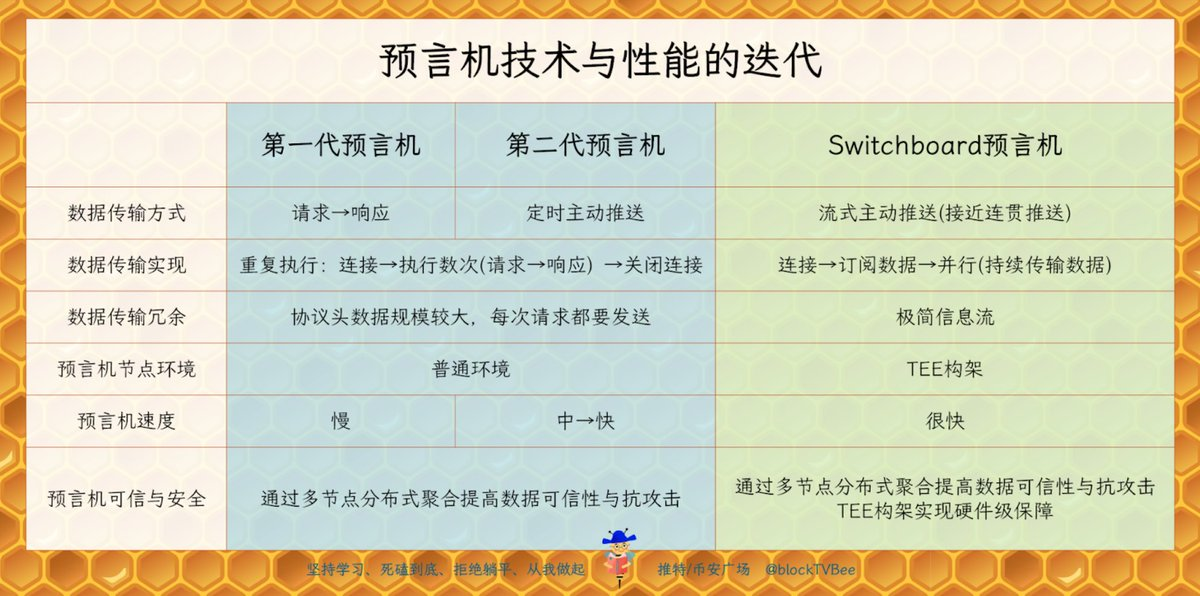
Request-response model. When DeFi applications have off-chain data needs, they send a request to the oracle, which then pulls the data, aggregates it off-chain, and returns the result on-chain, or aggregates the data on-chain. Whether aggregating on-chain or off-chain, this process creates significant delays, failing to meet the needs of DeFi applications.
◆Second Generation Oracles
Active data push model. Oracles actively push data to the chain, allowing DeFi applications to access data more efficiently when needed. However, these types of oracles often push data at set intervals; for example, Chainlink typically pushes data every 30 seconds to a few minutes. Pyth may push data every 10 to 60 seconds. Currently, the vast majority of oracles adopt this model, which can meet the basic needs of DeFi applications.
Although Switchboard still uses an active data push model, it employs Surge streaming data push.
▌What Are the Advantages of Surge Streaming Data Push?
Switchboard's Surge streaming push technology can push data more quickly, theoretically achieving sub-second data transmission, thus allowing for a more coherent dissemination of the data needed by DeFi and other applications.
This relatively coherent active data push can almost meet the real-time demands of DeFi applications for cryptocurrency prices.
▌How Is Surge Streaming Data Push Achieved?
So, is Switchboard's Surge streaming push technology just hype? Why is it so fast? How is it achieved?
Most oracles push data using the HTTP protocol. In contrast, Switchboard's Surge streaming push technology uses the WebSocket protocol for data transmission.
Differences Between WebSocket and HTTP:
First, the data communication modes are different.
HTTP is a unidirectional transmission, following a request-response model. The client must first make a request, and then the server responds. Other oracles using HTTP must send a request and then wait for a data response.
In contrast, the WebSocket protocol used by Switchboard allows for bidirectional transmission, enabling real-time communication between the server and client. After connecting, the Switchboard oracle subscribes and can directly receive and push data without repeatedly executing the request-response process.
Second, the frequency of data communication differs.
HTTP involves a single connection with limited communication, where the number of communications and duration are restricted. Other oracles using HTTP must establish a connection, execute a limited number of requests, wait for data responses, and then close the connection before reconnecting.
In contrast, the WebSocket protocol used by Switchboard allows for a single connection with continuous communication. After connecting, the Switchboard oracle can continuously receive and push data.
Third, the scale of data communication differs.
HTTP communication has relatively lengthy protocol headers, requiring larger data transmission for other oracles using HTTP.
In contrast, the WebSocket protocol used by Switchboard has a highly streamlined information flow in post-connection communications. Thus, the propagation efficiency of the Switchboard oracle is naturally higher.
This explains the technical principles behind Switchboard's implementation of Surge streaming data push, clarifying why Switchboard can achieve sub-second data transmission and better address the speed issues of oracle data pushing.
It is important to note that oracles face two sets of communication relationships: one is the data transmission between oracle nodes and data sources, and the other is the communication between oracle nodes and aggregation services (on-chain or off-chain), or directly with on-chain applications. Therefore, the advantages of WebSocket over HTTP in the Switchboard oracle system have a double effect.
╰┈✦Surge's TEE Architecture Enhances Trustworthiness and Attack Resistance
In response to the security and reliability demands of oracles, Switchboard has adopted TEE construction.
TEE creates a secure area on computer hardware, ensuring that the oracle's execution process cannot be seen or tampered with by third parties, including the operating system and administrators.
Thus, Switchboard is essentially a customizable oracle, allowing DeFi programs to selectively subscribe to oracles based on their needs. Even if a DeFi application subscribes to only a single oracle node, its security and reliability are still higher than those of other oracles, thanks to the protections provided by the TEE environment.
Therefore, Switchboard oracles possess stronger trustworthiness and attack resistance.
The above outlines the core technical advantages of Switchboard, but this is just the foundation and the beginning; data can better showcase Switchboard's execution capabilities and market influence.
┈┈➤The Persuasiveness of Switchboard Data
╰┈✦Performance Data
The website thepriceisright monitors the real-time performance of Switchboard, Pyth, Chainlink, and Redstone.
After continuous observation, Switchboard has the highest performance.
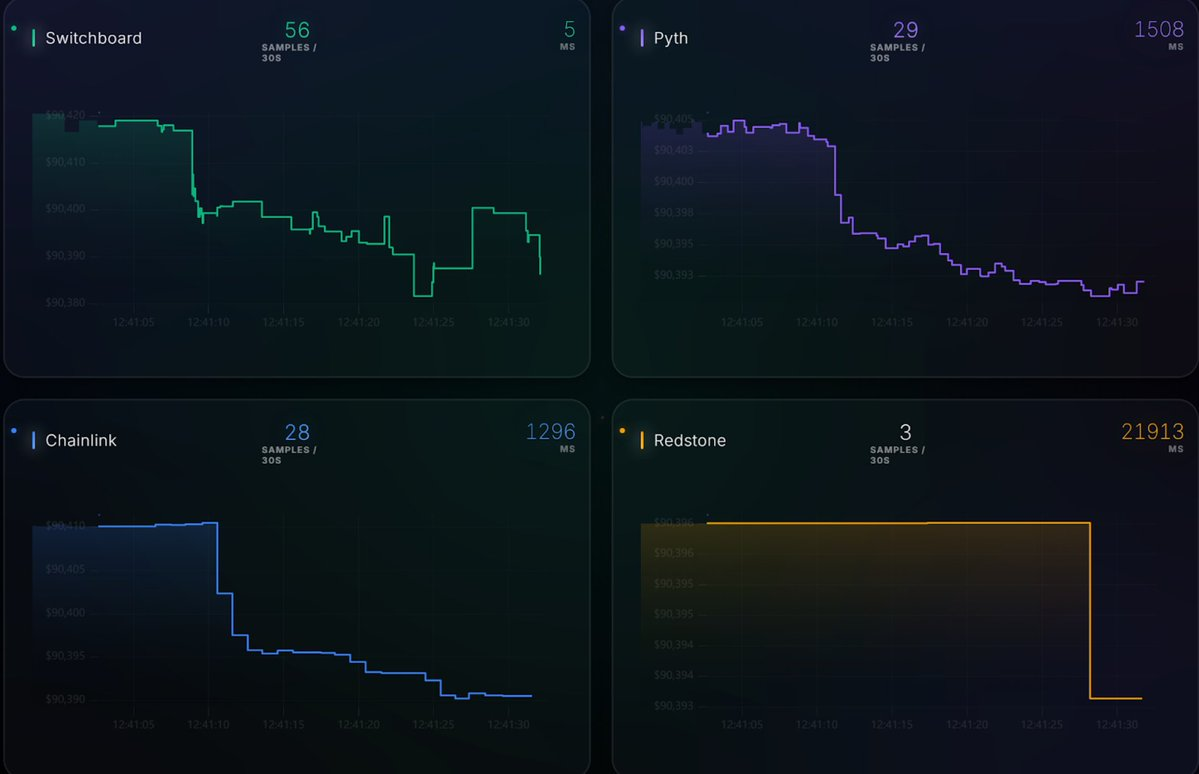
First, SAMPLES / 30S indicates the number of samples every 30 seconds, which is the amount of data processed by the oracle every 30 seconds. In the screenshot, Switchboard processes 56 data samples every 30 seconds, while Pyth processes 29 and Chainlink processes 28.
Second, latency. In the screenshot, Switchboard has a latency of 5 milliseconds, while Pyth has 1508 milliseconds and Chainlink has 1296 milliseconds.
This confirms the previously analyzed advantage of Switchboard's Surge streaming data push being faster.
╰┈✦Market Data
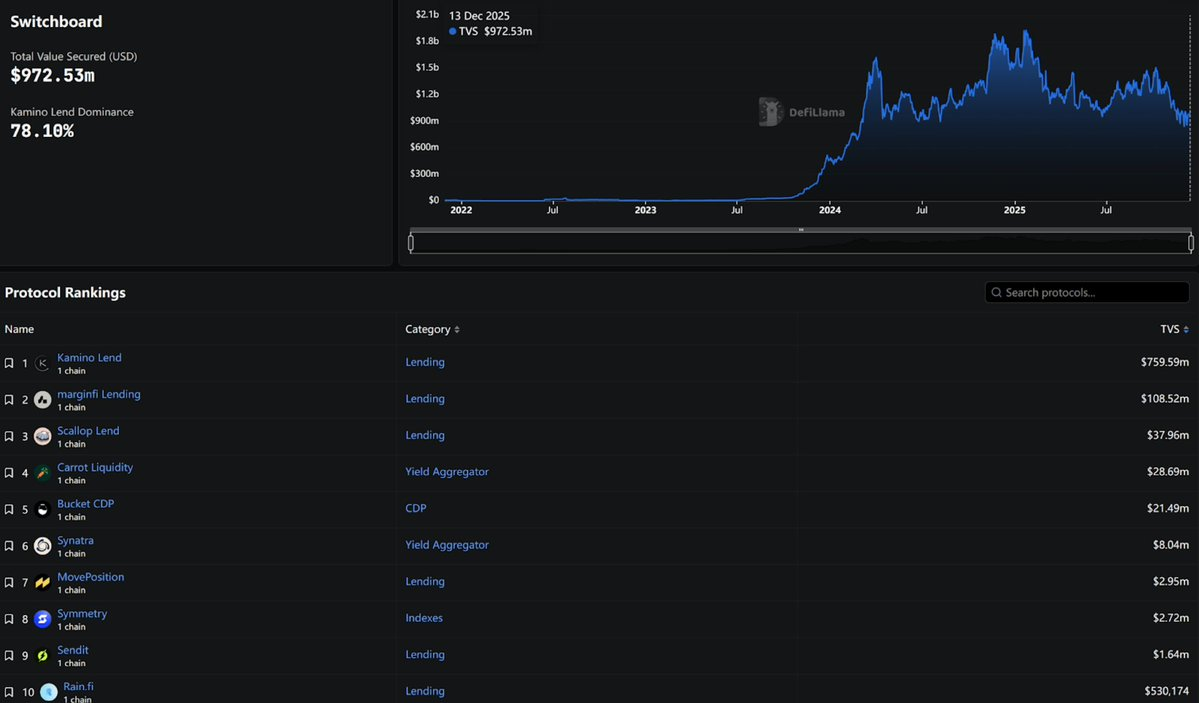
Switchboard's TVS (Total Value Secured) is $969 million, nearly $1 billion, across 21 DeFi protocols, primarily on the Solana chain, including Kamino, marginfi, Scallop, and others.
Among these, Kamino has the highest share, accounting for 78% of Switchboard's TVS. Kamino is the second-largest protocol by TVL in the Solana ecosystem and the largest lending platform. Its TVL is real and reliable.
Switchboard's influence in the Solana market is evident.
Moreover, the ecosystem supported by Switchboard is not limited to Solana. According to Switchboard's GitHub, they also provide compatibility for the Bitcoin ecosystem (CoreDAO), Arbitrum, Optimism, Aptos, SUI ecosystems, and are launching support for the Starknet ecosystem.
┈┈➤In Conclusion
Switchboard's Surge streaming push technology enhances the speed of data acquisition and pushing for Switchboard oracles. Meanwhile, the TEE technical architecture strengthens the reliability and attack resistance of Switchboard oracles.
However, Switchboard does not stop at technical narratives; it truly utilizes these technologies to take action, showcasing the advantages provided by technology to the market for observation and experience.
Real-time monitoring data from the website thepriceisright confirms the speed advantage of Switchboard oracles.
The scale of on-chain TVS reflects the market's trust and favorability towards Switchboard oracles.
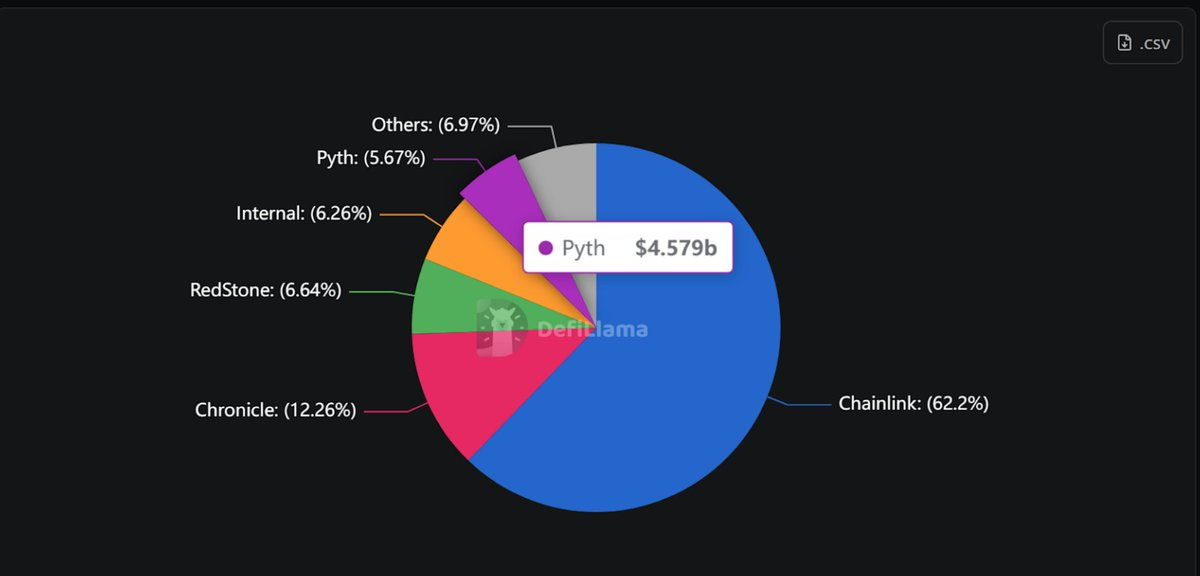
The question arises: Switchboard faces an $80 billion oracle market:
◆In terms of technology, it is solid and innovative.
◆In terms of practicality, it is faster, with stronger trustworthiness and attack resistance.
◆In terms of ecosystem, it is compatible with EVM, Solana, Move language, and ZK ecosystems.
How much growth potential do you think Switchboard, with a current market share of only 1.2%, still has?
免责声明:本文章仅代表作者个人观点,不代表本平台的立场和观点。本文章仅供信息分享,不构成对任何人的任何投资建议。用户与作者之间的任何争议,与本平台无关。如网页中刊载的文章或图片涉及侵权,请提供相关的权利证明和身份证明发送邮件到support@aicoin.com,本平台相关工作人员将会进行核查。