By: David Yaffe-Bellany, Sharon LaFraniere, The New York Times
Translated by: Chopper, Foresight News
In early March this year, Donald Trump Jr. spoke to a group of Republican state attorneys general at the Ritz-Carlton in New Orleans, where they were attending a three-day closed-door meeting.
As the president's eldest son, Donald Trump Jr. has repeatedly promised to separate the family's business interests from government work. However, during this closed-door event, he became involved in an intense legal battle over who should regulate predictive markets—states or federal agencies. This is a burgeoning industry in which the Trump family has a vested interest.
According to four people familiar with his remarks, Donald Trump Jr. hinted during a Q&A session with the Montana attorney general that state leaders are being misled by "vested interests" who want to attack predictive markets to preserve their "monopolies." He stated that these markets are, in fact, heavily regulated and referred to them as complex financial instruments overseen by federal officials rather than state attorneys general.
Insiders have said that Donald Trump Jr.'s tone was friendly. However, his previously unreported comments aligned closely with the message his father's administration has conveyed to state leaders: do not interfere.
Across lawsuits nationwide, red and blue states have joined forces to combat predictive markets like Kalshi and Polymarket. A court battle is set to erupt, the outcome of which will determine whether Americans can use these platforms to bet on sports, politics, and nearly all other events.
In total, 20 states are embroiled in lawsuits over whether predictive markets fall under state sports betting laws. Last month, 44 states sent a joint letter condemning these platforms as a "new type of casino" that is preying on young people.
State leaders believe that these markets are evading regulations and not paying state taxes. According to the nonpartisan research organization Tax Foundation, the estimated lost tax revenue amounts to at least $2 billion annually.
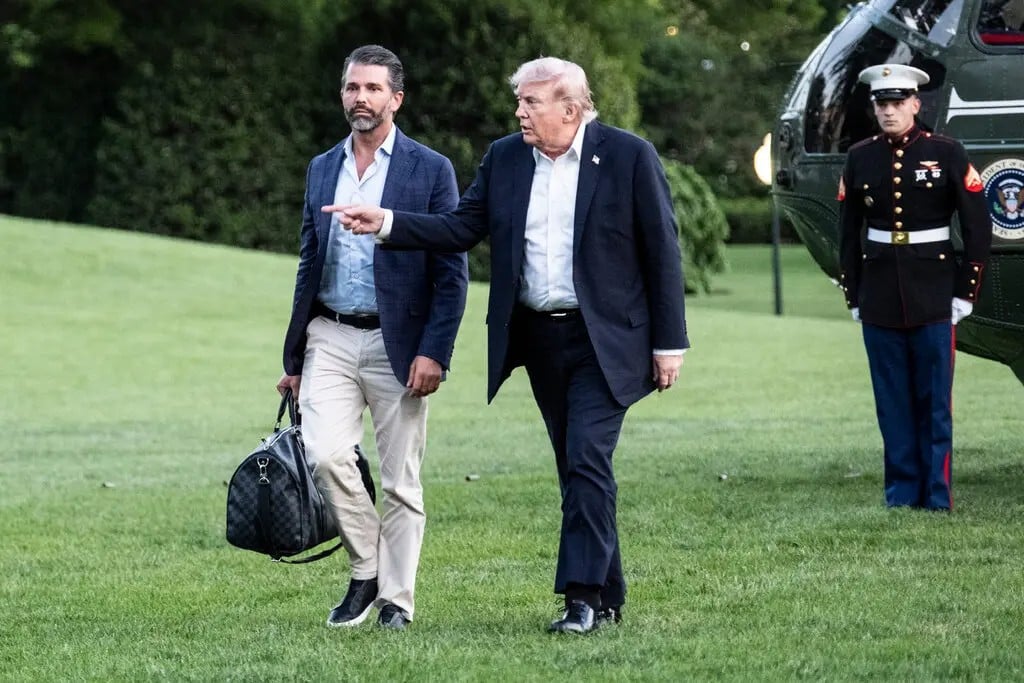
This litigation has prompted an unusual political game that has pitted the federal government against the states. President Trump has declared his desire for predictive markets to "thrive" under his leadership, free from state regulation. His administration has joined forces with Kalshi in court, asserting that the only regulatory agency for the industry is the Commodity Futures Trading Commission (CFTC)—a small agency responsible for overseeing commodity markets like oil and agricultural products.
The CFTC has stated that in the half-century since its establishment in 1974, it has never sued a state over regulatory issues. However, this year it has sued nine states, all led by Democratic governors. The agency has also instructed predictive markets twice to ignore court orders, utilizing emergency powers not used for decades.
This radical intervention aligns the agency with the financial interests of the Trump family. In January of last year, Kalshi hired Donald Trump Jr. as an advisor; his compensation included Kalshi stock worth over $300,000, which has multiplied in value. Last year, the president's son also became an advisor to Polymarket and holds shares in the company through his investment firm, 1789 Capital.
A spokesman for Donald Trump Jr. said that he "does not engage with the federal government on behalf of any company he invests in or advises." A spokeswoman for Kalshi stated that Donald Trump Jr. provides the company with marketing advice.
This legal battle has also attracted a powerful coalition of traditional sportsbooks that view predictive markets as a competitive threat and are pressuring states to take action. An industry organization representing casino operators is working with former New Jersey Governor Chris Christie, who has publicly criticized predictive markets.
"The stakes are enormous," said Rob Schwartz, who served as CFTC's chief legal advisor until last year and has tracked the litigation wave for 17 months. "This will definitely reach the Supreme Court. It's just a matter of time."
The crux of the lawsuit revolves around the debate over what constitutes gambling.

During the World Cup in July, Kalshi aired an advertisement in Times Square.
For years, Kalshi and other predictive markets have registered with the CFTC, categorizing bets on their platforms as "event contracts"—financial instruments deriving value from the outcomes of real-world events. These contracts are typically based on yes or no scenarios, such as whether it will rain on a certain day. These companies argue that since these tools are regulated at the federal level, predictive markets should be able to operate freely nationwide.
As the largest predictive market in the United States, Kalshi faces the most legal pressure; most bets on Polymarket occur outside the US, although it now also has a small US application.
Kalshi stated in a statement that it offers safeguards for its customers, and its business model gives people a genuine opportunity to win money. The company claims to have "a national regulatory framework rather than a patchwork system of state regulation," adding that "states trying to shut down a federally licensed exchange is too radical."
But state officials argue that Kalshi's position is untenable. Attorneys general believe the products provided by the company are virtually indistinguishable from sports betting but lack the protections required by the states. With few exceptions, almost all states prohibit residents under 21 from engaging in sports betting, but Kalshi's application is open to anyone aged 18 and older.
"You can log onto a website and bet on the outcome of a sports event," said Washington State Attorney General Nick Brown, who recently won an early court victory against Kalshi. "This is the same as gambling."
"A Nod is as Good as a Wink"

Tarek Mansour, co-founder of Kalshi, believes that the services his company provides are fundamentally different from traditional gambling.
On the morning of this year's Super Bowl, Utah Attorney General Derek Brown saw a Kalshi advertisement sent to his college-going son. The ad invited him to "legally trade on football results."
Brown was taken aback. In his view, Kalshi was evading Utah's regulations with clever wording, as the state's constitution prohibits gambling. "This is a nod and a wink," he said.
In the following two weeks, Brown and the governor of Utah (both Republicans) publicly criticized predictive markets, labeling them "almost dystopian." Brown received a text from a Kalshi lobbyist requesting a conversation. He did not respond.
At the end of February, Kalshi filed a lawsuit in federal court against Utah, claiming the state "intends to prohibit Kalshi's operations." This is one front in a nationwide legal battle involving Kalshi and several of its top competitors, including Polymarket and trading site Crypto.com.
Following the US Supreme Court's overturning of the sports betting ban in 2018, most states legalized the industry and imposed taxes. According to the Tax Foundation, licensed operations generated over $3 billion in tax revenue in the last fiscal year.
Predictive markets have taken a different route. In 2024, Kalshi won a court ruling allowing it to offer electoral betting, paving the way for these markets to operate under CFTC licensing. This year, Kalshi and Polymarket became cultural phenomena, attracting billions of dollars in bets each month. New competitors entered the fray, bringing the number of registered predictive markets to 13.
Public attention to these markets has largely focused on their novel products, such as bets on celebrities using drugs or missile strikes on Israel. However, according to data provider The Block, about 75% of activity on Kalshi this year has stemmed from sports. Kalshi has partnered with The Athletic, a sports media site owned by The New York Times Company.
Kalshi's CEO Tarek Mansour argues that the products offered by his company are fundamentally different from traditional gambling. Kalshi does not act as a "bookmaker" to bet against each wager. Instead, it matches buyers and sellers and generates income by charging fees.
However, some of Kalshi's own marketing campaigns undermine this position. A social media ad cited in state lawsuits encouraged customers to "bet on the NFL." Kalshi has stated it no longer uses that advertisement.
Unsurprisingly, the rise of Kalshi and Polymarket has infuriated sportsbooks that pay state taxes and hold state licenses. Some companies, like DraftKings and FanDuel, quickly established their own predictive markets. Others have pushed back, led by the American Gaming Association, which represents casino operators and other gambling companies.
Kalshi is a "backdoor sports gambling operation" that is flouting state laws, said association spokesperson Rob Lockwood in a statement.
Emails obtained by The New York Times show that last December, association executive Tres York dined with Kentucky Attorney General Russell Coleman at Joe's Seafood restaurant in Washington. Afterward, York pitched the necessity of pushing back against predictive markets to Coleman's office, noting that a coalition of states was preparing a legal brief.
"I would be happy to connect you with the Nevada Deputy Attorney General, who is leading the recruitment of personnel to defend states' rights," York wrote in an email to an aide of Coleman.
Kentucky did not sign that brief, but Coleman eventually sued Kalshi and Polymarket in state court. "These billions of dollar companies and their compliance do not hold up under scrutiny," he said in a statement.
Federal Agencies Get Involved
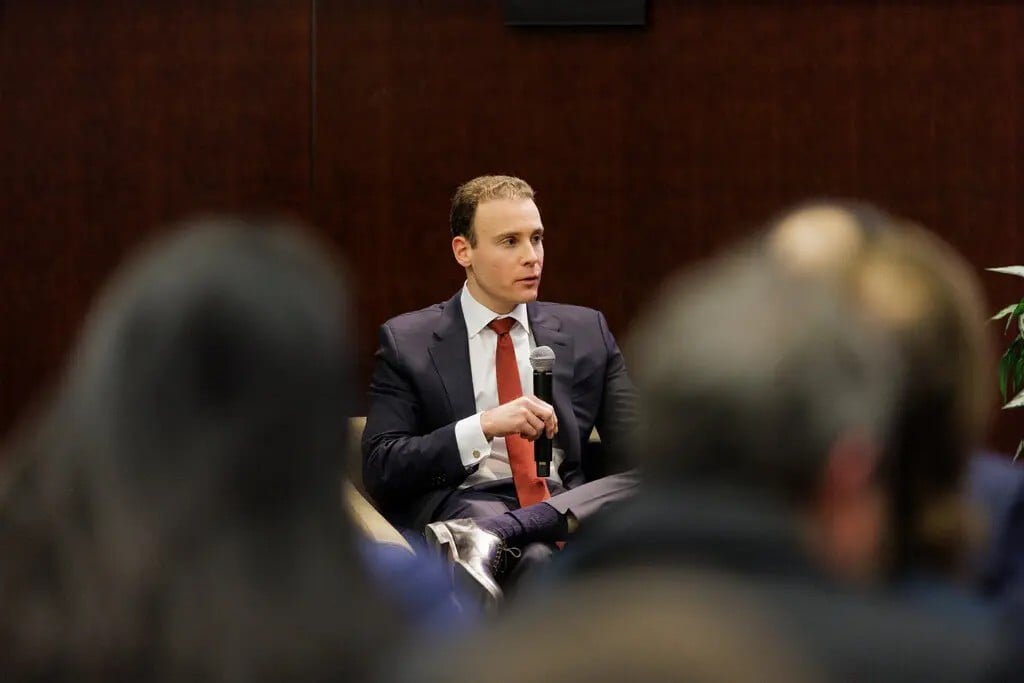
Michael S. Selig, chairman of the Commodity Futures Trading Commission, has sued nine states opposed to predictive markets.
Soon, another plaintiff joined the fray.
In December 2025, Michael S. Selig, chairman of the CFTC nominated by President Trump, was sworn in. Selig, 36, is a tech enthusiast who has worked as a corporate lawyer with predictive markets and cryptocurrency companies.
After taking charge of the CFTC, Selig filed lawsuits against Kentucky, Illinois, and seven other states opposing predictive markets. "This is a matter of life and death for the agency," he said in an interview. "If states are trying to undermine our regulations, that's a problem for us."
Indeed, the agency has regarded this issue as an emergency in some states, believing it necessary to invoke its extraordinary powers.
Selig's response to a little-known state court ruling in Michigan highlighted the current government's determination to safeguard the predictive industry. In July of this year, a state judge ordered that Kalshi ban bets from Michigan residents because the company had not obtained the proper license.
The agency invoked rarely used emergency powers, directing Kalshi to ignore the court order, even though the company began canceling bets. The CFTC stated in court documents that the Michigan order "could undermine public confidence in predictive markets."
The last time the agency used this power was in 1980 when President Carter banned grain sales to the Soviet Union. The agency halted grain futures trading to quell panic in the commodity markets.
"This is truly unprecedented, and frankly outrageous," said Aitan Goelman, a former head of enforcement at the CFTC during the Obama administration. "How can not being able to bet online on sports be an emergency for the market?"
This month, after a federal judge refused to prevent New York from shutting down Kalshi's local operations, the agency initiated a second emergency intervention. The CFTC instructed Kalshi to continue operations. Within days, the company cited this measure in a case in Connecticut.
The federal judge overseeing the lawsuit was unmoved. "The CFTC does not have the authority to issue orders that conflict with this court's ruling," he wrote.
When asked why the agency attempted to circumvent the judge, CFTC spokesperson Zach Fulton stated that it needed to "maintain the status quo while the court is still adjudicating these issues."
Like the growing coalition of blue states, Republican-led states such as Ohio, Nevada, Montana, and Tennessee have also filed lawsuits or issued cease-and-desist orders to force predictive markets to comply. However, despite the CFTC suing nine states led by Democratic governors, it has taken its strongest legal actions against Republican-led states only by filing amicus briefs. Judges are not obliged to read these arguments.
Fulton stated that politics did not play a role in the legal strategy, asserting that the agency sued those states that were most aggressive.
The "CFTC didn't choose these states, they chose themselves," he said.
Kalshi Strikes Back

North Carolina Representative Pricey Harrison introduced a bill aimed at restricting predictive markets in North Carolina.
Last month, Democratic Representative Pricey Harrison from North Carolina carefully reviewed a printed copy of the state's latest budget draft. On page 626, she noticed a concerning provision.
Harrison recently introduced a bill to restrict predictive markets. But the content included in the budget seemed to her like a "windfall" for the industry. The document stated that predictive markets registered with the CFTC "can operate legally in the state by virtue of their registration with the commission." These markets would pay a 6% tax on revenue, lower than the 23% tax rate imposed on sports books.
"I'm not the most observant person," Harrison said, "but I thought at the time, 'Oh, this sounds off.'"
This provision would allow predictive markets to operate in North Carolina without facing the threat of state litigation. According to two people familiar with the related conversations, a Kalshi lobbyist—former North Carolina Representative Jim Harrell—helped draft this wording during discussions with the state's House Republican leadership. Feedback from the company ensured that the tax rate would be lower than the level originally considered by lawmakers.
Lawmakers also received input from the White House, another sign of government intervention in state-level disputes. A spokesperson for House Speaker Destin Hall stated that the Office of Intergovernmental Affairs shared information about the "federal government's stance on state regulation of predictive markets." The budget was signed into law on July 7.
A White House spokesperson stated that President Trump believes it is "crucial" for the CFTC to maintain exclusive authority over these markets.
Hall's spokesperson denied that the tax provision was a form of charity, pointing out that predictive markets had not been required to pay taxes before. Kalshi stated that the arrangement in North Carolina is fair to the industry, claiming that the state will also tax those profits since many people are winning in predictive markets.
So far, the outcomes of the lawsuits have been mixed. All nine of the CFTC's lawsuits are pending in federal court. Judges in places like Nevada and Washington have ruled against Kalshi, ordering it to cease operations. While the company secured an early victory in the federal appeals court in New Jersey, other appellate courts are still considering the cases.
However, policy victories achieved in places like North Carolina remain instructive. Two weeks after the budget signing, a lawyer for Kalshi referenced this agreement in the documents for one of the appeals, describing it as a possible compromise that could apply to other jurisdictions.
The company is striving for more rights. According to an informed source, as of this month, Kalshi has sent lobbyists to all 50 states.
免责声明:本文章仅代表作者个人观点,不代表本平台的立场和观点。本文章仅供信息分享,不构成对任何人的任何投资建议。用户与作者之间的任何争议,与本平台无关。如网页中刊载的文章或图片涉及侵权,请提供相关的权利证明和身份证明发送邮件到support@aicoin.com,本平台相关工作人员将会进行核查。


