Original text source: "Meanders" podcast
Original text translation: BlockBeats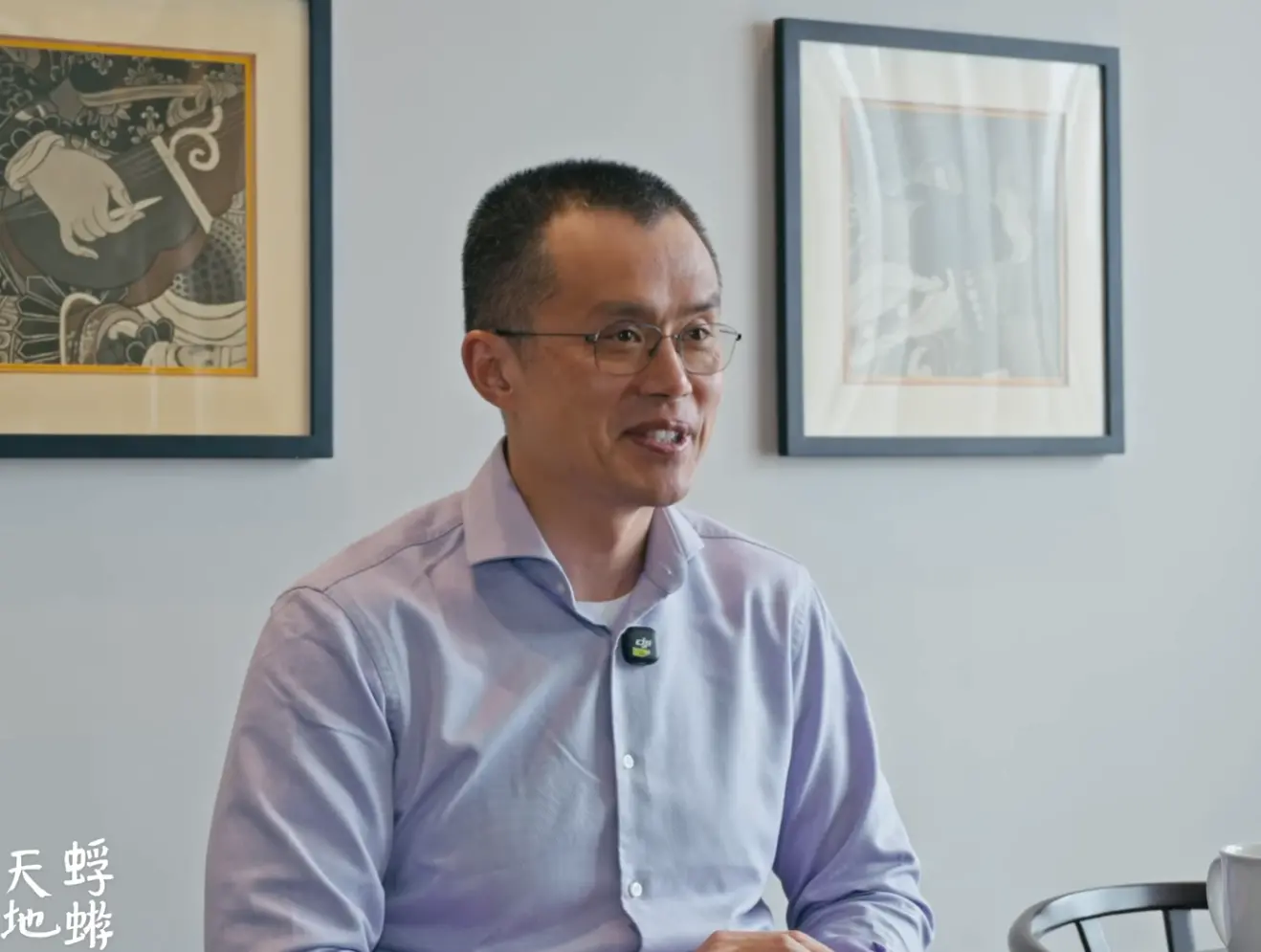
TL;DR:
Casual chat in Bhutan, CZ says he no longer considers himself the busiest, but responds to messages as soon as he sees them; regardless of progress, only keep those who can push themselves forward, and only focus on three to five things he wants to do.
If he were to redo the global trading platform: from day one, avoid U.S. users; contracts and financial products would come earlier and more comprehensively while blocking certain regions. What's written in "The Binance Life" about that time's feelings can't be clearly expressed.
The two most stressful periods: the ICO launch crash and the over ten months stuck in the U.S.—what's truly stressful is uncertainty. To handle pressure, separate tasks, unsettle financial goals, and believe in simulation theory: do your best and leave the rest to fate. Founders often underestimate difficulties and need to be adaptable and passionate; diligence for peace of mind can be skipped.
He still believes Bitcoin has value, but payment and on-chain rights haven't reached early expectations; RWA and stablecoins are things he understood later. He continues working because helping others brings him joy—Gogo Academy has grown from a few hundred thousand children to about 1.2 million this year.
CZ appears on the "Meanders" podcast, discussing pressure, adaptability, and lifelong motivation. The full conversation between host Han Yang and CZ is as follows:
Busy or not, how to respond to messages, how to manage tasks
Han Yang: I have a small question, are you tired right now?
CZ: I'm okay, a little bit, but overall fine.
Han Yang: Do you think you are one of the busiest people in the world?
CZ: No, I definitely am not. I think a few years ago I could have been considered one of the busiest, but these past two years I shouldn't be that busy.
Han Yang: It's been three years since I met you. No matter what time I message you, you always reply, which makes me feel like you don't have a time zone.
CZ: I reply when I see the messages. If I don't reply when I see it, I’ll forget later. After meetings, I might take a few minutes to check and respond to messages. I do this in the morning when I wake up and before I go to bed at night. If I chat with friends for a bit, I'll look at messages too. But if I'm doing something serious, I won't check. If your message comes in and it’s quicker to reply, I’ll reply first, otherwise I’ll forget.
Han Yang: Do you think you can reply to 500 messages in a day?
CZ: Yes, definitely more than that. Sometimes right after I reply to one message, I need to find a message I replied to earlier, and then I have to scroll a long way down. I can reply to many messages within a few minutes.
Han Yang: I can imagine you have to handle a lot of things simultaneously. How do you ensure your mind keeps track of each matter? Like, where is this task at, and where is that task?
CZ: I still have a lot of random tasks, and there are many loose ends as CEO, so I’m not great at tracking. When someone comes to me, I tell them what to do and then I won’t proactively follow up the next day or week. I generally don’t. So I need to work with very proactive people who need to push you forward. If we need to have another meeting tomorrow or the day after, they need to schedule it, not me going to find them tomorrow. If anyone works with me, I’ll have to ask them about the progress of the project—those are generally not people I keep. Normally in such cases, there's a problem with the project. I hope that person has an update to share tomorrow or next week. If they message me, I’ll remember. I need very self-motivated, proactive people around me. Everyone around me is relatively proactive. It’s also very important to me: you can remember three to five key things, but those three to five things are what I’m supposed to do, and the rest is their responsibility to report to me proactively.
If I were to redo a global trading platform with today's experience
Han Yang: Speaking of three to five things, my second question is related. I previously wrote about Binance and looked up a lot of your public statements. I was struck by your emphasis around 2017-2018 that you wanted Binance to become a faster, more user-friendly, and safer company. But looking at your statements from 2025, especially this year, you emphasize that you may have underestimated laws, compliance, and politics back then. If you could go back to 2017 with all of today’s experience and recreate a global crypto trading platform, what would be the constitutional rules, or non-negotiable guidelines you’d set for yourself?
CZ: Looking back there is hindsight; it’s clearer now. I think the first rule would be: do not touch U.S. users. From day one, do not touch U.S. users. Their definition of centralized financial platforms is: if you touch U.S. users, you need to be regulated by the U.S. and must obtain licenses in the U.S. They don’t implement this 100% all the time, but they have the right and ability to do so. Also, looking back, in some areas, we didn’t act quickly enough. Yesterday someone asked me online if these two points weren't conflicting: are you more cautious or faster? If looking back today with today's experience, there are things I wouldn’t hesitate about and other things I wouldn’t do.
Han Yang: Can you give an example? What is something you wouldn't hesitate on if you had to do it again?
CZ: Many small product features. I might release contracts a bit earlier. Even certain financial products might come earlier and be more comprehensive, but we would need to block certain regions entirely. Also, we might communicate more thoroughly with regulators. This first part I’m not great at. Second, we’re not in one country; we have to communicate with over a hundred countries, which is hard to manage. So we might have worked harder in this area.
Han Yang: From a third-party perspective, Binance is one of the platforms with the most communication with regulators.
CZ: Binance has definitely communicated the most, if not the only one.
Han Yang: But you still feel it’s not enough?
CZ: The coverage is still a bit lacking. Additionally, if you want to really do this, the cost is very high. It’s not just a money issue; you need to hire good people, spend a lot of time, and invest a lot of time managing it. When a large number of people are just doing this, the company's CEO might end up spending a lot of time overseeing this. Those are all costs. By doing this, the product may suffer as a result. Binance operates globally and hence requires communication with a lot of countries. Most companies only need to deal with one regulatory body. The expectation from them is that most traditional companies spend 30% of their time on them, and they expect you to spend 30% of your time on them too. But if you have to spend 30% of your time dealing with over a hundred such cases, it becomes quite difficult. So it’s not just about adding more people. You can't have everyone acting individually; they still need to report up, and many decisions need to be made, so higher management will spend significant time on this. There may be better ways to manage this.
Things hard to express while writing "The Binance Life"
Han Yang: I had a big impression when I read your "The Binance Life." Sometimes, writing about past events can trap you in a feeling of uncertainty about how to proceed. Some things are too complex to know how to convey to others. Is there anything you consider particularly important in hindsight that people today might underestimate, but you, as an author, found it hard to share with readers?
CZ: I definitely have that feeling. Sometimes the feelings of that time cannot be conveyed well. For instance, in 2019 when there was a theft, we couldn't withdraw coins for an entire week, but trading continued, and the entire system was being upgraded. I hardly slept that week, catching a few naps here and there while the engineers barely slept for seven days or five days. That pressure from back then is not expressed clearly enough in the book. There were also a few law enforcement agencies from certain countries that acted very irrationally, even illegally. They used public funds to trade, lost money, and expected us to compensate them. The communication pressure in these situations was significant. Some of this is described in the book, and some isn’t due to various reasons and can't be included in the book yet. Writing a book always involves leaving a lot out. What’s included sometimes can’t be described as comprehensively as I’d like. But that’s how it is.
Han Yang: Your response is very interesting to me. I understand that you might refer to a specific matter that is underestimated, but I gather you feel somewhat regretful because the feelings of that moment are hard to express through written words.
CZ: Yes. I think my ability to express myself isn't that strong, my writing isn't particularly strong either, so many inner pressures or thoughts I had at that time aren't clearly expressed in the book overall. I wrote the book in a relatively simple style because my proficiency in Chinese and English is limited, so I described what happened in very simple language. I'm also not particularly keen on spending too much effort beautifully articulating my feelings. I think it’s better to let readers read and experience a general sense of what it felt like back then.
The two most stressful periods
Han Yang: Now looking back on everything after all this, which matters truly caused you immense stress?
CZ: I think there were probably two, and it's pretty simple. One was the ICO. After we launched the ICO, the coin price fell drastically. Those two weeks were very stressful. The other was dealing with the U.S. situation; I was stuck there for over ten months. They told me in advance that I'd have to wait six months and then sit in jail for four months. If it was 100% certain, you know what to expect. When I went, I figured going to jail was a very slim possibility since no one has ever gone to jail for a single violation of the U.S. Bank Secrecy Act; I was the only one. We didn’t commit fraud, and no users were harmed. So at that time, I thought I might just be subject to house arrest in the U.S. for a few months. House arrest is simple for me because I don’t particularly like going out; I can just stay home and go online. But at that time, the biggest pressure in the U.S. came from uncertainty. I wasn’t sure if they would eventually let me go, or if they would keep adding more conditions, continuously complicating things for me. The uncertainty during that period was incredibly stressful.
Han Yang: That makes me wonder, are you sleeping well?
CZ: I usually sleep okay. I haven't been sleeping well these past couple of days, but that's sporadic. About 80% of the time, my sleep is still alright. I usually sleep for six hours at night, then take a half-hour to an hour nap during the day, so overall, that adds up to six or seven hours, sometimes eight hours. I rarely get to eight hours, but I generally get around seven.
How CZ handles pressure
Han Yang: Before I first met you, I had already written an article about Binance. Many friends suggested that if I meet CZ, I should ask him what questions. Most people expressed they wanted to know how, as a founder of such a rapidly growing company experiencing massive changes in a short time, you handle such pressure and transformations.
CZ: Initially, in the first few years, I did sleep less and it was more fragmented. Some nights I slept only three or four hours, which increased pressure a bit. But I’ve always had the habit of taking naps; sleeping half an hour during the day wakes me up a lot more. As for handling this pressure, I don’t know how my personality formed, but I’m a very resilient person. I have been since I was young.
For example, when my parents would fight at home, my sister and I would see them argue, and both would be in bad moods. When we went to school, their arguments would affect my sister's mood. When I got to school, my friends couldn’t tell that I was in a bad mood; they wouldn’t notice my parents were arguing. My sister’s friends would ask her why her mood was bad. I would isolate those emotions, keeping the two situations separate. When dealing with company matters, many people have told me that one meeting might be about a very stressful negotiation with American lawyers, lawsuits, and dealing with the American case; the next meeting might be a product meeting. There might be one or two people attending both meetings, and they would say, "Wow, how are you so calm in the product meeting all of a sudden?" For me, it’s just two different matters. I can feel the pressure, but I generally keep them separate.
The second thing, in terms of resilience, is that my worldview has always been like this. I seldom set goals for myself. I don’t set a specific ranking, a certain amount of wealth, how much I should earn, or any mandated growth percentages. I generally don’t set goals. I just do my best. This year the market is bad; the company performance might decline, but I did my best, I didn’t slack off, and I didn’t make major mistakes. In dealing with issues, I think similarly. No matter how difficult the problem, I just try my best to handle it.
I mentioned in my book that I believe in simulation theory; I believe the world is simulated, so it’s like a game. It's simulated, but that doesn't mean that the game isn't important. In this game, I only need to do my best; what more can I do? When faced with difficult problems, I try to solve them the best I can; if the problems are simple, I also do my best to address them. Once I've done my best, whatever consequences may arise from the tough problem, I leave it to fate. Once I adopt this mindset, the pressure reduces significantly. There’s still pressure, but I accept my fate. Whatever happens later, happens. I just try my best to handle it, and once I've dealt with it, it’s down to waiting, essentially letting it win by doing nothing.
What founders often underestimate and whether effort truly helps
Han Yang: So how's your digestive system?
CZ: My digestive system is generally good. Sometimes my intestines aren't great, but my stomach is fine.
Han Yang: We are quite alike. Sometimes if I eat raw fish or something not very fresh, my intestines might act up, but my stomach isn’t a problem. I realize increasingly that the more outstanding founders you talk to, the more you find that resilience is a particularly important prerequisite. People usually talk about entrepreneurship in terms of PMF and growth, but many overlook the resilience of the founder. In terms of entrepreneurship, products, technology, IQ, or emotional intelligence are all easily visible. But often they don’t mention resilience. I believe that any successful founder has to bear a tremendous amount of pressure. As a founder myself, I want to ask a question regarding founders. Now that you’re investing, you must meet a lot of founders, and being an outstanding founder yourself, what do you think are things a founder should know—especially for the earlier days versus what someone who hasn’t succeeded might not even imagine?
CZ: Most people underestimate the difficulty of getting something done. Many enterprising individuals often think that a typical case is actually a good case. Ninety percent of entrepreneurship results in failure, but as a founder, people tend to be more optimistic. I think the first factor is being generally optimistic, the second is the resilience I just mentioned, and the third is having strong adaptability. Some individuals are very smart but sometimes lack adaptability. Their IQ can be high, but their ability to change is weak; they need a structure, which is difficult to change. However, in entrepreneurship, you must not only be smart but also adaptable and capable of embracing change. You need to adjust at any moment. Also, a founder must have a passion for what they do. If there's no love for it, it’s hard to persevere. This work is exhausting; all entrepreneurship is incredibly taxing.
Han Yang: Earlier, you mentioned you strive to work hard. How do you determine whether the efforts you made at Binance were strategically significant—as a saying goes, don’t let tactical diligence mask strategic laziness—how do you ensure that what you’re doing is genuinely meaningful on a macro scale, and that some efforts are only for your peace of mind, just making you feel like you’re working hard?
CZ: Anytime you feel that what you are doing is just to feel busy or helpful to yourself, you should stop doing it. Whatever you do must have meaning. If at any time you think what you are doing is merely for your happiness, it’s not necessary to do. You'd be better off doing nothing and taking a break. Downtime is a form of adjustment. Sometimes when you’re tired, you can afford to rest for a while. This isn’t laziness. If you don’t take a break, it’s impossible to go further on your journey. As an entrepreneur, there's no need to deceive oneself. Most investors won’t be focused on how many hours you’ve worked, etc. So this is all about self-management. Most entrepreneurs don’t need external forces to push them. From my perspective, if I have free time, I’ll listen to audiobooks. I generally don’t listen to music. I also can take periodic breaks.
Han Yang: Do you scroll through short videos these days?
CZ: Occasionally, but not very often. One advantage I have is that when I do scroll through them, I often get bored. The recommendation algorithms are so uniform that after watching three or four videos, they’re all the same, and it makes me lose interest.
The "consensus" in the crypto world today
Han Yang: Let me ask a blockchain question. In the past, many pioneers in blockchain had various imaginations for the entire blockchain and crypto world; some were realized, and some weren't. One term that often comes up in discussions is consensus. From my perspective, there’s been a significant change in the consensus about consensus over the past decade. What do you think today, especially for you? When we talk about consensus in the crypto world and blockchain, what does that consensus refer to? What do you still believe in? What areas do you think we haven’t improved enough?
CZ: The term consensus has a rather unique definition in blockchain: blockchain is the first technology that allows a group of people to maintain a shared ledger without having to trust each other. In that sense, it's a form of consensus. Additionally, from the perspective of industry consensus, I think some have been achieved and some have not. A core consensus that has been achieved is that Bitcoin has not disappeared. Bitcoin has value. Whether it's considered a currency, product, or something else is attributed by others; each country can give it different labels, but it is fundamentally a valuable item with uses.
Furthermore, the industry has continued to grow. This represents a new monetary technology. So, at the most fundamental level, there are no issues. However, some consensus hasn’t been reached. For example, payment systems are still quite small. They haven’t developed to the degree we anticipated: about ten years from now, we’d see widespread adoption of this payment method. This is partly because the current payment systems in most countries are still quite good, and most people do not engage in cross-border payments. The segment dealing with cross-border payments is slowly growing. Other concepts haven't been realized, such as whether government real estate certifications should use blockchain; using blockchain would simplify many aspects. So far, not much is being implemented in this area. That doesn’t mean it can’t be done in the future; it just means progress isn’t happening as quickly as anticipated.
Regarding blockchain itself, I think performance improvements have been slow. To create a new blockchain and upgrade Bitcoin with new technology is quite difficult. Once you upgrade Bitcoin, there could be votes in the community that lead to forks and such, so Bitcoin’s upgrades are slow. However, because the upgrades are slow, it remains particularly stable, which is also an advantage. Therefore, there are pros and cons. Many of the early thoughts we had have seen various implementations and many have not. But the entire industry continues to evolve; many unexpected occurrences are happening. The RWA topic, even a year and a half ago, made me wonder if RWA could succeed, but now it's growing rapidly.
Honestly, regarding stablecoins, five years ago, I still had doubts about how long they could last; at that point, I hadn’t fully understood their purposes and applications. Stablecoins have specific uses. So these elements are things we didn’t foresee before.
Who is underestimated outside the industry
Han Yang: When blockchain is mentioned, several names come up, like yours, Sister Yi, and Vitalik, among others. From your perspective, including reflections while writing, who do you think is underestimated by people outside the industry? For example, someone who is important to the industry, but those outside the sector don’t realize that, or certain events?
CZ: Yes. I haven't deeply reflected on this particular question, but there definitely are. Many technical contributors who may have been active in the early stages have since become quieter. Particularly the core developers of Bitcoin. Initially, about ten people had direct email interactions with Satoshi Nakamoto. Among them, several launched their projects, some succeeded while others did not, but several retreated as time passed. These individuals still contributed a lot. Moreover, numerous entrepreneurs who made significant contributions early on may have sold their companies or transferred them. For example, there was a young fellow at Blockchain.info, who at 22 created that biggest Bitcoin traffic site and was once the primary block explorer for Bitcoin; that young man was Ben Reeves. Eventually, he sold his company and exited; he was a shy person and went quiet. I estimate that if one were to dig deeper, we could uncover several hundred guys like that.
The reasons he continues working
Han Yang: I have one last question. What motivates you to continue working today? You could completely choose not to work, yet you are still a very busy person, even if not among the busiest. What makes you happy?
CZ: I think it’s about living life; we need to seek happiness. We could play golf all day or be at the beach, but those things can become boring. Doing them occasionally may bring joy, but doing them all the time wouldn’t guarantee consistent happiness. In my view, any animal helping its species can lead to happiness. Our genes are designed like that. If they didn't help their peers, the whole species might weaken and risk being eliminated by nature. So, within our genes, it’s naturally selected: when we take good care of ourselves and our kind, then when we can care for others, it’s emotionally rewarding. Whether others say thank you or not doesn't matter. At least for me, that’s how I see it. Our genes are designed this way; it’s a fundamental aspect. So how do you leverage that? For me, if I do something I believe helps many people, I feel happier. This feeling isn't related to earned money or reputation. I feel happy just by doing something.
That’s why I still spend quite a bit of time working on Gogo Academy, the free education platform. Every time I have a meeting with them, I feel happy. Hearing that we’re currently teaching 1.2 million children, up from around a hundred thousand at the beginning of the year, brings me joy when I see that number and the app. So why do I do it? Simply for the joy of it. What else makes me happy? Eating good food also makes me happy, but I need to watch what I eat since I've already gained too much weight. There are countless things you can do, yet contributing positively to society and humanity is essentially infinite. The only limits are my energy and time. So I just try my best; I do as much as I can.
Han Yang: How’s your back doing now?
CZ: My back is much better now. I’ve had two small surgeries for lumbar disc herniation. I spent about two years recovering and rehabilitating. Now I still feel discomfort if I sit for too long, and I still feel slightly weaker when I move than a normal person. But I’ve recovered to the point where I can ski or kitesurf, and I can sit for one or two hours during this interview. However, most of the time when I work from home, I lie in bed during calls with a small stand for my computer so I can use it while lying down.
Fixed endings for the show: Which building stays behind
Han Yang: We always conclude our interviews with the same question: if you could choose one building in the world to model and make eternal, which building would you choose? It doesn’t have to be one of your favorites, you can pick anything. Many people choose their own room, their school, whatever.
CZ: I’m not an expert on this. I think there are many buildings with significant modeling meaning, but from my perspective, the older a structure is, the more meaningful its modeling becomes, simply because it is more prone to degradation over time. Like the Acropolis of Athens in Greece, or Machu Picchu in Peru, which I haven't visited. I've seen the one in Greece. Then there's India; they mention the Seven Wonders of the World, such as the Taj Mahal. I think of these, but those are also buildings that many have already dedicated models to. I believe your modeling quality is quite high, and it’s okay to create a few more. Like we are currently in Bhutan; if you look at the buildings here, they are rich in cultural heritage, and there are plenty of old buildings that I think are quite good. So, I wouldn’t call myself an expert; I’m just voicing my thoughts casually.
Han Yang: Alright, thank you.
CZ: Thank you.
免责声明:本文章仅代表作者个人观点,不代表本平台的立场和观点。本文章仅供信息分享,不构成对任何人的任何投资建议。用户与作者之间的任何争议,与本平台无关。如网页中刊载的文章或图片涉及侵权,请提供相关的权利证明和身份证明发送邮件到support@aicoin.com,本平台相关工作人员将会进行核查。


