Summary
- In the past fifty years, the largest migration in global capital allocation has shifted from picking individual securities to holding packaged products. The global ETF scale has reached $23.09 trillion, the annual issuance of structured notes in the United States exceeds $222 billion, and Korea's ELS issuance was 22.8 trillion won in a single month. The blockchain is now at the starting point of the same migration, and the first to enter this round are sovereign funds and Wall Street asset managers.
- Academic research confirms that structuring is the most profitable segment in the asset management industry. The five-year total profit rate of 53,500 retail structured products in Europe is about 7%, and for each additional layer of structure in the payoff, the annualized profit rate increases by an average of 0.34 percentage points.
- The asset side on-chain (RWA $33.5 billion), the demand side, and the regulatory side (GENIUS Act) have all matured simultaneously for the first time in the past 18 months; yet on the infrastructure map, four levels are crowded, and only the issuance level of "turning assets into products" remains blank.
- Teams with a background in issuing traditional structured products have quietly begun to occupy this blank layer and have received early funding from crypto-native institutions. Once the product manufacturing layer is validated and scaled, pioneers have the opportunity to replicate the path that Hyperliquid took for perpetual contracts—such projects are likely to become the biggest dark horses in the next bull market cycle.

New York Stock Exchange building. Source: Wikimedia Commons, photo by Luigi Novi, CC BY
In the past two years, "assets on-chain" has transitioned from a narrative to a number on reports. The total supply of stablecoins has surpassed $300 billion, and the scale of tokenized RWA has grown from $11.8 billion to $33.5 billion within a year.
Corresponding regulations are also gradually catching up: the GENIUS Act is set to be implemented in July 2025, and market structure legislation has already entered the Senate process. Assets, users, and regulations are all rising simultaneously.
Changes on the capital side are even more noteworthy. BlackRock's tokenized money market fund BUIDL reached a size close to $3 billion; JPMorgan issued deposit tokens on Canton; the Abu Dhabi sovereign fund MGX completed a single settlement of $2 billion using stablecoins; Nasdaq submitted an application to the SEC to support tokenized stock trading.
More pivotal is the signal that not only assets are going on-chain, but products themselves are also beginning to go on-chain. In August 2025, DBS Bank moved its crypto-linked structured notes onto the Ethereum public chain, lowering the investment threshold from $100,000 to $1,000, and in the first half of 2025, its clients' trades in crypto options and structured notes exceeded $1 billion; in July of the same year, BNY Mellon and Goldman Sachs teamed up to turn money market fund shares into on-chain mirrored tokens, with BlackRock, Fidelity, and Federated Hermes as the first participants, targeting the U.S. money fund market exceeding $7 trillion. Within just one year, structured notes and money market funds have successively had on-chain versions, and this time, what Wall Street is moving on-chain is not just a single asset but an entire product line.

The New York Stock Exchange trading floor in 1963. Thousands of assets are directly held, but the strategies are few. Source: U.S. News & World Report Archive, public domain
1. From Picking Stocks to Selling Products: The Capital Migration on Wall Street over Fifty Years
According to ETFGI statistics, the global ETF scale reached a historical high of $23.09 trillion by the end of June 2026, with a net inflow of $1.33 trillion just in the first half of the year; in the U.S., more than half of households hold the market through funds rather than individual stocks—this is the most intuitive footnote to the "capital migration" mentioned in the summary.
The packaged form is not limited to ETFs, as each market has showcased its representative products.
For instance, Xueqiu transformed the assessment that "the market will not plummet" into double-digit coupon rates, serving high-net-worth clients unwilling to only accept deposit rates, with the peak stock in the Chinese market exceeding 300 billion yuan; FCNs act like interest-paying limit buy orders, long a default allocation for Asian private banking clients; the Buffer ETF offers a 9% to 30% decline cushion by giving up part of the upside, designed for the nearing-retirement 401(k) generation in the U.S., with categories scaling to several billion dollars.
Likewise, products like JEPI leverage volatility to create monthly cash flow, achieving around $40 billion from scratch in four years; structured deposits provide "capital protection plus floating returns" for the most conservative savers, with the balance peak in the Chinese market surpassing 12 trillion yuan; even Binance and OKX's dual-currency investments and shark fins are essentially the same logic's crypto version.
Products are varied, but the underlying principle is singular. In short, investors' risk preferences exist on a continuous spectrum; relying solely on the "long" and "short" buttons cannot meet the diverse yield and risk demands across the spectrum.
Pension funds require stable cash flow, savers need capital protection, high-net-worth clients seek enhanced returns, and trading funds pursue amplified flexibility. A single asset is bound to have only one yield curve, making it impossible to address every item on this list simultaneously; the entire meaning of structured products lies in converting the same batch of underlying assets into different risk-return forms, allowing every type of capital to find tailored tools for itself.
For issuers, the significance of packaging lies in broadening the audience: those willing to study individual stocks will always be a minority; most are "people with spare money, clear goals, and not wanting to monitor." Most of the asset management industry's growth in the past fifty years has come from this latter group being introduced to the market through packaged products.
2. Unveiling the Profitability: Structured Products are the Most Profitable Segment in the Asset Management Industry
Institutions are willing to move structured products on-chain primarily due to profitability: structuring is one of the few remaining high-fee processes in the asset management value chain.
The data is direct. The five-year total profit margin of 53,541 retail structured products in Europe is about 7% (Célérier & Vallée, QJE 2017); products such as Morgan Stanley's SPARQS are issued at prices on average nearly 8% higher than their fair value (Henderson & Pearson, JFE). Even after the U.S. requested issuers to disclose "estimated initial values," the price differential has consistently remained at 2% to 4% for years, with the U.S. market's issuance scale still setting a record of over $222 billion in 2025 (SRP data).
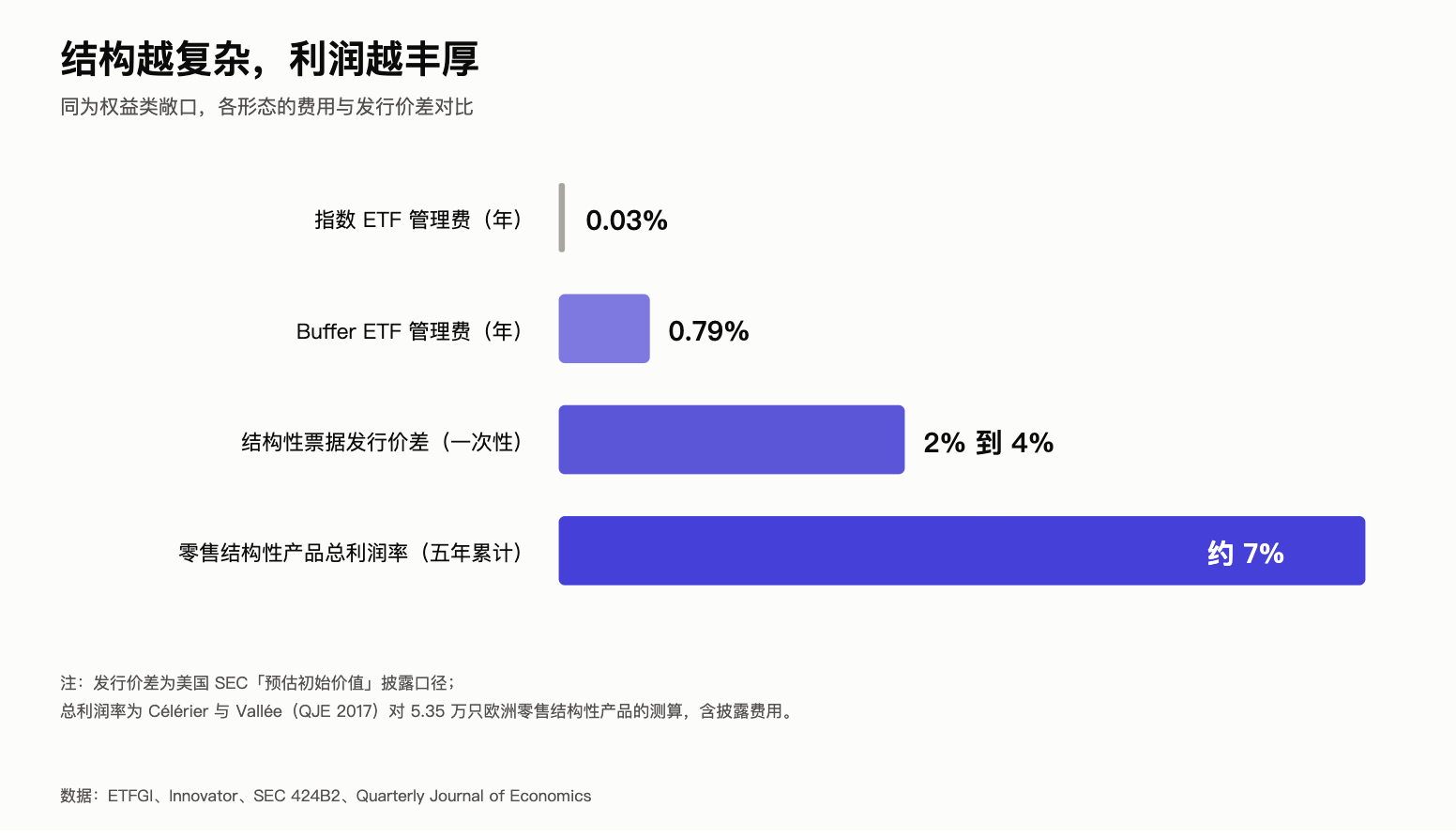
Figure 1 | The more complex the structure, the greater the profit
Fee comparisons make this clearer: for the same exposure to the S&P 500, index ETFs charge 0.03%, while Buffer ETFs charge 0.79%—a difference of 26 times, yet this does not hinder the latter from achieving several billion dollars in scale. Channel business fees have long approached zero; only the process that converts β into specific risk-return forms retains pricing power.
This has direct significance for on-chain implementations: whoever occupies the structuring segment will capture the most assured revenue source in the industry. With $330 billion in stablecoins and RWA, even if only one-tenth enters the product layer, a 1% comprehensive fee rate corresponds to over $300 million in fee revenue annually—comparable to the earnings of today's leading DeFi protocols.
3. Three Major Motives for Wall Street to Move On-Chain: New Clients, High Profits, and First Movers
So, why does Wall Street want to place structured products on blockchain? There are at least three motives.
**The first is new clientele.** Traditional structured products are firmly locked within channels, with private banks often requiring a million-dollar threshold, while qualified investor systems keep the public out, and cross-border sales are fragmented by different jurisdictions.
On-chain, however, presents a market with almost no existing supply. With tens of millions of cryptocurrency holders globally, about $64 billion in idle stablecoins, along with a year-round, borderless distribution network, this represents a brand-new incremental market for the product departments of investment banks.
**The second is profit itself.** As previously mentioned, structuring is nearly the only remaining high-profit process in asset management, and there’s no reason for it to be an exception on-chain.
On-chain issuance can also eliminate layers of transfers between registration, custody, and clearing, with settlements measured in minutes, resulting in lower manufacturing costs than traditional issuance. The profit margin for on-chain versions of the same note will be higher, not lower. Capital has this inherent nature; wherever there is unmet demand and richer profits, the product departments will follow.
The third reason is straightforward: leading institutions are already doing it. UBS issued tokenized fixed-rate notes and tokenized warrants between 2022 and 2023; SG-Forge, a subsidiary of Société Générale, has repeatedly issued bonds on public chains; BlackRock's BUIDL is essentially "products on-chain" rather than "assets on-chain"—importing money market funds, a product from 1971, directly into the blockchain, replicating the deployment order of fifty years ago: first laying out assets, then products.
However, each investment bank's pilots are operating in isolation, with each building its closed system, preventing third-party distribution of products and reconciliation on the same ledger.
What Wall Street currently lacks is a layer of neutral issuance and operation facilities, and whether this layer can be built depends on whether the on-chain soil has matured.
4. Assets, Capital, and Regulation: Three Major Conditions Mature for the First Time Simultaneously
So far, no one has truly succeeded in moving a complete line of structured products on-chain. The closest previous attempt was the 2021 Options Vault (DOV), which reached a scale close to one billion dollars but collapsed in 2022 due to a uniform structure that solely "sold volatility."
The failure of a single structure emphasizes that what is needed is not yet another product but infrastructure that can support diverse structures. The three conditions supporting this infrastructure have only matured simultaneously for the first time in the past 18 months.
On the asset side, the raw materials repository has been established. Structured products need a sufficient quantity of compliant underlying assets.
Currently, the total scale of tokenized RWA is $33.5 billion, increasing nearly threefold in a year; tokenized stocks have surged from about $8 million to $2.7 billion, a 33-fold increase in a year (BlockTempo data); Ondo's tokenized stock scaled up from $65,000 to $927 million within twelve months, and Binance-supported bStocks achieved $624 million in less than two months.
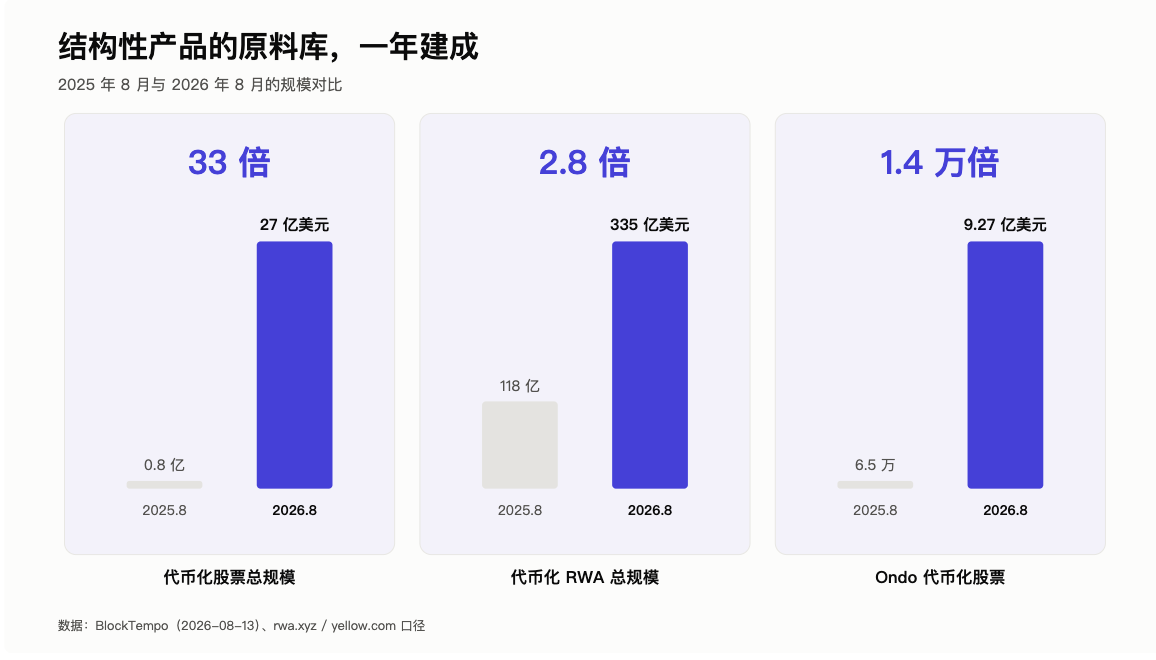
Figure 2 | The raw materials repository for structured products, completed in one year
The long-standing popularity of dual-currency investments and shark fins in centralized exchanges proves the persistent demand from individual investors in the crypto market for structured yields; the only missing element is transparent supply.
On the regulatory side, compliance departments can finally sign off. The GENIUS Act resolves the issue of "what to subscribe with," giving stablecoins a federal framework, such that institutional memos can now state "can hold"; the ongoing market structure legislation in the Senate addresses "what the product itself counts as."
Historically, the shift from ambiguous to clear regulation often coincides with the issuance window for new categories. The rise of ETFs occurred after the SEC's approval in 1993, and the emergence of money market funds followed the loosening of interest rate controls.
5. The Asset Layer is Filled with Players, While the Product Layer Remains Blank
The level of congestion among various on-chain tracks varies significantly. By reviewing existing projects from the ground up based on traditional financial roles, it becomes clear that funds and teams concentrate in the same few segments, leaving only one genuine vacancy.
The asset layer is responsible for moving assets on the chain. Ondo, bStocks, and xStocks all operate in this layer, with tokenized stocks aggregating approximately $2.7 billion.
The institutional settlement layer reassures banks to enter the market. Canton is representative, as JPMorgan's deposit tokens have already been implemented, with a CC market cap of about $4.8 billion.
The open issuance layer resolves the issue of asset open issuance. Centrifuge dominates this segment with about $1.6 billion TVL, being the only platform currently supporting true third-party issuance.
The strategy product layer creates scale for specific strategies. Ethena, Maple, Midas, and Upshift all pursue this route, with leading Maple's TVL around $2.5 billion.
Above this, there should exist a product manufacturing layer, responsible for converting any asset and any strategy into standardized products with NAV, subscription and redemption features, and risk control measures. This layer currently remains vacant.
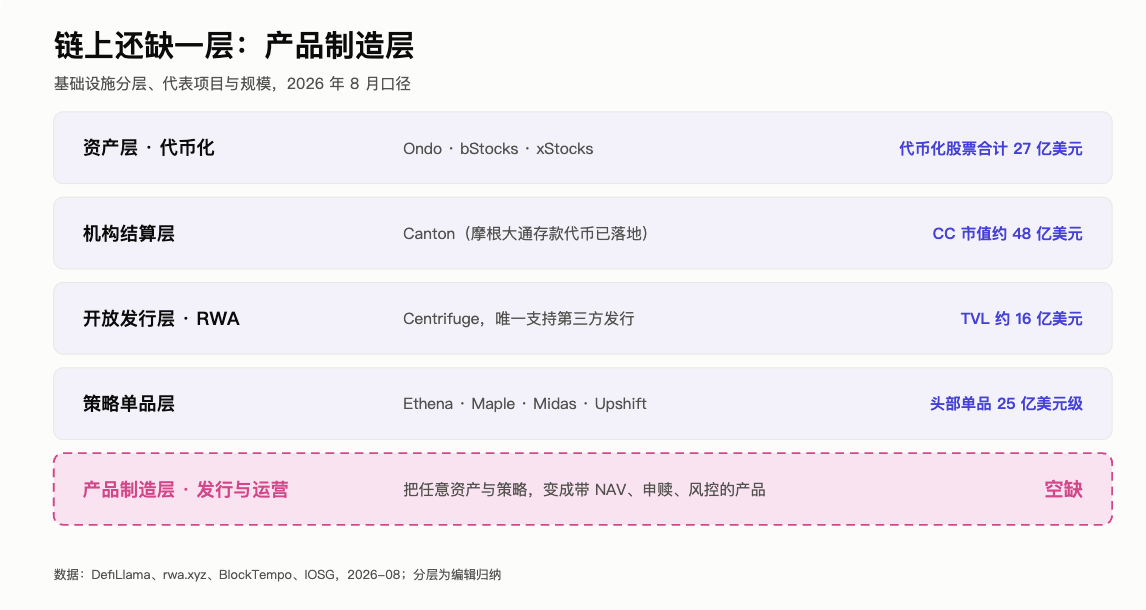
Figure 3 | Layering of on-chain infrastructure, four layers are crowded, one layer is vacant
It is worth examining the relationship between the strategy product layer and this vacancy. Every successful player in the strategy product layer has followed the path of "building one agreement for one product." Ethena established a complete minting, custody, hedging, redemption, and distribution system for a basis strategy; Maple repeated the same processes for institutional credit; and Midas did it again for yield certificates.
Each time involves redundant construction, and only strategies anticipated to reach substantial scale can afford this fixed cost. Traditional markets have long resolved this issue. After SPY, State Street doesn't need to reconstruct a registration and settlement system for every new ETF; the mutual fund industry can accommodate tens of thousands of products, relying on shared standard components like fund accounts, custody, registration transfers, and disclosures.
The two closest players to this vacancy highlight the existing gap. Centrifuge supports third-party issuance but serves clients "tokenizing a pool of assets," thus the product structure remains at the asset share level; Upshift operates embedded vaults but stops at vault share pricing, lacking product-level NAV, making it difficult to support structures requiring daily valuation and conditional triggers, like coupon and interval types.
In other words, long-tail structured products like a phase of Xueqiu, an FCN, or a buffer product currently lack a reusable production line on-chain. This layer lacks corresponding independent companies in traditional finance, as it is fragmented within the back offices of fund companies, custodians, and registration agencies; for the first time on-chain, there is an opportunity to establish it as an independent and neutral protocol layer.
6. Case Study: How City Protocol Occupies the Structured Product Track
With genuine demand and substantial profit potential, Wall Street has the motive and conditions have matured, yet one layer remains empty on the map.
The remaining question is who in the market is handily BUIDLing?
There are already sporadic projects trying to target this vast market, one representative example being the recently launched City Protocol.
City Protocol positions itself as the issuance and operating layer for on-chain structured products.
Issuers define strategy authorizations and access named managers on the protocol; the protocol provides product-level NAV, epoch-based settlement for subscriptions and redemptions, as well as on-chain enforcement rules for valuations and risk control. Depositors can subscribe shares using stablecoins at NAV, with execution, valuation, accounting, and redemption operating within the same set of rules; every new product launched subsequently inherits the same execution pathway.
The systems reconstructed by players like Ethena have been transformed here into reusable shared facilities. Issuing a new product transitions from a one-off engineering project into a configuration. This step precisely strikes at the core of the profit logic mentioned earlier. The price differentials of the structuring segments represent the most stable income in the asset management industry, and how much profit can remain within that differential depends on how low the manufacturing costs can be compressed.
Transforming the manufacturing process into a shared facility turns the priciest segment in this business into a fixed cost that can be diluted. The larger the scale, the lower the unit cost.
Moreover, the reliance of structured products on experience and craftsmanship is very high; pricing, hedging, and clause design expertise is largely nested in the product departments of traditional issuers.
Publicly available information indicates that core members of City Protocol come from institutions like HSBC and UBS, both of which were early testers of tokenized notes and digital bonds as mentioned earlier. Team members have also managed crypto assets for major family offices including the Rothschild family, Zhengda family, Hanwha, and New World.
The first buyers of structured products in the traditional market were precisely clients of private banks and family offices. Familiarity with the dispositions of such funds significantly aids in determining which structures to sell on-chain first.
Looking at the investors, the project has raised about $11 million, divided into seed and private placement rounds. Investors include early backers of Ethena (with a peak TVL exceeding $6 billion), and institutions like Jump and CMT Digital with trading and market-making backgrounds.
This list itself serves as a corroborating evidence for the earlier judgment. Funds that profited from strategy product dividends on Ethena are now backing upstream products, essentially staking a bet that "competition is migrating positively towards the product layer."
From the City Protocol case, we can derive three core conclusions.
First, the project addresses the longstanding absence of an "assembly procedure" on-chain. Both assets and strategies are in place, yet assembling them into products with net value, redeemable features, and risk controls required every team to build a complete system. The issuance and operational layer transforms this procedure into a public service, lowering the market entry barriers for launching a product from maintaining a team to merely setting up once.
Second, there are two trends that it aligns with. On-chain, the layout of the asset and trading layers has solidified, with competition migrating toward the product manufacturing segment; off-chain, Wall Street's product lines are beginning to fully transition on-chain, with DBS and BNY Mellon still setting up their closed pilots separately, making a layer of neutral issuance and operation facilities inevitable.
Third, the determining factors for success will hinge on three aspects: whether the product line can continue to widen, whether managers and channels can gather and coalesce, and whether valuation and redemption disciplines can withstand extreme market conditions. Those who solidify these three aspects first will hold the pricing power at the product layer.
7. The Path to Breaking Through for Structured Products
The surge of ETFs relied on one-click orders from every brokerage account, rather than direct counters built by fund companies. The potential breakout for on-chain structured products will likely not lie in building standalone apps, but rather in integration: directly linking NAV-based subscriptions and epoch-based settlements into wallets, exchanges, and payment apps; attracting more institutions to showcase products as named managers; and expanding the underlying asset pool through tokenized asset partnerships, providing issuance capabilities as white-label offerings to partners.
Institutions predict this path's endpoint vividly: Citigroup foresees stablecoins reaching $1.6 trillion by 2030, McKinsey predicts tokenized assets will be around $2 trillion during the same period, while Standard Chartered estimates a scale of $30 trillion by 2034. Even if penetration only reaches one-fifth of the traditional market, the product layer would correspond to scales in the hundreds of billions, generating annual fee revenues in the tens of billions—while today's entire industry has only several billion dollars in storage.
The structure between the asset layer and trading layer has solidified, with competition migrating toward the products in "what form to buy." This kind of shift has already played out in last cycle: Hyperliquid captured seventy percent of perpetual contract market share, becoming the biggest winner thanks to its outstanding infrastructure. The first to establish standards for issuance, valuation, and redemption, concentrating managers and channels into the same production line, has a chance of becoming the Hyperliquid in the product era.
Conclusion
In 1976, the first index fund raised only $11 million, drawing mockery from peers as "Bogle's folly." Fifty years later, packaged products represent a $23 trillion world, and that $11 million back then coincidentally equals City Protocol's current funding amount.
Looking back at the arguments above, we can easily see the authenticity of demand.
From Xueqiu to Buffer ETF, every type of structured product is backed by a verified group of buyers; even the Korean market, which has seen failures in types, managed to rebound in issuance volume by 39% within two years. Profits are significant; in an era where channel fees have approached zero, the structuring segment still retains pricing power measured in basis points. The conditions are ripe; the raw materials repository has been established within a year, willingness to pay has been navigated by players like Ethena, and the GENIUS Act has opened the doors to compliance. The gap is also clear; on a five-layer map, the product manufacturing layer is still unfilled.
Looking forward five years along this line, the picture is not hard to imagine. The number of on-chain products will grow from today's dozens to tens of thousands; issuing a structured product will become as commonplace as deploying a contract today; Xueqiu, FCN, and buffer exposures will sell in on-chain forms for the first time to ordinary people outside private banking clients, with NAV queryable daily, audits public, and every basis point of fees documented on-chain. By then, structured products will no longer be the exclusive counter of high-net-worth clients but a default option in every wallet.
In the past fifty years, Wall Street's most valuable ability has never been asset selection but product creation.
This craft is now going on-chain, with large funds already making early moves. Whoever lays out this production line first will stand on the essential path for all products.
免责声明:本文章仅代表作者个人观点,不代表本平台的立场和观点。本文章仅供信息分享,不构成对任何人的任何投资建议。用户与作者之间的任何争议,与本平台无关。如网页中刊载的文章或图片涉及侵权,请提供相关的权利证明和身份证明发送邮件到support@aicoin.com,本平台相关工作人员将会进行核查。


