
Author: Jae, PANews
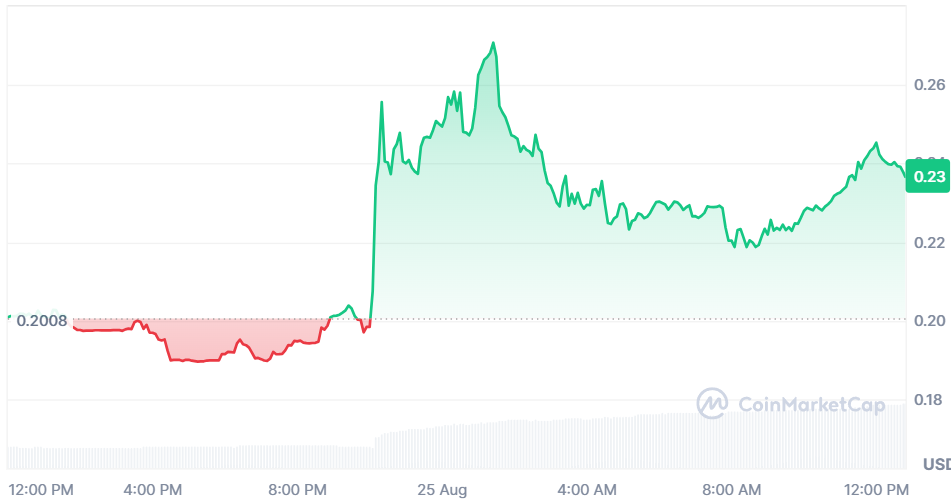
On the evening of August 24, the liquidity staking protocol Kinetiq announced the launch of Elysium, a high-performance Layer 2 network custom-built for the Hyperliquid ecosystem. Stimulated by this news, its native token KNTQ surged more than 30% in a short period, with a fully diluted valuation (FDV) briefly reaching $270 million.
As leading DeFi applications begin to take on customized Layer 2 solutions, the boundary between the application layer and underlying infrastructure is being redefined. Behind Kinetiq L2's scaling efforts is Hyperliquid's structural anxiety of "contract dominance, weak spot," as well as the protocol’s strategic breakthrough in search of a second growth curve amidst bottlenecks in staking business growth.
A reconstruction around trading infrastructure, application ecology, and token value is about to unfold within the Hyperliquid ecosystem.
Completing the Spot Puzzle of the Hyperliquid Ecosystem
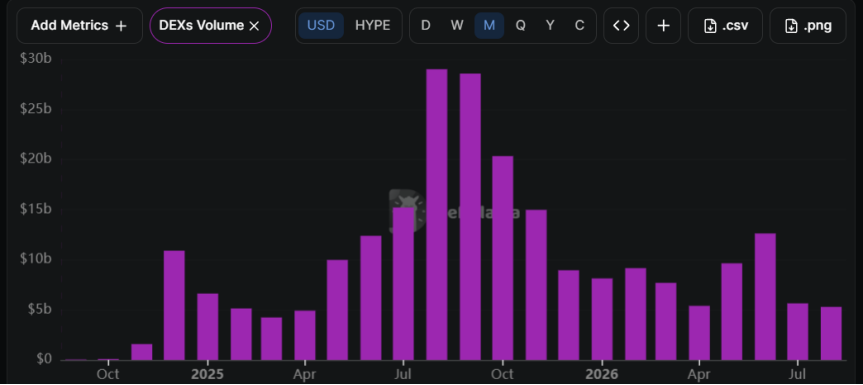
The significant background for the launch of Elysium is the long-standing structural imbalance within the Hyperliquid ecosystem: perpetual contracts lead the market, while spot trading and DeFi applications struggle to gain traction.
Hyperliquid has climbed to the top of the on-chain perpetual contract sector thanks to its excellent trading depth, but the activity level of its spot market has not matched the scale of its derivatives business. Since October of last year, the protocol's spot trading volume has remained at a low level.
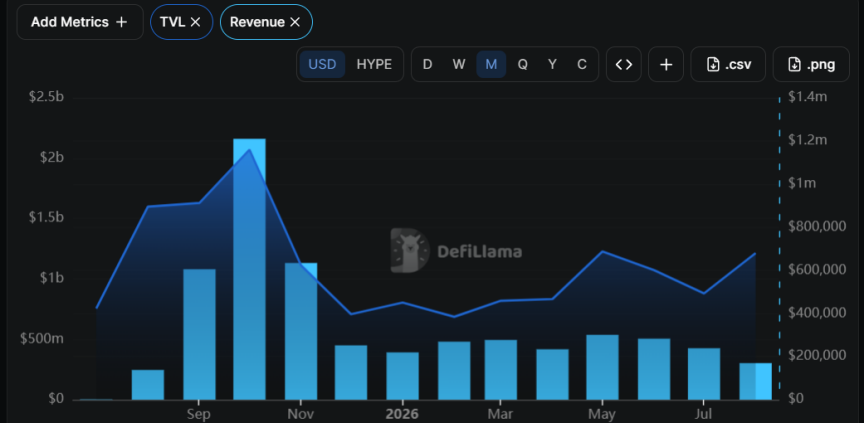
As the leading liquidity staking protocol within the Hyperliquid ecosystem, Kinetiq currently has a total value locked (TVL) of over $1.2 billion, and in the last 30 days, the protocol’s revenue was only $200,000, indicating that the growth ceiling of its main business is becoming apparent.
Elysium aims to address this gap. It seeks to provide a higher throughput execution environment, allowing PropAMM-type applications to directly access HyperCore's order book data, establishing a complete asset transfer pathway: token issuance → AMM liquidity launch → HyperCore spot market → HIP-3 perpetual contract market.
In other words, the goal of Elysium is not merely to "add a new ecological Layer 2," but to solve the long-standing application layer discontinuity issue in the Hyperliquid ecosystem: opening up the capabilities of trading infrastructure HyperCore to more applications, enabling developers to reuse ecological liquidity at low cost. Once this model is successful, Hyperliquid will evolve from a trading platform primarily focused on perpetual contract business to a model of "trading infrastructure + application chain."
Changing L2 Gas Model, Elysium Using HYPE as Gas
In contrast to most Layer 2s that issue independent Gas tokens, Elysium will directly use the HYPE token as network Gas assets, a design based on dual considerations of ecological synergy and value transfer.
Minimized user friction: Users do not need to hold additional new Gas assets to trade and deploy applications on Elysium; at the same time, HYPE, as the core asset of the ecosystem, can form smoother asset connections between HyperCore, HyperEVM, and Elysium, significantly enhancing the composability between different execution environments.
Expanding HYPE's utility: Previously, HYPE's value capture mainly came from L1 network governance, staking demand, and transaction fee revenue; with the emergence of execution environments like Elysium, HYPE will upgrade from "L1 native governance asset" to a foundational payment asset covering the entire Hyperliquid application ecosystem, strengthening its ecological currency attributes.
However, it needs to be rationally viewed that: Gas demand does not equate to linear buying pressure on HYPE. If Elysium's transaction costs are low enough, the amount of HYPE consumed per transaction may be very limited. The true economic value of HYPE as a Gas token still depends on how many real users, transactions, and applications Elysium can attract in the future, rather than solely on the Gas mechanism itself.
Liquidity Staking Expansion Stalled, L2 "Collecting Rent" to Unlock Second Growth Curve
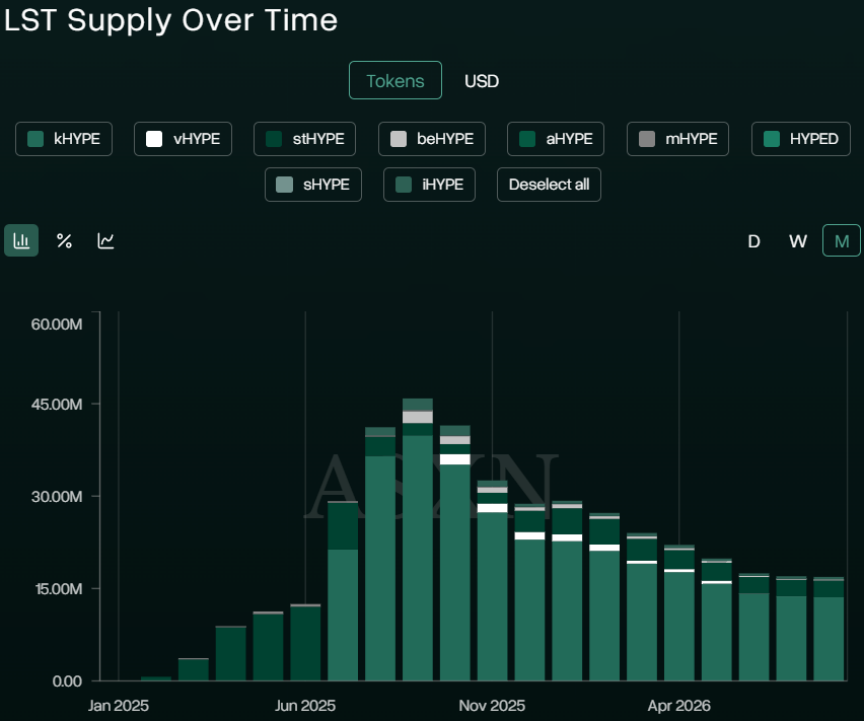
Kinetiq's main product is liquidity staking, where users stake HYPE tokens to receive kHYPE and earn staking rewards, but this business is facing pressure from slowed growth, with the circulating supply of kHYPE down about 66% compared to last September, and it has continued to be under pressure in recent quarters.
Clearly, the protocol needs to find a second growth curve. Elysium offers a new source of revenue: sequencer fees.
According to the announced distribution plan, Elysium's sequencer revenue will be distributed at a fixed ratio, with 50% used for repurchasing and burning the protocol token KNTQ, creating a direct transmission of network activity to token value.
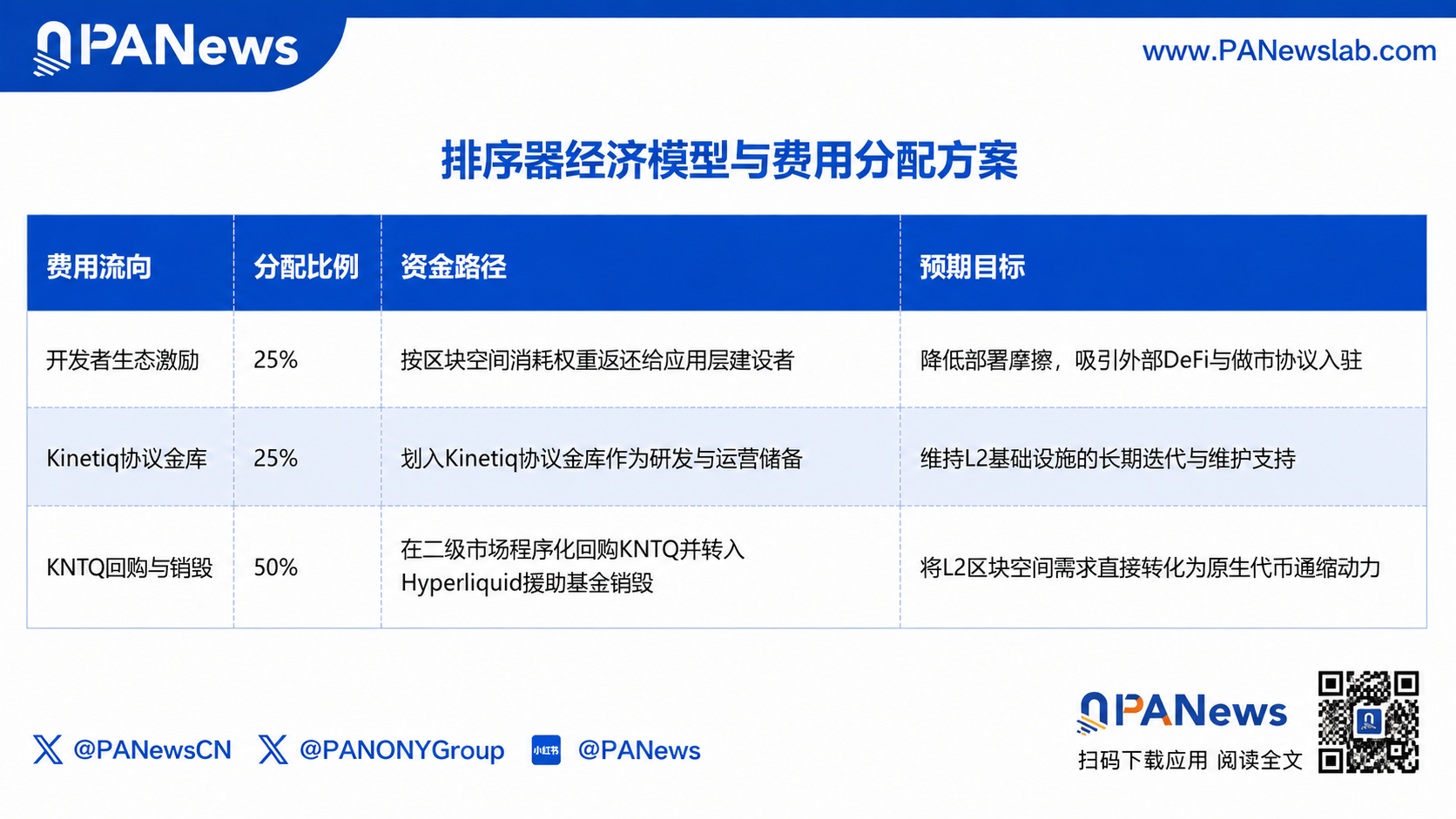
If Elysium can generate a sufficiently large trading volume, network activity will convert into demand for KNTQ repurchases and burns, essentially Kinetiq is attempting to establish a "network activity → sequencer revenue → token repurchase and burn" value capture flywheel.
For KNTQ, its valuation logic will also be restructured. In the past, its value was mainly tied to the liquidity staking business, while the future L2 infrastructure will open up new growth space, which is also one of the core driving forces behind the token's short-term rise of over 30% following the news.
Elysium Stands on the Shoulders of Giants, But Can't Escape the "Triangle Dilemma" of L2 Ecosystem
With the established ecosystem of Hyperliquid backing, Elysium's cold start barrier is significantly lower than starting from scratch as a public chain, but that does not mean it can easily run through the logic of ecological growth.
On the surface, Elysium is naturally standing on the shoulders of giants. Hyperliquid possesses mature trading infrastructure and existing users, theoretically allowing Elysium to reuse existing liquidity and trading data, significantly reducing the cold start difficulty of the new network. At the same time, it is developed using OP Stack, which can effectively control the development costs of the infrastructure and provide a relatively mature modular technical framework.
However, the competition in Layer 2 has never been limited to performance; it focuses more on the ecology. Elysium still has to face the triangle dilemma that all Layer 2s cannot avoid: without applications, the network lacks real trading demand; without deep liquidity, applications cannot retain users; without user scale, developers lack the motivation to continue building. The three are mutually restrictive; if any link fails to keep up, it will fall into a "vicious cycle."
A deeper threat comes from Hyperliquid itself. If HyperEVM upgrades its native technology in the future and competes for the ecological position occupied by Elysium, then the necessity and growth space of it as an independent Layer 2 may be squeezed.
Additionally, classical risks of Layer 2 such as sequencer operating mechanisms, cross-chain asset security, cross-execution environment interaction, and upgrade permissions remain invisible challenges hanging over Elysium.
HYPE Expanding Boundaries, KNTQ Repricing
From a token economics perspective, this event has vastly different impacts on HYPE and KNTQ.
For HYPE, it represents an expansion of long-term ecological value. The greatest potential value of Elysium lies in broadening the use cases and ecological boundaries of HYPE, strengthening its attributes as an ecological currency. In the short term, the scale of Gas consumption by Elysium still needs to be observed and may not create organic "new buying pressure for HYPE." Its value realization is a long-term process that occurs gradually as the ecosystem unfolds.
For KNTQ, this is a repricing of growth logic. The success or failure of Elysium determines KNTQ's intrinsic value: if the network is successful, the income from sequencer fees will provide sustained support for repurchase and burn; conversely, if the activity level fails to meet expectations, the actual contribution of this value capture mechanism may be limited.
In the coming days, the market needs to closely monitor Elysium's key operating data: daily active users, transaction counts, Gas consumption, spot trading volume, HyperCore liquidity migration scale, actual sequencer revenue, etc. These are the hard indicators to verify the authenticity of the story.
Right now, whether it can convert the liquidity deposited in Hyperliquid into real demand for spot trading, DeFi, and application layers will be Elysium's first test.
免责声明:本文章仅代表作者个人观点,不代表本平台的立场和观点。本文章仅供信息分享,不构成对任何人的任何投资建议。用户与作者之间的任何争议,与本平台无关。如网页中刊载的文章或图片涉及侵权,请提供相关的权利证明和身份证明发送邮件到support@aicoin.com,本平台相关工作人员将会进行核查。


