On August 22, the price of HYPE broke through $80, once again setting a new historical high. Funds and attention returned to Hyperliquid, and HyperEVM also saw the long-awaited meme market. Two high market cap targets, egg and joff, emerged.
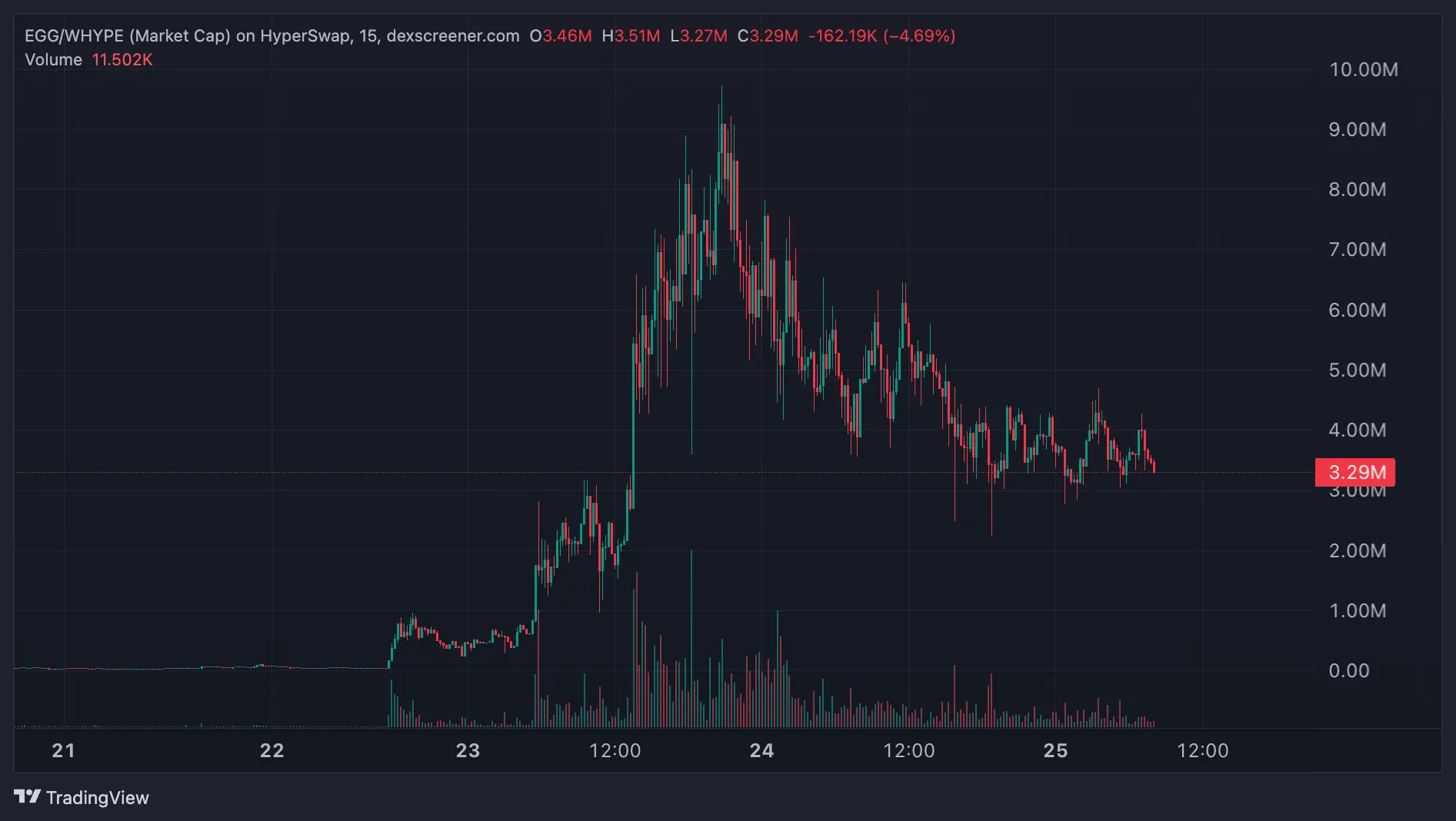
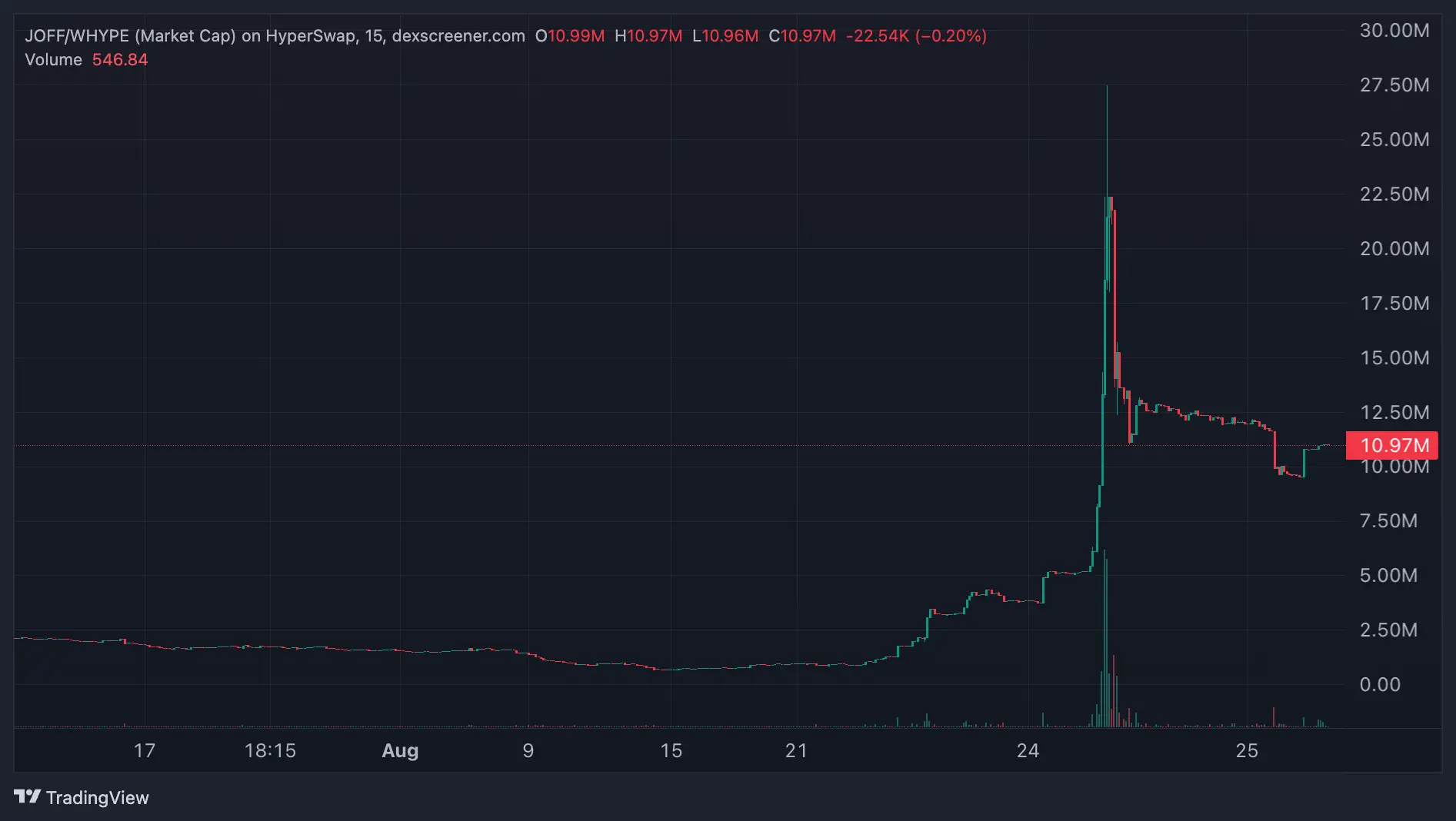
The heat comes quickly, and retreats even faster.
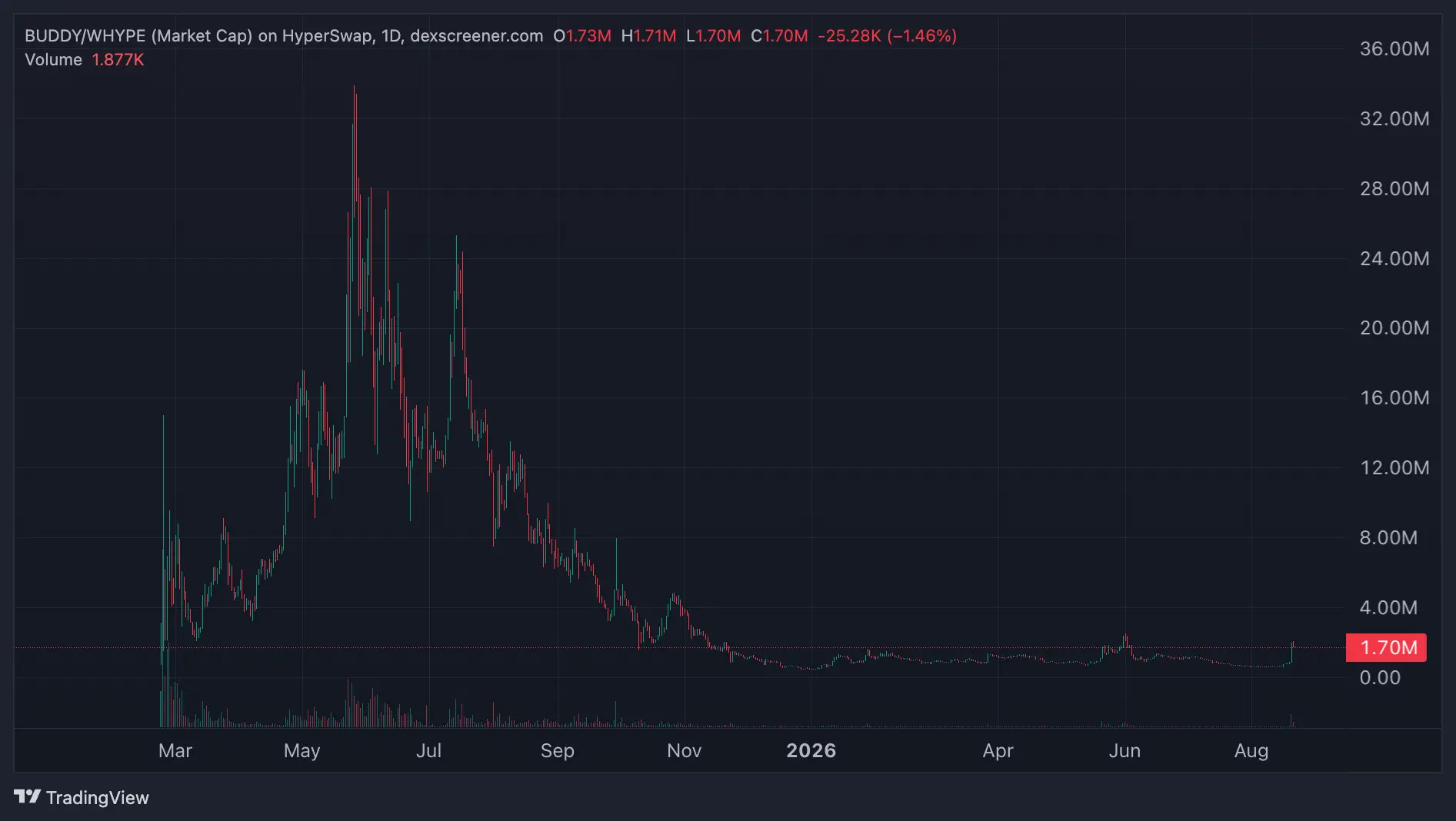
This has almost become the fixed script for memes on HyperEVM. In the first round of the meme season last June, the market cap of BUDDY once reached $35 million, but since then, it has been difficult to find a target that can continue the relay. HyperEVM has never lacked retail investors willing to bet, but it lacks a trading infrastructure capable of accommodating this speculative demand.
HyperEVM adopts a dual-block architecture, connecting to HyperCore while leaving the complexity to developers and traders. During network congestion, the gas for a simple swap may exceed $10, and in extreme cases, even reach $20. After the new token is issued, one still has to separately find AMM, spot liquidity, and perpetual contract markets; HyperEVM does not have a unified token launch platform that links these processes together.
Kinetiq saw this gap. As the largest liquid staking protocol on Hyperliquid, it announced the launch of Elysium, Hyperliquid's L2. After the announcement, discussions around KNTQ reassessment, HYPE value capture, and new application migration quickly spread in the community.
From Staking Protocol to Hyperliquid Infrastructure
Kinetiq initially solved the liquidity issue after HYPE staking. Users stake HYPE to the protocol and receive k HYPE, which can earn staking rewards; k HYPE can also enter DeFi scenarios such as lending and yield strategies, allowing the same asset to simultaneously fulfill the staking and liquidity functions.
Currently, Kinetiq’s TVL is approximately $1.214 billion. In addition to kHYPE, Kinetiq has also launched products such as Earn, kmHYPE, Launch, and Markets.
According to Kinetiq’s disclosed design, Elysium will continue to use HYPE as gas. Users do not need to buy another base asset to enter the new network, and the transaction demand generated by Elysium will directly increase the use case for HYPE.
Performance is the primary layer of transformation. Kinetiq claims that the block speed and throughput at the launch of Elysium will be several orders of magnitude higher than HyperEVM, with the long-term goal of bringing block times closer to HyperCore. It is evident that Kinetiq aims to create an environment suitable for high-frequency spot trading, automated market making, and applications that require continuous state updates.
A more critical part is the connection between Elysium and HyperCore.
The existing L1 Read pre-compiled contracts of HyperEVM allow smart contracts to read HyperCore data, but the visible order book information is mainly the best bid and ask prices. Elysium plans to revamp L1 Read, providing developers with richer market depth and fresh quotes close to the top of the block.
For ordinary traders, this means simply reading a few more order book levels. For market makers, the significance is entirely different. They can continuously quote in Elysium’s AMM, while reading HyperCore’s depth and prices to complete hedging.
Kinetiq views Prop AMM as the first type of application that Elysium needs to attract. This type of AMM uses proprietary funds from professional market makers to quote, and is highly sensitive to latency and hedging efficiency. According to data disclosed by Kinetiq, the spot volume handled by Prop AMMs on Solana has long been far higher than that of HyperCore. What Elysium aims to replicate is the spot trading demand that Hyperliquid has missed out on.
Reconstructing the Token Lifecycle
The shortcomings of Hyperliquid in spot trading go far beyond transaction speed.
To issue spot assets in HyperCore, one needs to participate in Ticker auctions and rebuild the order book; when issuing tokens in HyperEVM, developers have to find their own launch platform, AMM, and market makers. Even if new coins gain attention in the short term, it is challenging to keep this liquidity flowing into HyperCore. Spot trading and perpetual contracts seem to belong to the same ecosystem, but they actually follow two separate paths.
Elysium proposes a complete pipeline: new tokens are generated in Elysium first, completing cold launches through long-tail AMMs; after liquidity expands, they enter Prop AMM; subsequently, they choose to establish a HyperCore spot order book; finally leveraging HIP-3 to launch a perpetual contract market.
This is what Kinetiq refers to as a "value-accruing L2." L2 on Ethereum is often critiqued for intercepting mainnet activity and fees, while Elysium attempts to channel new on-chain activities back to HyperCore. It uses HYPE as gas, establishing a spot market for assets in HyperCore, while derivatives return to HIP-3. The more active Elysium is, the more transaction volume HyperCore theoretically gains.
Kinetiq’s token KNTQ also has a separate value capture path. The income plan for Elysium’s sequencer allocates 25% to applications that consume block space, 25% goes to the Kinetiq treasury, and the remaining 50% is used to repurchase KNTQ from the public market and send it to the Hyperliquid Assistance Fund for destruction.
Accommodating Complex Application Scenarios
Among the potential use cases of Elysium, meme is just the easiest to understand. What can truly test the limits of this chain is new types of Perpetual DEX, like PaperTrade, which carry complex settlement logic.
We have previously introduced PaperTrade. It reads the prices from the Hyperliquid order book, allowing users to settle profits and losses directly with public LP pools. The trades do not enter HyperCore matching; the logic for profit queues, LP balances, and PAPER token minting operates entirely within HyperEVM smart contracts.
This design inherently relies on high-frequency state updates. Each open, close, profit queue, and subsequent payment must be executed on-chain, while HyperEVM's slow transaction confirmations and high gas can directly undermine product experience. A more realistic issue is that any high-performance chain that connects to an external price oracle can replicate the mechanism of PaperTrade while providing lower gas and more aggressive token incentives. PaperTrade chose Hyperliquid based on native quotes and native users; however, HyperEVM's performance undermines both advantages.
Elysium offers another possibility. PaperTrade can continue to read HyperCore’s prices, utilizing the extended L1 Read to obtain richer order book information, while placing settlement and token logic into a faster execution environment. It does not need to leave Hyperliquid to seek performance, nor must it hand over the most critical price source to an external oracle.
No wonder Kinetiq’s founder Omnia specifically named PaperTrade after the release of Elysium: “It now has a home.”
Similar opportunities will also appear in options, automated trading, and lending protocols that require real-time hedging. HyperCore already has the most active on-chain traders and depth; what Elysium aims to do is enable developers to run more complex financial logic alongside this liquidity.
免责声明:本文章仅代表作者个人观点,不代表本平台的立场和观点。本文章仅供信息分享,不构成对任何人的任何投资建议。用户与作者之间的任何争议,与本平台无关。如网页中刊载的文章或图片涉及侵权,请提供相关的权利证明和身份证明发送邮件到support@aicoin.com,本平台相关工作人员将会进行核查。


