On August 24, 2026, it appeared to be just another “job-hopping news” making waves in the AI community: Luke Metz, who had worked at OpenAI and whose whereabouts became a mystery after leaving, was confirmed by insiders to have officially joined Meta's superintelligence lab this week, directly reporting to Alexandr Wang. This story, seemingly limited to the tech sector, intertwines with the rapidly fluctuating price curves displayed on screens around the world on the same day: Digital bank Fasset, which focuses on compliant crypto financial infrastructure, announced an additional $68 million in funding, bringing its total funding this year to $119 million; South Korea's Upbit suddenly included SAND in trading alerts and suspended deposits and withdrawals, coinciding with the market anxiously awaiting U.S. Treasury Secretary Janet Yellen to announce details of sanctions against Iran, a moment highly sensitive to any risk control signals; in the foreign exchange market, the Korean won surged against the dollar to 1,376.5, hitting a new high since mid-September 2025, while on the same trading day, domestic CPO concept stocks and leveraged products linked to Hong Kong stocks such as Samsung and SK Hynix collectively corrected or even sharply declined. On this day, talent, capital, policy, and prices rarely synchronized to accelerate, and the real question is: How does each reshuffling of talent in the AI talent war amplify layer by layer through exchange rates, stock markets, and crypto market sentiment, evolving into the multi-market resonance we are witnessing?
Luke Metz's Job Change: The Blood Loss of OpenAI
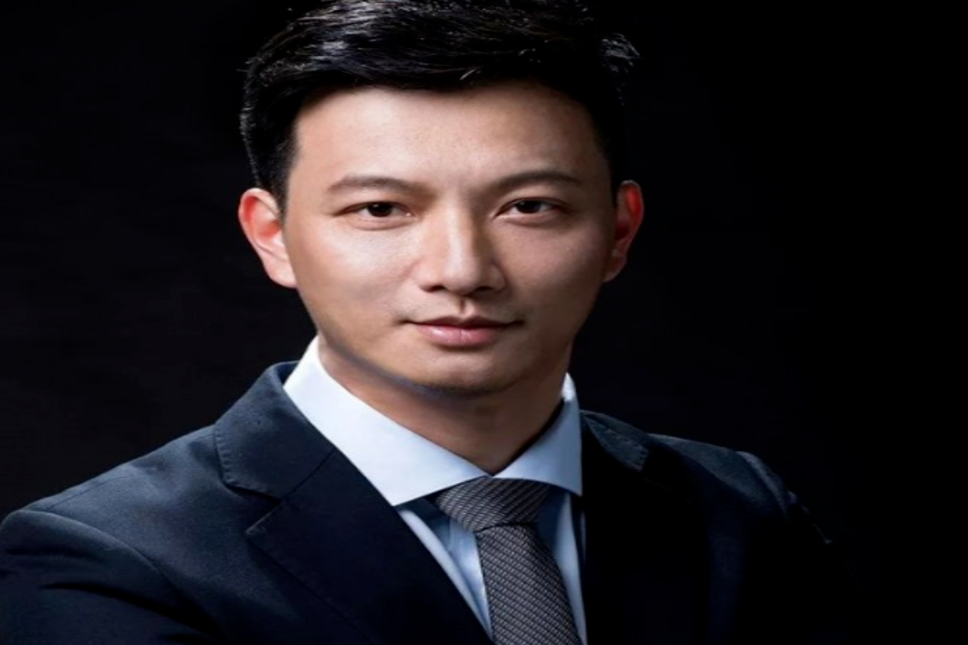
Luke Metz's trajectory is almost a microcosm of the covert war between top labs over the past two years. He was an important researcher at OpenAI, leaving in 2024 from this institution viewed as the “frontline headquarters”; after a short stay at an institution called Thinking Machin, whose full name and business details are unclear in public reports, it felt more like a tentative stopover. Until the morning of August 24, when insiders confirmed to Axios: Luke Metz has joined the superintelligence lab being built by Meta, officially starting work this week, and right from the beginning, he directly reports to Alexandr Wang—this is a typical “level-jumping” move, not filling a piece of a puzzle, but being placed in the command hub of the new lab.
Flowing between labs like OpenAI and Meta is no longer an ordinary workplace story but read by the market as a reshaping of the AGI and superintelligence competitive landscape. For insiders, this means which side can offer more resources, a voice, and a sense of control over future direction; for outsiders, especially capital focused on valuations and product roadmaps, this is a compelling “behavioral data”: When a key researcher who once bet on OpenAI places the next stage of their chips on Meta's superintelligence lab, capital will quietly begin to rewrite the AGI odds in their minds, adjusting who is more likely to approach superintelligence first. On August 24, 2026, amidst violent fluctuations in exchange rates, tech stocks, and crypto sentiment, this job change was amplified into a clear signal—next round of bets on AGI and superintelligence will no longer only look at model parameters and computing power, but fine-tune daily tracking of the movements of a few key researchers.
Fasset's $119 Million Financing Signal
On the same day when talent was frantically sought in the superintelligence race, capital offered another way to bet in the crypto world. In May 2025, a digital bank Fasset, focusing on account and payment services anchored in fiat currency settlement tokens, secured $51 million in funding, packaged as a new sample of “compliant crypto financial infrastructure”; just over a year later, on August 24, 2026, it secured another $68 million from traditional finance giant SBI, bringing this year's total rounds to $119 million, with the latest valuation pushed up to about $1 billion. The valuation quickly raised to the “unicorn” range in less than two years essentially represented the primary market voting with checks: this model that bundles on-chain accounting, fiat channels, and compliance requirements is one they are willing to hold long term.
The identity of the lead investor is more striking than the figures themselves. The team is led by traditional financial groups like SBI, rather than pure crypto-focused funds, meaning they are not here to gamble on assets doubling in price in the next round but to tie themselves to “compliant crypto infrastructure”—from clearing, custody to fiat entrances and exits, trying to hold as many pipeline segments in regulated hands as possible. Fasset claims an annual transaction volume exceeding $40 billion (this figure comes from a single source, and the outside world still needs to remain cautious), providing an apparently large story for this traditional financial entry: even if cryptocurrency prices fluctuation sharply under macro uncertainty, as long as trading and settlement don't stop, the pipeline can continuously extract fees. On August 24, as the market was closely watching the details of sanctions against Iran and the liquidity and volatility were highly tense, funds flowed into this type of “bottom pipeline” target, which itself is a clear signal: within the crypto world, capital is shifting from chasing target prices to buying foundational infrastructures that will need to be used repeatedly regardless of market conditions.
Funding Sentiment Wavers Under the Shadow of Sanctions
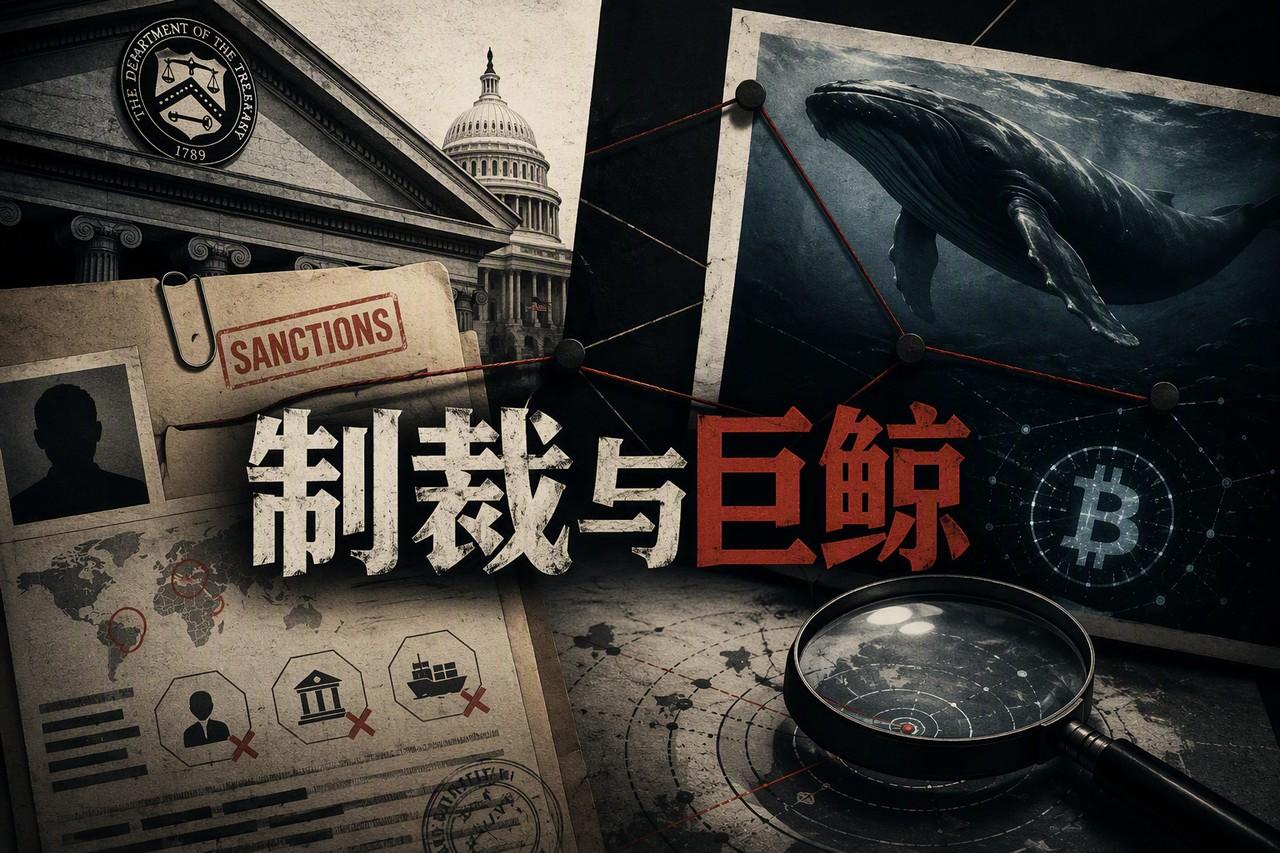
On August 24, the true “protagonist” in the market was not any particular coin or tech stock, but a string of details yet to be voiced—the U.S. Treasury Secretary Janet Yellen’s upcoming announcement of sanctions against Iran. The market had almost regarded this as the biggest black box in recent times: if the details are stronger than previously imagined, both the stock and crypto markets could respond in sync; but until the shoe drops, everything remains at the level of “expectation management,” with only prices testing emotional bottom lines in narrow ranges back and forth. Ironically, crypto assets had already gained strength for several consecutive days, with positions and confidence pushed to high levels, making sentiment particularly fragile— the more they rise, the more they fear the first genuine negative news.
On the eve of such news, every seemingly “local” risk control action would be amplified into a market-wide demonstration. On August 24, Upbit suddenly announced it would include SAND on a trading alert and suspend deposits and withdrawals for that asset. Public information did not provide specific reasons, making it impossible for the outside world to determine whether it was an issue with the project's fundamentals or if a certain type of trading behavior triggered the risk control threshold; however, in the context of looming sanctions expectations, this unexplained tightening was frightening enough: the combination of regulatory shadows and platform risk control led market funds to quickly switch from “hold and wait for news” to “short-term speculation + reducing positions at any moment.” When even top platforms began to actively shrink their risk exposures, traders preferred to use shorter cycles and lighter positions to hedge against the unknown, creating a top-down transmitted sense of tension that became the most genuine market temperature beyond prices on that day.
The Strength of the Korean Won and the Dislocation of Asian Tech Stocks
If the tension in the crypto market comes from an “invisible hand,” then the comparison of forex and equities in the afternoon of the same day feels more like a puzzle placed on the table. On August 24, the Korean won surged to 1,376.5 against the dollar, hitting its strongest level since mid-September 2025, supported by a weaker dollar, accumulated pressure on U.S. treasury repurchases, and Korea's robust semiconductor exports. Logically, this combination of exchange rate and export should provide emotional backing for Korean and surrounding tech assets, but on the other side of the screen, the related equities were collectively dropping: A-share CPO concept stocks generally plunged, with Zhongji Xuchuang down nearly 10%, Tianfu Communication down over 11%, and stocks such as Xin Yi Sheng, Tai Chen Guang, Zhong Ci Electronic, Chang Guang Hua Xin, and Dongshan Precision all dropping more than 6%. In the Hong Kong stock market, Southern Double Long's Samsung Electronics (07747.HK) plunged over 18%, and Southern Double Long SK Hynix (07709.HK) also fell over 5%.
What made traders uneasy during this round of adjustments was the lack of a “single point pot.” Public data did not provide direct causes for the decline in A-share CPO sector that day, making it hard to simply attribute it to a specific policy or sudden news; research reports could only provide relatively calm explanations in hindsight: in the context of the global AI and semiconductor-themed assets accumulating gains, the strengthening of the won corresponds to improvements in fundamentals and macro expectations, while the abrupt drop on the equity side is more likely the result of fund rebalancing across different markets and a phase digestion of previous gains. In other words, this isn't a story bankrupting, but rather a turnover of chips—at the moment when sanction details have yet to be settled, and risk preferences mysteriously decline, this “strong currency, weak stock price” dislocation reflects a micro-adjustment in the way funds are positioned, rather than a collective surrender to the entire tech cycle.
The Next Act of AI and Multi-Market Resonance
Looking back, the timeline of August 24, 2026, saw several puzzle pieces pressed at the same time: Luke Metz transitioned from OpenAI to Meta's superintelligence lab, placing top talent flows in the “more aggressive” AGI chips; Fasset's funding accumulated to $119 million this year, with a valuation of about $1 billion, indicating traditional finance starting to invest real money in compliant crypto pipelines; the details of U.S. sanctions against Iran remain unpublished, but stock and crypto assets are already tightening their nerves in advance; on the same day, the won hit its highest point in over a year, while A-share CPO and Hong Kong leverage products in semiconductors collectively adjusted, which almost serves as a model of “talent—capital—policy—market” simultaneously interacting. Looking forward, the next act truly worth watching is where the talent flow between leading AI labs ultimately points in terms of technological direction, how fast compliant infrastructures like Fasset can draw traditional financial budgets, and the magnitude of the substantive repricing of stock, forex, and crypto risk preferences when sanctions and regulations land. In this environment of multi-factor resonance, any single beautiful or glaring candlestick in a single market becomes increasingly difficult to interpret independently; whether one can build a cross-market perspective and causal chain is becoming a new threshold for understanding asset price stories in the AI era.
Join our community to discuss and become stronger together!
AiCoin exclusive Hyperliquid benefits: https://app.hyperliquid.xyz/join/AICOIN88
AiCoin exclusive Aster benefits: https://www.asterdex.com/zh-CN/referral/9C50e2
On-chain Telegram community: https://t.me/AiCoinWhaleData
On-chain community: https://www.aicoin.com/link/chat?cid=N6OVMor5g
AiCoin on-chain Twitter: https://x.com/aicoinwhaledata
免责声明:本文章仅代表作者个人观点,不代表本平台的立场和观点。本文章仅供信息分享,不构成对任何人的任何投资建议。用户与作者之间的任何争议,与本平台无关。如网页中刊载的文章或图片涉及侵权,请提供相关的权利证明和身份证明发送邮件到support@aicoin.com,本平台相关工作人员将会进行核查。