Looking at today's title, everyone should have guessed that I’m talking about grid trading again.
Friends who are familiar with me understand that I have mentioned this topic many times. Why do I repeat it? Because grid trading is really reliable, a solid way to earn steady money in finance. Previously, I only discussed the method without specifying which coins are suitable for trading; today, not only will I share practical insights, but I will also list a few targets I often watch, along with experiences on how to set ranges.
By the way, registering on OKX with a dedicated link gives you a permanent 20% rebate on fees.
The link is here: https://jump.do/zh-Hans/xlink?checkProxy=true&proxyId=2
Running high-frequency grid trading saves a considerable amount on fees.
First, let me give new friends a brief lesson, what is grid trading?
The official definition is an automated trading strategy that arranges buy and sell orders within a set price range, earning profits from market fluctuations.
Put simply, it can be described in four words: buy low, sell high.
It's a concept everyone understands, but the challenge lies in timing the market accurately. The market operates 7×24 hours, and people need to sleep; we can’t stay up all night monitoring the market. A grid bot acts as a tool to monitor the market for you. You just need to set the price range, grid quantity, and investment amount. You don’t have to monitor it every day to steadily earn from market fluctuations.
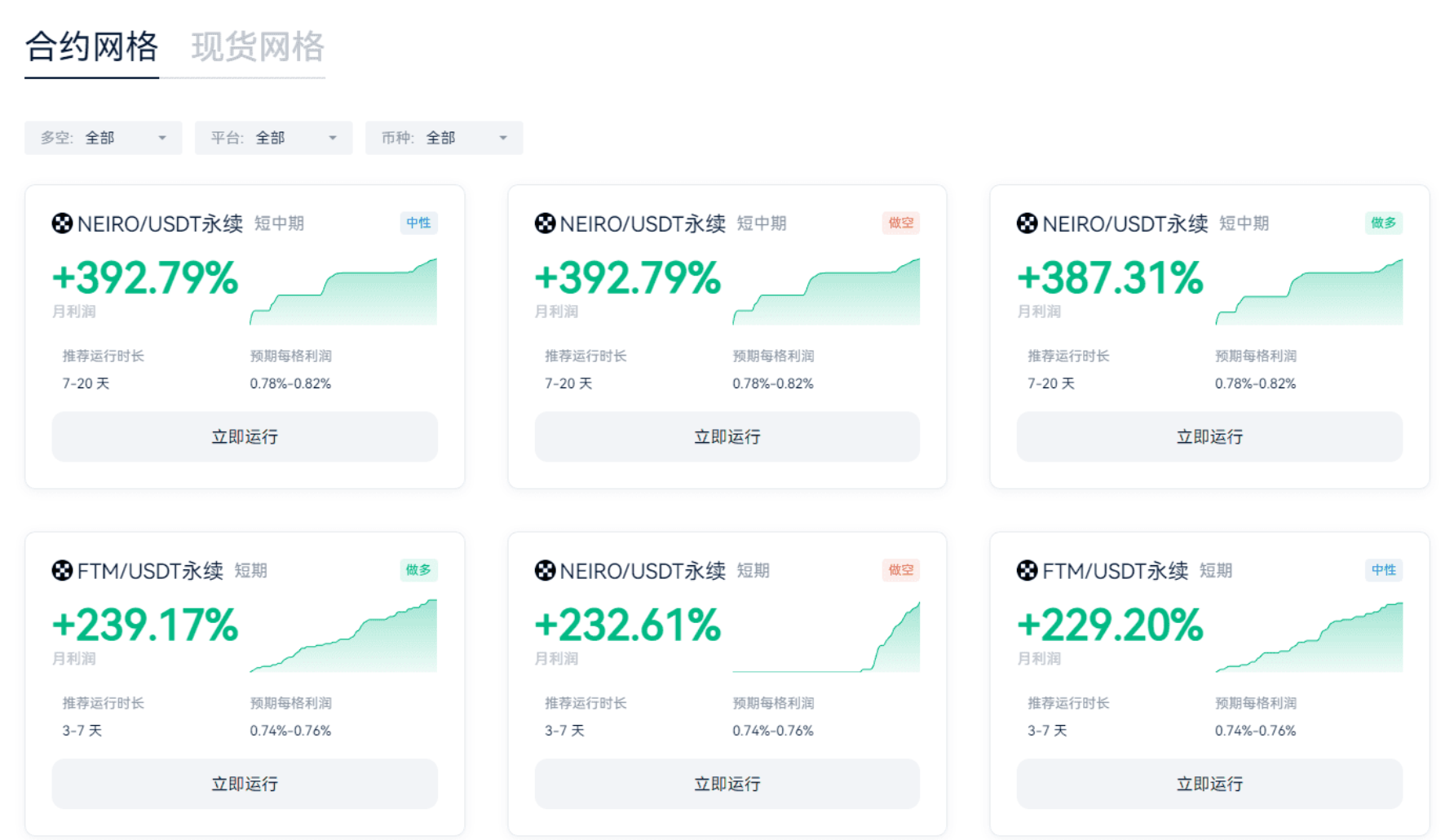
In the short term, the returns may seem average, but looking at the annualized return over the long term, it's impressive and a stress-free, reliable finance method.
The core of a grid strategy consists of just a few parameters, let me break it down for you:
The first is the price range, which is the operation price range of the strategy, corresponding to the lowest price and highest price.
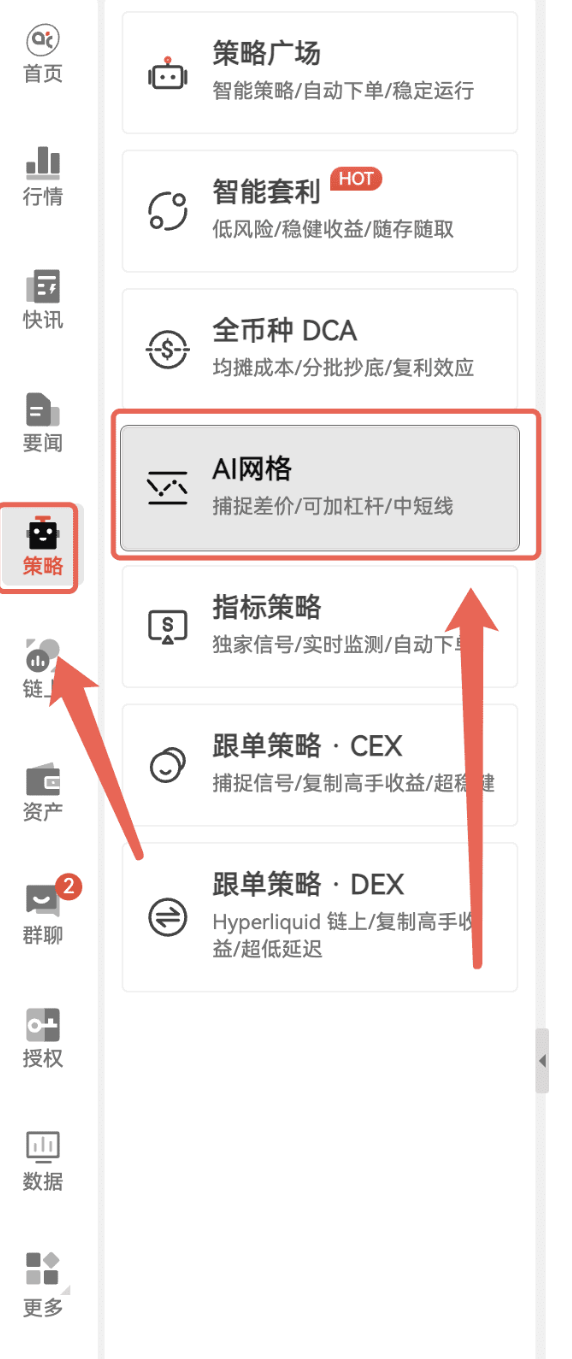
When you open the app, click on "Strategy" → "AI Grid," where you will find contract grids, spot grids, and margin grids. If you set the parameters manually, the differences are actually not significant. Why I repeatedly discuss grid strategies.
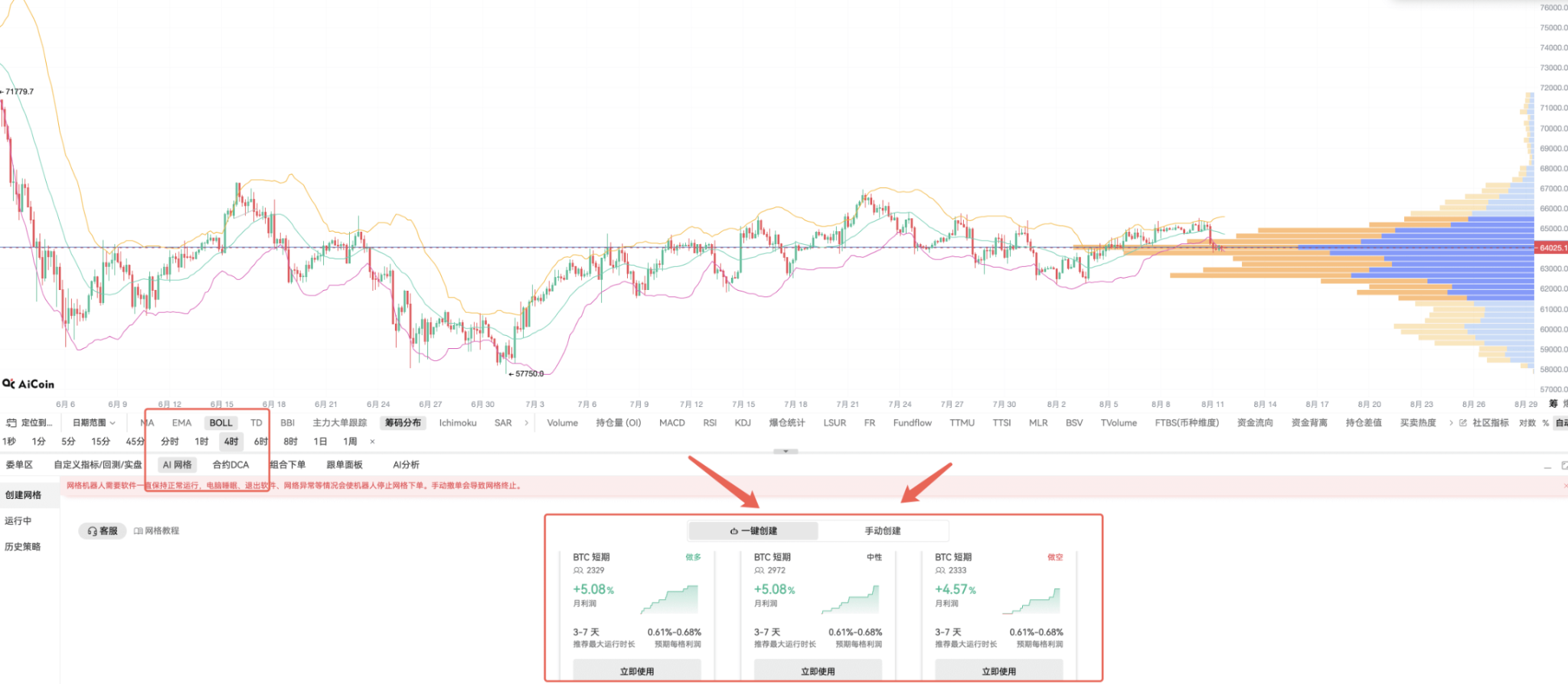
On the market page, there is a one-click creation option, and you can also customize it manually. The platform provides many recommended strategies. Choose AIC's or OKX's depending on your preference. Personally, I find it easier to use AIC; I check the news and watch the market all in this app, which allows me to manage monitoring and trading without switching between apps.
Let’s talk about the number of grids, which indicates how many orders are placed within the range, divided into two modes: arithmetic and geometric.
Arithmetic means the price is evenly divided, with equal price differences for each grid; geometric divides by proportion, with the same percentage change for each grid.
Why is it called "grid"?
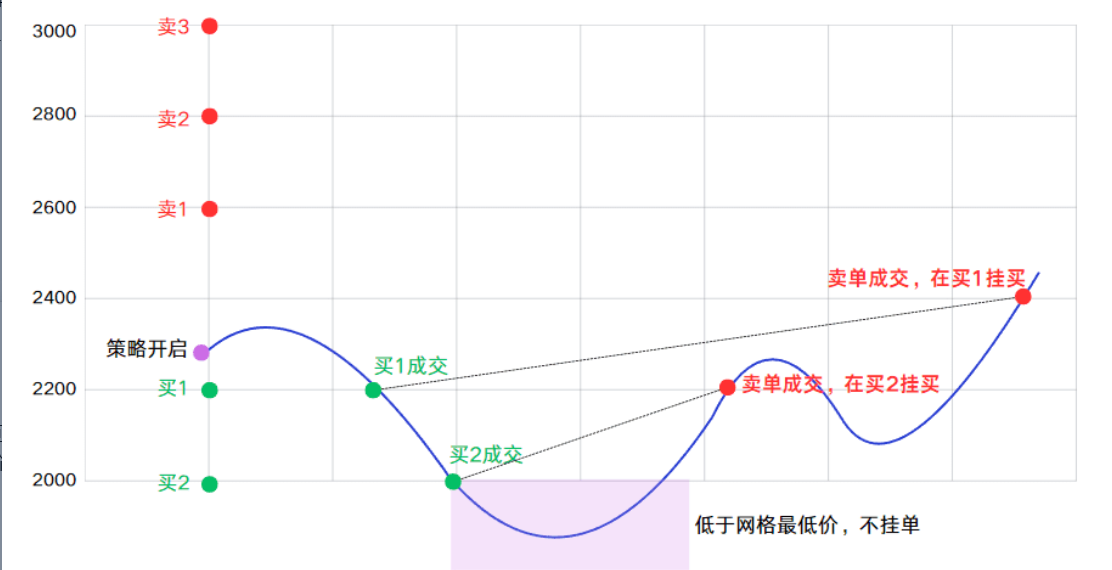
You can see, it divides the price movement into individual grids; when the price touches a line, it automatically executes a buy or sell order, which resembles a net.
After the strategy is created, it will only officially start when the price reaches the trigger point, and you can also preset profit-taking and stop-loss points. Once the price hits the set point, the strategy will automatically terminate. The order interface looks something like this; first, understand these basic concepts, and you will get the hang of it quickly later.
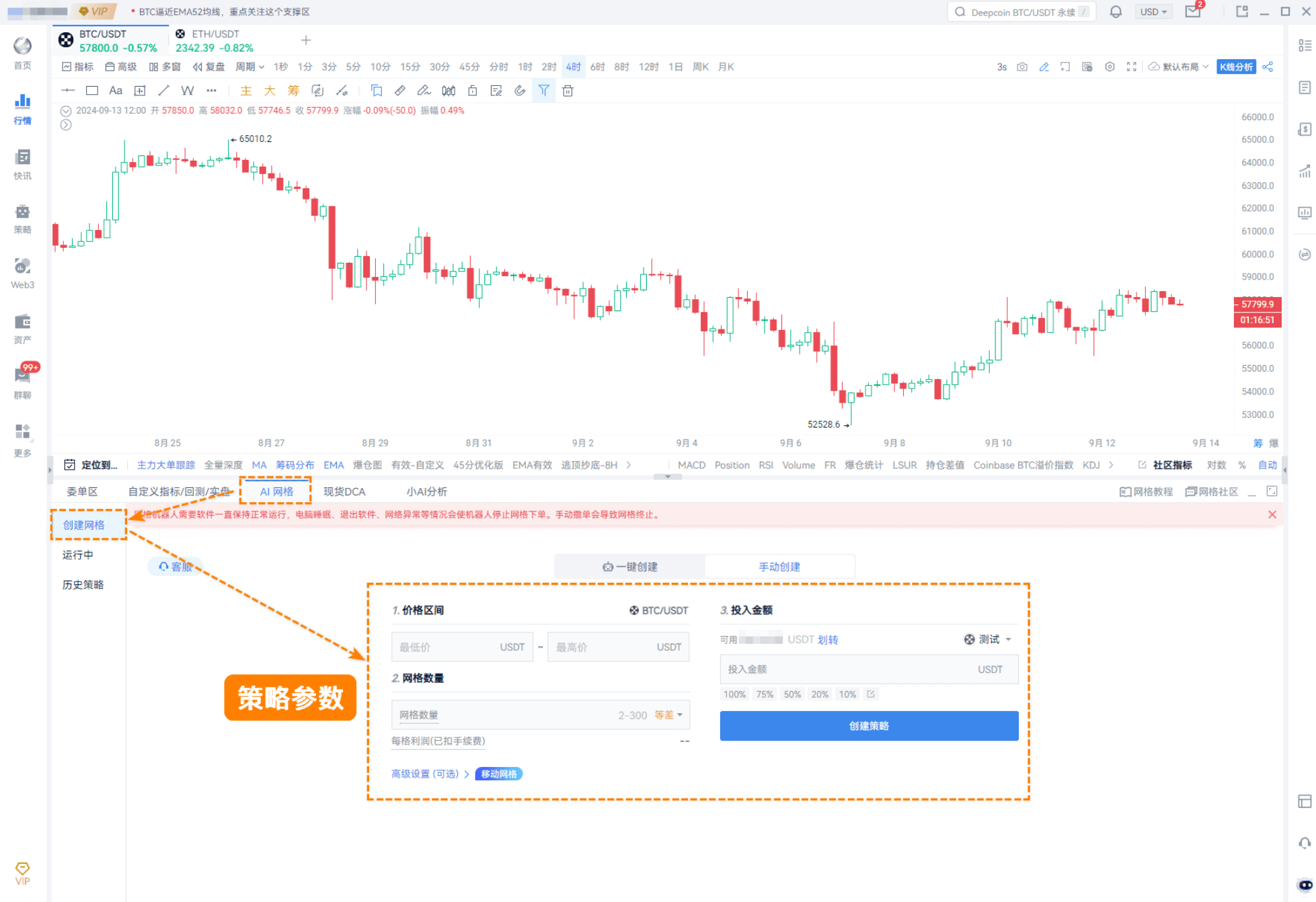
Taking ETH/USDT spot as an example, it’s easy to understand.
Assuming a minimum price of 2000 USDT and a maximum price of 3000 USDT with 5 grids in an arithmetic setup, investing 1000 USDT when the ETH price is 2341 USDT---this is just an example, the current price is roughly over 1800.
The entire range is divided into 5 grids, with a price difference of 200 USDT for each grid. A price fluctuation exceeding 100 USDT will trigger a trade.
When the strategy starts, the program will automatically place buy orders below the current price and sell orders above it.
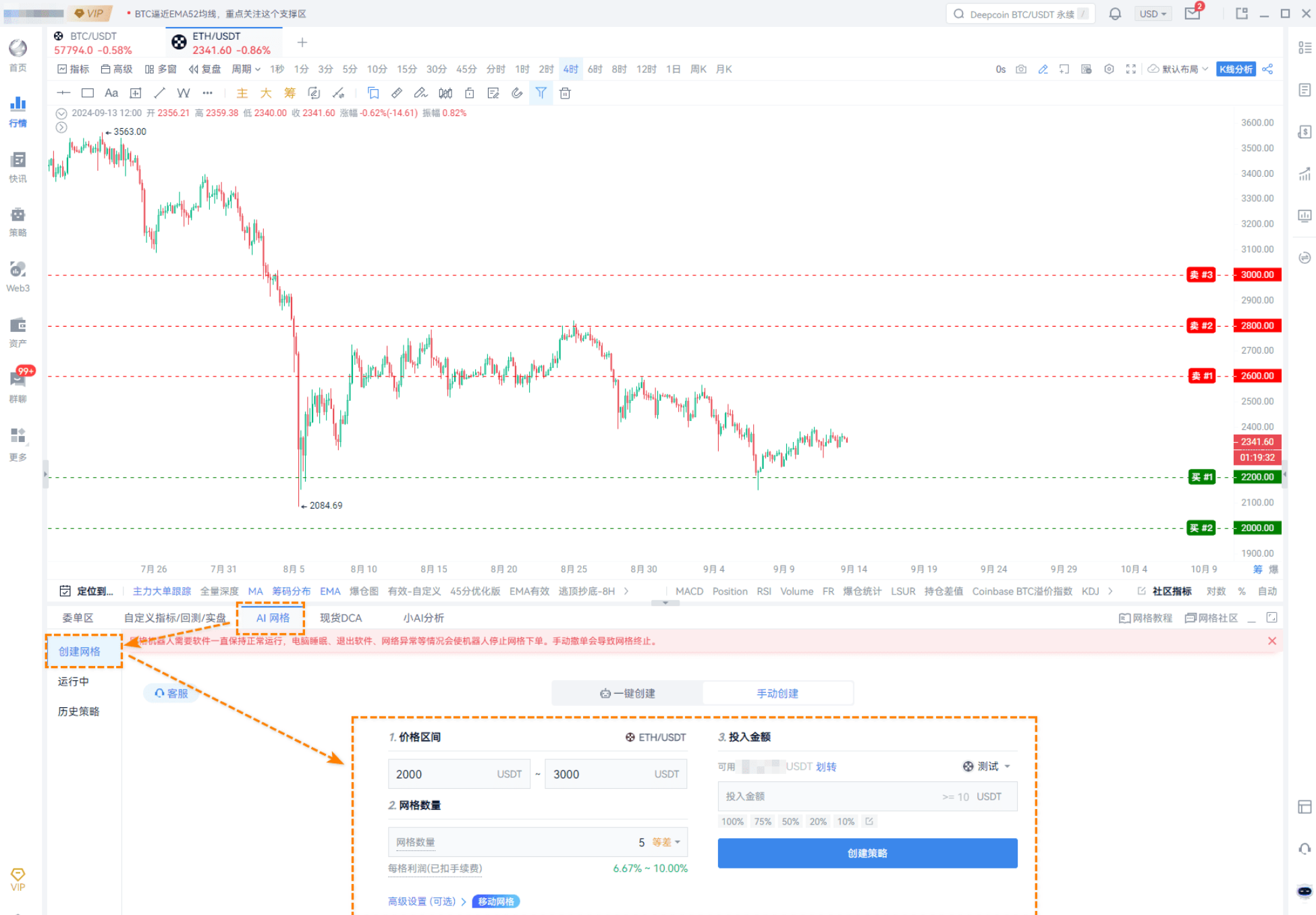
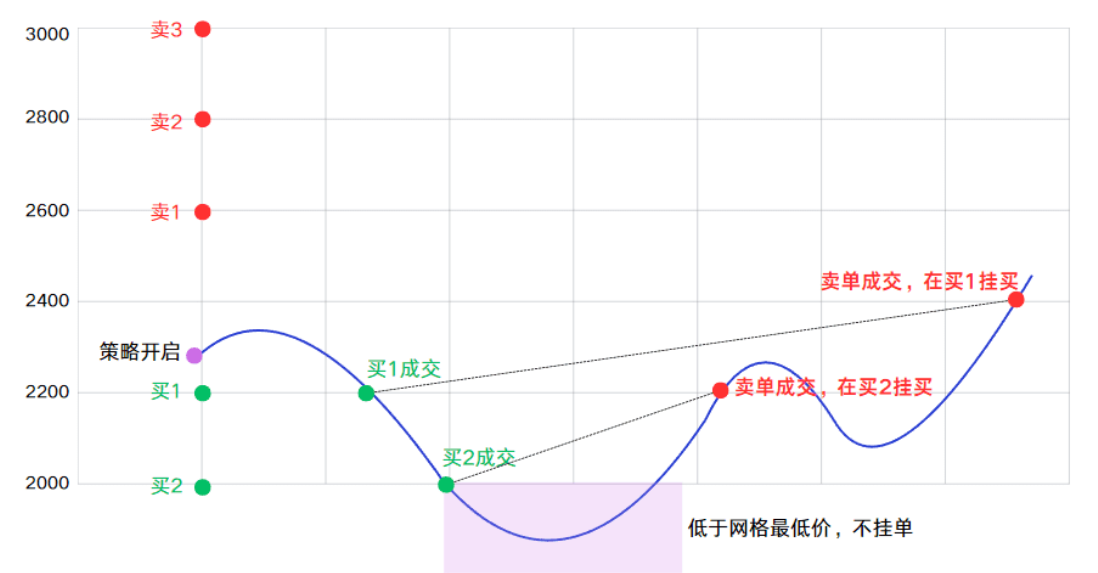
If the price falls to 2200, the buy order is executed, which is equivalent to buying low; simultaneously, a sell order is automatically placed at 2400 USDT, waiting for the price to rise to sell high.
Once the price rises to 2400, the sell order is executed, profiting from the price difference, and a new buy order is placed below. This process repeats continuously, earning from price swings.
This is why grid trading can work in both bull and bear markets; the more volatile the market, the easier it is to earn.
For spot grids, you don’t need to worry about the direction much, but for contract grids with leverage, you’ll need to select a lot for long or short positions. I usually choose neutral positions; while the profit from a directional contract is often higher, the stability is a winning factor.
I noticed someone asking, what to do in extreme one-sided markets?
As I mentioned earlier, if the price breaks out of your set range, the bot will stop functioning. Waking up to find the strategy has "slept" is indeed frustrating.
I personally have two ways to deal with this.
The first is to make a forecast, using the Bollinger Bands indicator to assist in the judgment.
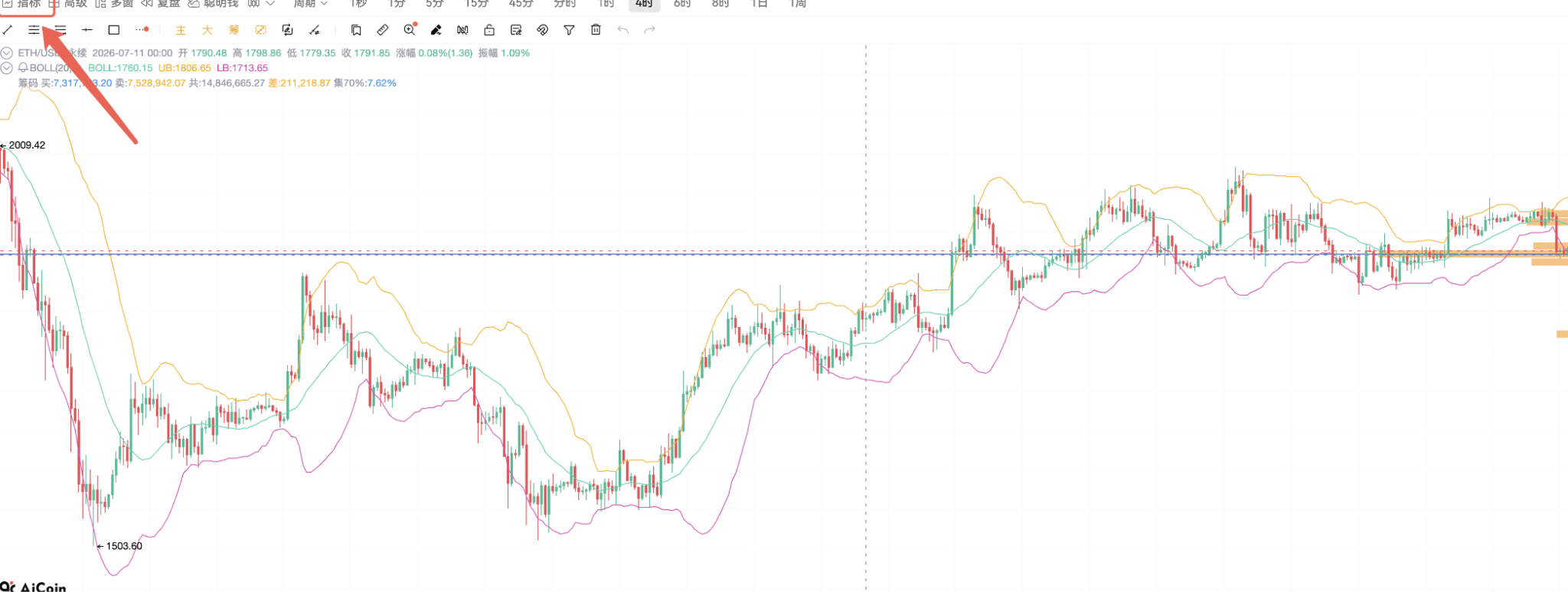
Just look at these two tracks above and below; when trading grids, you need to hope these two lines can have a long and happy relationship—converging to the middle indicates a volatile trend, which is perfect for grid trading.
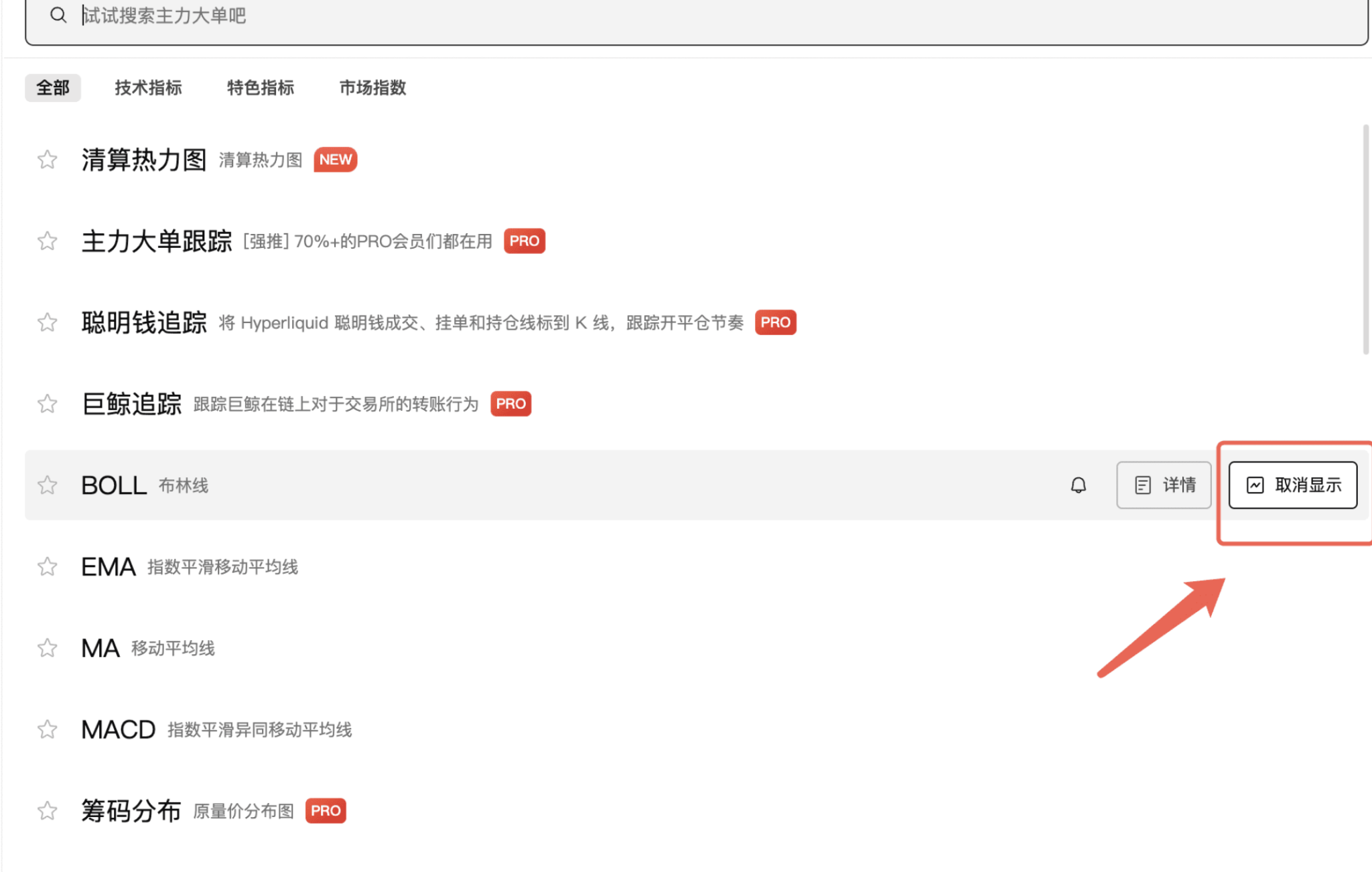
If they start to separate, it indicates that a one-sided market is likely.
Even if it does go one-sided, there’s no need to panic. Just monitor the long and short directions, as long as the price stays within the range, things are fine.
But what if it indeed breaks out of the range? You can’t just stand there watching it stop.
AiCoin has a mobile grid function, which is equivalent to the bot changing to a new range and continuing to trade; when you wake up, you’ll see it still at work, just in a different "room."
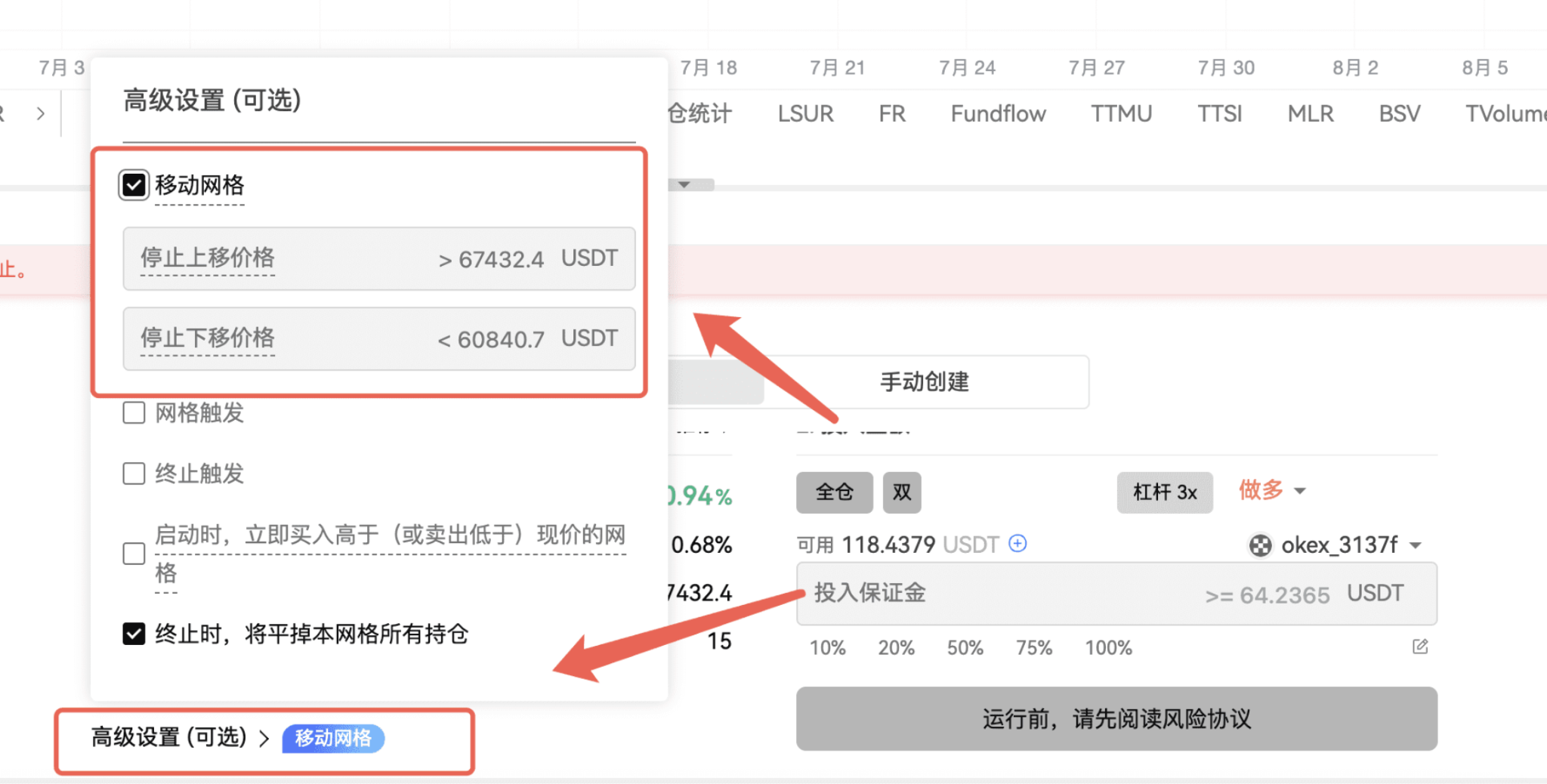
After all, extreme one-sided movements won’t last forever; after going up or down, it will eventually return to consolidation. Grid trading does not rely on absolute prices but rather profits from fluctuations.
Lastly, I’d like to recommend a few targets that I think are suitable for grid trading.
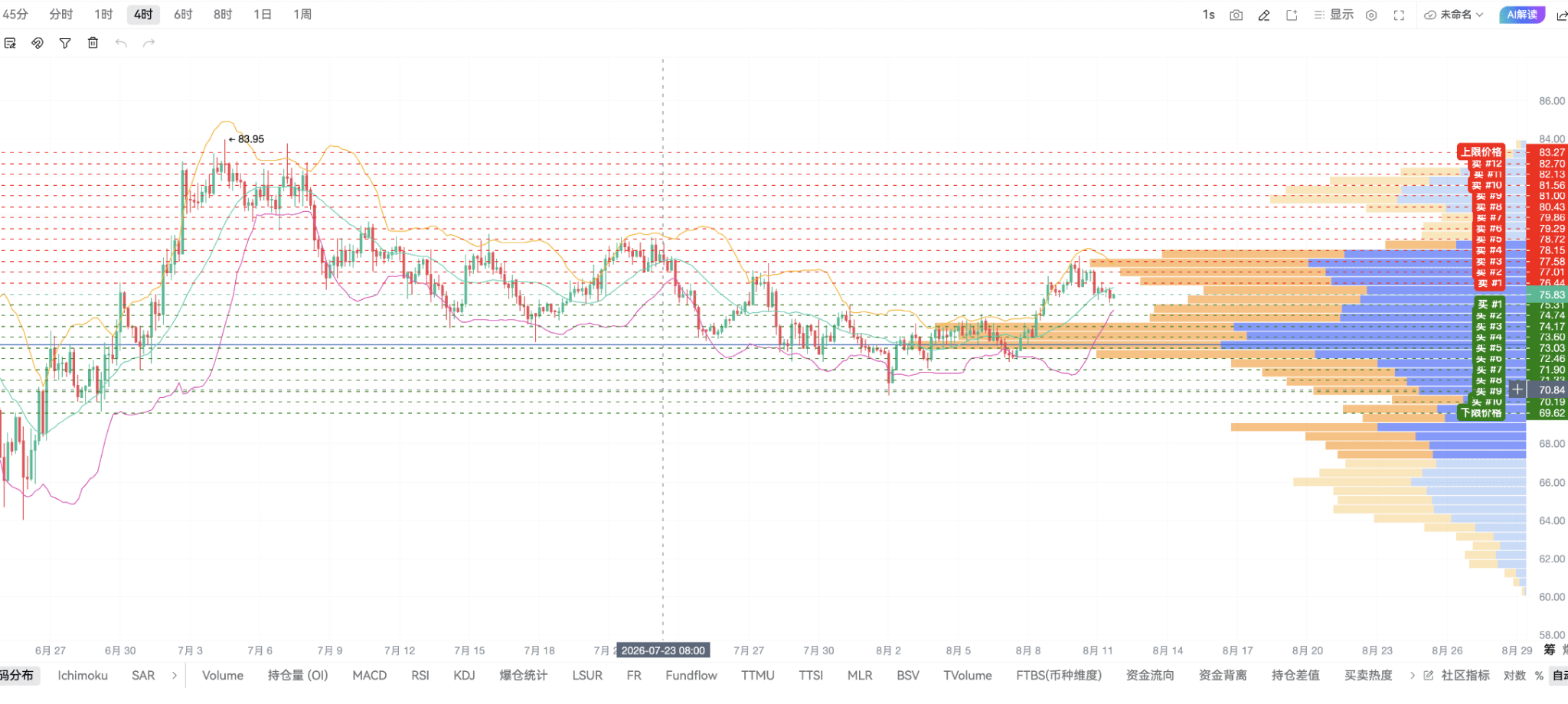
First, let's talk about SOL; from a four-hour perspective, the price range would be about 70-85, and you can directly use the first suggested strategy.
To put it simply, running within these red and green line ranges usually ensures profit, just varies in amounts.
If you want to enable mobile grids, you need to set a take-profit as well. The setup is quite simple; for example, set the highest price to 85 and have the mobile grid set 5 points higher to 90, setting take-profit and stop-loss at 3% will suffice, with no interference.
I’ve always felt that the movement of SOL is quite suitable for grid trading.
I also have a little experience with setting ranges: the actual range should leave a buffer of 10%-20% more than the historical highs and lows. For example, if the historical fluctuation is between 50,000 and 60,000, you set it to 45,000 - 65,000 to avoid the strategy stopping due to a false breakout.
You can also refer to the recent distribution of chips; you can see these data on the right.
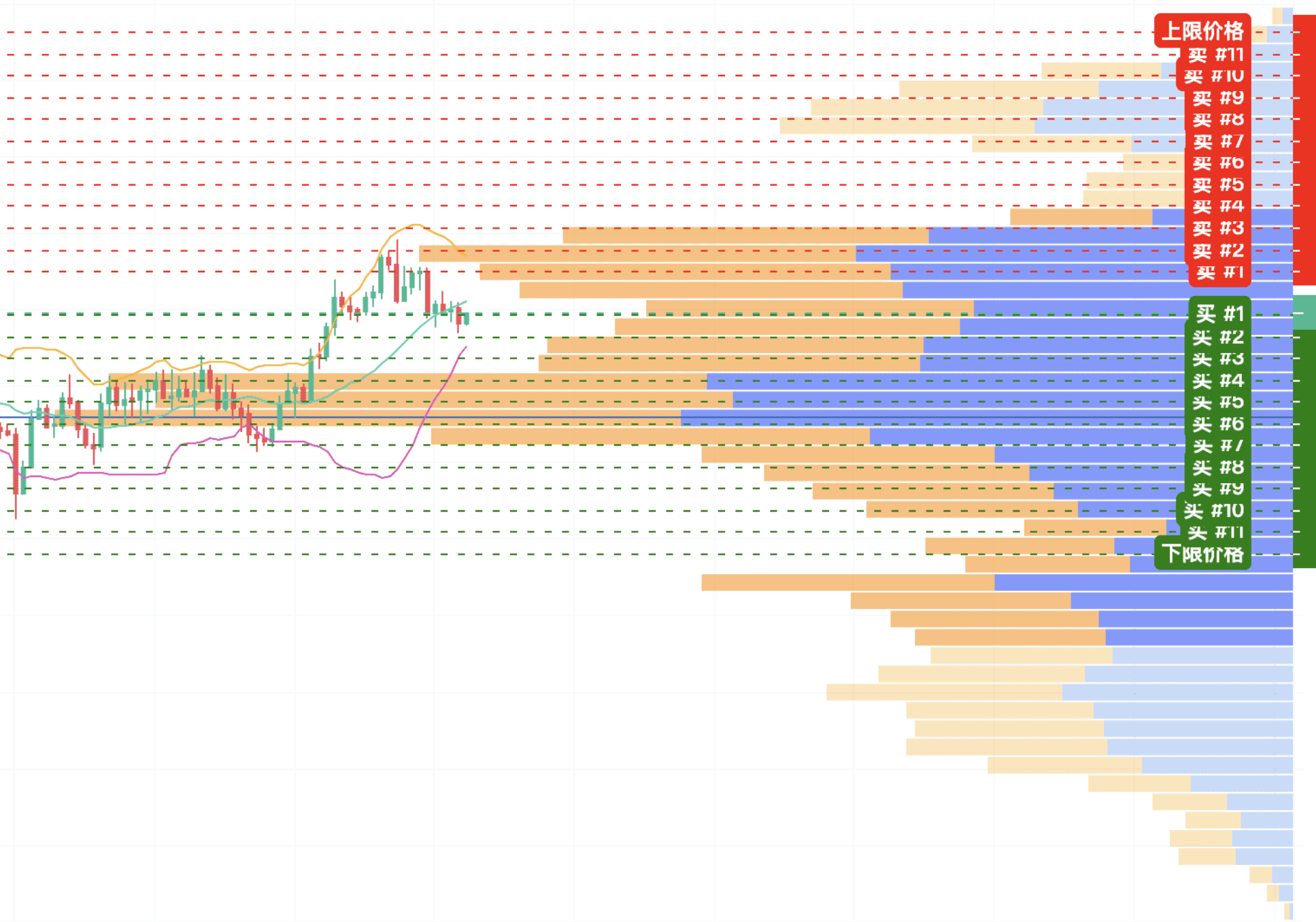
Also, keep an eye on the news. Even the most stable coins can be affected by major market movements. When there are significant positive or negative news, adjust accordingly.
Remember one thing: earning less is not losing, and not losing is a big gain. Always keep in mind that this is investing, not gambling.
The grid trading gives you ample response time, it won’t wipe out your funds overnight, so rest assured.
That’s all my experiences accumulated from running grids.
I usually handle short-term trades in both bullish and bearish markets, and only keep grids running long-term because they are genuinely stable; that's why I keep reiterating this in live sessions.
Currently, there is a live stream every day; feel free to continue following the AiCoin team! Reserve early👇
https://www.aicoin.com/zh-Hans/live/list?tab=upcoming
Join our community to discuss and grow stronger together!
Official Telegram community: https://t.me/aicoincn
AiCoin Chinese Twitter: https://x.com/AiCoinzh
Aster referral: https://www.asterdex.com/zh-CN/referral/9C50e2
Hype referral: https://app.hyperliquid.xyz/join/AICOIN88
Binance referral: https://jump.do/zh-Hans/xlink-proxy?id=3 invite code: aicoin668
Coinbase referral: https://jump.do/xlink?checkProxy=true&proxyId=25 invitation code: Y8L23JL
免责声明:本文章仅代表作者个人观点,不代表本平台的立场和观点。本文章仅供信息分享,不构成对任何人的任何投资建议。用户与作者之间的任何争议,与本平台无关。如网页中刊载的文章或图片涉及侵权,请提供相关的权利证明和身份证明发送邮件到support@aicoin.com,本平台相关工作人员将会进行核查。