The U.S. June PCE price index recorded a month-on-month change of -0.1%, marking the first decline in about four years, but year-on-year it remains at 3.7%. Core PCE increased by 0.1% month-on-month and 3.3% year-on-year, clearly conveying a contradictory signal: headline inflation is cooling, but core inflation remains significantly above the Federal Reserve's 2% target, providing ammunition for both narratives of "premature rate cuts" and "the need to maintain high rates longer." In the same report, personal consumption expenditures increased by only 0.3% month-on-month, personal income rose by just 0.2%, and the savings rate fell to a four-year low of 2.7%, indicating that households are increasingly relying on consuming savings to maintain spending. This model of "overdrawing future income for current demand" raises questions about the sustainability of consumption resilience. Since PCE and core PCE are the Federal Reserve's preferred inflation indicators, the current combination of "marginal easing of inflation + core still high + savings at a low" significantly intensifies the divergence over the future interest rate path: one side bets on peak inflation and slowing growth eventually forcing the Fed to start cutting rates in the coming quarters, while the other emphasizes that core inflation at 3.3% is still high, necessitating sustained high-risk free yields to curb price pressures. In such an uncertain environment, the future trajectory of dollar liquidity is brought into a volatile state: if interest rate expectations decline, it theoretically favors the valuation space for high-duration risk assets; if "high rates last longer" continues to prevail, funding costs remain high, suppressing the risk appetite for risk assets. For Bitcoin and Ethereum, viewed as high-beta assets, this set of data shifts pricing focus back to the macro level: on one hand, cooling inflation improves the medium-term rate cut outlook; on the other hand, the dislocation between core inflation and household savings raises the risks of economic volatility and policy misjudgments, making the repricing of the dollar's interest rate path and liquidity directly govern the fund direction and risk premiums in the crypto market for the next few months.
Cooling Inflation: First Month-on-Month Decline in Four Years for PCE
The June PCE price index showed a month-on-month decline of -0.1%, the first decrease in about four years, but year-on-year it remains at 3.7%, significantly above the 2% target; simultaneously, core PCE, excluding food and energy, showed a slight month-on-month rise of 0.1% and a year-on-year increase of 3.3%. Structurally, this is an inflation reading of "total cooling, core stubbornness": the negative month-on-month PCE indicates that recent price pressures are marginally easing; however, core PCE is still growing positively and is above 3% year-on-year, suggesting that medium to long-term inflation stickiness remains, making it difficult for the Fed to interpret this set of data as having "completed its task." Considering PCE and core PCE are the Fed's favored inflation measures, this combination of "surface cooling, core high" weakens concerns about a re-acceleration of inflation while also providing data support for the faction advocating "high rates lasting longer."
From a pricing mechanism perspective, declining inflation expectations historically often accompany downward revisions of nominal yield expectations, leading to actual interest rate paths also being adjusted downwards, directly impacting high-duration asset valuations via discount rates. The current month-on-month negative PCE prompts the market to begin reassessing the future nominal and real interest rate centers: if the inflation path is believed to retreat faster, the risk-free discount rate faced by risk assets will decline, theoretically raising the fair valuation of high-beta assets like BTC and ETH; however, core PCE at 3.3%, still significantly higher than 2%, combined with the need for households to rely on a lowered savings rate of 2.7% to support consumption, embeds growth volatility risks that make it difficult to compress risk premiums significantly. For the crypto market, this means that the PCE data is reshaping prices through two opposing forces: "downward discount rates" and "difficulty in lowering risk premiums." Short-term trading positions can seek to capture beta elevation through reduced interest rate expectations, but medium-term allocation of funds still needs to be cautiously reevaluated in a scenario where inflation is not yet fully controlled, and policies may be forced to remain relatively tight, regarding BTC and ETH’s risk compensation requirements.
Savings Rate Falls to Four-Year Low: Consumption Resilience Begins to Overdraw
From the June data, U.S. households have begun to use "compressing the future" to maintain current consumption: personal income rose only 0.2% month-on-month, while personal consumption expenditures increased 0.3% month-on-month, with the difference directly reflecting a passive decline in the savings rate to 2.7%, a four-year low. The "excess savings" accumulated during the pandemic had previously been a buffer for consumption resilience, and now that the savings rate has returned to a low level, it indicates that this buffer has been substantially consumed. To maintain similar consumption growth in the future, households will need to rely more on new income or leverage rather than using existing assets. Macroeconomically, this will lead the market to begin to repricing the sustainability of U.S. domestic demand: once there are minor fluctuations in employment or income, consumption growth may retreat more quickly than before, making the overall growth forecast shift downward.
The downward revision of growth expectations does not merely signify "slower growth," but rather an increase in the probability of a recession, which typically reflects in risk asset pricing as rising volatility and re-elevated risk premiums. For high-beta assets like Bitcoin and Ethereum, the combination of "consumption overdraw + savings hitting the bottom" will weaken the market's willingness to continue leveraging to bet on the bullish trend: the narrowing futures-to-spot price gaps, falling or turning negative funding rates, and slowing on-chain dollar asset supply are all typical signals of reduced risk appetite. In an environment where discount rate expectations are declining but growth uncertainty is rising, the crypto market is more likely to evolve into a structure of "low leverage, low positions," with funds choosing to maintain liquidity positions rather than aggressively extending duration and amplifying risk exposure.
Policy Game: High Rates Lasting Longer or Early Shift
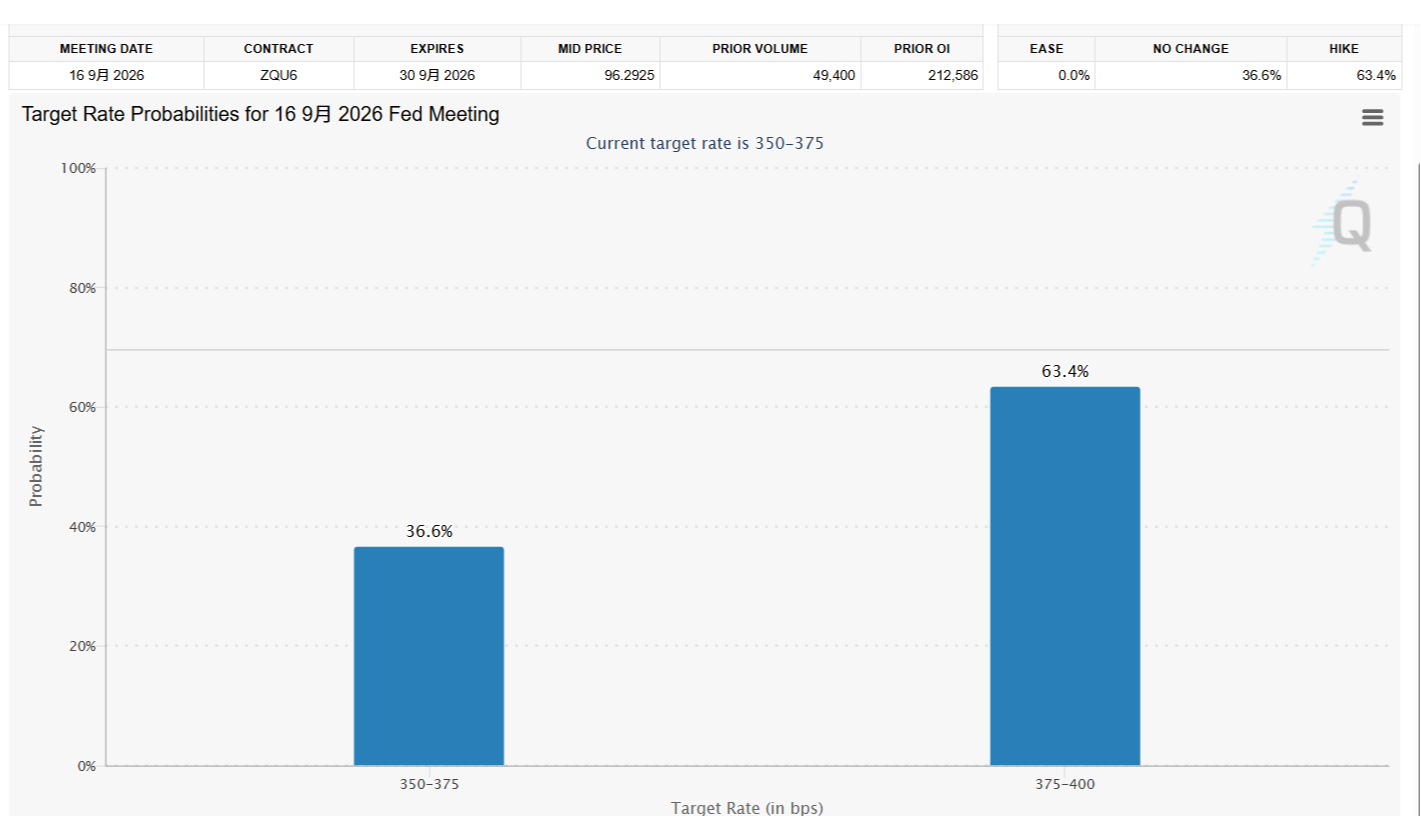
The June PCE showed a month-on-month change of -0.1%, marking the first decline in about four years. Coupled with core PCE's month-on-month increase of only 0.1% and year-on-year of 3.3%, this provides ammunition for the dovish narrative of "inflation is declining"; however, the significant gap from the 2% target at 3.3%, along with personal consumption expenditures still increasing and the overdrawn structure of the savings rate at only 2.7%, allows advocates for "high rates lasting longer" to argue for continued demand suppression. The Federal Reserve has repeatedly stressed "data dependency," meaning the interest rate path will oscillate between these two interpretations: one path is to maintain high rates longer until core PCE becomes closer to 2%, corresponding with persistently tight dollar monetary conditions and high-risk-free yields; another path is to initiate rate cuts earlier, lowering policy rates amidst falling inflation but rising growth uncertainty, corresponding with looser dollar liquidity and a lower discount rate center. At the same time, the Bank of Japan has kept its target interest rate unchanged at 1%, maintaining a high U.S.-Japan interest rate differential, reinforcing the sensitivity of global funds to the dollar's interest rate path.
In the scenario of "high rates lasting longer," global discount rates rise, and the dollar financing costs remain high. High-beta BTC/ETH will need to bear a higher macro risk premium: the valuation center tends to move downwards, on-chain dollar asset supply and the willingness for off-market financing trend towards caution, making it harder for futures-spot differentials and funding rates to maintain positive premiums for long. The narrative shifts from "liquidity returning" to "cash flow and defense." If the market is more convinced of an "early shift," then the expectations for a lower discount rate will benefit high-duration assets generally, reestablishing BTC/ETH as tools for hedging against expansions in the looseness cycle and a resurgence of dollar liquidity, with risk premiums expected to compress, valuation anchors to rise, and on-chain dollar asset deployment and leverage demand to recover. The key game in the current crypto market hinges on whether traders are more convinced of "high rates lasting longer" or "early shift," and consequently, how this informs the repricing of BTC/ETH's discount rate path and risk premiums.
U.S.-Japan Interest Rate Differentials and Dollar Direction: Crypto Carry Trade and Cross-Currency Funds
As inflation data has made the market rebet on the Federal Reserve's rate path, the Bank of Japan's decision to keep the target rate unchanged at 1% stands in stark contrast to the persistently high rate environment in the U.S., maintaining historically elevated U.S.-Japan interest rate differentials. This differential structure is a core constraint for cross-currency carry trades: funds borrow in low-interest-rate currencies, convert to high-interest-rate currencies, and allocate to high-yield assets, placing dollar assets and risk assets at the "final buyer" position within this chain. As long as the market still believes in "high rates lasting longer," the U.S.-Japan interest rate differential and rising dollar rates will maintain their attractiveness for dollar assets, increasing dollar financing costs while suppressing the leverage impulse originating from non-dollar currencies.
For the crypto market, this game of interest rate differentials and dollar direction affects three layers directly. Firstly, borrowing and derivatives structures denominated in dollars are highly sensitive to dollar financing costs: if, following the cooling of PCE, the market increases its bets on interest rate cuts, expecting the U.S.-Japan interest rate differential to narrow, the dollar curve will shift downwards, resulting in lower marginal costs of on-chain dollar positions and contract leverage, favoring BTC/ETH leveraged longs, futures basis trading, and repricing of the forward curve towards "loose expectations"; conversely, if high rate expectations are reinforced and the interest differential remains elevated, dollar-denominated funds will prefer to hold risk-free yields, diminishing the willingness to supply on-chain dollar assets and restraining leverage demand. Secondly, funded carry trades starting from yen, facing dual risks from interest differentials and exchange rates, will dynamically adjust positions in crypto assets: if the U.S.-Japan interest rate differential narrows or expectations for a weaker dollar rise, yen-funded carry trades will be incentivized to close out dollar asset and BTC/ETH risk positions, compressing cross-currency capital supply in the crypto market. Thirdly, off-market derivatives and structured products corresponding to different currency environments will also be redesigned alongside the U.S.-Japan interest rate differential and dollar path, thereby reflecting a new round of repricing for BTC/ETH risk premiums in indicators such as on-chain dollar supply, futures-spot differentials, and funding rates.
Three Macro Observational Clues for BTC/ETH Trading
Based on the signals displayed in this data, one is the month-on-month PCE change of -0.1% and core PCE month-on-month change of +0.1%, indicating marginal easing of inflation pressure, favorable for lowering nominal and real discount rates; the second is personal consumption expenditures of +0.3% and income of only +0.2%, with the savings rate falling to a four-year low of 2.7%, emphasizing the maintenance of demand through balance sheet overdraw and exacerbating medium-term growth and recession risks. These two directions will form a tug-of-war between declining discount rates and earnings/growth uncertainty when pricing BTC/ETH. For trading these two major assets going forward, the first observational clue is monitoring inflation and interest rate expectations: consistently tracking subsequent PCE and core PCE trajectories, as well as the Federal Reserve's public discourse weighing "inflation still above 2%" against "interest rate cut windows," using on-chain dollar-denominated asset supply, spot-future basis, and perpetual funding rates to validate whether changes in interest rate expectations have indeed lowered the capital costs in the crypto market. The second clue is growth and consumption: observing whether U.S. employment and consumption data exhibit marginal weakening amid a low savings rate, assessing whether BTC/ETH is transitioning from "interest rate trading" to "recession trading" through the degree of futures leverage usage, funding rate extremes, and narrowing price differentials and re-evaluating whether high-beta asset risk premiums are being raised anew. The third clue is global interest rate differentials and capital flows: under the pattern where the Bank of Japan maintains a 1% target interest rate and the U.S.-Japan interest rate differential remains high, continuously tracking the evolution of U.S.-Japan policy differentials and their impact on cross-currency carry trades, observing changes in net inflows/outflows of on-chain dollar-denominated assets and the structure of spot versus futures price differentials in major exchanges, to determine if global capital allocation between dollar assets and BTC/ETH is repricing the risk premiums and duration premiums of BTC/ETH.
Join our community to discuss and become stronger together!
AiCoin exclusive Hyperliquid benefits: https://app.hyperliquid.xyz/join/AICOIN88
AiCoin exclusive Aster benefits: https://www.asterdex.com/zh-CN/referral/9C50e2
On-chain Telegram community: https://t.me/AiCoinWhaleData
On-chain community: https://www.aicoin.com/link/chat?cid=N6OVMor5g
AiCoin on-chain Twitter: https://x.com/aicoinwhaledata
免责声明:本文章仅代表作者个人观点,不代表本平台的立场和观点。本文章仅供信息分享,不构成对任何人的任何投资建议。用户与作者之间的任何争议,与本平台无关。如网页中刊载的文章或图片涉及侵权,请提供相关的权利证明和身份证明发送邮件到support@aicoin.com,本平台相关工作人员将会进行核查。