Author: CryptoSlate
Translation: Shenchao TechFlow
Shenchao Insights: The Japanese Senate has passed the cryptocurrency regulatory reform bill, bringing crypto transactions under the Financial Instruments and Exchange Act, and ultimately implementing a 20% tax rate. However, when this long-awaited preferential tax rate will take effect depends on when the Cabinet initiates the new regulations — execution in 2027 means taxation begins in 2028, and the timetable remains uncertain.
On July 15, the Japanese Senate passed Cabinet Bill No. 57 by a majority vote, completing the legislative process to include regulated crypto activities under the Financial Instruments and Exchange Act.
The legal framework is in place, but traders may have to wait until 2027 or 2028 for the new market rules and the 20% tax rate to take effect.
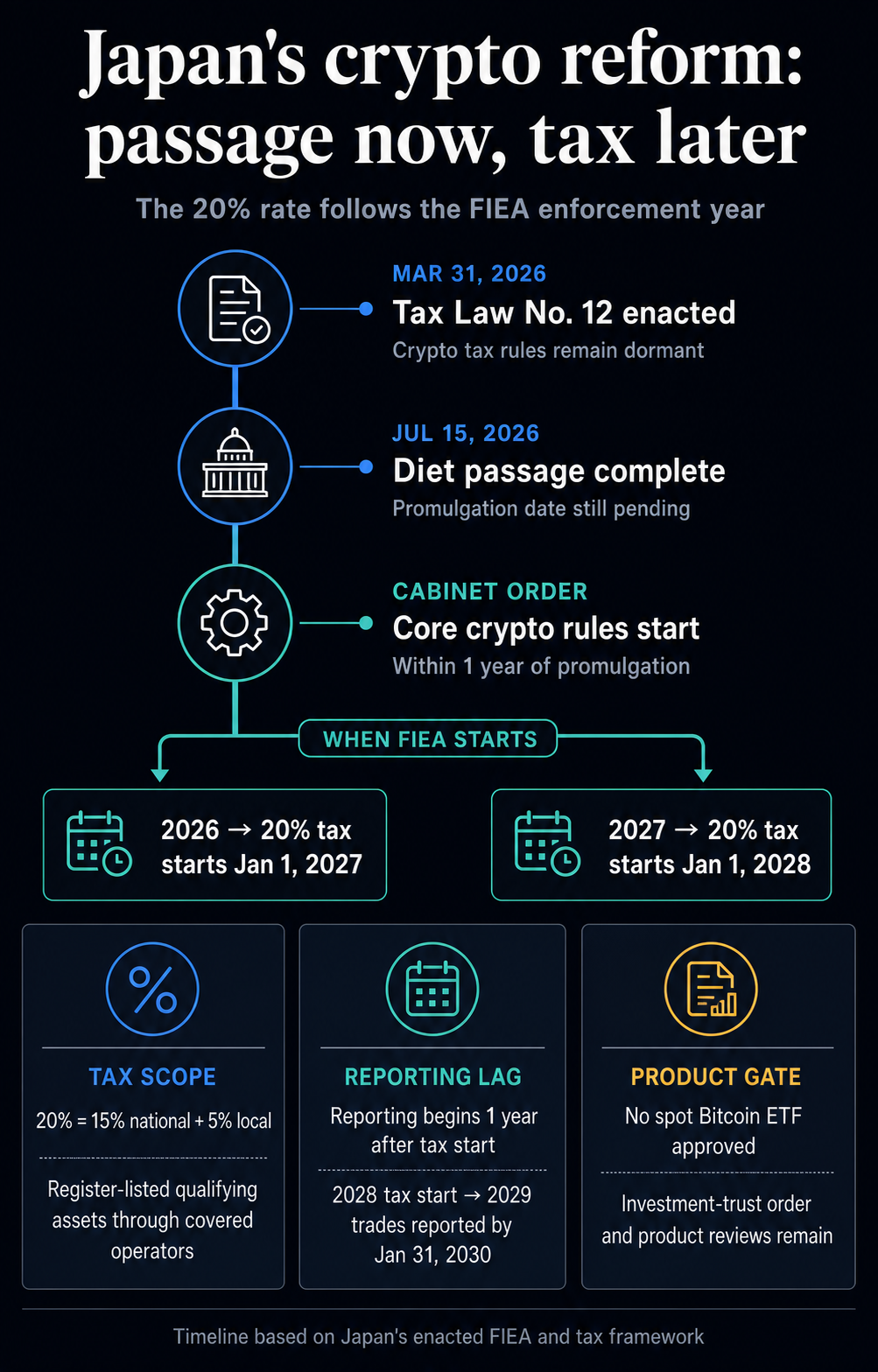
Official Senate records show that the core crypto provisions will take effect within one year of the law's announcement, on a date set by Cabinet order. If implemented in 2026, the tax rules will begin on January 1, 2027; if implemented in 2027, the start date will be pushed to January 1, 2028. The Cabinet's scheduling will determine which calendar applies.
Implementation Before Gains
This reform transfers the regulation of crypto trading from the Payment Services Act to the Financial Instruments and Exchange Act. Legally, cryptocurrencies remain distinct from securities, but regulated activities are provided a compliance framework similar to the securities market.
The Financial Services Agency's explanatory materials increase disclosure and registration requirements for crypto sales, issuer-controlled token offerings, and lending, alongside asset screening, custody, client protection, and insider trading controls.
Exchanges and intermediaries can now prepare for this framework; their obligations will apply once it takes effect. Detailed operational requirements are still pending Cabinet orders and Financial Services Agency regulations.
XRP Currently Dominates Cash Inflows in Japan, the New 20% Tax Rate Set to Lock in This Advantage
Parliament has passed tax-related legislation, but its crypto provisions remain dormant until the trigger conditions of the Financial Instruments and Exchange Act are met. Japan passed and announced the tax amendment for the fiscal year 2026 on March 31, as Law No. 12. Once implemented, eligible gains will be subject to a combined tax rate of 20%, divided into 15% national income tax and 5% local residence tax.
The 20% tax rate only applies to investors selling eligible tokens through registered crypto businesses, with the assets appearing on Japan's official registry.
Unused losses within the same tax definition of crypto categories can be carried forward for three years but must meet conditions. Tokens, venues, and transactions outside that defined channel will maintain existing treatment.
Reports will arrive one year after the tax and loss rules take effect. According to the Ministry of Finance framework, companies must provide client identity, Japan's My Number identifier, and transaction details to tax authorities by January 31 of the year following the trading year. If the 20% system starts in 2028, reports will cover transactions in 2029, with the first reports due by January 31, 2030.
Japan's 20% Crypto Tax Rate Sets a New Benchmark in Asia, Bringing Pressure to Singapore and Hong Kong as Retail Costs Decrease
The reform plan also outlines potential pathways for crypto investment products. It incorporates crypto investment management and consulting under the Financial Instruments and Exchange Act, and anticipates certain investment trusts to hold registered crypto assets that meet tax conditions. This handling still requires separate amendments to the Investment Trust Act enforcement order.
The text does not mention spot Bitcoin ETFs, nor does it grant approval to any products. The Financial Services Agency stated in October 2025 that the formation and sale of domestic crypto ETFs are prohibited under the previous framework. Sponsors will still need to pass applicable product and listing reviews after defining new pathways through implementation rules.

Japan's Bitcoin ETF Plan Readies to Open Pathway to Household Savings
Key dates now depend on when the law is officially published, when the Cabinet makes changes to the Financial Instruments and Exchange Act effective, and when the Financial Services Agency completes detailed rules. The 20% tax rate will apply starting from the next tax year.
免责声明:本文章仅代表作者个人观点,不代表本平台的立场和观点。本文章仅供信息分享,不构成对任何人的任何投资建议。用户与作者之间的任何争议,与本平台无关。如网页中刊载的文章或图片涉及侵权,请提供相关的权利证明和身份证明发送邮件到support@aicoin.com,本平台相关工作人员将会进行核查。


