Author: Jae, PANews
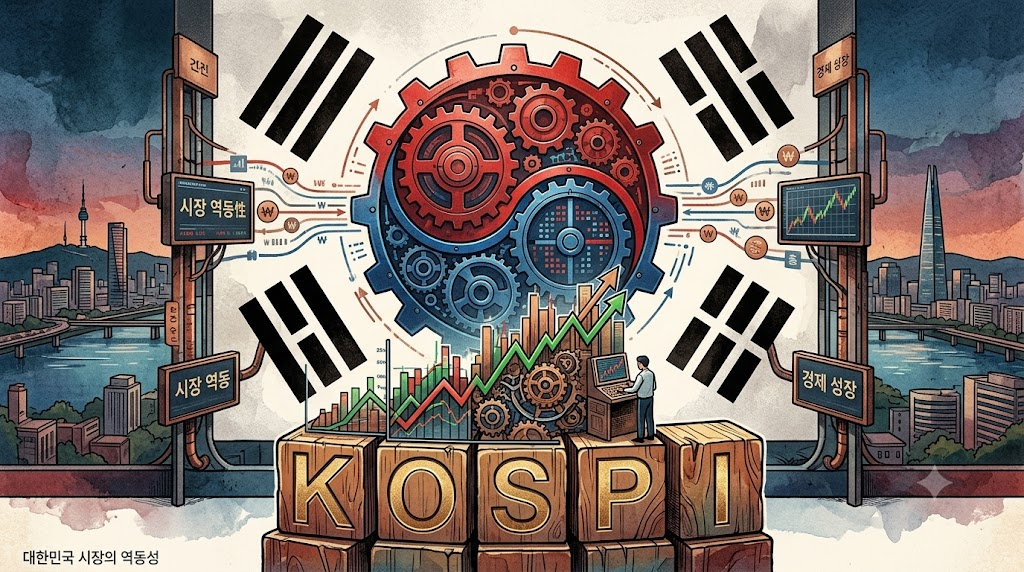
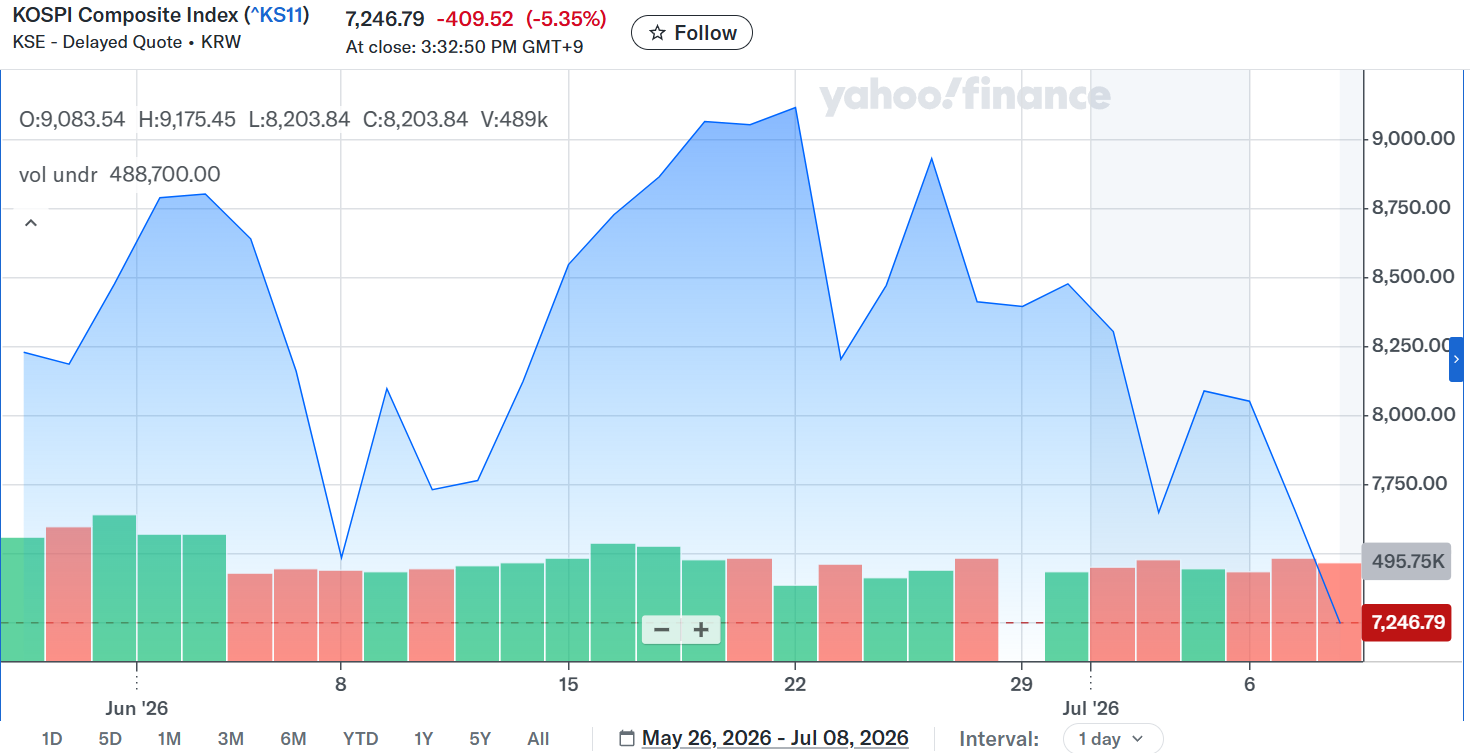
On July 8, the South Korean stock market continued its downward trend, with the Korea Composite Stock Price Index (KOSPI) briefly falling below 7200 points, decreasing over 6% during the day, and cumulatively dropping over 20% from the peak in June, entering a technical bear market.
Known for its high volatility and high retail investor participation, the South Korean stock market has plunged into an unprecedented trust crisis, triggered by leveraged ETFs targeting individual stocks.
A member of the National Power Party of South Korea and former presidential candidate Ahn Cheol-soo publicly criticized on social media: the KOSPI has completely "turned into a casino." He strongly demanded stringent corrective measures, including delisting, for the 2x leveraged products linked to Samsung Electronics and SK Hynix.
From the public excitement when the regulatory authorities exceptionally opened individual stock leveraged ETFs at the end of May to the current situation where the National Assembly is considering delisting and the regulators publicly apologize, the South Korean stock market has taken a steep parabolic path in just six weeks.
This financial farce has revealed the structural wounds of the South Korean stock market, characterized by high concentration and rampant leverage, and has sounded an alarm for the regulation of leveraged products amid the global trend of retail investing.
Institutional Easing Driven by Outflow of Funds
Looking back two months, the implementation of individual stock leveraged products in South Korea was essentially a defensive maneuver.
Radical financial reforms often come with institutional helplessness and anxiety. For a long time, dissatisfied with the long-term stagnation of the local stock market, South Korean retail investors withdrew vast amounts of funds and invested in overseas leveraged markets, particularly leveraged and inverse ETFs listed in the United States and Hong Kong. Among them, the SK Hynix double-leveraged product issued by China Southern Asset Management (CSOP) in Hong Kong was the most popular, draining a massive amount of day trading funds from Korea in a short time, with its asset scale exceeding $13 billion at one point, making it the world's largest leveraged investment tool for a single stock.
On one side, the local market continues to bleed out, and there are significant depreciation pressures on the Korean won, while on the other, retail investors have a strong demand for leveraged products, prompting South Korea's financial regulatory authorities to tilt their policy scale. On April 28, the Financial Supervisory Service (FSS) officially revised the long-standing "single stock leverage ban": increased the individual stock holding limit for index products from 30% to 100%, and removed the rigid threshold of 10 component stocks, clearing compliance obstacles for 2x leveraged and inverse products linked to tech giants.
At that time, the semiconductor industry was riding the wave brought by artificial intelligence (AI). Amid a surge in AI computing power demand and breakthroughs in high-performance high-bandwidth memory (HBM) technology, Samsung Electronics and SK Hynix continuously set historic records for performance, pushing bullish expectations to their peak.
On May 27, South Korean financial authorities officially approved eight mainstream asset management institutions to issue the first batch of 16 locally issued 2x leveraged and inverse products linked to Samsung and SK Hynix.
To curb excessive speculation, regulators set up a firewall in form:
- Prohibit the term "ETF" from being directly included in the product name to distinguish it from diversified investment funds;
- Investors must pay a margin of 10 million Korean won;
- Force completion of a 2-hour investment education course.
However, these thin barriers are virtually ineffective in the face of retail investors' nearly frenzied speculative enthusiasm.
High Concentration + High Leverage Backfire on South Korean Stock Market, Retail Investors Become Daily Rebalancing Sacrifices
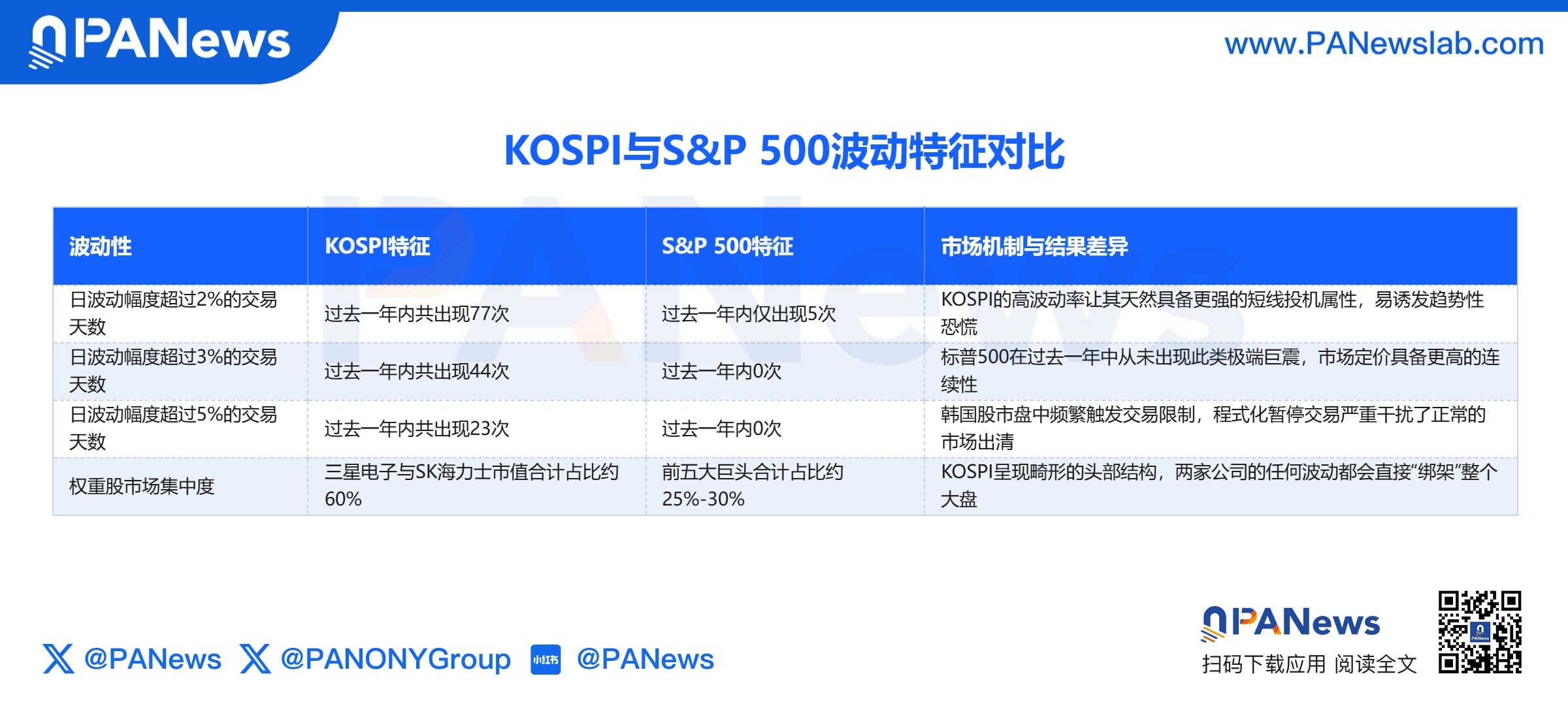
Ahn Cheol-soo pointed out that Samsung Electronics and SK Hynix together account for about 60% of the total market capitalization of KOSPI. Overlaying leverage on such a "top-heavy" structure is equivalent to equipping the entire index with an amplifier. This means that any slight disturbance will be exponentially amplified throughout the market.
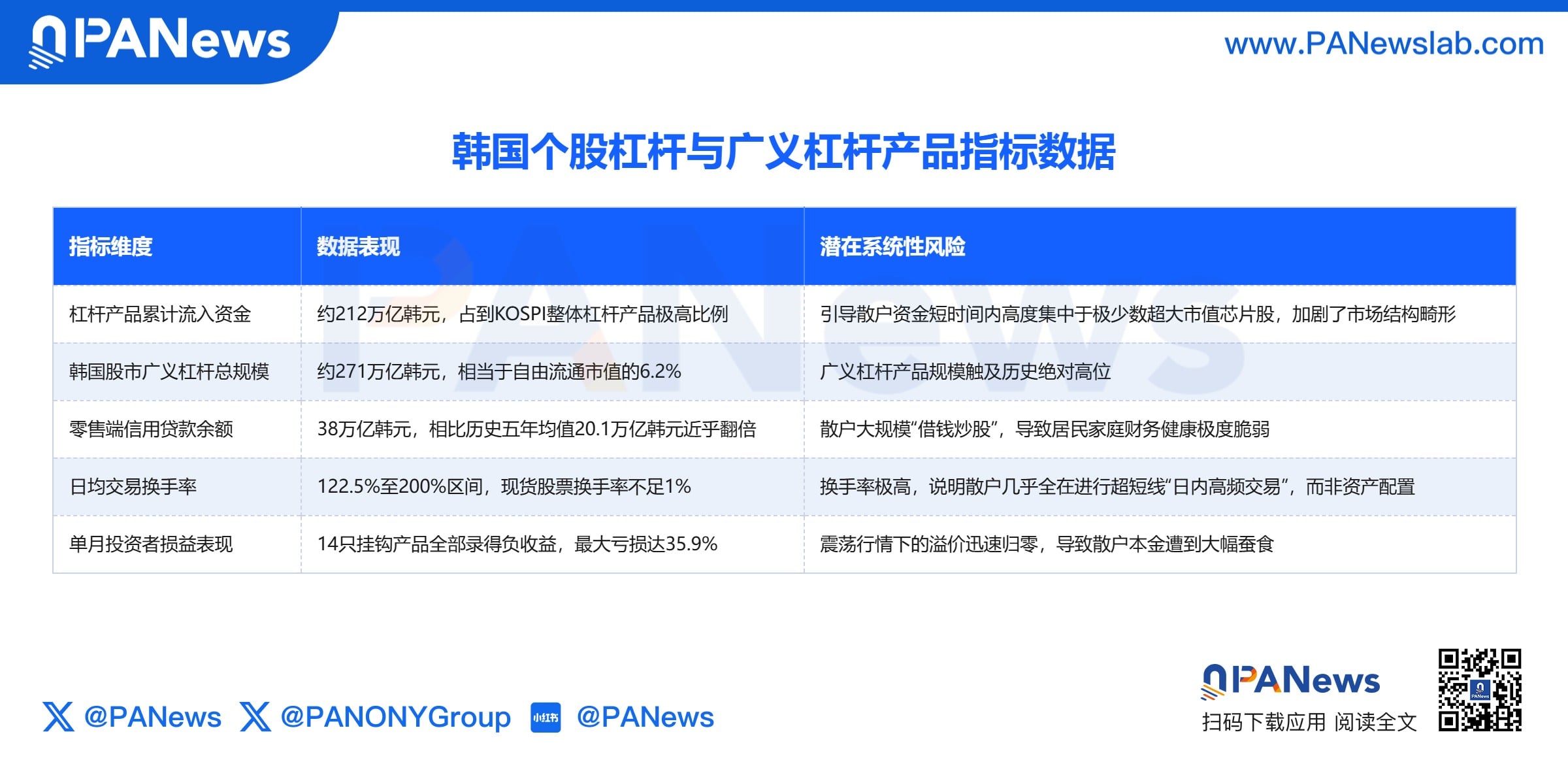
By early July, the funds flowing into the leveraged products of Samsung Electronics and SK Hynix reached 212 trillion won, accounting for approximately 26.6% of the total trading volume of Korean ETFs. However, all 14 leveraged products recorded negative returns a month after their listing, with the largest loss reaching 35.9%. On July 7, 13 of them fell below the issuance price of 20,000 won. On that day, the total transaction amount of 16 individual stock leveraged and inverse products reached 13.11 trillion won, exceeding one-third of the total transaction amount of all market ETFs.
What is even more puzzling is that from the listing until July 3, despite Samsung Electronics' stock price increasing by about 0.81%, the KODEX Samsung Electronics leveraged product instead fell by 10.75%.
While the underlying stocks are rising, the leveraged products are losing. This means that the "Daily Rebalancing" mechanism of leveraged products has become a curse that harvests retail investors.
To maintain a 2x risk exposure, leveraged products must perform programmed adjustments before the end of each trading day: buying more as the stock price rises, and mechanically selling as the stock price falls. In a volatile market, this mechanism generates a "negative compounding effect," causing the net value to continuously diminish due to adjustment losses. As long as the underlying assets are in wide swings rather than a single upward trend, the net value of leveraged products will continue to evaporate.
As of July 6, the total net assets of the 16 individual stock leveraged ETFs were approximately 14.91 trillion won, a decrease of 15.3% from 17.6 trillion won on June 25, shrinking by about 3 trillion won.
The destructive power of leveraged products not only leads to retail investor losses but also backfires on the entire market. According to trading monitoring data from UBS and Barclays, during the market fluctuations in early March and mid-May, the programmed adjustment flow in the half hour before the market close accounted for 60% and 17% of the total trading volume of SK Hynix's spot market, respectively.
The adjustment behavior of leveraged products has significantly deviated from the underlying fundamentals, directly evolving into irrational sell-offs or rallies reminiscent of "the tail wagging the dog." The KOSPI panic index spiked to historic extremes of 90.8 and 95 in mid-June, and the market entered a highly emotional speculative state. This year, the South Korean stock market has triggered five overall market circuit breakers, while this mechanism has only been activated a total of 11 times since its implementation; another "circuit" mechanism targeting programmatic trading has also been triggered more than 30 times this year.
Brokerages Make Commissions While Retail Investors Suffer Heavy Losses
Any financial spectacle can be broken down into an account that reflects corresponding benefits and costs: in the South Korean stock market, brokerages are profiting significantly, while retail investors are suffering heavy losses.
Policy reforms have indeed achieved the objective of detaining funds in the short term. After leveraged products were launched, their scale rapidly expanded to 14 trillion won (approximately $9.1 billion), verifying the enormous demand for leveraged tools among local retail investors; high turnover rates and secondary market premiums have also provided ample arbitrage opportunities for quantitative funds and market makers, enhancing the pricing participation of the South Korean stock market in the leveraged field to a certain extent.
Among them, the biggest winners are the brokerages. According to FSS estimates, in the first month of launch, domestic brokerages earned commissions totaling 5-10 trillion won (approximately $3.3-6.6 billion) from related trades, injecting a robust boost into a brokerage industry that has been sluggish for a long time.
“Those operating the system are just counting money while the retail investors genuinely participating are unable to make any profits.” Just like Lee Chan-jun's post-event scolding, the cost greatly outweighs the benefits. Among the holders of leveraged products, 92% are retail investors. Using their meager savings, they have become the payers of this financial experiment under the double squeeze of information asymmetry and mechanism flaws.
International capital accelerates withdrawal, damaging the credibility of the South Korean stock market: Data from The Wall Street Journal shows that the capital outflow of over $10 billion in the first half of 2026 signals the mainstream global funds voting with their feet. Yesterday (July 7), foreign funds sold nearly $1.5 billion in the South Korean stock market again, pushing overall stock prices down. Ahn Cheol-soo pointed out that if the "roller-coaster-like KOSPI" continues, the South Korean market will be regarded as an unpredictable "junk stock market" by global institutional investors.
Market concentration and unilateral risk intensification: On July 2, the semiconductor sector faced bad news, triggering a more than 5% drop in KOSPI within just 10 minutes of opening, which directly triggered a circuit breaker, with the programmed selling pressure from leveraged products playing a key propulsive role. The Bank of Korea warned that the ongoing expansion of individual stock leveraged products could further intensify market concentration, increase market volatility, and amplify the loss risks for retail investors.
Liquidity mismatch and high premium traps create valuation illusions: On June 8, due to a rush of funds and insufficient liquidity, the ACE SK Hynix leveraged product once experienced an 86% premium in the secondary market, with most retail investors purchasing at high prices. The next day, the premium quickly returned, and even if the underlying rebounded, it could not cover the overdrawn premium, resulting in retail investors not only failing to profit but also suffering a 27% evaporation of their principal.
Regulators "encircle and suppress" leveraged products, potentially triggering a new round of capital flight by retail investors
With retail investors' assets shrinking significantly, the call for accountability from the financial regulatory authorities has reached its peak in South Korean society.
FSS President Lee Chan-jun admitted at a media briefing in June that in the rush to stabilize the exchange rate and intercept capital outflow, the regulatory authorities "responded hastily" during the product review process.
Currently, the National Assembly has officially initiated a deep review of individual stock leveraged products, focusing discussions on deadlines for rectification and even mandatory delisting proposals. At the same time, the Financial Supervisory Service has urgently convened CEOs of major asset management institutions in South Korea to discuss an emergency safety cushion mechanism.
The corrective directions proposed by the regulators mainly include three aspects:
Raise the investment threshold for retail investors: Significantly increase margin standards or set a hard upper limit on individual derivatives positions;
Slow down the pace of expanding derivative tools: The Korean Exchange has announced the postponement of the four super heavyweight weekly options originally scheduled to be launched at the end of June to prevent the formation of arbitrage chains from multiple derivatives and avert secondary crushes on the spot market;
Guide products towards diversification: In principle, no new individual stock leveraged products will be approved, and the quotas for existing products will gradually be locked; at the same time, relax restrictions on actively managed composite products with a correlation coefficient of less than 0.7, guiding retail investors back to multi-asset allocation.
However, the overseas asset management industry holds differing views on the remedial actions of Korean regulators. Lee Ji-chung, Executive Director of CSOP in Hong Kong, bluntly stated that even if South Korea implements a stringent crackdown, it may be futile. External markets like Hong Kong have more flexible tax advantages and longer trading hours; forcing the delisting of domestic leveraged products could easily trigger another "mass flight of retail funds" back to overseas leveraged markets.
In six weeks, the KOSPI has transformed from an "innovation test field" into a "casino." In this casino, the most expensive chips are the investors' trust.
History repeatedly proves: liquidity built on leverage will ultimately be repaid with more violent fluctuations; a market propped up by attracting gamblers will eventually be voted against by rational funds.
免责声明:本文章仅代表作者个人观点,不代表本平台的立场和观点。本文章仅供信息分享,不构成对任何人的任何投资建议。用户与作者之间的任何争议,与本平台无关。如网页中刊载的文章或图片涉及侵权,请提供相关的权利证明和身份证明发送邮件到support@aicoin.com,本平台相关工作人员将会进行核查。


