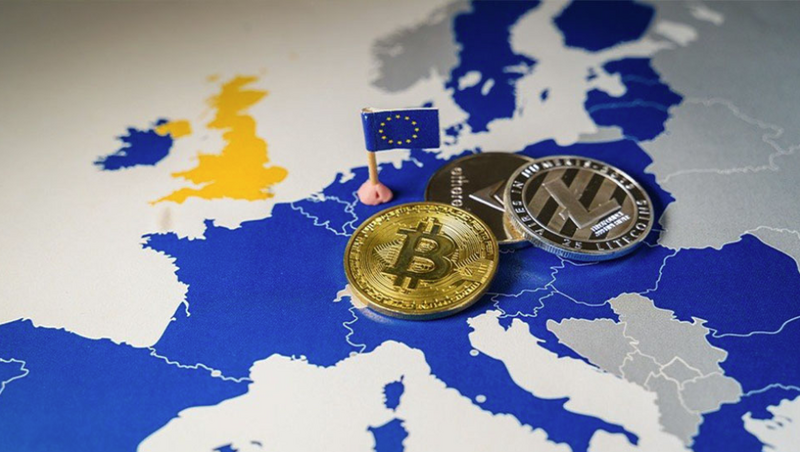
Recently, discussions around the European MiCA license have been intensifying. Many people tend to equate whether an exchange has obtained a specific regional license directly with its compliance; others see MiCA as a new watershed in industry competition.
If we extend the timeline, this closely resembles the story experienced by internet giants over a decade ago. In the early stages of global expansion, companies like Uber and Airbnb faced restrictions or even bans from countless countries and cities due to ambiguous regulations and conflicting interests.
However, today, when people discuss them, they rarely get bogged down in whether a certain city issued a license in a specific month; rather, they focus on how these companies have integrated into the foundational infrastructure of society.
The cryptocurrency industry may also be going through a similar phase.
Licenses are certainly important as they represent eligibility for specific jurisdictions; however, what truly determines whether a platform can navigate through cycles is not a piece of paper but the comprehensive capability that has been established over the long term in compliance, security, risk control, and ongoing collaboration with global regulatory systems.
From this perspective, MiCA resembles a node rather than an endpoint.
What truly deserves attention is the role transformation occurring within cryptocurrency exchanges - they are gradually evolving from digital asset trading platforms into a part of the global financial infrastructure.
Underlying Logic of the Industry: From Competing on Products to Competing on Trust
If we rewind to 2021, evaluations of an exchange were primarily based on trading volume, liquidity, listing speed, and marketing activities. These were the metrics of competition in the early 'online casino' phase.
However, over the past two years, several key events driving industry growth have pointed to a single keyword - regulatory clarity.
Whether it's the approval of Bitcoin ETFs, ongoing advancements in stablecoin legislation, the increasing number of publicly listed companies incorporating digital assets into their balance sheets, or Circle's successful IPO, they fundamentally indicate one thing:
Only when the market has sufficiently clear and credible rules will traditional financial liquidity worth trillions feel safe to keep pouring in.
This also implies that the focus of competition among exchanges in the future may no longer be solely on "who has the better trading experience" but rather on who can take on an increasing number of responsibilities as financial infrastructure.
This includes user asset security, AML and sanctions screening, AI risk identification, law enforcement collaboration, cross-jurisdictional compliance, data transparency, and risk management systems across multiple dimensions.
These capabilities may not bring traffic as quickly as launching a popular token, but they determine whether a platform can exist long-term within the global financial system.
Analysis: Where Do Top Exchanges Spend Their Money?
Recently, Binance released a set of the latest compliance construction data. In comparison to new products and new assets, these figures are almost entirely concentrated on another, less eye-catching yet increasingly important matter - compliance infrastructure development.
We can view this shift in industry focus from four dimensions:
Compliance has become a long-term investment in heavy assets
Data shows that Binance currently invests approximately 300 million USD annually in compliance, with around 1,500 team members dedicated to compliance-related tasks, which accounts for about a quarter of the global workforce. Compliance has transitioned from a legal department's responsibility to the backbone of platform operations. Facing cross-jurisdictional regulatory challenges, anti-money laundering efforts, and sanctions screening, these capabilities do not directly generate trading volume but are critical for the platform's survival through the next cycle.
AI is redefining risk management
AI has not only changed trading but also upgraded financial crime. Deepfakes, AI identification documents, and automated fraud have made traditional manual reviews ineffective. Currently, Binance has deployed over 24 AI projects and more than 100 AI models, covering KYC, fraud detection, and anomaly transaction detection among other aspects. Risk control is shifting from human experience to a real-time running AI data system.
Security is no longer simply about "not being hacked"
For ordinary users, the term "compliance" is quite abstract. What they can truly perceive is whether their assets are safe and whether the platform has the capability to help resolve issues when they arise.
According to disclosed data, Binance has handled approximately 1.28 million user complaints over the past year, helping recover digital assets worth about 8.2 billion USD in scenarios of erroneous transfers; meanwhile, they have also assisted in recovering or freezing a large amount of funds related to hacking attacks.
The future exchanges are becoming a crucial part of the on-chain security network and assistance mechanisms.
Collaboration with regulators is becoming a new product capability
As global regulatory frameworks continue to improve, the relationship between exchanges and regulatory agencies is also changing. Data shows that to date, Binance has processed over 310,000 collaborative requests from law enforcement agencies worldwide.
In the future, whether it's European MiCA or the market structure bill currently being pushed in the United States, platforms may be required to have higher levels of transparency, auditability, and cross-border collaboration capabilities.
These capabilities fundamentally belong to financial infrastructure.
Congratulations on Yi He's announcement yesterday regarding Binance's official entry into the Philippines! Building upon the existing licenses, registrations, or authorizations in 20 global jurisdictions, I believe Binance can continue to excel and swiftly acquire MiCA!
In Conclusion
In the past, cryptocurrency exchanges resembled internet companies, competing on products, operations, and traffic growth. However, today, they increasingly resemble financial infrastructure, beginning to undertake a growing number of social responsibilities such as asset custody, security, risk control, anti-money laundering, and law enforcement collaboration.
The transition of MiCA is still ongoing, and licenses, rules, and markets will continue to evolve.
But for users, what truly matters always boils down to two things: whether assets are safe, and whether the platform can maintain stable operations amid regulatory changes.
Licenses are certainly important; it is equally crucial to establish sufficiently mature infrastructure that can operate continuously and stably under different regulatory frameworks.
In a bull market, exchanges compete for liquidity.
In a bear market, exchanges compete for trust.
In the next cycle, what truly determines how far an exchange can go may be its foundational capability in building infrastructure. Compliance, security, risk control, transparency, and long-term collaboration with regulatory systems will become essential lessons on this path.
Keep BUIDLing.
免责声明:本文章仅代表作者个人观点,不代表本平台的立场和观点。本文章仅供信息分享,不构成对任何人的任何投资建议。用户与作者之间的任何争议,与本平台无关。如网页中刊载的文章或图片涉及侵权,请提供相关的权利证明和身份证明发送邮件到support@aicoin.com,本平台相关工作人员将会进行核查。


