On June 23, 2026, screens around the world were dyed red almost simultaneously: In pre-market trading in the U.S., Nasdaq 100 index futures fell by about 2.5%, S&P 500 futures dropped by about 1.4%, and Dow futures declined by about 0.7%. The technology and storage sectors saw significant losses first, with both SanDisk and Micron falling over 10% before the market opened, while leading chip and storage companies like Nvidia, Intel, AMD, Qualcomm, Seagate, and Western Digital experienced declines ranging from 3% to 8%. During the Asian session, Hong Kong stocks and the South Korean market quickly provided their own answers, with the Southern double-long Samsung Electronics ETF dropping over 24% in a single day, and the Southern double-long SK Hynix ETF losing more than 23%. The Korean Composite Index closed down about 9.99%, at around 8204.06 points, marking the largest single-day drop since March 4, 2026. High-leverage products related to technology and storage were rapidly liquidated amid sell-off pressure, and in the cryptocurrency market, the AI concept token TAO fell below the $220 mark, trading at approximately $219.9, a 24-hour decline of about 5.5%. This timing resonated with the corrections in traditional tech and storage assets, and amidst a sudden drop in risk appetite, the eighth round of the group card challenge at Bybit exchange was still running as planned, with a total prize pool of 270,000 USDT, including up to 162,000 USDT in Royal Flush rewards. The activity window runs from June 22 to June 28, with the contrast between high incentives and scarce green numbers on the screens making the market on this day appear particularly tense and contradictory, clearly delineating a boundary between risk aversion and speculation.
Chip and storage stocks plummet, U.S. stock futures lead the decline
In the U.S. pre-market on June 23, the three major stock index futures quickly gave direction: Nasdaq 100 index futures fell by about 2.5%, S&P 500 index futures dropped about 1.4%, and Dow futures declined approximately 0.7%. The decline, ranked from highest to lowest, precisely corresponds to the weight of technology stocks—led by the tech-heavy Nasdaq 100, the overall weakness in U.S. stock futures directly lowered the emotional anchor for risk assets throughout the day, prompting subsequent funds to more quickly and concentrically withdraw from high valuation, highly volatile sectors.
On the other end of this chain, the sell-off almost precisely targeted technology stocks that are highly correlated with AI computing power and storage devices. According to Bitget market data, both SanDisk and Micron fell over 10% before the market opened, becoming the disaster zone for the storage sector that day. Major players surrounding computing power and chips also faced selling pressure: Nvidia dropped about 3.23% before the open, Intel about 8.5%, AMD about 6.5%, Qualcomm about 5.1%, HDD maker Seagate about 8.14%, and Western Digital about 8.75%. These names have been almost synonymous with "AI," "computing power," and "storage cycle" over the past year or two, and discussions about whether the related themes have become overheated have persisted. This pre-market collective drop feels like a simultaneous realization of that main thread. The leading downward movement in futures and the amplified feedback from individual chip and storage stocks coalesced in the same time window, vividly illustrating the re-evaluation of funding's risk aversion direction and its reassessment of the high-growth tech sector, clearly marked in the pre-market trends on June 23.
Hong Kong leveraged ETFs plummet, South Korean index falls nearly a tenth
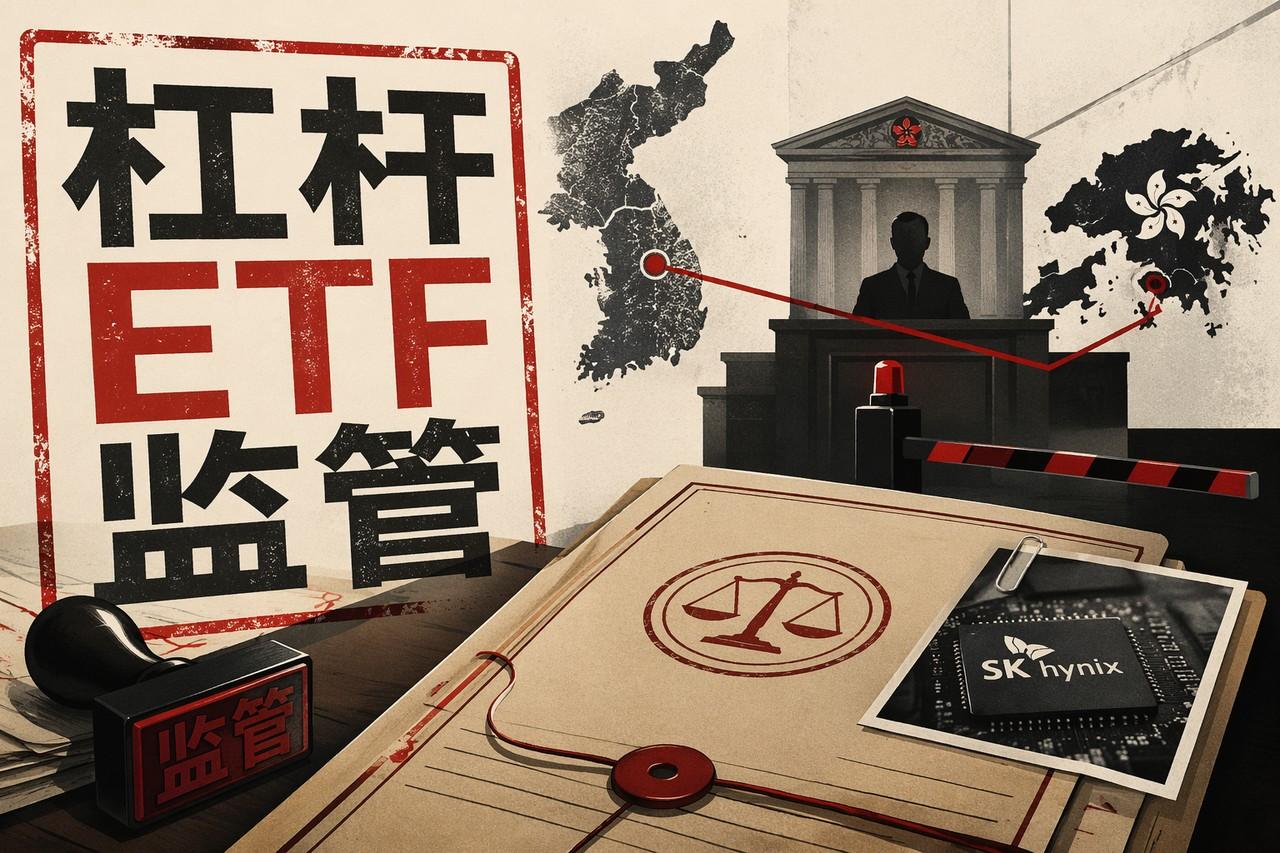
While the sell-off in U.S. pre-market trading remained at the futures and individual stock level, the same storage and semiconductor main thread had been magnified in the Asian market. On June 23, Hong Kong's market saw significant pullbacks around leveraged ETFs focused on Samsung Electronics and SK Hynix: The Southern double-long Samsung Electronics ETF fell over 24% in a single day, while the Southern double-long SK Hynix ETF dropped more than 23%. For products already using high leverage to amplify volatility, such numbers imply that investors experienced a nearly "halved" net value fluctuation within a single trading day. The main fluctuations in the Hong Kong market that day were almost dominated by these leveraged products linked to storage chips and semiconductors, offering a direct insight into the intent to retreat both from themes and from the structural context.
If the Hong Kong market merely showcased the storage chain's risks through leveraged ETFs, the South Korean domestic market provided a much more severe response at the index level. The Korean Composite Index closed down about 9.99%, at approximately 8204.06 points, marking the largest single-day drop since March 4. Without clear macroeconomic or policy triggers from publicly available information, this nearly tenth drop coincided with the concentrated sell-off in global technology and storage sectors on the same day, extending the chains of Samsung and SK Hynix from individual stocks and ETFs to a national index level. It paints a real picture of how risk is swiftly transmitted across different markets along the technology and storage main threads and reminds investors that the re-evaluation of prices on this chain is no longer an isolated event in a particular region or among a few products.
AI concept token TAO undergoes synchronized correction, crypto market sentiment under pressure
As the industry chain of Samsung and SK Hynix was sold off from individual stocks and leveraged ETFs to the Korean Composite Index, cryptocurrency assets linked to the same "technology—computing power—storage" narrative experienced their own stress test at the same time. The token TAO, classified by the market as an AI-related concept token, fell below the $220 mark on June 23, closing at approximately $219.9, a 24-hour decline of about 5.5%. For investors accustomed to correlating the movements of TAO with the prospects of AI computing power and storage sectors, this number may seem unremarkable. However, its appearance on the same day as the concentrated downturn in global technology and storage assets allows this cryptocurrency's correction to naturally fit within the narrative of "risk asset interaction."
The presentation of the market only reflects the temporal synchronization: one side sees SanDisk, Micron, and other storage stocks falling over 10% before the market opens, while Nvidia, Intel, AMD, Qualcomm, Seagate, and Western Digital saw collective weakness ranging from 3% to 8%; simultaneously, the relevant Hong Kong leveraged ETFs and the Korean index were rapidly cut through. On the other side, TAO exhibited significant corrections on the same day, dousing the previously extended cryptocurrency investment sentiment surrounding the AI theme with cold water. Current public information does not provide direct evidence of a causal relationship between TAO and U.S. tech stocks, nor does it pinpoint a single unique trigger. What we can observe is that on the same day, various risk assets associated with the technology and storage main threads were re-evaluated in their respective markets; this cross-market resonance itself constitutes an emotional scene worth recording.
In the sell-off, Bybit launches group card battle, with a striking 270,000 USDT prize pool
Amid the concentrated "discounting" of technology and storage-related assets on June 23, Bybit chose to start a campaign resembling a poker game. From June 22 to 28, the eighth round of the group card challenge opened, with the total prize pool directly raised to 270,000 USDT, described as "a record high" by officials, of which 162,000 USDT is specifically reserved for the Royal Flush rewards, consuming the vast majority of the chips. There is no zero entry barrier to sit at this table—users need to complete a contract trading volume of 10,000 USDT to qualify for unlocking their hand, while amid an atmosphere of reduced positions and hedging, the platform rebranded cold, hard numbers into game-like chips through the narrative of "group card games."
This design stands out particularly in the context of June 23: on one side, U.S. stocks, Hong Kong stocks, the South Korean stock market, and some cryptocurrency assets faced synchronous pressure; on the other side, the exchange pushed the prize pool to a "record level," using high-stakes games to encourage users to continue engaging in a volatile market. The total prize pool of 270,000 USDT and the 162,000 USDT Royal Flush reward became among the few intentionally heightened "odds" in these days, attempting to offset the cooling in trading brought on by the decline in risk appetite. Rather than being merely a promotional activity, it is more accurately viewed as a collective bet made by the platform to maintain engagement through gamified incentives during periods of extreme volatility. Under the prevailing theme of reduced risk appetite, this arrangement of exchanging record prize pools for trading participation has become a noteworthy footnote in this wave of volatility.
Simultaneous declines in technology and crypto, what does this imply for the cycle?
Looking back on June 23, it appears more like a puzzle of collective pressure on risk assets: in U.S. pre-market, the Nasdaq and S&P futures weakened alongside SanDisk and Micron's over 10% corrections, with a series of tech and storage chain stocks like Nvidia, Intel, AMD, Qualcomm, Seagate, and Western Digital filling in the gaps with declines between 3% to 8%; at the same time, in the Hong Kong market, the Southern double-long Samsung Electronics and SK Hynix ETFs fell over 24% and 23% respectively, with leverage amplifying fears of a cooling storage outlook; the Korean Composite Index recorded a single-day drop of about 9.99%, closing at 8204.06 points and setting the maximum adjustment record since March 4, while AI concept token TAO in the crypto market fell below $220, closing around $219.9, with a 24-hour drop of about 5.5%, synchronizing with the corrections in this round of technology and storage. What the brief can confirm is that this string of declines was not identified in publicly available information as having a single macroeconomic or policy trigger; the market was merely seeking explanations within existing narratives of "AI and storage cycles being overheated" and "high prosperity over high expectations," treating this day as a timestamp for emotional and valuation corrections. Moving forward, what is truly worth monitoring is not the absolute value of this decline but whether the valuation pullbacks in tech stocks continue to spread to broader sectors, whether the Korean and wider Asian markets can rebuild risk appetite in the course of technical repair, and whether cryptocurrency AI assets like TAO will continue to move in tandem with traditional tech risks during future volatility, thus being viewed by the market as an extension along the same risk main line over a longer cycle.
Join our community to discuss and grow stronger together!
AiCoin exclusive Hyperliquid benefits: https://app.hyperliquid.xyz/join/AICOIN88
AiCoin exclusive Aster benefits: https://www.asterdex.com/zh-CN/referral/9C50e2
On-chain Telegram community: https://t.me/AiCoinWhaleData
On-chain community: https://www.aicoin.com/link/chat?cid=N6OVMor5g
AiCoin on-chain Twitter: https://x.com/aicoinwhaledata
免责声明:本文章仅代表作者个人观点,不代表本平台的立场和观点。本文章仅供信息分享,不构成对任何人的任何投资建议。用户与作者之间的任何争议,与本平台无关。如网页中刊载的文章或图片涉及侵权,请提供相关的权利证明和身份证明发送邮件到support@aicoin.com,本平台相关工作人员将会进行核查。