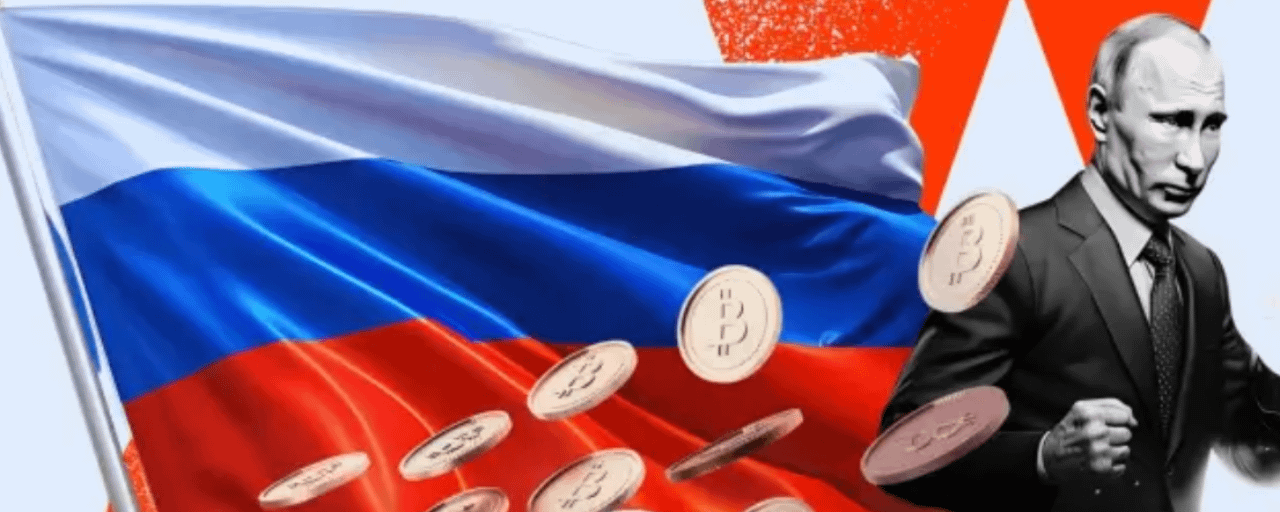
The Russian Ministry of Finance has said two things about the same batch of assets over the past week or so.
First, it stated that these foreign digital currencies are high-risk, "unfriendly," and will incur additional fees.
Less than a week later, it said that these foreign digital currencies can be included in the legitimate trading system.
At first glance, this seems like a reversal of stance; in fact, it represents two sides of the same regulatory framework—one side increases the cost of using risky assets, while the other formally incorporates some assets into the legal trading scope. Russia’s long-term stance on crypto assets has never been a "ban" but rather "not banned, but strictly limited and regulated." These two statements are just two pieces of the same puzzle disclosed in sequence.
To put it simply, the issue has never been about "whether to allow," but rather "at what cost to allow."
First, let's establish a model: customs, foreign cash, and interceptors
Condensing the entire matter, it suffices to remember three roles.
Russia: plays the role of customs—deciding who can enter, how much they need to pay, and when they can freeze.
USDT, USDC, etc.: play the role of "foreign digital cash," technically capable of freezing user wallet assets at the request of a certain jurisdiction.
EU: plays the role of "standing outside customs, trying to intercept this batch of money."
Keep these three roles in mind; the timeline that follows is essentially these three parties each taking a step forward.
Step one: first extract the "high-risk" portion and raise the fees
Over the past year, Russia has been building a regulatory framework, centered around one core question: can ordinary people legally buy and sell cryptocurrencies, which ones, and how much. The draft established at the end of last year capped the annual limit for ordinary investors to buy cryptocurrencies via one platform at about 300,000 rubles (approximately 4,000 dollars, with fluctuations due to varying exchange rates). In April of this year, the bill for this framework passed the first reading in the legislative body with a high vote count, defining the licensing system and regulatory authority, but there was a loophole—allowing cross-border settlements using cryptocurrencies. This loophole will be crucial later on.
At the beginning of June, the Russian Ministry of Finance issued a warning: the issuing companies of these "foreign digital cash" have the technical capacity to cooperate with foreign regulators to freeze funds and there have already been cases of freezing.
This was immediately followed by a formal announcement at an important economic forum in St. Petersburg: a special fee will be levied on USDT, USDC, and BNB, which have been characterized as "unfriendly" assets, potentially up to 3% of each transaction amount. Ordinary "unfriendly assets" incur a fee of 0.5% to 2%, while these three have been individually raised to the maximum. The reason is straightforward—they do not trust which companies these issuers heed.
This is equivalent to customs announcing: this money is classified as higher risk and will be accounted for separately.
Step two: simultaneously, formally include it in the legal list
But customs cannot truly keep these out—the daily trading volume of cryptocurrencies in Russia is about 700 million dollars; with such a large volume, if banned, the money will simply flow underground or abroad, and Russia will not collect a penny in taxes.
So, less than a week later, the Russian Ministry of Finance added the other half: USDC will be included in the "regulated list" along with Bitcoin, Ethereum, and USDT—meaning it is now an asset that ordinary investors can legally buy and sell. The reasoning provided was also very clear: these are assets widely used around the world and cannot be blocked; instead of halting them, it’s better to incorporate them into regulation.
In customs terms, this is equivalent to customs adding, "Okay, you can bring it in, but you need to register and pay."
Examining these two actions together provides a complete "tiered inclusion" process: Russia is not trying to ban these foreign digital cash but rather intends to confine them to its own toll booths—allowing entry, but requiring higher fees for the high-risk portions.
Step three: Russia also wants to differentiate between "insiders" and "outsiders"
Simply charging fees is not enough; Russia also wants to do one more thing—guide people towards the "money from insiders."
The Russian side mentioned that small digital currencies tied to the ruble or to the UAE dirham may not need to pay that high toll in the future, making it easier to obtain approval. The countries behind these two currencies generally have friendly relations with Russia and theoretically would not cooperate with the West to freeze assets.
Thus, the complete logical chain is essentially: "digital cash" classified as "high risk, possibly frozen" (USDT / USDC / BNB)—allow it in, but tax heavily; "digital cash" from friendly countries (tied to the ruble or dirham)—let it in with little tax or none since its issuers are unlikely to cooperate with external freezes. This is a design that uses price to vote on "trustworthiness."
Looking deeper, the "up to 3% fee," if interpreted solely as a tax, will underestimate its true effect. More accurately, it functions as a risk pricing mechanism—charging high fees quantifies the issue of "how safe this money is" into a directly comparable digit. The higher the cost, the less encouraged its use; the lower the cost, the more it encourages flow. Here, price is not just a market behavior; it serves as a filtration tool for regulation.
For ordinary investors, the currently disclosed rules are: retail investors without "qualified investor" status will only be able to buy and sell Bitcoin, Ethereum, and USDT in the future; USDC, while included in the "regulated list," has yet to have a unified stance on whether it can be purchased and whether the additional fee will apply, awaiting final confirmation once the law is implemented.
Step four: the urgency of customs is due to external tightening
Russia is hurriedly attempting to establish this "toll booth" rule before July 1 for good reason—the external openings are simultaneously being tightened, leaving Russia with a limited window.
Not long after Russia released the fee news, the EU proposed in the 21st round of sanctions against Russia to upgrade cryptocurrency sanctions from "named platforms" to "service layer restrictions," planning to introduce a potential ban mechanism targeting third-country cryptocurrency service providers.
This means the logic of sanctions is shifting from "blocking specific exchanges" to "limiting the accessibility of the entire cross-border crypto service network."
This round of draft specifically targets to ban transactions of a dozen cryptocurrency platforms on the grounds they are deemed to assist Russia in circumventing international sanctions; simultaneously, it plans to take action against dozens of Russian banks. Almost at the same time, US President Trump publicly stated that he would soon impose stricter sanctions on Russia.
This is crucial: what the EU wants to cut off is precisely the "cross-border settlement" loophole that Russia left deliberately in the April bill—this loophole was originally an important channel for Russia to bypass the Western financial system and continue cross-border business. The tighter the external sanction pressure, the more urgently Russia needs to establish its own cryptocurrency regulatory system and form a closed loop, reducing reliance on dollar system assets like USDT and USDC, and guide funds towards tracks it can control (rubel stablecoin, stablecoin from friendly countries).
In other words, Russia is racing against time to pass legislation and have accompanying tax laws go through the first reading before July 1, not just merely arranging domestic regulatory progress; it resembles an attempt to pave a "back road before being completely cut off" under the accelerating backdrop of external blockades. Cryptocurrency itself has already evolved from merely an investment category to a key variable determining whether Russia can maintain external funding channels.
The real variable
When USDC is included in the national regulatory list and is simultaneously at risk of being frozen in another jurisdiction, its nature is no longer purely what it seems.
It is both a financial instrument and an institutional interface.
What Russia is attempting to do is find a controllable position for itself within this new interface system.
The future question may no longer be "whether cryptocurrency is accepted," but rather: whoever defines the rules of crypto assets will master the new financial passage.
*The content of this article is for reference only and does not constitute any investment advice. The market has risks, and investment should be cautious.
免责声明:本文章仅代表作者个人观点,不代表本平台的立场和观点。本文章仅供信息分享,不构成对任何人的任何投资建议。用户与作者之间的任何争议,与本平台无关。如网页中刊载的文章或图片涉及侵权,请提供相关的权利证明和身份证明发送邮件到support@aicoin.com,本平台相关工作人员将会进行核查。


