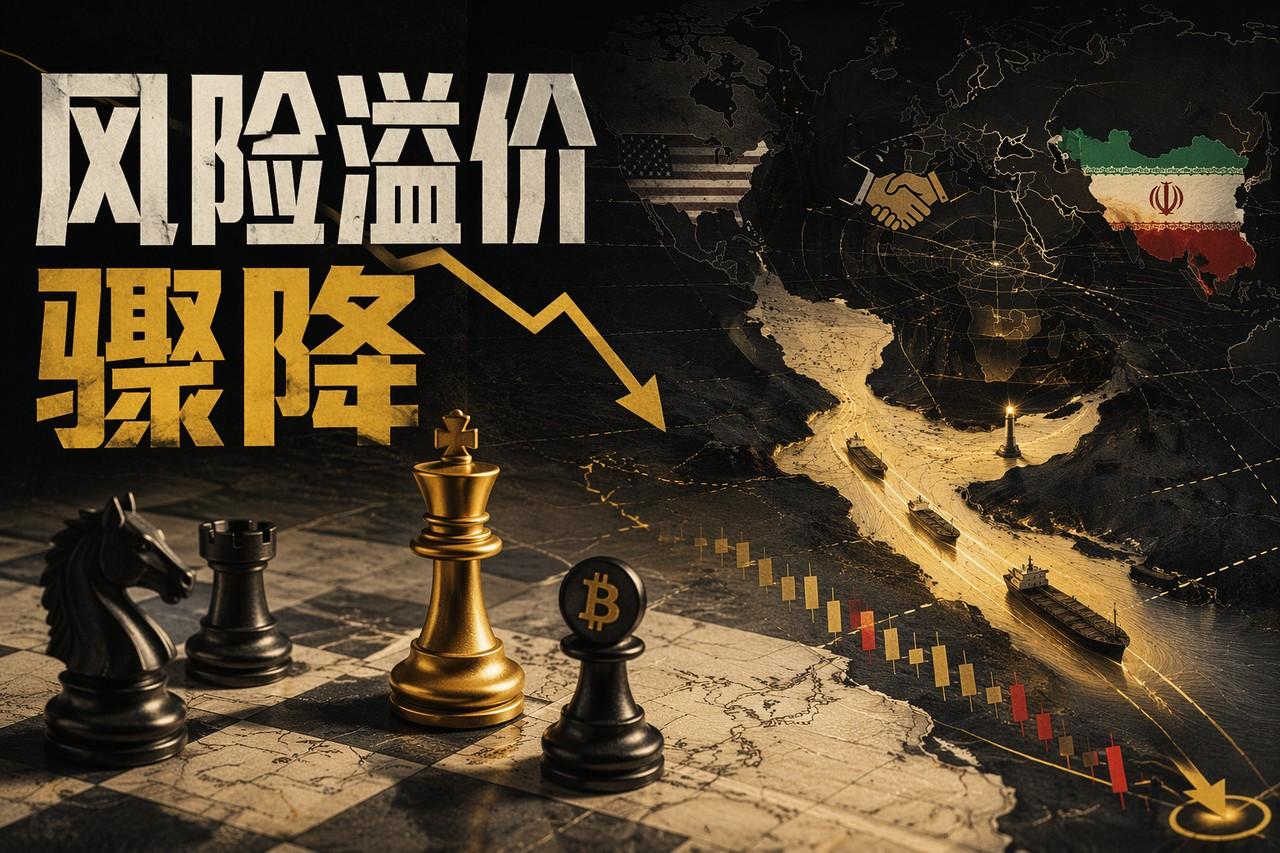
On June 18, 2026, traditional finance and the on-chain world seemed to coincide in reaching their respective "lows." According to AiCoin market data, the WTI crude oil price briefly fell below $73 per barrel during the day, with a daily decline of about 3.66%, hitting the lowest point since March 5. This price level itself served like a scale mark, clearly signaling the market's doubts about global demand expectations and overall risk sentiment on the chart. On the same timeline, the DeFi lending protocol Ionic Protocol announced that, one year after the security breach in 2025, it would immediately shut down all operations and urged users to withdraw their assets from the protocol as soon as possible; however, multiple users reported in public channels that most of the liquidity pools had been nearly drained, with some asset withdrawals blocked. There were even calls for the return of the ezETH that had not been damaged during the attack, as the trust originally placed in compensation promises began to turn into doubts and confrontational sentiments. With the drop in crude oil prices coinciding with the shutdown of the protocol, the weak expectations on a macro level and the cracks in on-chain security overlapped to form a risk footnote that was harder to ignore.
WTI Falls Below $73: A Brake on the Commodity Market
During trading on June 18, the WTI crude oil price dropped below $73 per barrel, with a daily decline of about 3.66%. According to AiCoin market data, this level is the lowest intraday point since March 5, 2026, re-testing the "reference scale" that had been touched again, effectively re-evaluating the fluctuation margin from previous months in the price series. For traders watching the market, this was not just a simple green candlestick; it marked an effective breach of the previously supportive range, clearly signaling that the commodity market had stepped on the brakes at this moment.
As a globally significant benchmark oil price, WTI's curve has long been used as a macro barometer, reflecting comprehensive judgments about global demand expectations, production policies, and risk sentiment. When prices fall below a temporary low point, the market's instinct often interprets it as "economic momentum marginally weakening" or "energy demand from businesses and households falling short of expectations." Even if current public materials do not specify the trigger for this decline, the narrative connecting price fluctuations with growth prospects and demand concerns is likely to develop on its own. In the absence of more details, the further dip in WTI is viewed more as a concentrated vote on sentiment and expectations rather than a straightforward outcome of a single news event.
Aftereffects of an Attack: Ionic Announces Immediate Closure
Since the security breach in 2025, whose details have not been fully disclosed, Ionic's fate has been rewritten. After that incident, the protocol did not shut down immediately but continued to operate under the label of a "previously attacked lending platform," with community discussions fluctuating regarding security and compensation promises, leading to weakened trust without a clear conclusion.
This endpoint arrived on June 18, 2026. Ionic suddenly announced externally that it would "immediately shut down all operations," opting for language suggesting direct closure and settlement rather than the common "pause functions, wait for an upgrade," and urged users to withdraw their assets from the protocol as soon as possible. However, when users attempted to do so, they found it was not a simple "close button" operation: multiple users reported in public channels that most liquidity pools had almost no usable liquidity, and some assets could not be successfully withdrawn. Meanwhile, some criticized the team for not issuing refunds as previously promised, and several users specifically mentioned the undamaged ezETH asset, arguing that since this portion of assets were unaffected by the attack, they should not be locked away or repurposed. The available feedback samples are limited, and the project has not publicly responded to each accusation one by one, leaving the outside world with a timeline of deterioration from a security incident to a "direct closure," as well as an outcome still full of questions in the details.
Unaddressed Security Gaps: How DeFi Trust Diminished Gradually
The timeline of Ionic itself represents a process of trust erosion. After the security breach in 2025, the protocol did not shut down immediately, but after nearly a year of operations, it announced on June 18, 2026, that it would close all operations, viewing that attack as a source of "too big to fail" risks. For users, this meant they were asked to continue trusting a system that had encountered problems, with its remediation procedures not being transparent for a considerable amount of time, and now the result is that most liquidity pools have nearly no liquidity, some assets cannot be withdrawn, and promised refunds have not been fully honored. The project has not publicly disclosed detailed compensation pathways, loss breakdowns, or repair progress; what outsiders can see is merely the outline of "first the attack, then the delay, and finally the shutdown," and this informational void itself can be interpreted as part of the risk.
Mechanically, DeFi lending protocols entrust collateral and debt positions to smart contracts, and once the contract or risk control chain has defects, it is often the users’ wallets that bear the brunt, rather than the project’s balance sheet. After an attack, whether the project fulfills its promises regarding compensation or whether it clearly discloses the scope of losses and repair progress often determines how much residual trust it can maintain; in the current case of Ionic, these key nodes are either inadequately executed or poorly communicated, ultimately evolving into a passive situation where users largely report "unable to withdraw" and "cannot get back" before and after the shutdown. When the protocol hits the close button and liquidity has been drained, ordinary users have nearly no self-rescue space on-chain, passively waiting for team disposal or accepting discounted exits. In such a structure, once a security gap is not promptly addressed, what is drained is never just a single liquidity pool, but the trust relationship on the entire chain itself.
A Double Blow on the Same Day: Macro Pessimism Collides with On-Chain Thunder
June 18 was a day of synchronized gloom for participants in risk assets across two screens: on one side, according to AiCoin market data, WTI crude oil briefly fell below $73 per barrel, with a daily decline of about 3.66%, returning to its lowest point since March 5, and such a price drop can easily be interpreted as weakening global demand expectations and a cooling macro outlook; on the other side, Ionic announced on the same day the immediate closure of all operations, urging users to withdraw their assets quickly, accompanied by controversies concerning "liquidity pool has no liquidity," "some assets cannot be withdrawn," "earlier promised refunds not honored," and where the undamaged ezETH would go. The weakening of commodities at the macro level coincided with the collapse of credit in DeFi protocols at the micro level on the same timeline; even if there is no direct causality between the two, it is sufficient for the market to piece together an emotional picture of "overall cooling of risk appetite."
For investors on the chain, such a temporal overlap naturally alters the narrative focus: the Ionic shutdown, originally seen as a single project’s aftermath failure, now magnified against the backdrop of WTI hitting a multi-month low, becomes a pressure on the reputation of the entire DeFi ecosystem, as if the on-chain world has once again exposed its security shortcomings amid macro headwinds. When traditional assets emit signals of "demand concerns," while DeFi concurrently erupts with user assets being inaccessible and promises unfulfilled, many people no longer distinguish between individual cases and the industry as a whole but will simply jot down a note in their minds—that such risks may not be a problem for a specific protocol, but rather a vulnerable link in the entire narrative of on-chain finance.
From Oil Prices to Lending Protocols: How to Self-Protect in an Era of Risk
According to AiCoin market data, WTI crude oil fell below $73 per barrel in trading on June 18, 2026, coinciding with Ionic's announcement of shutdown, conveying a common signal that both macro expectations and on-chain security are in a fragile state. The former reminds us that global demand and risk preferences may turn at any time; the latter illustrates with the year-later still-ongoing aftermath of the attack that, in the DeFi environment lacking insurance, guarantees, and mandatory regulatory protection, a security incident will not simply fade with media attention but may weigh heavily on users over the long term in forms such as shutdowns, withdrawal difficulties, and refund disputes. Looking ahead, the variables worth continuing to monitor are whether WTI can stabilize relative to this round of lows and whether other lending protocols will respond to such events with more proactive security audits, transparent disclosure of asset pools, and clear compensation plans. For investors, in this era of risks, the first step to self-protection is not chasing yields but examining whether the protocol has a history of attacks, whether promises were fulfilled afterward, and whether current liquidity pools are concentrated in a few addresses, thus controlling the asset exposure to a single protocol and treating "visible and clear" safety records and remediation histories as preconditions for deciding whether to participate.
Join our community to discuss and become stronger together!
Exclusive Hyperliquid benefits for AiCoin: https://app.hyperliquid.xyz/join/AICOIN88
Exclusive Aster benefits for AiCoin: https://www.asterdex.com/zh-CN/referral/9C50e2
On-chain Telegram community: https://t.me/AiCoinWhaleData
On-chain community: https://www.aicoin.com/link/chat?cid=N6OVMor5g
AiCoin on-chain Twitter: https://x.com/aicoinwhaledata
免责声明:本文章仅代表作者个人观点,不代表本平台的立场和观点。本文章仅供信息分享,不构成对任何人的任何投资建议。用户与作者之间的任何争议,与本平台无关。如网页中刊载的文章或图片涉及侵权,请提供相关的权利证明和身份证明发送邮件到support@aicoin.com,本平台相关工作人员将会进行核查。