Author: TinTinLand
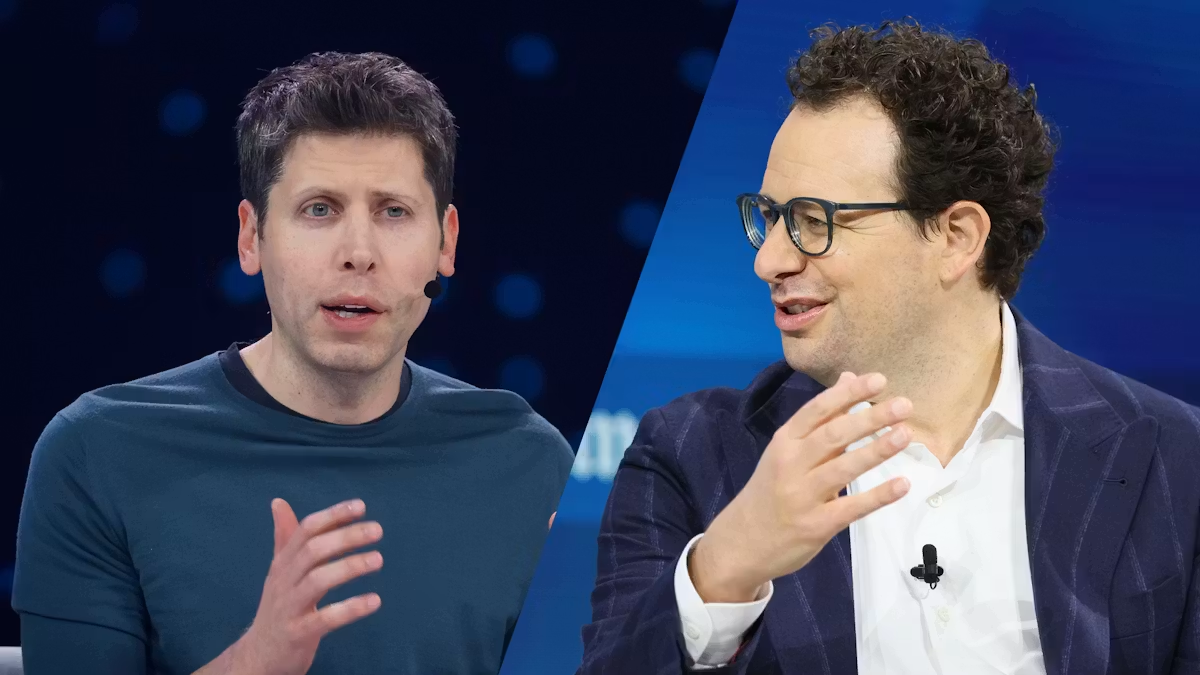
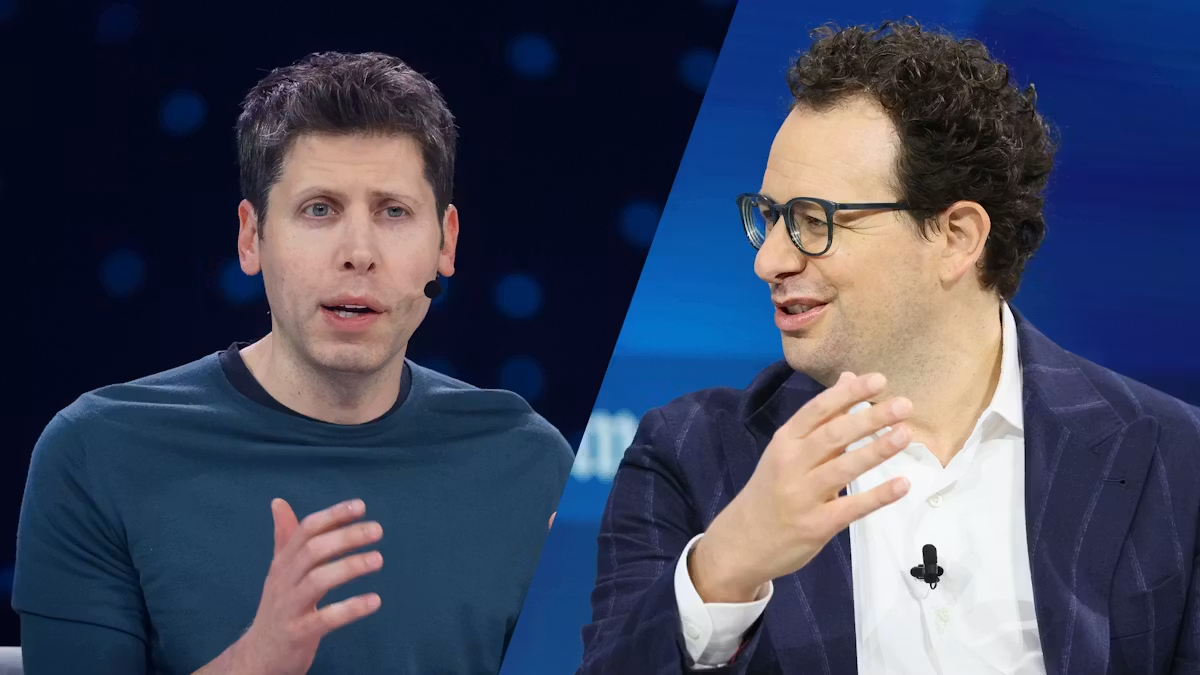
In the past year, the script for the future has almost universally been written in the same apocalyptic tone: AI will not only enhance productivity, but it will also massively replace human jobs.
OpenAI CEO Sam Altman warned that a large number of white-collar jobs could "disappear completely"; Anthropic founder Dario Amodei even predicted that within five years, entry-level white-collar jobs could decrease by half, leading to an unemployment rate of 10% to 20%.
Then, in May 2026, they changed their tune.
Altman began to publicly acknowledge that his judgment regarding employment impacts was "significantly wrong"; Amodei also stopped emphasizing job losses and started discussing how AI could create demand and expand employment.
This collective shift happened to coincide with a crucial period for OpenAI and Anthropic as they prepared for IPOs, making it particularly intriguing.
Sam Altman: I’m glad I was wrong
Over the past two years, Sam Altman has repeatedly warned about the impact of AI on the job market.
He had stated that certain career categories could be "totally gone," especially many repetitive white-collar jobs, and suggested that the country must implement Universal Basic Income (UBI) to alleviate employment pressure.
However, on May 26, 2026, during a video link at the Accelerate AI summit hosted by the Commonwealth Bank of Australia in Sydney, Altman completely reversed the script:
"We were largely correct in our technology predictions, but significantly wrong in our judgments about social and economic impacts."
He also stated:
💬 I’m glad I was wrong. So far, the number of entry-level white-collar jobs eliminated by AI is far less than I had originally feared.
He shared a personal experiment: he had tried letting AI handle his Slack messages and emails, some even labeled "This is Sam's AI responding," but eventually switched back to managing them personally. This made him realize the "value of interpersonal interaction" in work.
A few days later, in an interview with CNBC, Altman further stated:
👉 Companies that actively use AI tend to also be the ones hiring the most; many companies attributing layoffs to AI actually have not deeply adopted AI.
Dario Amodei: Employment Rates Rising Instead of Falling
Dario Amodei, CEO of Anthropic, also showed remarkable consistency in changing his stance.
Just recently, Amodei had warned that AI could eliminate about half of white-collar jobs in the coming years and significantly increase unemployment rates.
On May 5, 2026, Amodei appeared at a financial services media briefing by Anthropic and introduced a classic economics concept: Jevons Paradox.
This concept originates from the 19th-century British economist Jevons's observation of steam engines: after steam engines improved coal utilization efficiency, people did not reduce their coal consumption; instead, they consumed more coal due to lower costs.
Using this framework, Amodei expressed: If AI automates 90% of a job, then everyone will start doing that remaining 10%. And that 10% will gradually expand until it becomes all that people do, producing outputs that are ten times the original.
In other words, AI enhances efficiency, lowering costs, which leads to explosive demand, ultimately resulting in rising employment rates instead of declining.
This statement is clearly much milder than the earlier claim that "white-collar jobs will be massively eliminated."
More Statements Emphasize “AI Creates Jobs”
Altman and Amodei's shift is not an isolated event. Multiple tech and finance giants have publicly expressed similar optimistic positions.
Jensen Huang: Blaming Layoffs on AI is a Lazy Explanation
Among all tech giants, NVIDIA CEO Jensen Huang might be the most steadfast optimist. He opposes the AI job apocalypse narrative almost every time he appears publicly.
On April 22, at the Adobe Summit, he stated that ten years ago, when AI entered medical imaging, the industry widely predicted that radiologists would be replaced, but in reality, the opposite happened—demand increased.
On May 4, at the Milken Institute Forum, Huang sharply criticized those company executives who blame layoffs on AI:
"Many companies attribute layoffs to AI; this narrative is just too lazy. They just want to make themselves sound clever and visionary. I really despise this approach; it's scaring the general public and is extremely irresponsible."
Goldman Sachs CEO: An Exaggerated “Doomsday Panic”
On May 22, 2026, Goldman Sachs CEO David Solomon published a guest article in The New York Times with a straightforward title: I’m the CEO of Goldman Sachs, and the AI job apocalypse narrative is exaggerated.
Solomon cited internal Goldman Sachs research: AI could automate about a quarter of existing work hours in the next decade, but this does not equal a proportional increase in unemployment—instead, work hours will be redistributed to more complex and higher-value tasks.
He also noted that since 2022, the construction of data centers alone has added 200,000 jobs in the U.S.
His conclusion: since 1962, U.S. employment has grown by 145%. Every major technological revolution has eliminated some old jobs while creating more and higher-quality new jobs.
On the Other Hand: Some Still Insist “Doomsday is Coming”
However, not all tech leaders have chosen to change their tune. Many industry insiders still argue that the impact of AI on the job market has yet to fully manifest.
Elon Musk: AI Will Make All Jobs Optional
Elon Musk, head of Tesla and xAI, in his posts and speeches in May 2026, maintains his original judgment.
Musk firmly believes that within the next 10 to 20 years, as AI and embodied intelligent robots (like Optimus) mature, traditional human jobs will be completely emptied.
"Future work will become an option. If you want to work, you can. But if you don’t want to work, robots and AI will provide you with any goods and services you want."
To address the ultimate unemployment brought by the inability of humanity to work, Musk proposed an even more radical solution: the government should not just provide the minimum guaranteed "Universal Basic Income (UBI)," but should instead issue a "Universal High Income" backed by the federal government.
White-Collar Tasks Will Be Fully Automated in 18 Months
Mustafa Suleyman, CEO of Microsoft AI, provided a radical prediction in an interview with the Financial Times:
Within the next 12 to 18 months, AI will reach human-level performance on most professional tasks. Lawyers, accountants, project managers, marketers—those white-collar workers who spend their days handling tasks at computers will see most of their tasks fully automated by AI.
U.S. Senator Bernie Sanders, upon hearing this prediction, commented that if true, it would be an economic earthquake.
Companies Introduce AI to Cut Costs and Increase Efficiency
Nobel laureate in Physics and "father of deep learning" Geoffrey Hinton expressed significant caution.
I do not believe that the new jobs created by AI will be as numerous as the ones it replaces. It might create some new roles like prompt engineers, but in comparison to the scale of positions it is about to destroy and replace, that is not even remotely comparable.
Hinton emphasized that from a purely profit-driven business perspective, the sole purpose of large companies introducing AI is to cut costs and improve efficiency, and the most immediate cost is labor.
He urged governments to research taxation on AI and implement universal basic income; otherwise, the productivity dividends will be concentrated in the hands of a few tech giants in an irreversible manner.
Key Timing: Both Companies are Pushing for IPO
The timing of Altman and Amodei's change of heart is very intriguing: OpenAI and Anthropic have officially or secretly initiated their super IPO processes.
An article from Fortune magazine directly addresses this issue: Sam Altman and Dario Amodei Withdraw AI Job Doomsday Predictions, Timing Coincides with Their IPO Plans.
The logic is not complicated: for a company about to go public, if its CEO repeatedly asserts that its products will lead to massive unemployment and social unrest, that is certainly not a good story for institutional investors.
This raises several issues: regulatory pressures, public backlash, and popular resistance to AI products.
If society believes that AI is the root cause of unemployment, it will become more challenging for AI companies to gain public trust and policy support.
Of course, we do not know whether their true judgments have changed. But this timing inevitably leads one to think further.
Two Sides of the Truth Exist Simultaneously
Behind the debate, the data on the table is real and contradictory.
Layoffs Are Indeed Happening
According to Layoffs.fyi, as of May 2026, the tech industry has laid off over 115,000 people in five months, nearing the 124,000 total for 2025.
The employment agency Challenger, Gray & Christmas reports that nearly 50,000 layoffs have been directly attributed to AI.
Meta: In May, it streamlined about 8,000 positions once again, with Zuckerberg stating the need to "fully redirect resources to AI infrastructure and innovation."
Intuit (a financial software giant): In May, it announced layoffs of about 3,000 people, with the official explanation being that it needed to cut traditional roles to free up funds and positions to recruit AI era experts.
Federal Reserve Chair Powell also acknowledged that a considerable number of companies are reducing hiring or laying off due to AI.
Macro-Level Stability
However, macro data currently shows no abnormalities.
A study from Yale University’s Budget Laboratory in April 2026 indicates that since the launch of ChatGPT at the end of 2022, the unemployment rate for jobs with high AI exposure has not changed significantly.
The Atlanta Fed's survey of 6,000 companies shows that over 90% of business leaders say AI has no effect on employment.
Conclusion: The Ultimate Tug of War Between Pro and Con Camps
Is AI the end of jobs, or a miracle of productivity?
This debate is far from over.
For ordinary people, rather than obsessing over which giant’s predictions to believe, it’s better to maintain a clear judgment: do not be excessively anxious, and do not stop learning.
After all, the impacts, changes, and opportunities brought by AI have already occurred. As to whether it will ultimately create more jobs than it replaces or vice versa—drawing conclusions now may still be premature.
免责声明:本文章仅代表作者个人观点,不代表本平台的立场和观点。本文章仅供信息分享,不构成对任何人的任何投资建议。用户与作者之间的任何争议,与本平台无关。如网页中刊载的文章或图片涉及侵权,请提供相关的权利证明和身份证明发送邮件到support@aicoin.com,本平台相关工作人员将会进行核查。


