The most recent criticism of Ethereum by Michael Saylor is not particularly novel. He contends that the network's growing competition from Solana, BNB Chain, Sui, Hyperliquid, and numerous Layer-2 networks is the reason why trust in Ethereum has declined. He believes that utility, not story, will ultimately determine whether these ecosystems thrive or fail. It is difficult to disagree with that point.
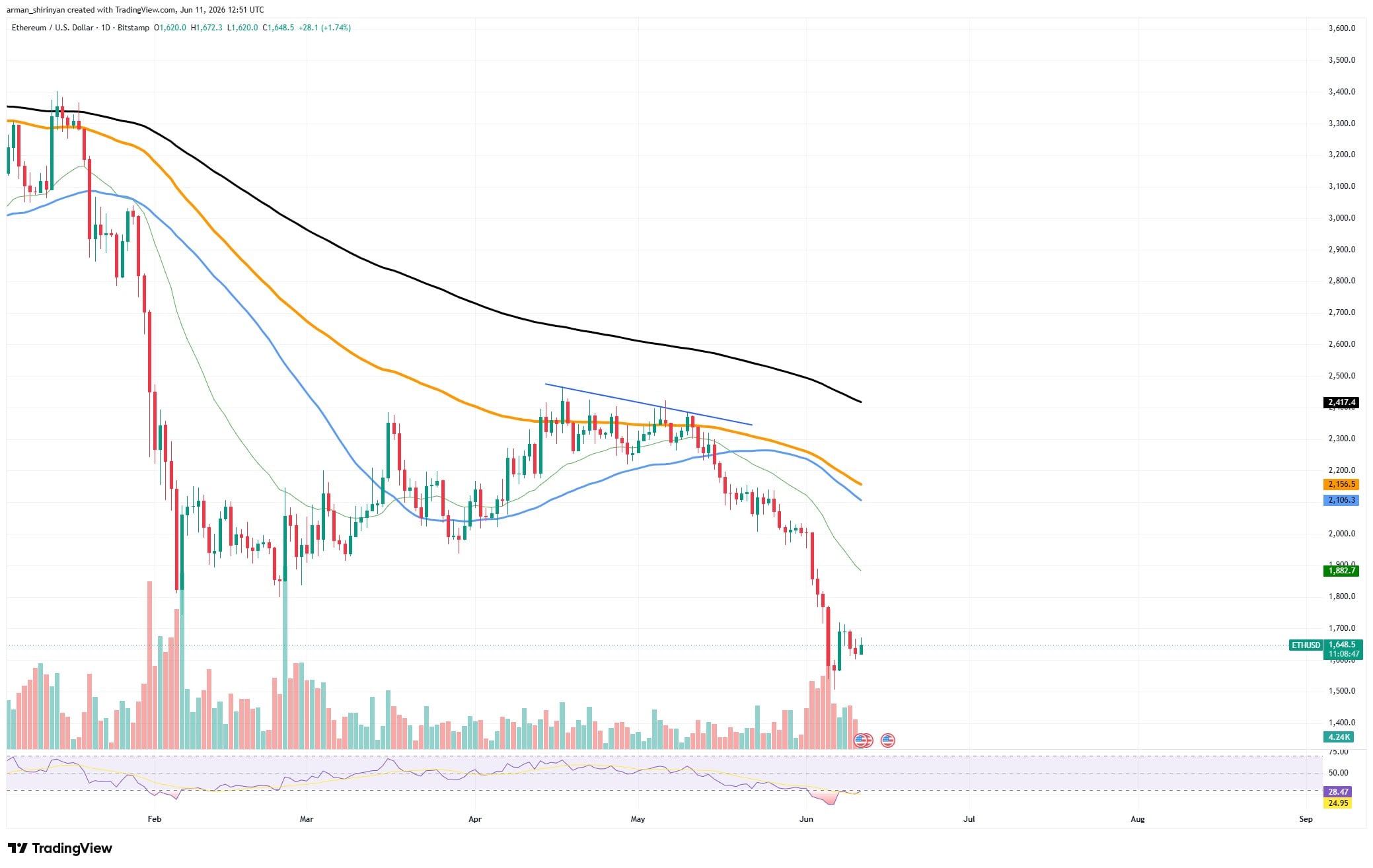
ETH/USDT Chart by TradingView
Given Ethereum's current state, it is clear why detractors are becoming more vocal. During the recent market downturn, ETH has been among the weakest major assets. Trading well below the 50-, 100-, and 200-day moving averages, the chart displays a clean break below important support levels. The RSI was in oversold territory for a while, but the price recently fell toward the $1,600 region.
How Ethereum is damaged
Additionally, Saylor is right that competition is now far more fierce than it was in earlier cycles. Retail activity is dominated by Solana, Hyperliquid has grown to be a significant player in perpetuals, and Ethereum's Layer-2 strategy has dispersed liquidity across several networks. These are real difficulties.
HOT Stories Binance Lists Ethereum's Largest Treasury BitMine; XRP Loses $1 Billion ETF Threshold Despite Record Lock Up; Shiba Inu (SHIB) Eyes Regulatory Breakthrough via Japan's New Framework - Morning Crypto Report XRP Vindicated? Ripple CEO Says 'Yes'
The notion that confidence has collapsed is where the argument starts to seem dubious. Institutions would not have continued to develop Ethereum if confidence had really collapsed. In addition to having the deepest smart contract ecosystem and the highest concentration of DeFi liquidity, Ethereum continues to serve as the main settlement layer for numerous institutional blockchain projects. Ethereum will play a part in future digital credit markets, according to some of Saylor's own recent remarks.
You Might Also Like

Thu, 06/11/2026 - 11:00 Only $4 in SHIB Burned: What's Behind 72% Drop?ByTomiwabold Olajide
This is also a historical irony. In 2024, Saylor claimed that spot ETFs were unlikely and that Ethereum would never gain significant institutional acceptance. Since then, Ethereum ETFs have emerged, drawn billions of assets, and established themselves as a well-known institutional product.
Potential for Ethereum's recovery
Ethereum is in poor condition. The growth of network activity has slowed, there is little price movement, and rivals are gaining market share. Ethereum, however, is not in danger of disappearing. By economic value, developer activity, and institutional adoption, it continues to be the biggest smart contract platform.
While investors wait for evidence that Ethereum's ecosystem can continue to expand in a far more competitive environment, the market has aggressively repriced Ethereum lower.
免责声明:本文章仅代表作者个人观点,不代表本平台的立场和观点。本文章仅供信息分享,不构成对任何人的任何投资建议。用户与作者之间的任何争议,与本平台无关。如网页中刊载的文章或图片涉及侵权,请提供相关的权利证明和身份证明发送邮件到support@aicoin.com,本平台相关工作人员将会进行核查。


