SpaceX's Starship's 12th test showed mixed results; the V3 maiden flight successfully deployed simulated satellites, but the booster recovery failed. This test reduced the project's stagnation risk, and analysts generally classify it as a "lukewarm success," which did not shake the market's macro expectations for SpaceX as a future AI infrastructure provider, also providing confidence support for its upcoming IPO roadshow.
Written by: Zhang Yaqi
Source: Wall Street Insight
SpaceX's 12th test flight of the Starship did not return with full success, leaving a significant regret due to the booster recovery failure. However, analysts and investors' judgment is: this is enough.
On May 22, SpaceX completed the 12th test flight of the Starship at the Starbase in Texas, which was also the maiden flight of the V3 iteration. The spacecraft successfully deployed a batch of simulated satellites and completed a controlled splashdown in the Indian Ocean, but the "Super Heavy" booster failed to recover as planned, crashing into the Gulf of Mexico. It has been reported that the IPO roadshow for SpaceX is scheduled to start on June 4, and if the issuance goes smoothly, it could raise up to $80 billion, potentially setting the record for the largest IPO in history.
Analysts classified this test as a "lukewarm success" — neither a complete failure nor a total breakthrough. After a gap of seven months since the last flight, the completion of this test itself holds calming significance for the market. Mark Vena, CEO of SmartTech Research, stated, "SpaceX doesn’t need this flight to be perfect, it needs to prove that the upgraded spacecraft is moving in the right direction, and investors generally see that."
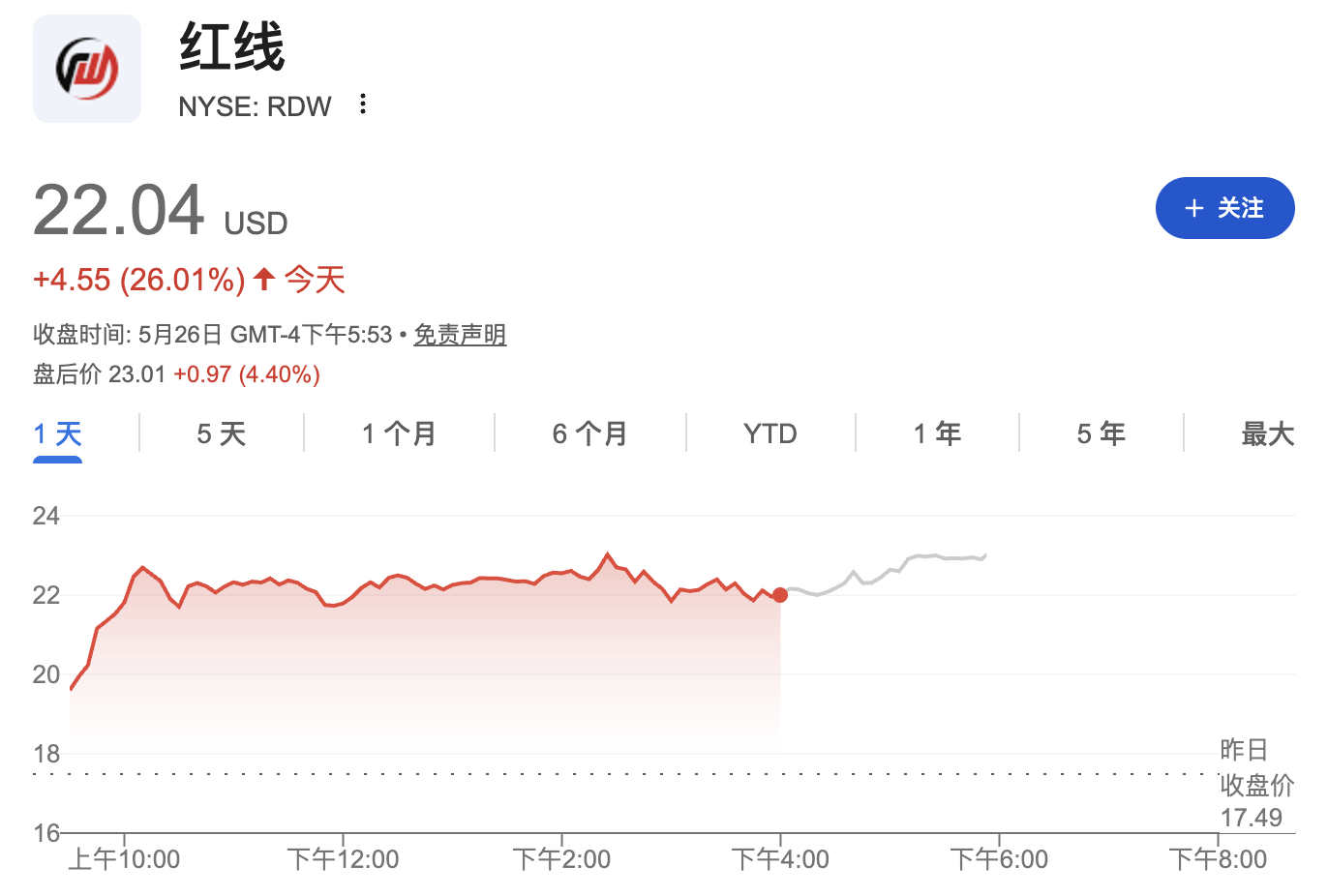
SpaceX's IPO has ignited enthusiasm for space on Wall Street. On Tuesday, shares of space infrastructure company Redwire surged by as much as 31%, eventually closing up 26%, while Firefly soared 19% after winning a NASA lunar contract. Bank of America's space basket stocks have skyrocketed by 61% this year, and the Procure Space ETF has risen nearly 69%, far exceeding the S&P 500's 9.8%. Investors are increasingly viewing SpaceX through a more macro lens, positioning it as a future AI infrastructure provider, but whether the Starship can operate stably at a commercial scale remains a focal point of contention between bulls and bears.
"Lukewarm Success"
SpaceX's 12th Starship test since 2023 has shown clear signs of "mixed results."
On the positive side, the V3 version of the spacecraft successfully completed the simulated satellite deployment task and achieved a controlled splashdown in the Indian Ocean. On the failure side, the core reusable component, the "Super Heavy" booster, failed to land as planned and ultimately crashed into the Gulf of Mexico.
Antoine Grenier, partner and head of the space consulting business at Analysys Mason, described the "lukewarm success" as "a good result, possibly even the best result." He explained, "A complete failure would be tricky, while total success could lead to overly enthusiastic market sentiment before the IPO."
SpaceX has invested over $15 billion in Starship research and development, aiming to create a fully reusable heavy rocket with far greater payload capacity than existing launch systems. As of now, this goal remains a "work in progress."
Key Window Before the IPO
Since the last Starship test, SpaceX has been silent for seven months. Analysts note that this gap made completing the test before the IPO almost a necessary option.
Antoine Grenier stated that failing to complete a launch before the IPO "would raise more questions for investors about the company's execution rhythm." From this perspective, the mere completion of this test holds symbolic significance on par with the test results themselves.
The strategic value of the Starship goes far beyond launch business. SpaceX emphasized in its IPO filing that the Starship is crucial for reducing launch costs, expanding the Starlink satellite internet business (currently the company's core cash source), and supporting the deployment of orbital AI data center satellites, crewed lunar missions, and even Mars exploration. If the roadshow proceeds smoothly, the maximum issuance scale of $80 billion will surpass all previous IPO cases.
Bullish Logic: From Rockets to AI Infrastructure
Investor and analyst bullish sentiment has not been significantly shaken by testing flaws, backed by a macro investment narrative.
James Bruegger, Chief Investment Officer of UK investment firm Seraphim Space, stated, "Full reusability is key to substantially lowering launch costs, which is the true source of value."
Investors are increasingly viewing SpaceX as a potential core provider of AI infrastructure, betting on orbital data centers and next-generation satellite constellations in space computing scenarios. Elon Musk also endorsed his AI company xAI this Tuesday, stating that the three-year-old company is still in its early stages compared to OpenAI and Anthropic and promised that its models "will be outstanding."
Jesse Nacht, a researcher at MarketVector Indexes, stated, "This launch has reduced the tail risk of the Starship falling into a failure cycle, but it has not completely eliminated execution risk. Unless a catastrophic accident occurs, I don't think it will significantly change market expectations."
Execution Risk Has Not Yet Cleared
Despite the overall bullish market sentiment, analysts generally emphasize that the Starship is still quite a distance from stable and economical operations at a commercial scale.
Austin Moeller, Executive Director of equity research at Canaccord Genuity, pointed out, "SpaceX clearly needs to demonstrate successful launches, payload deployments, orbital insertion, and controlled landings of the booster and spacecraft to give the system the capability for large-scale deployment, thus building a super constellation of orbital data centers."
SpaceX has also self-warned in its IPO documents that delays in development or cost targets could raise operating costs, thereby hindering the deployment pace of the next-generation satellites and AI infrastructure. Some investors worry that the Starship may fall into a "repair-failure" cycle, never able to verify an end-to-end usable system.
For the market, this test provides an incremental confirmation of confidence, rather than a decisive technological breakthrough. Whether the booster can achieve stable recovery and rapid turnaround in subsequent flights will remain a core observation indicator for investors during the roadshow.
免责声明:本文章仅代表作者个人观点,不代表本平台的立场和观点。本文章仅供信息分享,不构成对任何人的任何投资建议。用户与作者之间的任何争议,与本平台无关。如网页中刊载的文章或图片涉及侵权,请提供相关的权利证明和身份证明发送邮件到support@aicoin.com,本平台相关工作人员将会进行核查。


