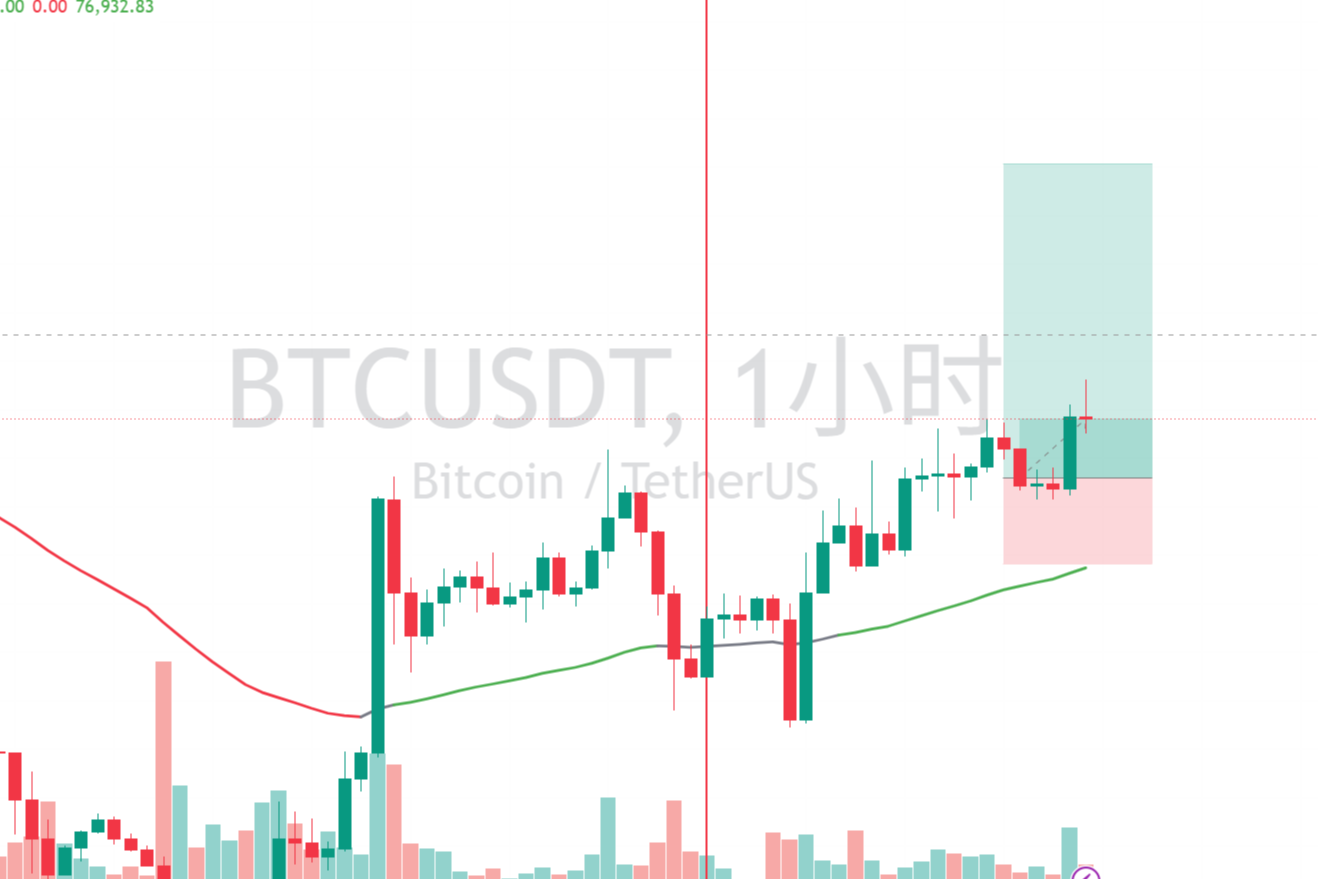
In May 2026, the Federal Reserve completed a leadership change, with Kevin Walsh sworn in. The market originally hoped that "new personnel + falling inflation + geopolitical easing" could quickly open the window for interest rate cuts, allowing the high interest rates that have risen post-pandemic to fall back, reigniting a liquidity bull market for risk assets, especially for crypto assets. However, by mid-May, CME FedWatch was already pricing in that maintaining interest rates at the June meeting was nearly a consensus, with real expectations for interest rate cuts being continually pushed back. Shortly thereafter, in the week of May 25, a research report by Thomas Matthews of Capital Economics further dampened hopes — even with the conclusion of the Middle East conflict, the likelihood of major economies cutting rates in 2026 remained very low; high interest rates appeared not to be a "transitional phase," but rather more like a new normal. Against this macro backdrop, the simplistic narrative of "waiting for the Fed to cut rates, and BTC and ETH will naturally welcome a new bull market" began to falter, forcing investors to accept an unwilling reality: high interest rates raised risk-free yields, making it necessary for risk assets to offer more attractive risk premiums to attract capital. The personal asset allocation of BiStrategy CEO Phong Le is a reflection of this reality — while maintaining his 30-year mortgage at around 1.75% without early repayment, he allocated $250,000 into STRC with an approximate yield of 11.5%, treating ultra-low-cost long-term liabilities as leverage to capture the interest rate spread between high-yield crypto products and traditional rates. This "spread arbitrage" extending from household balance sheets to blockchain is pushing a market reliant on interest rate cut expectations and price speculation towards a central question: in a world where high interest rates are prolonged, will more capital, like Phong Le, bypass traditional assets and head directly towards high-yield crypto products to reshape the entire crypto market's pricing structure?
Crushed Rate Cut Expectations: Capital Economics' High Rate Warning
Just as the market was digesting Phong Le's case of leveraging low-cost mortgages to buy high-yield blockchain products, a report from Capital Economics pulled the lens back to the macro level. In the week of May 25, 2026, Thomas Matthews released a forward-looking report, explicitly stating: even if the Middle East conflict concludes in the future, the probability of major economies cutting rates in 2026 remains "very low." This report came just before the Fed's June monetary policy meeting, coupled with CME FedWatch indicating that the market no longer anticipated significant short-term rate cuts, and Kevin Walsh having just been sworn in as Chair of the Federal Reserve, raising concerns about a hawkish future rate path, effectively driving another nail into the "crushed rate cut expectations" in the existing high-rate environment — high interest rates are no longer seen as a short-term tactic, but rather as a basic scenario likely to be extended.
The key macro variable being altered is the expectation of "how long the risk-free rate remains high." Following the pandemic, the policy rates of major economies have already been significantly higher than before, and within Matthews' framework, this high state is not likely to be quickly replaced by easing. Elevated risk-free yields increase the discount rates for all risk assets, applying long-term pressure on valuations for stock markets, growth stocks, as well as BTC and ETH, which are considered "macro hedge assets." In this environment, the formerly simplistic narrative — "waiting for the central bank to cut rates and liquidity to return, crypto will naturally restart the bull market" — becomes exceedingly fragile: if rate cuts themselves turn into low-probability events, the next round of market activity is more likely to come from investors actively chasing spreads and utilizing low-cost old debt to allocate to high-yield blockchain products, rather than passively awaiting a flood of monetary easing. This narrative shift itself is the core signal that the crypto market's pricing structure is being rewritten.
Walsh Succeeds Powell: The Politics of Rates in the Trump Era
While investors were rewriting their balance sheets using spread logic, another key piece of the institutional "new narrative" fell into place in May 2026 — Kevin Walsh's swearing-in as Chair of the Federal Reserve was seen by many traders as the starting point for a new phase of U.S. monetary policy. The change in Fed Chair is viewed by the market as a potential inflection point for changes in the path of interest rates and communication styles; even a single forward guidance statement or differences in the tone of a press conference could redefine the term structure of global capital. Some media and observers even commented that Walsh's succession of Powell means Trump will have to take more direct political responsibility for economic and inflation issues, though this statement is based on a single source and carries a clear commentative flavor, more intended to enhance the atmosphere of "politicization of rates" rather than being seen as hard information that can be traded directly.
What truly falls upon pricing is the concern about Walsh's potential hawkish tendencies: with inflation not yet fully back within a comfortable range, the new chair is expected not to easily loosen rates for growth. This sentiment quickly manifested on CME FedWatch — by late May, the market was generally betting on the June meeting maintaining interest rates unchanged, remaining very cautious regarding short-term easing. For the crypto market, this equated to writing "high interest rates will be maintained longer" into the dollar interest rate curve: risk-free yields elevated, expectations for dollar liquidity tightened, leading to increased discount rates and a forced revaluation of assets like BTC and ETH, which are treated as macro hedge assets. The high beta narrative falls back, and the political games surrounding interest rates, liquidity, and Federal Reserve personnel have instead become the new main storyline for price fluctuations.
From Mortgages to On-chain Yields: Phong Le's Spread Bet
Within the same timeline where the interest rate curve is locked at high levels, BiStrategy CEO Phong Le made a seemingly "counterintuitive" decision: holding a mortgage with an interest rate of about 1.75% over 30 years, instead of prepaying as most financial advisors suggest, he withdrew $250,000 and invested it into a crypto-related asset named STRC. According to his statement, the annualized yield of this position is about 11.5%, which is ten times the mortgage rate. This is not just a simple "buy high," but a typical spread mindset: using a fixed low-cost long-term liability to hedge against a high-yield, high-volatility on-chain asset, viewing the nearly 10-point yield from 1.75% to 11.5% as his "personal carry trade."
Phong Le is also not shy about this; he publicly defines this operation as a strategic case of utilizing the spread between low-cost mortgages and high-yield crypto. Set against the macro backdrop of 2026, the symbolic significance of this story extends far beyond the $250,000 itself: the post-pandemic rate hike cycle has pushed the cost of newly issued mortgages and corporate bonds to high levels, and those with "old era" low-interest liabilities have become the ones able to leverage spreads in a high-interest-rate world, while on-chain yield products provide an outlet that still offers double-digit tickets. For assets like BTC and ETH, treated as macro hedge assets, this type of behavioral pattern signifies that the path of capital entering the crypto market is changing — not merely betting on price appreciation but treating them as underlying assets with high-yield structures, using low-cost dollar liabilities to obtain high interest on-chain, embedding the risk appetite of the high-rate era into each cross-asset spread transaction.
High Rates Raise the Bar: The Role Division between BTC and High-Yield Tokens
When Capital Economics on May 25, 2026, clearly stated that "the probability of rate cuts in most major economies is very low," it effectively set a new baseline for the entire risk asset world: high interest rates are no longer seen as short-term disturbances but rather should be written into the discount rates of valuation models as the norm. With policy rates elevated, traditional assets deemed low-risk can provide sufficiently attractive yields, resulting in all funds willing to cross the risk boundary first asking, "How much higher than the risk-free rate can you yield?" In this environment, those on-chain yield structures, if merely hovering around the risk-free rate, find it hard to convince capital to leave money market funds and short-term bonds; only nominal yields significantly higher by several levels are adequate to hedge against volatility, hacking, compliance, and a host of other risks.
This new baseline is also reshaping the internal role division of crypto assets. Assets like BTC and ETH, which do not pay out dividends or interest, find it even harder to be portrayed as "high-growth tech stocks in a liquidity glut" in a high-interest-rate era; they are forced to return to the macro asset hierarchy, standing alongside gold, used to hedge against monetary policy missteps, rising inflation, or geopolitical risks, rather than competing with high-yield debt and equity assets for short-term yields. Under this narrative, institutional investors are more willing to treat BTC/ETH as "macro hedge legs" in their portfolios, utilizing various staking, lending, and structured products to package them as high-yield underlying assets to meet the heightened risk premium requirements of the high-rate era. Conversely, high-volatility altcoins and long-duration tokens priced on "forward narratives" are directly exposed to the impacts of rising discount rates: future narratives are discounted to present value at higher rates, valuations come under pressure, liquidity tightens, and funds become more inclined to withdraw from these long-duration chips, returning to BTC/ETH with macro hedge properties and to high-yield products that offer clearer structures.
Trading Structure Reordering: From Spot Hoarding to Crypto Spread Trading
In an environment where high interest rates and macro uncertainty are "locked in," the mainstream play in the crypto market is shifting from simple spot hoarding and directional speculation to structures closer to traditional finance involving spreads, yields, and hedging. After Capital Economics wrote "it’s hard to cut rates in 2026" into the consensus, the market assumed higher risk-free yields, diminishing the cost-effectiveness of purely betting on price increases, leading more capital to start thinking like Phong Le: can the liability side maintain low costs, and how to layer in higher yields on the asset side. Phong Le uses a long-term mortgage at 1.75% as a source of liabilities, putting $250,000 into a yield of around 11.5% in STRC, adding in a typical carry trade: locking in a long-term fixed low interest, while earning spreads on high-yield crypto assets; this mindset is being replicated across broader crypto capital pools.
Compared to before the pandemic, participants holding dollars and tokens pegged to it are no longer content with leaving funds in centralized exchanges or bank accounts to earn meager interest. Instead, they are frequently moving assets between CEX and on-chain protocols, looking for a balance between "platform and contract safety" and "yields above traditional rates": part of the funds remain in large platforms to maintain liquidity and hedging, while another part sinks into more complex structures with more attractive yields. In this new structure, the role of BTC and ETH is significantly enhanced: on one end, they are treated as underlying collateral similar to gold, locked in lending and derivatives protocols to "earn interest," where holders don’t just wait for price rises but use spot collateral to exchange for USD-denominated capital to invest in high-yield products; on the other end, participants with low-cost liability capabilities view cheap funding from the traditional world as the "liability side," extracting high yields in crypto on-chain and within structured products. The result is a market transformation from "betting on coin prices" to "competing on spreads," where the next stage of risk appetite and price volatility will be increasingly driven by the interest rate structure of BTC/ETH as collateral assets and cross-market spread opportunities.
Join our community to discuss and become stronger together!
On-chain Telegram community: https://t.me/AiCoinWhaleData
On-chain community: https://www.aicoin.com/link/chat?cid=N6OVMor5g
AiCoin on-chain Twitter: https://x.com/aicoinwhaledata
AiCoin exclusive Hyperliquid benefits: https://app.hyperliquid.xyz/join/AICOIN88
AiCoin exclusive Aster benefits: https://www.asterdex.com/zh-CN/referral/9C50e2
免责声明:本文章仅代表作者个人观点,不代表本平台的立场和观点。本文章仅供信息分享,不构成对任何人的任何投资建议。用户与作者之间的任何争议,与本平台无关。如网页中刊载的文章或图片涉及侵权,请提供相关的权利证明和身份证明发送邮件到support@aicoin.com,本平台相关工作人员将会进行核查。