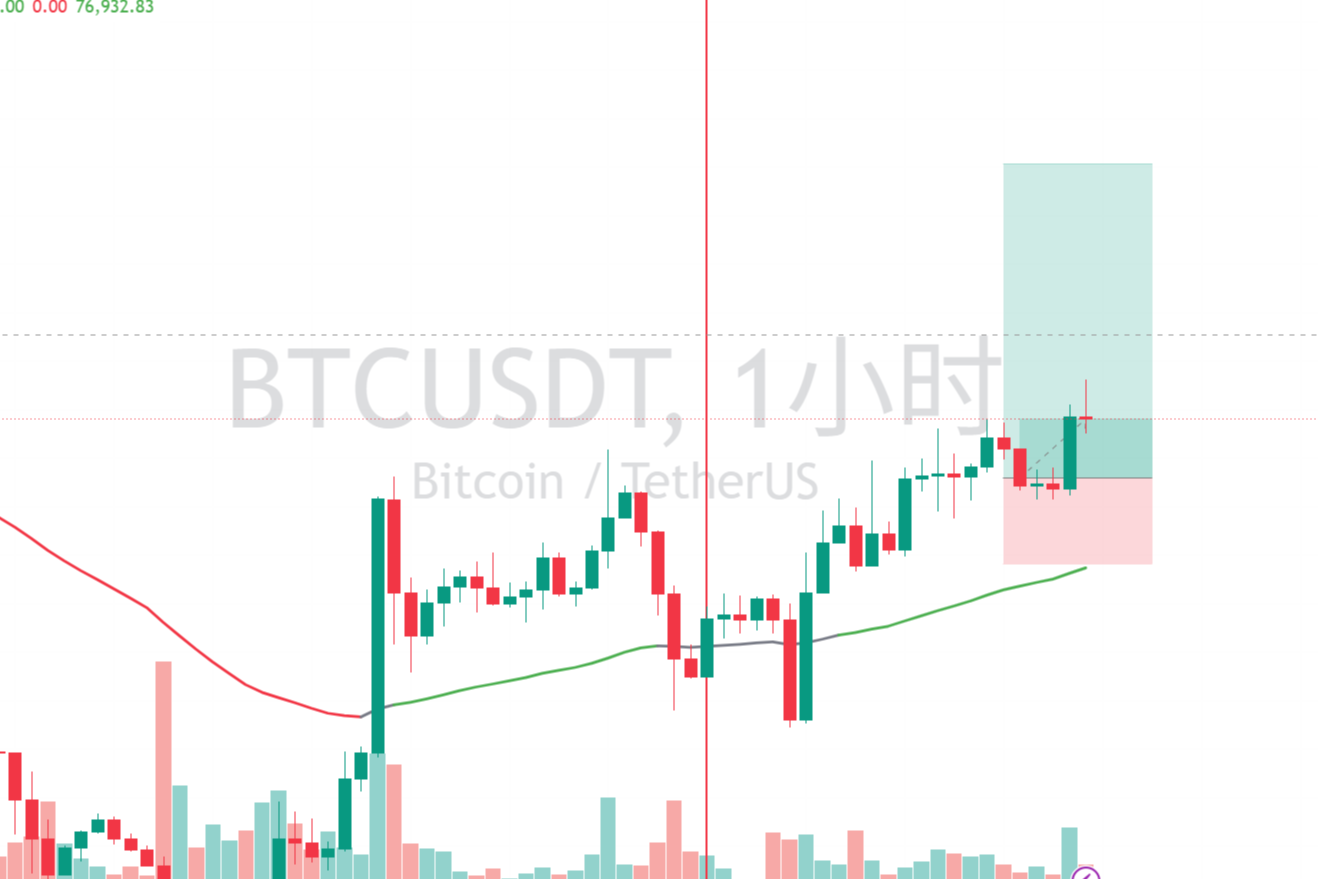
On May 25, 2026, Navin Saigal, the Head of Global Fixed Income in Asia Pacific at BlackRock, was asked the same question in public: during the term of the newly appointed Federal Reserve Chair, Walsh, who has not yet officially taken office, will interest rates raise again, or will they begin to decline? His answer did not align with the market's intuitive expectation of "hawkish Walsh," but rather provided a middle-ground judgment between holding steady and aggressive easing—if a choice had to be made between raising rates and lowering them, he believed the current macro environment offered sufficient reasons to support a one-time symbolic rate cut, rather than reopening the hiking cycle. For some traders still pricing in "higher for longer" or even additional rate hikes, this signal from one of the world's largest asset management firms sharply contrasted with their narrative based on Walsh's anti-inflation persona; moreover, in BlackRock's research brief, signs of weakening in the U.S. labor market and potential future pressures were viewed as key backdrop supporting this “one-time cut.” The question remains, when faced with a market perception that insists on high rates, and BlackRock’s baseline advocating for just one cut, how this disparity in interest rate expectations will ultimately translate into the repricing of U.S. dollar liquidity, U.S. Treasury yields, and global risk premiums, which will then extend into the fluctuations of BTC, ETH, and on-chain U.S. dollar assets—what is truly worth questioning is how this seemingly mild "one-time cut" in the Walsh era will distinctly rewrite the risk appetites and capital flows of crypto assets.
The Market Bets on Rate Hikes, Yet BlackRock Calls for Just One Rate Cut
In the interim period before Walsh officially takes office, the market has already labeled him. Based on his past positions and public image, some participants categorized him as more hawkish, placing greater emphasis on inflation and policy credibility; discussions on trading desks concerning interest rate futures and macro hedge funds were about whether to "hike again" or "stay higher for longer." In this pricing atmosphere, BlackRock presented what seemed like a mild yet sufficiently jarring judgment: not to restart the hiking cycle, but to implement only one rate cut during Walsh’s term. Navin Saigal candidly articulated on May 25 that if forced to choose between a rate hike and a cut, he would prefer to bet on "just one cut," rather than raising terminal rates again.
The foundation supporting this baseline is not a wishful thinking of Walsh's personality but rather a reassessment of the U.S. labor market. The research brief has already pointed out that around this power transition, employment data began to show signs of weakness, which may face certain pressures in the future. In BlackRock's view, a new chair confronting marginal pressures on employment would find it difficult to proactively push rates higher during their initial term. A more feasible scenario would be to cautiously provide a symbolic and functional rate adjustment without inflation spiraling out of control. Thus, while the market is pricing in rate hikes for "hawkish Walsh," BlackRock documents “labor market pressure” to delineate the boundaries of just one cut. This divergence is magnified by BlackRock, as one of the largest asset management institutions globally, transforming directly into confrontations in interest rate swaps, yield curves, and even the discount rate expectations of high-beta assets, which also becomes the starting point of macro and crypto trading structural games in the following months.
The Interest Rate Path Game: Rebalancing U.S. Dollar Liquidity and Risk Premiums
When the market is tugging between the three paths of "continued rate hikes, maintaining high levels, and just one rate cut," the actual game is about the global benchmark line for U.S. dollar liquidity and funding costs. Continuing a hawkish stance on rate hikes means further upward movement in nominal rates, an increase in the dollar funding costs, and new support for the U.S. dollar index at the expectation level. Consequently, globally dollar-denominated assets would have to recalculate their value using higher discount rates, putting pressure first on high-beta assets; maintaining the current high rate would embed "higher for longer" into duration, capping further upward shifts in funding prices yet extending the contraction effect over time, keeping risk premiums latched at elevated levels for longer, thus suppressing any reckless recovery in risk appetite.
The baseline that BlackRock has thrown into the mix, stating "just one rate cut during Walsh's term," essentially provides a narrow median between these two extremes: the interest rate path remains tilted towards higher levels, but the upward cycle is over. For the U.S. Treasury curve, this means that front-end yields will be priced more by the time spent at "high levels" rather than by new hike increments, shifting the adjustment focus of term premiums towards the intermediate to long end—investors originally betting on consecutive rate cuts will need to raise their expectations for forward rates, while those insisting on “higher for longer” will gain short-term support on the front-end yields. The U.S. dollar index and U.S. Treasury yields have always been highly sensitive to interest rate expectations, and this expectation differential will spread globally through U.S. dollar funding costs: the nominal discount rate will no longer continue to be raised, but rather locked at elevated levels, thus shifting the discount rate for risk assets from an "upward trend" to a "high-level plateau." Consequently, crypto assets will also be encompassed within the same framework of discount rates and risk premiums, awaiting the next directional choice of macro variables.
From Wall Street to On-Chain: The Rate Trades of BTC and ETH
Within BlackRock's framework, "just one rate cut during Walsh’s term" pushes the Federal Reserve from a continuous hiking phase into a high plateau phase. For BTC and ETH, this signifies the dramatic adjustment of discount rates coming to a close, but nominal rates remain stuck at a height unfriendly to risk assets. During the intense easing and asset purchase programs of 2020-2021, when liquidity surged, crypto assets experienced a typical bull market; conversely, during 2022, when the Fed rapidly hiked rates and tightened liquidity, crypto assets faced overall pressure. These two historical stretches have etched BTC and ETH's "rate beta" into traders' memories: they are perceived as high-beta assets most sensitive to changes in discount rates and liquidity. In a scenario of "just one cut," the macro environment does not release additional liquidity as in 2020-2021, nor does it continue to elevate discount rates as in 2022. The market thus needs to reprice BTC and ETH primarily through adjusting risk premiums—rather than betting on a new round of easing.
In this new high-interest normal, the rationale for institutional and long-term fund allocations towards BTC and ETH has also been rewritten. With U.S. dollar rates maintained at relatively high levels, traditional bonds and currency instruments provide substantial risk-free or low-risk returns, diminishing the impulse to simply "chase volatility." Crypto exposure can more easily be incorporated into the same risk budgets as those for Nasdaq and high-yield bonds, perceived instead as assets needing to exchange time for risk premiums, not purely speculative driven by short-term funds. Signs of weakness in the U.S. labor market provide the macro backdrop for a one-time rate cut while diminishing the tail risks of continued rate hikes. This allows some long-term institutions to plan a multi-year accumulation rhythm within a clearer rate range, viewing BTC as a long-term hedge against fiat currency credibility and inflation uncertainty, and ETH as a long-term bet on on-chain economic and revenue expectations, thereby treating crypto assets within the "high plateau" discount rate framework as an investment requiring patience, rather than a speculating gamble reliant on sudden easing.
The Dollar Spread Persists: The Appeal of Dollar Assets Like USDT Continues
Under the "just one rate cut" path, U.S. nominal rates will likely remain higher than those of other major economies. What Navin Saigal describes resembles a "slight decline from high levels" rather than a rapid plunge towards zero in a loosening cycle. The spread does not disappear, thus the narrative of "U.S. dollar earnings" does not dissolve: for global funds, as long as the return rates of U.S. cash and short-end instruments exceed those of local currency assets, risk-averse and arbitrage funds have reason to continue favoring dollar assets. In the past, this often manifested as increased demand for offshore dollar deposits and dollar-denominated assets. In the crypto market, USDT and other "on-chain dollars" naturally cater to this preference—in stages where U.S. dollar rates remain high while the volatility of risk assets expands, institutions are more inclined to hold USDT-type assets to maintain positions in dollars while keeping liquidity for quick switches back to BTC and ETH, turning the on-chain dollar pool itself into a buffer zone for yield and risk.
From a trading structure perspective, the Fed's interest rate path is reanchoring a "on-chain yield curve" through the borrowing rates of DeFi and CeFi. If the federal funds rate only slightly declines, the opportunity cost of dollar funding remains non-negligible; on-chain dollar borrowing rates will struggle to fall significantly below the returns of traditional dollar money markets, otherwise, whether institutional or quantitative funds, a preference would arise to withdraw dollars back off-chain for more definite yields. Similarly, the U.S. dollar borrowing and leveraged financing costs on centralized platforms will fluctuate around this policy rate range, locking the holding costs of high-beta assets like BTC and ETH into a relatively high bandwidth. The result is that USDT and other dollar-denominated assets continue to play the role of "high-yield currency" within the crypto ecosystem: on one side, global dollar funds attracted by high spreads keep flowing in, while on the other side, the outflow timing of these funds from the on-chain dollar pool towards risk assets like BTC and ETH is determined through DeFi rates and spot versus futures basis.
Betting on Expectation Differentials: What Signals Should Crypto Traders Monitor
Before Walsh has officially walked into the FOMC conference room, BlackRock and the market consensus of "higher for longer" have already found themselves on opposite sides of the interest rate expectation differential: one side is the minority judgment of "just one rate cut," underpinned by interpretations of weakening U.S. labor markets and increasing future pressures; the other side views Walsh as hawkish, pricing for a prolonged period of high rates or even additional hikes. For crypto assets, this is not an academic debate but rather a watershed for the on-chain dollar yields, BTC/ETH risk premiums, and the duration of USDT and other dollar-denominated assets staying on-chain in the coming quarters: if a BlackRock-like scenario comes true, high spreads peak and retreat, diminishing the "interest temptation" of on-chain dollars, allowing risk appetite to rise, and funds to return more easily from the dollar pool to BTC and ETH; conversely, if the market's hawkish scenario prevails and high rates are extended, the crypto system will continue to see high-yield dollars as a safety net, with risk positions increasingly reliant on futures leverage rather than spot increments. What is truly tradable is the convergence process of this expectation differential over time, thus crypto traders need to keep an eye on three types of signals: first, whether U.S. labor data continues to confirm "pressure is accumulating," which directly determines the reliability of BlackRock's logic; second, Walsh's inauguration timeline, his initial public statements against inflation, and the tone of his communications following the first few FOMC meetings, as the market will reshape his image as "new Paul" or "gentle gatekeeper"; third, the direction of repricing in the interest rate futures curve and U.S. Treasury yields—especially whether the market continues to pay premiums for scenarios of rate hikes before December, which are still marked as "to be validated" in the research briefs. Current information regarding Walsh's orientations and interest rate pricing still predominantly comes from a single channel, suitable for being incorporated as scenario hypotheses in trading frameworks, rather than viewed as a script already written into reality.
Join our community, let’s discuss and grow stronger together!
On-chain Telegram community: https://t.me/AiCoinWhaleData
On-chain community: https://www.aicoin.com/link/chat?cid=N6OVMor5g
AiCoin on-chain Twitter: https://x.com/aicoinwhaledata
AiCoin exclusive Hyperliquid benefits: https://app.hyperliquid.xyz/join/AICOIN88
AiCoin exclusive Aster benefits: https://www.asterdex.com/zh-CN/referral/9C50e2
免责声明:本文章仅代表作者个人观点,不代表本平台的立场和观点。本文章仅供信息分享,不构成对任何人的任何投资建议。用户与作者之间的任何争议,与本平台无关。如网页中刊载的文章或图片涉及侵权,请提供相关的权利证明和身份证明发送邮件到support@aicoin.com,本平台相关工作人员将会进行核查。