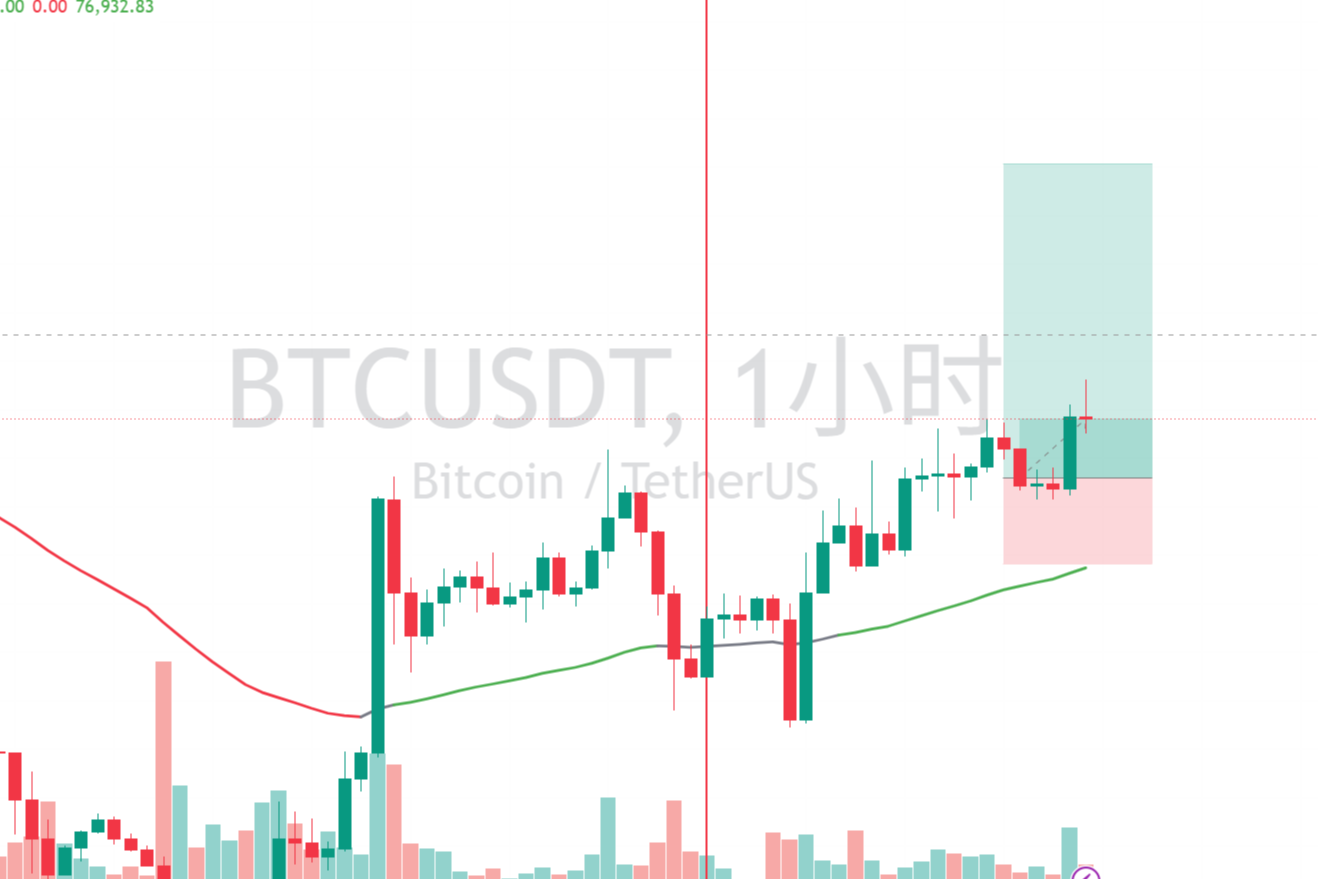
On May 25, 2026, the market was repeatedly tugged by news of a "possible agreement" between the US and Iran: on one side, US Secretary of State Rubio stated that a potential agreement with Iran could be signed as early as Monday, still hopeful for consensus; on the other side, Iranian Tasnim News Agency cited informed sources pouring cold water, emphasizing that the final memorandum of understanding has yet to be finalized, key terms remain contentious, and warned that if the US fails to honor its commitments, Iran will retain all negotiation leverage to counteract. In this tug-of-war filled with distrust, prices took the lead and "expressed their stance": Brent crude oil dropped by about 4.5%–6% during the day to around $94.59 per barrel, and WTI crude fell by about 6.8%, reported at about $93.45 per barrel (according to a single source), as if the market had already bet in advance on a scenario of "potential easing of sanctions and possible increase in supply." International oil prices are the most sensitive part of the global inflation basket; their dramatic pullback directly leverages inflation expectations, putting downward pressure on US Treasury yields and future interest rate paths, thereby reshaping the emotional tone of global risk assets in a short period of time. For cryptocurrency traders, this is not just a fluctuation in the energy market: the expectation differential in oil prices is altering the discount rate assumptions and funding preferences for BTC and ETH as high-volatility risk assets, affecting miner cost curves, the rhythm of position switching between on-chain dollar assets and mainstream coins. Next, we follow the "oil prices—inflation—interest rates—liquidity" chain to see how this round of US-Iran negotiation expectations is being repriced for BTC, ETH, and on-chain dollar assets.
Agreement on the horizon and denial alternating: Oil prices become a roller coaster of expectations
Rubio's statement of "still hopeful for an agreement with Iran... a potential agreement could be signed as early as Monday," is equivalent to throwing a pre-written script with a title into the market—heating relations between the US and Iran, easing sanctions, decreasing oil supply risks. For oil traders who heavily rely on expectations, this was enough to press the "sell first" button: Brent and WTI immediately saw a sharp decline, with intraday losses expanding to about 4.5%–6% and 6.8%, respectively, with prices quickly dipping to $94.59 per barrel and $93.45 per barrel, marking a collective bet on "future supply increase." Easing Middle Eastern geopolitical conflicts is usually interpreted as enhancing supply security margins, compounded by the market's association with "easing sanctions," this abrupt fall is not a reflection of current supply and demand, but a pre-determined expectation of future scenarios.
However, almost simultaneously, the Iranian Tasnim News Agency cited informed sources dousing optimism—stating that the final memorandum of understanding has not been reached, and key terms remain disputed; it emphasized that if the US breaches its commitments, Iran will retain all negotiation leverage to counteract. The result is that while the market digests the optimism of "agreement on the horizon," it is forced to reintegrate the probabilities of "talks breaking down" and "countermeasures": oil prices’ sensitivity to "whether an agreement will be reached" is amplified, and the daily fluctuations resemble an emotional game revolving around news headlines. This also means that the current oil price adjustment is more a lot of predetermined trading based on future paths, rather than a trend reversal anchored on real supply and demand; as long as there is any fluctuation in negotiation news, this expectation-based pricing may quickly retract, creating a highly reversible macro background on downstream inflation expectations, interest rate expectations, and even risk asset valuations.
Oil prices create an inflation gap: Signals from US Treasuries and the dollar
When Brent and WTI plunged 4.5%–6.8% above $90 in a single day, the market read it as not a "collapse in demand," but rather a forcibly torn inflation gap. International oil prices are a major part of the global inflation basket, transmitting through energy and transportation costs to the CPI. Once oil prices experience such a significant pullback, the model’s mid-to-long-term inflation paths will be forced downward, leading to a rewriting of the imagination space for further rate hikes and "how long high rates will remain." Once inflation expectations cool, historical experience often points to the same financial chain: long-end US Treasury yields face downward pressure because the combination of future nominal growth and prices is being repriced; while the loosening of the yield curve objectively relaxes the constraints on global discount rates, allowing for greater flexibility in the valuation of risk assets.
In the script of lower interest rate expectations, the strong logic of the dollar will also briefly lose one of its pillars. With US inflationary pressures easing, high yield differentials expectations weakening, the upward drive of the dollar index naturally wanes, and non-US assets and emerging markets gain relative breathing room in this environment, showing signs of global liquidity overflowing outward rather than "locked into dollar assets." But it must be emphasized that the current round of oil price adjustments is essentially a pre-bet on "potential easing of sanctions and alleviation of geopolitical tension," not a reflection that the real supply and demand pattern has flipped; as long as subsequent news points to a collapsed agreement or renewed Middle Eastern risks, oil prices and their implicit inflation and interest rate paths can quickly revert to their original tracks, at which point the reactions of US Treasury yields and the dollar will also flip to the other side, triggering a secondary pricing for all risk assets. For traders, the true variable is not how much oil prices dropped today, but when and in what direction this inflation and interest rate path will be forced to be rewritten.
From oil prices to computing costs: Dual revaluation of BTC and ETH
In miners' Excel sheets, oil prices are not abstract macro variables but coefficients on electricity price quotes. Some mining operations that rely on fuel generator units or tie fuel-indexed electricity prices see a drop in oil prices during the day as a drop in marginal cost per kilowatt-hour: the shutdown price for older models is adjusted downward, computing power can be sustained for a few more months, and the pressure to sell BTC for immediate electricity bills reduces in the short term, making inventory strategies lean more towards "sell high" rather than "sell daily." Of course, the downward shift in cost curves will also attract new computing power into the market, with difficulty adjustments swallowing back some cost advantages; but the buffering in rhythm is enough to alter the slope of miners' output during price pullbacks. In contrast, for ETH, which has transitioned to PoS, the main expenses for validators are no longer electricity but the opportunity cost of the staked funds themselves, so fluctuations in oil prices have limited impacts on their operational cash flows.
What truly brings BTC and ETH to the pricing table together is that underlying chain of "easing inflation—falling interest rate expectations—liquidity expansion" behind the oil price drop. Once the market determines that a drop in oil prices will suppress the inflation basket, expectations for US Treasury yields and future rate paths will be revised downward, and the discount rates for high-beta assets will decrease simultaneously, lifting the valuation center for growth stocks and crypto assets overall. In previous similar environments, the correlation between BTC and the Nasdaq has periodically risen, indicating that it is more like an extension of a basket of tech stocks in actual trading; but at the same time, some institutions view BTC as "digital gold," interpreting the drop in oil prices and the cooling of inflation expectations as favorable for "gold-like assets." Thus, the same oil price signal is used on one end to discuss hedging and inflation risk, while the other end discusses liquidity and high-beta premiums; what genuinely decides how BTC and ETH will be priced next is which side of these two narratives has stronger funding and is bolder with leverage in this round of oil price fluctuations.
The gunpowder smell in the Middle East hasn't dissipated: Cryptocurrency funds between hedging and speculation
Iran warns that if the US breaches its commitments, it will retain all negotiation leverage to counteract, while Rubio reiterates his optimistic remarks that "an agreement could be signed as early as Monday," emphasizing that Israel retains the right to self-defense under any agreement. These two signals combined essentially tell the market: even if there is an agreement, the Middle East could just as easily return to the battlefield. The Middle East has long oscillated in the cycle of "ceasefire—negotiations—conflict again," embedding a layer of geopolitical premiums within oil prices and risk assets; today that layer of premium cannot simply be entirely erased by a single piece of "agreement on the horizon" news but rather adjusted from "immediate explosion risks" to "risks that may return at any moment."
In such an environment of "anchored peace expectations," the behavior of cryptocurrency funds resembles tightrope walking: on one end are dollar cash and on-chain dollar assets (such as USDT, USDC, etc.), used to secure profits at any time during abrupt changes in risk sentiment; on the other end is BTC, which is sometimes briefly treated as a hedging tool during periods of geopolitical uncertainty, while also having attributes of high-volatility speculation. During significant falls in oil prices and easing inflation and interest rate expectations, some funds may switch from on-chain dollar assets to BTC, ETH, and other high-beta chips, betting on a combination of "conflict easing + more relaxed liquidity"; however, Iran's doubts regarding US compliance, coupled with the reiterated emphasis on Israel's right to self-defense, spur another group of funds to maintain high dollar positions, treating on-chain dollar assets as "standby warehouses" that can be withdrawn from the banking system at any time. For the crypto market, this is not just a one-way bet on a single outcome, but rather simultaneous pricing for "geopolitical easing" and "potential re-conflict," with price paths being determined more by who dares to increase their positions and who can decrease their positions faster in this two-way game.
Oil price curves and news reversals: What signals should crypto traders watch
This round of crude oil's daily drop of 4.5%–6.8% essentially reflects the intense repricing around US-Iran negotiation expectation differentials: on one side, Rubio releases optimistic signals of "an agreement could be signed as early as Monday, with hopes of reaching an agreement," emphasizing that Israel still retains the right to self-defense under any agreement; on the other side, Iranian sources deny that a final memorandum of understanding has been reached, warning that they will retain all leverage to counteract should the US default. The real-world supply and demand have not undergone structural changes within hours; what has changed is the market’s probability weights on "whether sanctions will ease and whether supply will increase," while the rapid pullback in oil prices is merely a price vote on this expectation switch. For crypto traders, what truly needs attention afterward are four macro dashboards: first, the oil price curve itself, especially whether the front-end and back-end spreads continue to soften, determining if the market is merely trading temporarily eased conditions or starting to lower long-term risk premiums; second, inflation expectations, as oil prices are core to the inflation basket and directly affect the market's imagination regarding future prices through energy and transportation costs; third, interest rate expectations and US Treasury yields, as each adjustment in the inflation path—whether upward or downward—will amplify on the interest rate curve, thereby altering global liquidity rhythms; fourth, the strength of the dollar; when inflation and interest rate expectations ease and the strong logic of the dollar is questioned, the "macro premium" for BTC and ETH tends to rise. However, once geopolitical tensions spike again and oil prices rebound, pushing inflation and rate hike expectations, a stronger dollar will again amplify the risk discounts for high-volatility assets, making on-chain dollar assets a safe haven. The negotiations in the Middle East are destined to be a tug-of-war; BTC is seen by some funds as a "hedge against inflation," while also being sold off alongside growth stocks when liquidity tightens. ETH is primarily priced along the logic of risk assets; therefore, strategically, it must pre-arrange positions and hedging plans for the two scenarios of "agreement landing, oil prices declining, liquidity easing" and "talks breaking down, oil prices spiking again, interest rate expectations rising." What genuinely determines the direction of this round of market movement is not the news headlines themselves, but the ongoing evolution of oil price curves, inflation expectations, interest rate expectations, and the strength of the dollar in response to news reversals.
Join our community, let's discuss and become stronger together!
On-chain Telegram community: https://t.me/AiCoinWhaleData
On-chain community: https://www.aicoin.com/link/chat?cid=N6OVMor5g
AiCoin on-chain Twitter: https://x.com/aicoinwhaledata
AiCoin exclusive Hyperliquid benefits: https://app.hyperliquid.xyz/join/AICOIN88
AiCoin exclusive Aster benefits: https://www.asterdex.com/zh-CN/referral/9C50e2
免责声明:本文章仅代表作者个人观点,不代表本平台的立场和观点。本文章仅供信息分享,不构成对任何人的任何投资建议。用户与作者之间的任何争议,与本平台无关。如网页中刊载的文章或图片涉及侵权,请提供相关的权利证明和身份证明发送邮件到support@aicoin.com,本平台相关工作人员将会进行核查。