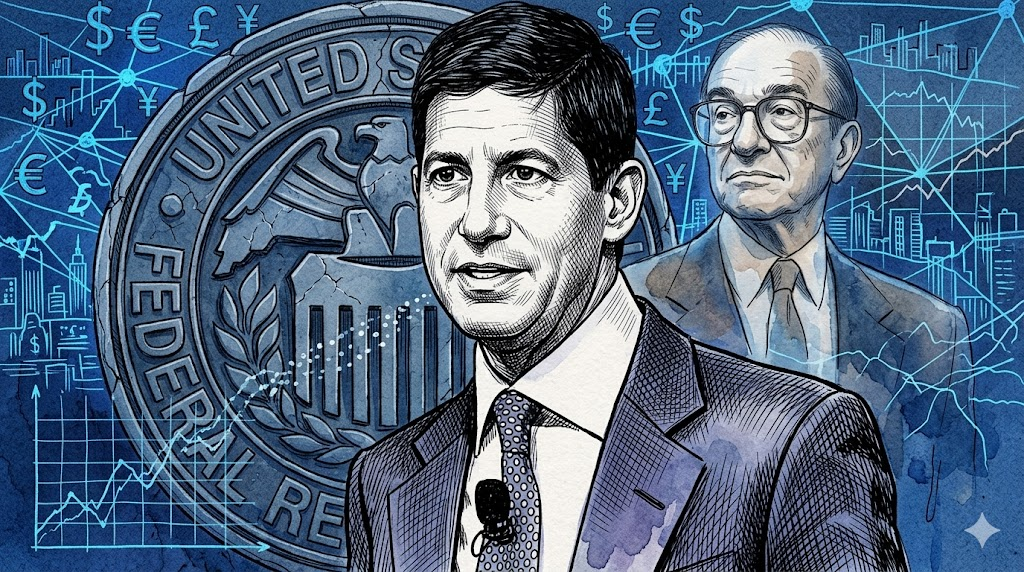
Author: Jae, PANews
At 11 PM Beijing time on May 22, Kevin Walsh took an oath as the 17th Chair of the Federal Reserve, placing his hand on the Bible in the presence of Supreme Court Justice Thomas, officially taking over the helm from former Chair Powell after eight years.
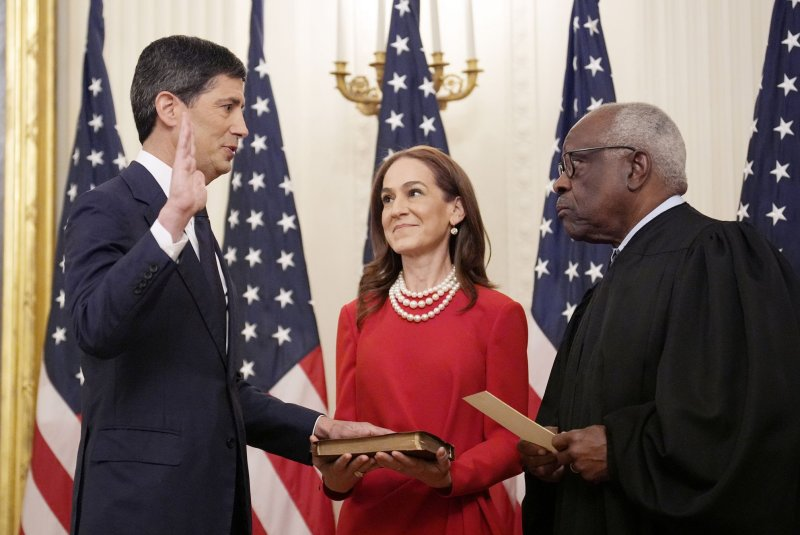
Fifteen years later, the former board member, who once resigned in protest against quantitative easing, has returned to the Federal Reserve and seized the highest power.
Unlike the inauguration customs of previous chairs held at the Federal Reserve headquarters, this time the oath-taking ceremony was held at the White House. This move to hold the ceremony outside the Federal Reserve headquarters, with the president personally endorsing it at the White House, has not occurred since 1987 when Reagan presided over Greenspan's inauguration, breaking the tradition over the past few decades of the Federal Reserve deliberately maintaining a physical distance from the White House.
Interestingly, during Walsh's oath ceremony, President Trump delivered a statement of "independence": the government would fully support Walsh's work, while the Federal Reserve would make independent decisions. This apparent display of delegation, in fact, set the stage for a policy game for the new Federal Reserve Board.
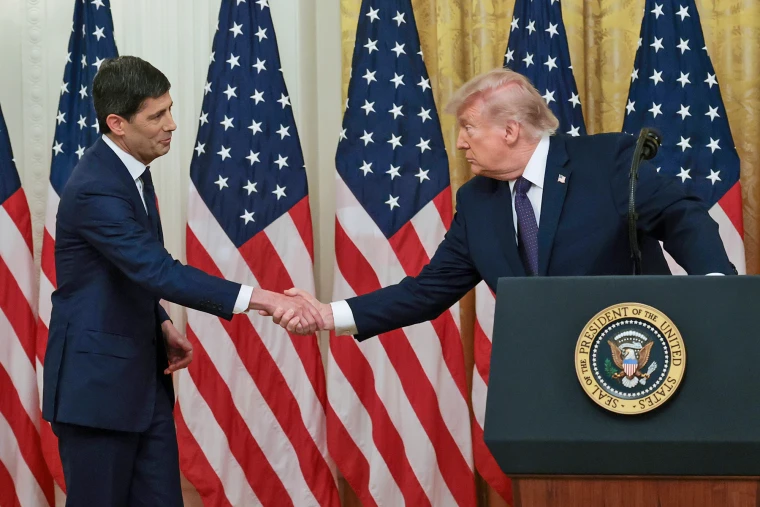
Outside the White House, the sky was blue and the sun shone brightly, yet the clouds of stagflation looming over the macro economy of the United States remained persistent. All players in the capital markets hesitated: can Walsh, who calls for a "reconstruction of the Federal Reserve," replicate the legend of Greenspan from 30 years ago and break the chains of inflation by leveraging the AI revolution?
Facing a technological turning point, Greenspan rode the wave of the times, while Walsh confronts the stagflation challenge
To understand Walsh's thinking, one must first clarify the two eras inhabited by him and Greenspan: a similar technological dawn, and vastly different economic soil.
The 1990s were the golden years of the U.S. economy, known as the "Great Moderation." With the end of the Cold War, globalization brought abundant benefits, and the geopolitical outlook was peaceful; the wave of personal computers and the internet swept across, infusing technology benefits into the fabric of the economy, leading to soaring corporate efficiency and plummeting marginal costs; inflation lingered at a moderate low, with the Federal Reserve enjoying near absolute independence, free from political constraint. Greenspan stood at the helm of this era, on a stable and fertile ground.
Currently, Walsh is navigating through a minefield laden with thorns. Although it is also a turning point in technological revolution, with generative AI ushering in its scalable application, echoing the early days of the internet, everything else differs from the script.
The CPI has risen to a three-year high of 3.8%, consistently exceeding the 2% target for five years, with stubbornly sticky inflation; the Iran war has triggered a crisis in the Middle East, with oil and gas prices skyrocketing by 50%, and risks of imported inflation and supply chain disruptions remain high; the Trump administration's strong intervention has openly pressured for interest rate cuts, putting the independence of the Federal Reserve under unprecedented challenge; the $6.7 trillion balance sheet left by Powell is a "liquidity dam," far exceeding that during Greenspan's tenure.
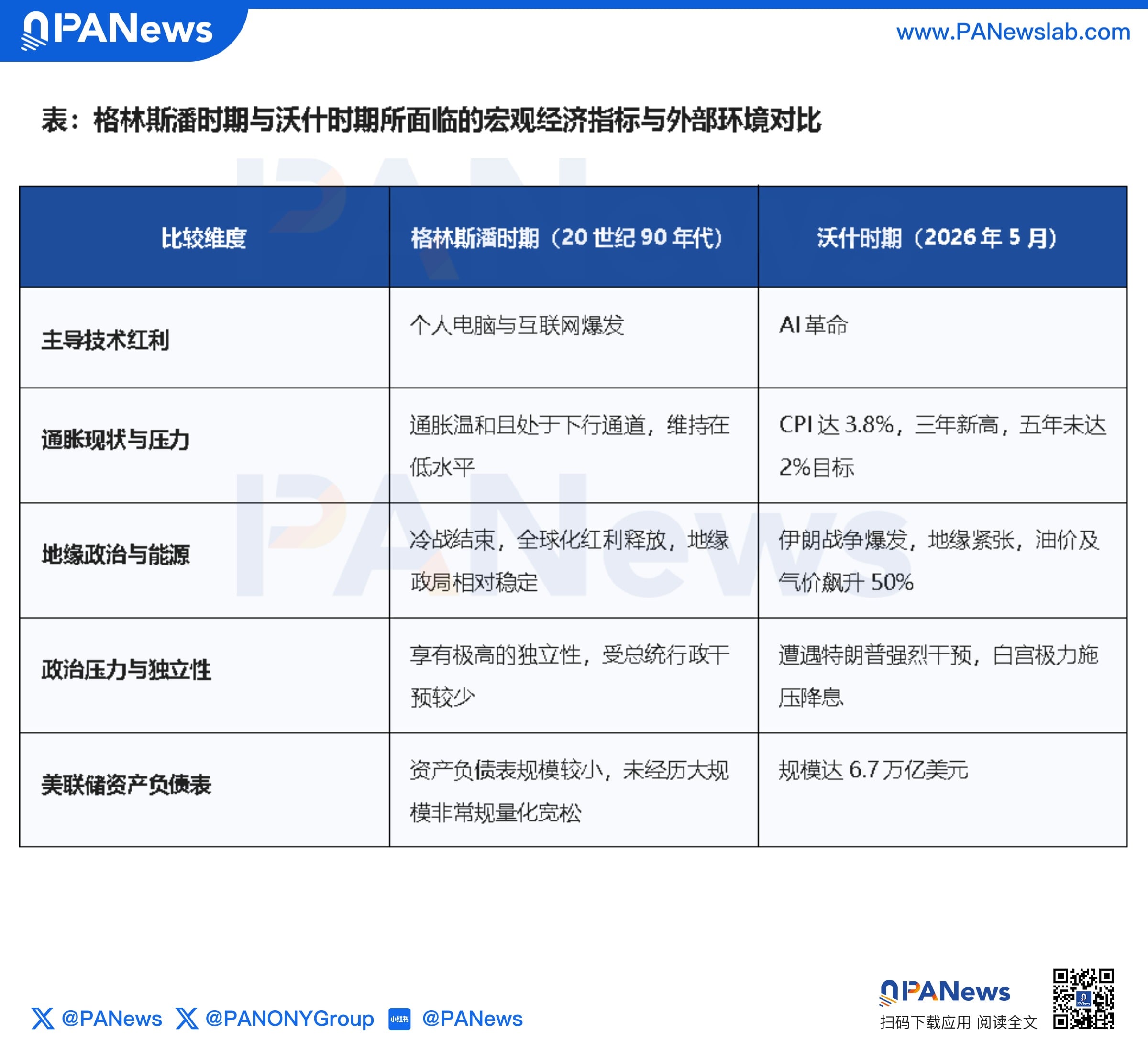
One is a favorable environment of technological benefits, low inflation, and stable growth, while the other is a difficult situation marked by the dawn of technology, the looming shadow of stagflation, and pervasive political intervention. The current Federal Reserve is forced to find a difficult balance between combating inflation and preventing economic recession, which makes every monetary policy decision by Walsh carry a high tolerance cost.
Disagreements arise over the "AI gamble," aggressive policies stir the bond market
Despite the vastly different backgrounds of the times, Walsh's policy narrative, as well as his ideas for Federal Reserve reform, reveal a tribute to Greenspan: both betting on technological benefits, attempting to rewrite the underlying logic of inflation and growth through supply-side reforms.
In the late 1990s, Greenspan proposed the sensational "internet hypothesis": the leap in productivity brought by the internet was sufficient to support high economic growth without triggering inflation.
Now, Walsh is trying to replicate this logic, but has changed the focus to AI. He repeatedly describes in public speeches a scenario: humanity is on the eve of the "golden age of AI," and AI will become a significant deflationary force. In his narrative, the productivity leap facilitated by AI will further lower corporate costs, creating ample space for the Federal Reserve to cut interest rates.
However, this "century gamble" regarding AI productivity has not yet reached a consensus. Doubts have proliferated from academia to inside the Federal Reserve, more fiercely than the controversies faced by Greenspan back in his day.
The root of the divergence lies in the belief of many economists: anchoring monetary policy to uncertain technological benefits is akin to walking a tightrope.
Former Federal Reserve Chair and current Treasury Secretary Yellen pointed out in The New York Times that Walsh focuses only on the supply-side deflationary potential of AI, while ignoring its inflationary effects on the demand side. The substantial investments by companies in data centers, power networks, and high-end equipment may, in the short term, become "fuel for inflation."
Beyond the logic of monetary policy, Walsh's reform ideas for the Federal Reserve also reflect his admiration for Greenspan's era of "constructive ambiguity."
Walsh has frequently criticized the Federal Reserve for becoming "overly verbose" and politicized: frequent press releases and dense public statements have stripped the central bank's decisions of flexibility. He advocates significantly streamlining communication mechanisms, eliminating the customary eight annual press conferences, and abandoning the quarterly released interest rate "dot plot," reverting to a communication model that emphasizes "substance over form." Much like during Greenspan's era, vague expressions preserve the flexibility of monetary policy.
Even more radical is his plan for balance sheet reduction, intending to force the $6.7 trillion balance sheet down to $3 trillion, which means the Federal Reserve must abandon the current "ample reserves" framework and revert to the traditional "scarce reserves" management mode. However, this maneuver comes with high risks; if balance sheet reduction occurs too quickly, it could repeat the liquidity collapse in the overnight lending market of 2019, triggering financial turmoil.
Moreover, during the process of balance sheet reduction, long-term interest rates often spike. A dramatic rise in long-term rates was one of the main causes of "Black Monday" in August 1987.
On May 19, a fierce sell-off storm erupted in the global bond market, leading to a substantial rise in U.S. Treasury yields. The 30-year U.S. Treasury yield broke through the 5% mark, setting a record since 2007; the 10-year U.S. Treasury yield approached a high of 4.6%; and the 2-year Treasury yield rose to 4.1%, the highest level since February 2025. The collective rise in U.S. Treasury yields reflects the market's intense risk pricing of Walsh's future policy path.
The "most obedient" Federal Reserve Chair? Trust becomes the first test of his term
In the first six months after taking office, a new Federal Reserve Chair typically faces active tests or trials from the market, as was the case for Greenspan at the outset of his tenure during the "Black Monday" stock market crash. Fast forward to 2026, Walsh will similarly need to commence his term amid a storm of public opinion regarding "independence."
In simple terms, the first test Walsh faces after taking office is not inflation or recession, but trust.
His nomination is steeped in the smoke of political maneuvering. Trump has publicly criticized Powell multiple times, explicitly stating the need for a "obedient" chair; Democratic Senator Warren even slammed Walsh during the hearing, calling him Trump's "mouthpiece."
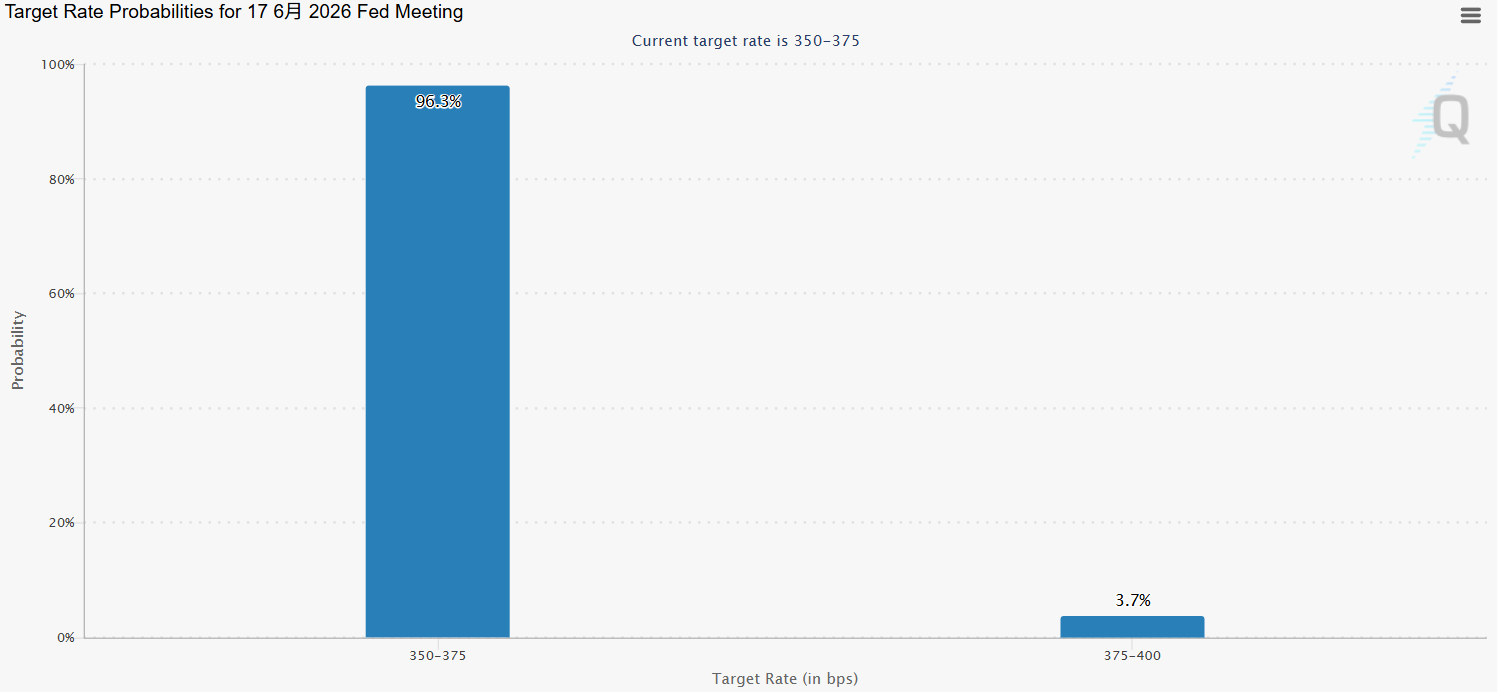
Though Walsh has repeatedly pledged to uphold the independence of the Federal Reserve, and the White House has never exerted pressure, market trust has already become fragile. To dispel doubts of being a "White House puppet," Walsh's first FOMC meeting (June 16-17) is likely to adopt a "hawkish debut," using a tough stance to demonstrate independence to the market.
The actual situation is far more challenging than imagined. Powell unusually remains on the Federal Reserve board until 2028, becoming the main counterbalance against Walsh; in previous Federal Reserve meetings, three decision-makers opposed interest rate cuts, and Walsh is replacing the only radical rate cut advocate, Milan. Allies have departed, checks remain, and Walsh has little to no room for rate cuts in the short term.
Market expectations have since reversed. As of May 23, the latest data from CME FedWatch shows that the probability of the Federal Reserve cutting rates has fallen to 0%, with the market instead betting on the next step being an interest rate hike. Some economists suggest that if inflation continues to heat up, the Federal Reserve may need to raise rates by approximately 100 basis points to counteract three expected rate cuts in the second half of 2025.
A dilemma of "independence" versus "inflation fighting," presents itself before Walsh, and his debut is bound to be a tough battle.
The start of the Walsh era represents a challenging test for the Federal Reserve itself.
Greenspan's thoughts can be seen faintly in him, firmly believing that a technological revolution can break through the growth ceiling. He happens to be on the eve of the explosion of AI but also confronts persistent stagflation.
The legend of Greenspan was aided by the gifts of the times, while the road ahead for Walsh has no ready answers. Whether he truly possesses the masterful talent of Greenspan will soon be revealed by the financial markets in the forthcoming debut storm.
免责声明:本文章仅代表作者个人观点,不代表本平台的立场和观点。本文章仅供信息分享,不构成对任何人的任何投资建议。用户与作者之间的任何争议,与本平台无关。如网页中刊载的文章或图片涉及侵权,请提供相关的权利证明和身份证明发送邮件到support@aicoin.com,本平台相关工作人员将会进行核查。


