At a time when oil prices and the clouds of war are both rising, U.S. regulators and on-chain whales revealed their respective positions almost in the same week: The Wall Street Journal reported that the Commodity Futures Trading Commission (CFTC) is conducting a retrospective review of the abnormal surge in crude oil futures trading volume before Trump's decision to delay action against Iran, attempting to clarify whether someone had prior knowledge of the impending military actions and built up positions significantly before the non-public government decision was made, potentially involving market manipulation; simultaneously, U.S. Central Command confirmed that U.S. forces are enforcing a maritime blockade against Iran, having guided 89 commercial ships to comply with blockade and safe passage orders, tying pre-war intelligence, substantive blockades, and futures markets together. On another seemingly parallel capital route, on-chain analysis data showed that a16z has been continuously increasing its positions in the Hyperliquid ecosystem's HYPE since April 16, 2026, accumulating approximately 9.18 million coins and investing about $356 million, with an unrealized profit of approximately $79.29 million, including an additional purchase of about 2.35 million coins in the past month alone, and within nearly 11 hours leading up to May 20, another approximately 206,000 coins, worth about $9.95 million, were swept in, pushing this single institution's status in the on-chain derivatives ecosystem to an unofficial label of "sixth largest holding, largest external institutional holding." When one side has the CFTC scrutinizing pre-war crude oil futures anomalies with a magnifying glass, while the U.S. military is reshaping energy and shipping order through a blockade, and on the other side, top venture capital is continuously increasing positions in the high-frequency derivatives battlefield on-chain, the question naturally extends from the crude oil market: will this round of regulatory upgrades under geopolitical pressure spill over along the logic of "intelligence abuse—market manipulation—compliance vacuum" to crypto funds and the trading platforms that custody them.
CFTC Focuses on Pre-War Crude Oil Futures: The Red Line of Derivatives Under Geopolitical Shock
This round of scrutiny disclosed by The Wall Street Journal does not start with the Iranian situation itself but with the "abnormal surge" in trading and positions in crude oil futures before Trump delayed action against Iran. The CFTC, as the governing body for commodity futures, intervenes at this time not to evaluate military decisions but to answer a colder question: within a window where a few people had advance knowledge of forthcoming government actions, and the information was not yet public, did anyone exploit this to place large-scale bets on crude oil derivatives, thereby constituting a trade based on non-public government action information that could even evolve into market manipulation? If the answer is yes, such behavior falls directly into the scope of market manipulation and insider trading investigations and penalties under the CFTC's authority, rather than being regarded as "wise trading in the right direction."
For regulators, the dilemma in the pre-war market lies in delineating the line: macro traders can reasonably anticipate conflict escalation based on public sentiment, military deployments, and sanctions history, but once trading paths, execution points, and internal government decision-making rhythms highly overlap, and funding volumes expand abnormally, it triggers the CFTC's habitual "pattern recognition" - they have launched multiple investigations over abnormal trading volumes and price fluctuations in commodities and interest rates, ultimately imposing hefty fines. This time, crude oil futures are merely a vehicle; what is truly being tested is: what kinds of event-driven trades are still viewed as high-risk gambles before and after geopolitical events, and what kinds of trades will be redefined as "informed trading." In the context of U.S. regulation, crypto assets have often been compared to "commodities," and their derivatives could theoretically be included in a similar framework. Once the CFTC establishes more detailed recognition standards in the Iranian crude oil case, all future on-chain perpetual and event contracts related to war, sanctions, or macro decision-making will find it harder to escape the gray narrative of "commodities that are not subject to commodity regulation."
a16z Swallows HYPE and Potential Regulatory Questions
Following the thread of "who is betting big on gray area derivatives," on-chain data has provided a striking name. According to analyst Ai Yi's tracking, to date, a16z has accumulated a position of approximately 9.18 million HYPE coins, investing approximately $356 million, with an unrealized profit close to $79.29 million, based on a single on-chain analysis source. Several Chinese media outlets deduced from this that a16z may already be the sixth largest holding entity of HYPE and possibly the largest external institutional holder, although this ranking is not officially disclosed by the project or regulatory bodies. The timing is also thought-provoking: since April 16, 2026, the newly monitored purchasing intensity has continued to amplify, accumulating about 2.35 million HYPE coins, with an additional approximately 206,000 coins, worth about $9.95 million, added in nearly 11 hours before May 20, pushing a16z toward a "whale-level" participant status within the Hyperliquid ecosystem, characterized by on-chain derivatives and high-frequency trading.
The issue is that this whale is swimming in waters that are already in a blurry regulatory boundary. Ecosystems like Hyperliquid's on-chain derivatives still drift in a gray area that traditional commodity and securities regulatory agencies find difficult to directly cover. In recent years, U.S. regulatory bodies, including the CFTC, have repeatedly issued warnings about the compliance obligations and cross-border enforcement against non-registered crypto derivatives platforms, and have initiated investigations and penalties against crypto exchanges and related service providers regarding deficiencies in KYC, anti-money laundering, and sanctions compliance, thus reversing the demand for compliance infrastructure like Checker. If at some future point, HYPE or its corresponding on-chain contracts are redefined as "commodity derivatives" or similar categories subject to stricter rules, large institutions like a16z holding positions worth hundreds of millions of dollars will very likely need to explain their trading strategies and information sources to regulators, LPs, and internal compliance teams, while the related platforms will have no choice but to benchmark their obligations in registration, client review, sanctions list screening, geographical blocking, etc., against traditional derivatives exchanges. In this scenario where regulatory changes rewrite the rules of the game, a16z's current whale position is both a bet on capital and a potential sample for future compliance pressure testing.
Escalation of Iran’s Maritime Blockade and Sanctions Compliance Risks
When U.S. Central Command publicly announced that U.S. forces are enforcing a maritime blockade against Iran and have guided 89 commercial ships to alter course, the first wave of pressure is not on-chain, but on the compliance departments of the global energy trade and settlement system. Once sanctions and blockades against Iran enter the "action period," banks, insurance companies, shipping firms, and commodity traders will be required to reassess clients and transaction counterparts, expanding due diligence and rejection scenarios related to Iran risk. Any freight financing, cargo insurance, or letter of credit arrangement suspected to be related to Iran or its "shadow network" may trigger internal alerts, subsequently leading to the cutting off of settlement channels.
This contraction in compliance will quickly transmit to the crypto market. On the one hand, the U.S. Treasury and relevant agencies have historically implemented secondary sanctions against financial institutions or enterprises identified as helping sanctioned parties "circumvent" sanctions, and the deterrent force of such "secondary sanctions" will compel banks to be more sensitive when dealing with crypto platforms, over-the-counter brokers, and high-frequency trading structures, more rigorously questioning whether they could potentially take on Iranian-related funds or derivative risk exposures; on the other hand, in past sanctions cases, crypto exchanges and custody institutions have already been required to strengthen their screening of addresses and entities related to sanctioned countries like Iran. Now, in the context of maritime blockades combined with geopolitical tensions, disrupted energy trade, hedging demands, and increased cross-border capital flows, on-chain derivatives platforms and cross-border capital channels will not only have to respond to stricter KYC and sanctions list screening but also anticipate that once labeled by the U.S. as facilitating "evasion of the blockade," they could be included in the secondary sanctions watch list. This will determine which platforms can still accept global energy risk hedging funds and which will be forced to withdraw from this profitable but heavily pressured regulatory capital flow.
The Rise of Compliance Infrastructure and Platform Red Lines
At a time when both regulatory and geopolitical pressures are tightening, Checker announced the completion of an $8 million financing round, formally positioning itself as "providing compliance and payment infrastructure for crypto-related businesses." For fiat entry and exit and various settlement channels, these service providers bear the most sensitive aspect of regulation: identity verification, transaction monitoring, sanctions list screening. Over the past few years, multiple U.S. departments, including the CFTC and the Treasury, have frequently imposed fines on exchanges and related service providers, with the core accusations almost always revolving around three issues - insufficient KYC, failure to effectively identify high-risk area users, and unclear business boundaries with sanctioned entities. Therefore, when institutional funds begin to flood into on-chain derivatives and liquidity pools, they often reverse "compel" platforms to integrate third-party compliance tools: without a risk control system that can interface with audits and regulatory inquiries, platforms may even be unable to obtain orders from these institutions.
The CFTC's current examination of the surge in crude oil futures volume and the ongoing U.S. sanctions and maritime blockade against Iran further heighten this demand for compliance infrastructure. On the surface, the CFTC is focused on whether there are transactions exploiting non-public military action information, or even manipulative market behaviors, but for the on-chain world, the spillover effect is the regulatory increasing sensitivity toward "who is providing pathways for sanctioned parties and gray capital." In the context of the ongoing enforcement reinforcement between the CFTC and OFAC, tools like Checker are likely to do more than just KYC entry; they will also bind closely with platforms on on-chain data monitoring and address risk levels: once certain addresses are algorithmically marked as highly related to sanctioned areas or suspicious commodity capital flows, whether platforms actively impose restrictions or bans will evolve into the critical line determining whether regulators will "intervene." For on-chain derivatives platforms eager to attract institutional participation and take in energy risk hedging funds, new game rules are forming - whether they dare, are willing, or able to genuinely blacklist high-risk addresses will likely decide if they can remain in the main channel of global capital.
The Next Steps for Crypto Compliance Under Geopolitical Pressure
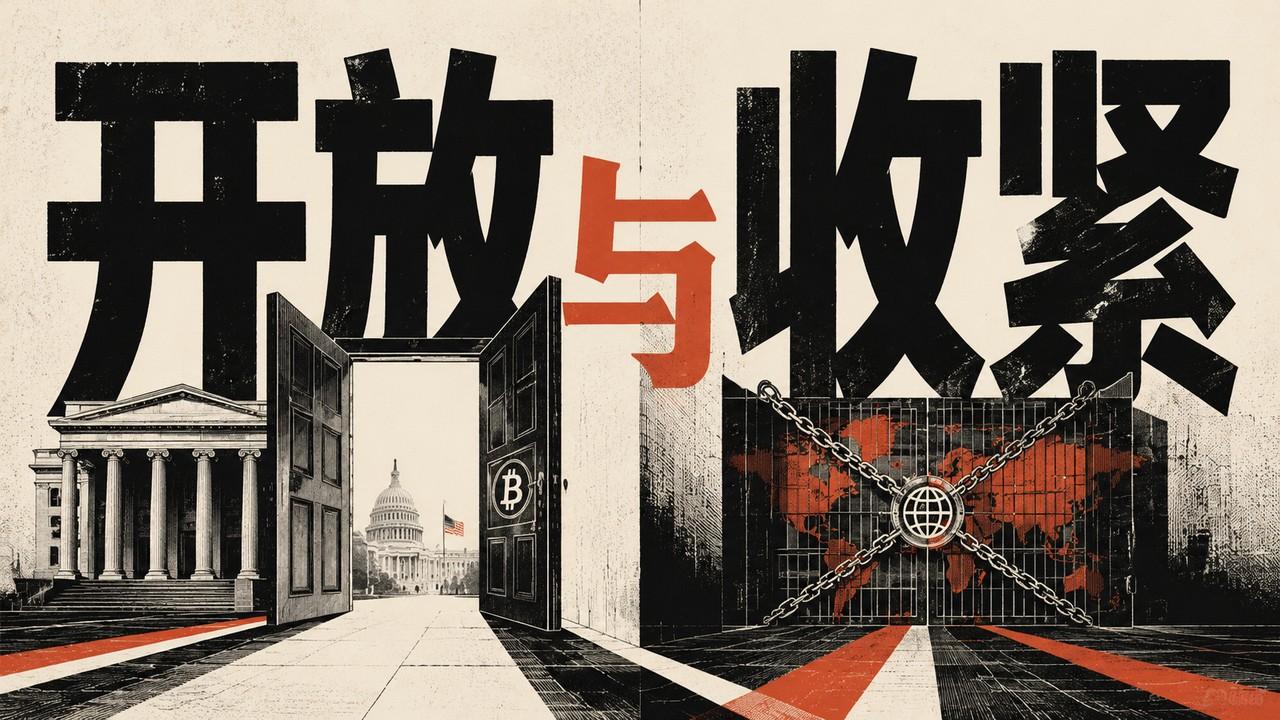
The CFTC’s examination of pre-war crude oil futures anomalies, the U.S. ongoing maritime blockade and sanctions against Iran, along with a16z’s concentrated positions in HYPE and the rise of compliance infrastructure behind Checker, are dragging on-chain derivatives into a single narrative line in regulation: can event-driven trading, sanction evasion, and institutional participation coexist? The first clue is the yet-unrevealed conclusions of the crude oil examination by the CFTC; whether it identifies trading based on non-public information, or focuses on algorithms and liquidity providers within "pre-war games," could be referenced against every upcoming large bet ahead of geopolitical conflicts, including complex hedge structures occurring on-chain; the second clue concerns the U.S. sanctions against Iran and maritime blockade transmitting layer by layer through banks, shipping, insurance, and commodity trade, objectively shifting the pressure of transaction counterpart identification and cargo and capital flow tracking onto on-chain derivatives platforms that seek to handle energy and geopolitical risk hedging demands; the third clue pertains to the escalating funding volume of a16z within the Hyperliquid ecosystem and Checker’s $8 million financing, signifying that top-tier institutions regard on-chain derivatives as serious capital allocation scenes, while confirming that regulatory bodies, including the CFTC and Treasury, are continuing their investigations and penalties regarding KYC, anti-money laundering, and sanctions compliance, directly raising the “entry ticket” for compliance and regulatory technology. For platforms and institutional funds, the next step of preemptive layout at least includes: making the event-driven strategy models, signal sources, and risk control assumptions traceable and explainable "compliance drafts," establishing screening and isolation mechanisms for high-risk areas and commodity capital flows across on-chain and off-chain, and reserving data retention and response processes for a potential "pre-war examination" of on-chain derivatives in the future. By May 20, 2026, with the CFTC’s oil investigation conclusion pending and uncertainties remaining around the scope and intensity of Iran's sanctions, while institutional funds and compliance infrastructure continue to ramp up on-chain derivatives, it means that platforms and trading institutions still have time to adjust strategies simultaneously across three fronts: one side waiting for the CFTC to provide a model for event-driven regulation, the other closely monitoring changes in the boundaries of sanctions lists and blockade policies, ready to respond the moment traditional regulation extends towards the on-chain derivatives ecosystem.
Join our community, let's discuss and get stronger together!
Official Telegram community: https://t.me/aicoincn
AiCoin Chinese Twitter: https://x.com/AiCoinzh
OKX Benefits Group: https://aicoin.com/link/chat?cid=l61eM4owQ
Binance Benefits Group: https://aicoin.com/link/chat?cid=ynr7d1P6Z
免责声明:本文章仅代表作者个人观点,不代表本平台的立场和观点。本文章仅供信息分享,不构成对任何人的任何投资建议。用户与作者之间的任何争议,与本平台无关。如网页中刊载的文章或图片涉及侵权,请提供相关的权利证明和身份证明发送邮件到support@aicoin.com,本平台相关工作人员将会进行核查。