After 2025, a very interesting phenomenon appeared in Silicon Valley: that batch of super-rich people who had already "retired" began rushing back to the forefront.
Written by: Fei Xiaohao
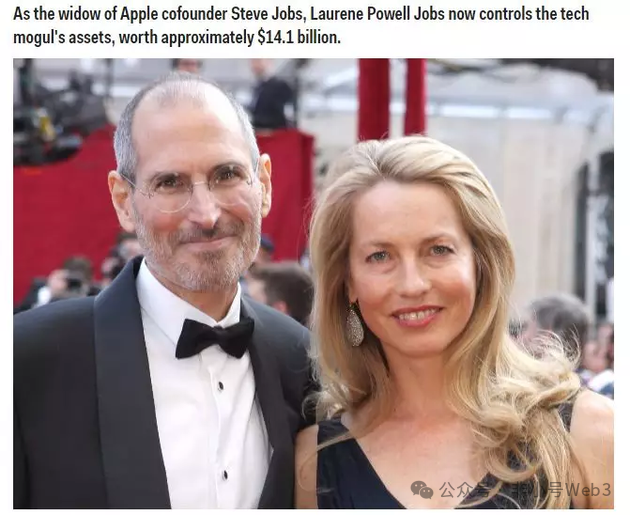
61-year-old Jeff Bezos resumed being CEO and personally founded Project Prometheus; 70-year-old Eric Schmidt took control of the rocket company Relativity Space and managed it directly; while Steve Jobs' widow, Lorena Powell Jobs, quietly invested substantial funds into AI healthcare, education, and new hardware.
If it were in the past, people would think these individuals no longer needed to take risks. They had already achieved financial freedom, possessing influence, social status, and a sufficiently vast asset portfolio. However, the emergence of AI has given this group of winners from the old era a renewed sense of urgency that they "cannot miss the next revolution."
If it were in the past, people would think these individuals no longer needed to take risks. They had already achieved financial freedom, possessing influence, social status, and a sufficiently vast asset portfolio. However, the emergence of AI has given this group of winners from the old era a renewed sense of urgency that they "cannot miss the next revolution."
What is truly important is that although they are all betting on AI, they are not betting on the same future.
Some bet on national competition, some on industrial revolution, and others on the reconstruction of the relationship between humans and machines. What appears to be the same wave is, in fact, three completely different worldviews.
Schmidt: AI is not the internet, but the next national competition
Among all the old Silicon Valley tycoons, Eric Schmidt may be the least like a "typical investor."
Most VCs investing in AI still operate under the core logic of finding the next OpenAI, the next Anthropic, betting on model capabilities and commercialization. But Schmidt's layout is obviously much bigger and "heavier."
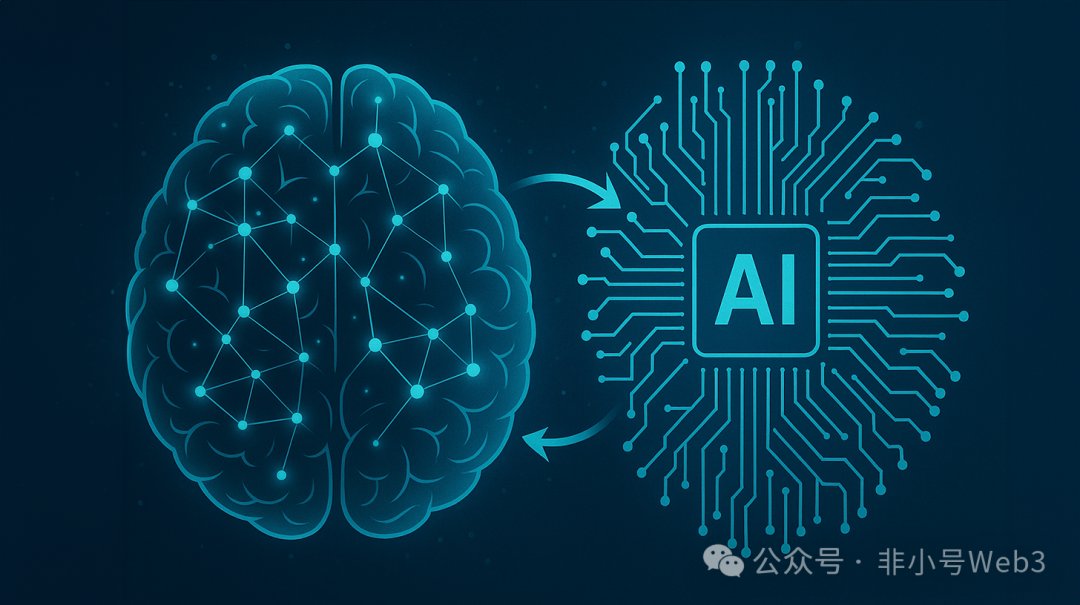
He invests in Anthropic, and also in companies like SandboxAQ that combine quantum computing and AI, but what is truly noteworthy is his other group of investments: AI drones, defense software, satellite systems, simulation platforms, and energy infrastructure.
Because in Schmidt's eyes, AI has never been just a chatbot.
The question he truly cares about is: when AI becomes a national strategic resource, who will provide energy? Who has computing power? Who controls the satellite network? Who possesses military-grade AI systems?
This is also why he has frequently appeared in the U.S. Defense Innovation Board and the Artificial Intelligence Safety Commission in recent years. He is not just a simple tech investor, but more like a "coordinator" spanning the realms of technology, military industry, and policy systems.
After the release of DeepSeek, his reaction also clearly illustrates the issue. Many people in the American tech circle responded with vigilance, lockdown, and even panic, but Schmidt's attitude was to "double down." He publicly called for the U.S. to increase investment in AI infrastructure, promote more open-source models, and strengthen the sharing of training technologies.
Because in his view, this is no longer merely commercial competition among companies, but a long-term endurance race between nations.
So it is not hard to understand why he later took control of Relativity Space and personally became CEO. Rockets, satellites, low-orbit communications, drones, data centers fundamentally belong to a part of the future AI system.
He even began to lay out in energy in advance.
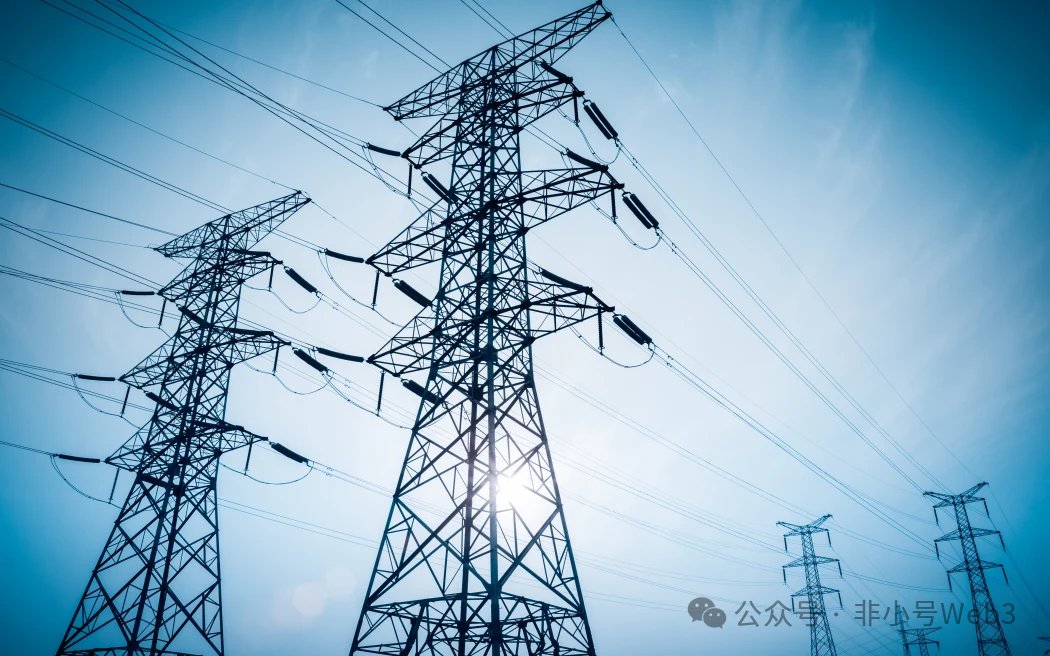
The Bolt Data & Energy he co-founded is no longer satisfied with "renting electricity," but is directly building natural gas power plants in Texas and supplying energy directly to AI data centers. Because the future of AI will ultimately encounter bottlenecks in computing power and energy.
While many are still discussing model capabilities, Schmidt has already begun to ponder, "who will supply power."
This is actually a typical Cold War mindset.
In his worldview, the endgame of AI is not apps, but the reconstruction of national-level industrial and military systems.
Bezos: The true goal is the AI entire industrial chain
If Schmidt represents the "national competition logic," then Bezos represents the typical "industrial empire logic."
Bezos's approach differs from everyone else's.
Because in his view, this is no longer merely commercial competition among companies, but a long-term endurance race between nations.
So it is not hard to understand why he later took control of Relativity Space and personally became CEO. Rockets, satellites, low-orbit communications, drones, data centers fundamentally belong to a part of the future AI system.
He even began to lay out in energy in advance.
The Bolt Data & Energy he co-founded is no longer satisfied with "renting electricity," but is directly building natural gas power plants in Texas and supplying energy directly to AI data centers. Because the future of AI will ultimately encounter bottlenecks in computing power and energy.
While many are still discussing model capabilities, Schmidt has already begun to ponder, "who will supply power."
This is actually a typical Cold War mindset.
In his worldview, the endgame of AI is not apps, but the reconstruction of national-level industrial and military systems.
Bezos: The true goal is the AI entire industrial chain
If Schmidt represents the "national competition logic," then Bezos represents the typical "industrial empire logic."
Bezos's approach differs from everyone else's.

Many people invest in AI by buying shares, betting on companies, or seeking financial returns. But what Bezos is doing is more akin to building a complete ecosystem.
His investment in Anthropic is not merely because he is optimistic about the Claude model, but because Anthropic can deeply integrate with AWS. Model training runs on Amazon Cloud, and chips use Trainium, forming an actual community of interests.
In other words, Bezos is not simply investing in an AI company but is strengthening Amazon's future position in AI infrastructure.
At the same time, through Bezos Expeditions, he has invested in companies like Perplexity and Figure, extending his reach into the realms of AI search and robotics.
A truly crucial step is Project Prometheus.
When this company appeared, the first reaction from the outside was, "Bezos is also getting into OpenAI." But in reality, it does not follow the same logic as traditional AI startups.
The core direction of Prometheus is "physical AI."
In simple terms, it aims to let AI move beyond just existing on screens and truly enter factories, manufacturing, robotics, spacecraft, and supply chain systems.
Why is Bezos so interested in manufacturing AI?
Because his business map is highly reliant on the physical world.
Amazon owns one of the largest logistics systems globally while also laying out the Kuiper satellite constellation. If AI can truly enter industrial and automated production systems, then Bezos's own company will be one of the first beneficiaries.
This means that he is essentially connecting the "model—cloud computing—robotics—manufacturing—logistics" entire chain.
This line of thinking is very similar to what he did with Amazon.
Amazon has never been a purely e-commerce company but has continuously achieved vertical integration through warehousing, logistics, cloud computing, and payment systems, ultimately forming a super platform.
Now Bezos is replicating the same thing in the AI field.
So after Prometheus was established, he quickly acquired General Agents, which makes Computer Agents. Because future AI will need not only to chat but also to truly operate systems, execute tasks, and manage devices.
What he truly wants to create is an "operating system-level infrastructure" for the AI era.
Not just a hot product.
Powell Jobs: She is betting on "people"
In contrast to the grand layout of Schmidt and Bezos, Lorena Powell Jobs's style appears exceptionally low-key.
She has not engaged in military industry, nor has she built data centers aggressively.
Even in terms of investment scale, she is far less aggressive than the former two. But her investment direction may be the most "long-termist."
Her invested projects are largely focused on education, healthcare, digital health, and new hardware interaction.
For example, Proximie's remote surgical platform, Atropos Health's clinical AI, Formation Bio's AI pharmaceuticals, and the French large model company Mistral.
These projects share a common feature: AI is not the goal but a tool.
She is more concerned with the question: can AI genuinely improve human life experiences?
This is also why she has long supported Jony Ive. After Jobs's death, Jony Ive left Apple for a time, and one of the key people supporting his continued entrepreneurial efforts was Lorena Powell Jobs.
Later, when Ive founded LoveFrom and then established io, Emerson Collective was behind them. What io is doing is actually very interesting.
It attempts to redefine the hardware form in the AI era.
No screens, emphasizing companionship, and more natural human-computer interaction reflect a very strong introspection: the past decade of the internet has trapped humanity in screens for too long.
So she and Ive have consistently emphasized a phrase—"humanity deserves better products." This is not just an empty statement. Because from social media to short video platforms, the business models of the past decade of the internet have fundamentally been in competition for attention.
With the emergence of AI, people are starting to rethink: should machines serve humans or control humans? The direction Powell Jobs is betting on is precisely this. She believes that the truly great AI products of the future may not necessarily be the strongest models but the ones that understand people the most. In the AI era, the true war has already begun.
Many ordinary people still see AI and their first reaction is chatbots, generating images, or writing code. But for the top capital in Silicon Valley, they are already seeing the next generation of world order. Schmidt is competing for energy, military industry, and space.
Bezos is building an AI industrial system.
Powell Jobs is reshaping the relationship between humans and machines.
They seem to be investing in companies, but in reality, they are vying for the entry points of the next decade. More importantly, this group of people possesses resources that ordinary entrepreneurs cannot compare to. They not only have money but also industry, policy relations, infrastructure, global influence, and a complete talent network.
When these resources begin to converge on AI, the impact it brings has already far surpassed the ordinary tech trend. Just one company, Anthropic, has received commitments from Amazon amounting to hundreds of billions of dollars; data center and power construction have entered a super cycle; AI chips, robotics, and satellite networks are starting to redefine the industrial chain. This means that AI is no longer just a part of the internet industry.
It is transforming into a new industrial infrastructure. And historically, every infrastructure revolution ultimately alters the global wealth structure. Electricity did so, railways did so, and the internet did so too. AI is likely to do the same. As for who will ultimately win, nobody knows that now.
Schmidt might bet right on national competition but may have overestimated the importance of geopolitics;
Bezos's full-stack system might become the Amazon of the AI era but could also face pressure due to rapid cash burn;
and that kind of "screenless AI device" might not necessarily succeed.
But one thing is becoming increasingly clear: truly smart money has already started to re-bet. And when the biggest winners of the last generation of the internet return to the table, it often signals that a new era has indeed begun.
免责声明:本文章仅代表作者个人观点,不代表本平台的立场和观点。本文章仅供信息分享,不构成对任何人的任何投资建议。用户与作者之间的任何争议,与本平台无关。如网页中刊载的文章或图片涉及侵权,请提供相关的权利证明和身份证明发送邮件到support@aicoin.com,本平台相关工作人员将会进行核查。


