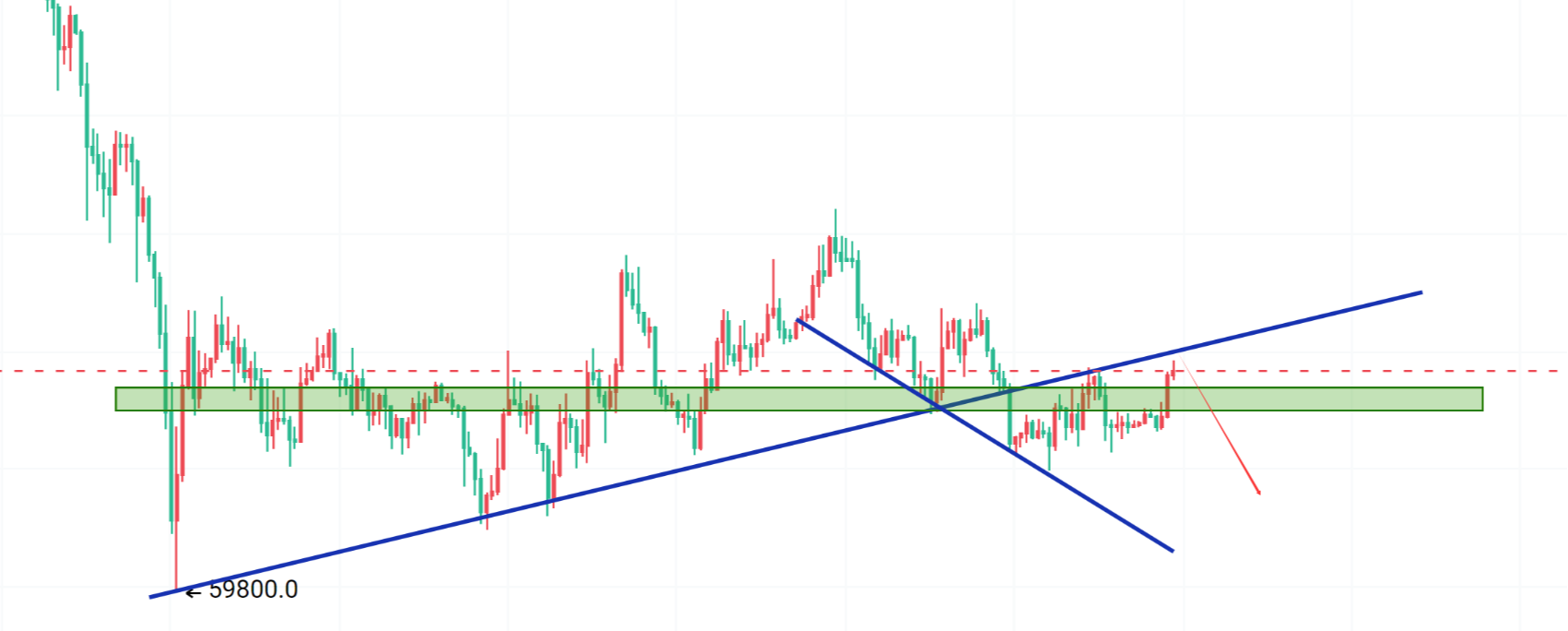
On April 6, the 10-year newly issued Japanese government bond yield once rose to 2.400%, refreshing the high since February 1999. This seemingly “traditional financial” data actually pressed a new coordinate system for global asset pricing. As a core anchor indicator of Japan's long-term interest rates, its breakthrough of 2.4% has been interpreted by multiple institutions as Japan officially speeding up its farewell to the ultra-low interest rate era. Meanwhile, the world is still at the tail end of a high interest rate cycle centered around the Federal Reserve, with the stress of tightening liquidity spilling over from the money markets of developed economies to various risk assets. In this context, a key suspense emerges: if the yen carry trade that has long relied on low-cost financing is forced to reverse, which high-volatility assets will come under pressure first? And how will the highly liquidity-dependent cryptocurrency market be passively “aligned” during this round of global repricing?
Japan's Interest Rates Break 2.4%: The Final Whistle of the Ultra-Low Era
In the Japanese bond market, the 10-year newly issued government bond yield is seen as a key barometer for long-term interest rates, serving as the core reference for pricing mortgages, corporate bonds, and even corporate investment return expectations. On April 6, this yield rose above 2.400%, reaching a new high since February 1999. In the history of over twenty years of low, zero, and even negative interest rates in Japan, this moment feels particularly striking. The extreme easing environment that has long been taken for granted is being rewritten from a data perspective.
Many Chinese media and institutional viewpoints have a highly consistent narrative regarding this breakthrough — it is referred to as an important signal that Japan's long-term interest rates are “accelerating their farewell to the ultra-low interest rate era.” Unlike the marginal adjustments to the yield curve control seen over the past decade, this round of increases in long-end rates, combined with the Bank of Japan’s adjustments to its extreme easing framework, is viewed by the market as a more substantive step towards “policy normalization.” Although there is currently still a lack of a specific timetable for future interest rate hikes, the directional turning point has already been locked in by the pricing of government bond yields.
What’s more intriguing is that this time, Japan's long bond yield crossing 2.4% is vastly different from the last occasion around 1999. The global context then was a low inflation environment on the eve of the “new economy” bubble, with the Federal Reserve's interest rate levels incomparable to today. Currently, however, we are in the tail end of a high interest rate cycle following a round of global inflation shocks. This means that Japan's turning point this time is not happening in isolation, but is layered upon multiple external variables like the Federal Reserve maintaining high rates and the Eurozone Central Bank's tightening aftereffects, creating a resonance impact on global liquidity and risk appetite.
From Zero Interest Rates to Positive Yield Spreads: Easing of Yen Carry Logic
To understand the upward trajectory of Japanese interest rates and its gravitational pull on global assets, one keyword is unavoidable: yen carry trade. The typical path involves funds borrowing in a yen environment with extremely low interest rates, effectively financing at near “zero cost,” then converting the borrowed yen into U.S. dollars or other currencies and flowing into higher-yielding bonds, stocks, commodities, or cryptocurrencies, and then leveraging to amplify the yield spread. For years, with Japan maintaining near-zero rates, this cycle of “low-interest yen → high-yield assets → leveraged amplification” has formed a large, invisible pool of capital in the global market.
When the yield on the 10-year government bond rises to 2.400%, the market's expectation for Japan's overall rate center also rises, making yen financing no longer “free money” both psychologically and in actual cost. Higher long-term rates mean that future financing and refinancing discount rates will rise, and some of the arbitrage structures previously built on extremely low costs will begin to face the dual pressures of eroding returns and rising holding costs. In the scenario of leveraged positions, this pressure will amplify into a real liquidation motivation—not to chase higher yields, but to avoid having their yield spreads completely erased or even turned negative.
As emphasized by market views such as Chenchao TechFlow, if yen carry trades start to reverse, the impact of this capital adjustment will not be confined to the domestic stock and bond markets of Japan. Since arbitrage funds usually cover a basket of configurations, spanning from U.S. stocks to emerging market bonds and commodities to various high-volatility asset positions, when one side's financing logic loosens, the entire asset portfolio may be forced to synchronize in deleveraging. In such a chain, cryptocurrencies are often classified as one end with the highest risk, relatively concentrated liquidity, and most efficient cash-out, thus they can easily become one of the positions to be cut.
The Global Interest Rate Scissors: Misalignment of Japan and the U.S.
Japan's long-term interest rate catch-up did not occur in a vacuum. At the other end, major global central banks represented by the Federal Reserve still maintain policy rates near historical highs. Current market pricing shows about a 96.6% probability that the Federal Reserve will keep rates unchanged in June, meaning that in the foreseeable short term, dollar rates will remain in high-range territory rather than quickly turning towards easing. The monetary policy rhythms of Japan and the United States, therefore, create a subtle scissors gap: the former is moving from extreme easing towards normalization, while the latter stands still at high levels, creating different intensities but similarly directed tightening.
This misalignment brings about a direct consequence: changes in the weighing logic of global funds between dollar assets and yen assets. During the past period of extreme low-interest rates, the opportunity cost of holding yen was almost negligible, and arbitrage capital was more inclined to “borrow yen and buy the whole world.” However, as Japan’s long-term rates continue to rise and the dollar maintains high rates, some funds will begin to reassess: should they continue to bear the pressure of rising yen financing costs, or gradually shrink their cross-border asset portfolio leveraged through yen?
Due to the current lack of publicly available quantitative data on the specific scale and leverage multiples of yen carry trades, we cannot accurately describe the quantitative impact of this scissors gap on various assets. However, qualitatively we can determine that in the context of the Fed not lowering rates and Japan catching up, the overall global yield curve is rising, arbitrage space is narrowing, and any asset class reliant on low-cost external liquidity will face the process of being queried for “cost-performance.” Cryptocurrencies are not directly tied to any national interest rate, but through the invisible channels of funding costs and risk appetite, they are linked to the scissors gap between yen and dollars.
Arbitrage Withdrawal Chain: From Offshore Yen to Crypto Accounts
When the yields from yen carry trades begin to narrow or even turn negative, the withdrawal path of funds often follows a “textbook” order: starting with the most liquid assets with positions easiest to shift without damaging prices, prioritizing reduction in high-volatility and highest risk-weighted targets. In this chain, offshore yen positions and dollar-denominated cross-border assets will be scrutinized together, while cryptocurrencies are typically included in a risk spectrum similar to high-beta tech stocks and emerging market high-yield bonds.
At this point, if we observe the sentiment data, we find that the cryptocurrency market itself is also in a highly fragile state. One source shows that the current crypto fear and greed index is at 13, within the “extreme fear” range, indicating that even without external shocks from the yen carry trade structure, confidence in the market is already exceedingly weak. On this emotional foundation, once external funds begin to deleverage due to changes in arbitrage logic, the price behavior of cryptocurrencies often exhibits two phases:
● First, there is a thinning of liquidity, with narrowed buying and selling depth, where even a slight increase in supply may lead to nonlinear price fluctuations;
● Subsequently, there is an amplification of volatility, with an increased frequency of short-term upward and downward spikes, stop-losses, and cascading liquidations. However, this does not necessarily equate to an immediate trend reversal but appears more like a “technical shakeup” during the reorganization of the capital chain.
From this perspective, equating the withdrawal of yen carry trades simply with “cryptos entering a new bear market” is not rigorous, but ignoring the potential amplifying effects of this cross-market chain also represents a negligence of risk management.
Bull and Bear Narratives Pulling: Interest Rate Normalization and Asset Repricing
Narratively, the rise in Japanese interest rates and the tightening of global liquidity overlap easily lead to a pessimistic interpretation from the market that “risk asset valuations will continue to be under pressure.” Pessimists argue that: with the Fed maintaining high rates and Japan catching up from zero rates, the global risk-free yield center rises, leading to systematic adjustments in the discount rates for equities and high-risk assets; at the same time, external funds like yen carry trades are forced to shrink, and sectors originally reliant on the “flooding water" logic either face a valuation correction or endure liquidity discounts, making a short-term price center decline seemingly unavoidable.
However, from an optimistic perspective, interest rate normalization is also viewed by some institutions as a symbol of Japan's economy moving out of “abnormality.” In the long run, a return of long-end yields to a more reasonable range often signifies that the financial system's expectations for future growth and inflation are no longer “long-term sluggish,” but rather return to a range with certain vitality. Under this narrative, Japanese assets are no longer just a combination of “safe-haven currency + negative-yield bonds,” but may re-enter the asset allocation basket of global institutions, attracting more long-term allocative funds. This reallocation may marginally constitute a structural boon for those with genuine cash flow and quality balance sheets.
The cryptocurrency market is therefore caught between these two narratives: on one side is the short-term discounts and liquidity pressures brought on by “tightening liquidity,” while on the other side is the long-term re-evaluation opportunities for projects with genuine application scenarios and on-chain demand due to “asset repricing.” In the short term, prices are often influenced by the former — as the fear index falls to 13 and sentiment remains incredibly fragile, the market is more focused on the direction of the next candlestick; but from a longer perspective, once the arbitrage-driven bubble is squeezed out, the stories inflated by cheap external funds will recede, leaving clearer valuation space for cryptocurrencies that possess real fundamentals.
The Next Step for Cryptocurrency Investors: Learning to Coexist with a High-Interest Rate World
In summary, Japan's long-term interest rate crossing 2.400% symbolizes the true end of the global zero interest rate era. The arbitrage boom, which once relied on near-zero cost yen financing coupled with multiple leverage, is unlikely to reenact under the same macro environment. For the cryptocurrency market, this means that an important source of external liquidity is undergoing structural contraction, and “liquidity bull markets” are no longer simply replicable scenarios.
In this new paradigm, cryptocurrency investors need to actively reduce their reliance on “external liquidity bull cycle” paths, gamble less on “which round of global easing will push prices up again,” and instead focus more on the projects themselves: Is the protocol's business model closed-loop? Is on-chain activity and genuine demand growing? Is the token a necessary tool or merely a pure speculation instrument in the ecosystem? These fundamental questions will only gain weight in a world of high interest rates and rising funding costs.
On a practical action level, strategies can revolve around three points: First, manage leverage and liquidity risk, exercise caution when using high leverage during periods of amplified cross-market volatility to avoid being passively exited in a liquidation spiral; second, be vigilant about the tail risks brought by a breakdown in the arbitrage chain, monitor resonant fluctuations in macro rates, financing spreads, and market sentiment indicators, and reserve safety margins and cash buffers; third, under the premise of accepting a high interest rate world, prepare for the next round of recovery in risk appetite, extend the time horizon, and gradually tilt research and positions towards quality assets with long-term value that can withstand cycles.
Join our community to discuss and strengthen together!
Official Telegram community: https://t.me/aicoincn
AiCoin Chinese Twitter: https://x.com/AiCoinzh
OKX benefit group: https://aicoin.com/link/chat?cid=l61eM4owQ
Binance benefit group: https://aicoin.com/link/chat?cid=ynr7d1P6Z
免责声明:本文章仅代表作者个人观点,不代表本平台的立场和观点。本文章仅供信息分享,不构成对任何人的任何投资建议。用户与作者之间的任何争议,与本平台无关。如网页中刊载的文章或图片涉及侵权,请提供相关的权利证明和身份证明发送邮件到support@aicoin.com,本平台相关工作人员将会进行核查。