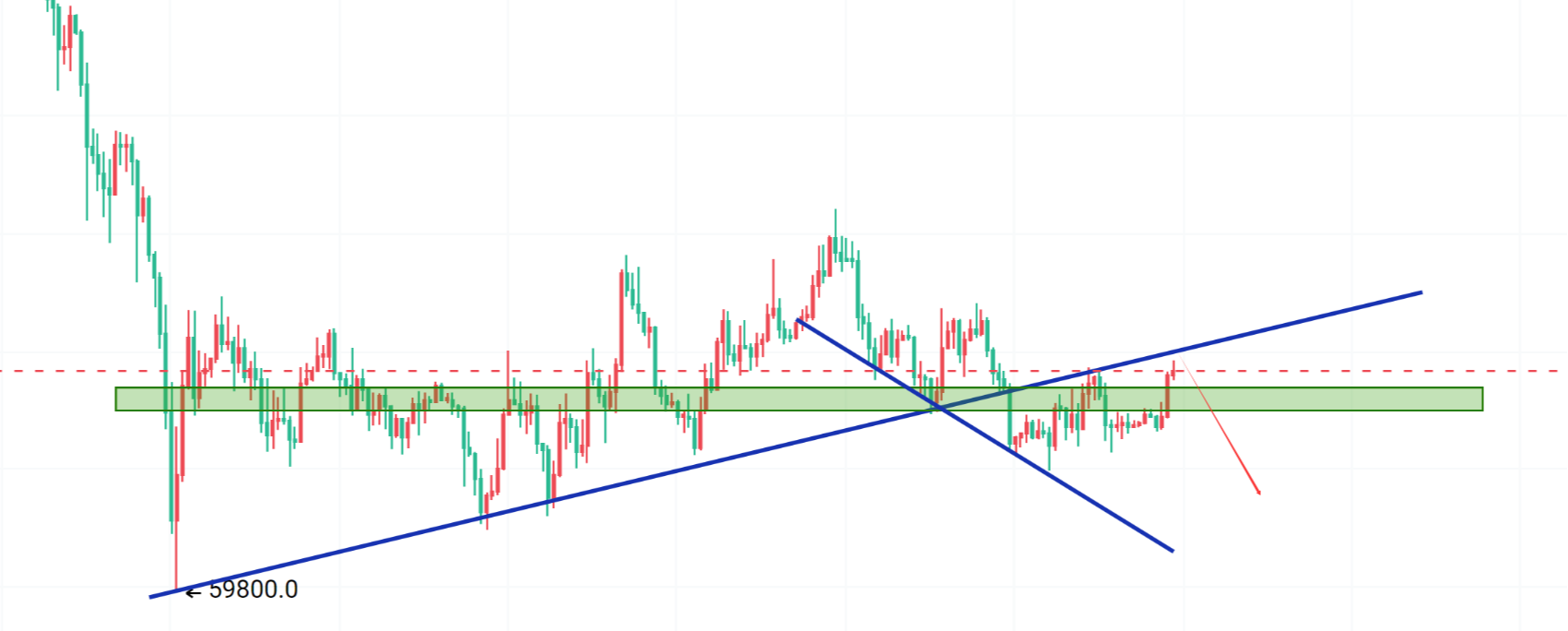
On April 6, 2026, the US-Iran game surrounding the Strait of Hormuz was directly thrust into the global spotlight: on one side, Bahrain promoted a resolution at the United Nations authorizing the use of force to secure this crucial energy route in the name of "ensuring freedom of navigation"; on the other side, the US government raised the stakes, threatening direct strikes on Iranian energy facilities, and issued an ultimatum set for 8:00 PM EST on April 7. In tandem with the escalating diplomatic rhetoric, the price curve on the screen spiked—US WTI crude oil shot up to $113 per barrel, transforming the Hormuz crisis from a geopolitical conflict into a real numerical pressure impacting corporate cost sheets and asset pricing models. Amid this time-sensitive high-stakes scenario, an increasingly urgent question emerged: will cryptocurrency assets choose to align with the "safe-haven anchor" above the $113 oil price threshold, or will they be reclassified as high-beta risk assets and become targets for sell-offs?
The Hormuz Powder Keg: From the United Nations to the Ultimatum Clock
The Strait of Hormuz has long been regarded as the "throat" of global energy; any military posturing would be amplified by the markets. Bahrain’s decision to initiate a resolution draft at the UN for "using force to clear the strait" emphasized "ensuring freedom of navigation" and the safety of international trade, repeatedly stating in public declarations that it was "not intended to escalate the situation." However, on a practical level, granting the UN authorization to use force would provide a political endorsement for deploying hard power in this sensitive waterway, while also increasing the potential for regional military miscalculations.
In contrast to the seemingly restrained diplomatic language, the US has continually escalated its threats. According to public information, the US has directed its focus on Iran’s energy infrastructure, providing an unusually clear timeline: before 8:00 PM EST on April 7, if Iran does not concede on specific issues, it will consider strikes on relevant targets. This countdown-style ultimatum reframed the Hormuz crisis from a vague geopolitical risk backdrop into a specific event node embedded within the financial market calendar.
Under this time pressure, Iran's response also left no room for retreat. Tehran accused the US of committing "war crimes" with its threats, elevating the dispute from shipping rights and sanctions negotiation to the realms of international law and the legality of war. A strong stance suggests that Iran is unlikely to make significant concessions under public opinion in the short term, and indicates that any misfire will quickly be framed as a binary conflict of "aggression" and "resistance." The escalation in political rhetoric, combined with discussions about the use of force at the UN level, ensured that this game over Hormuz was locked onto a high-risk trajectory from the outset.
Oil Price Surpassing $113: The Red Line on the Global Cost Sheet
In this context, the price of US WTI crude oil soared to $113 per barrel on April 6, not just as a market number, but as a "new line" written into the global production and transportation cost sheet. For shipping companies that rely on seaborne crude and refined oil, each significant rise in oil prices directly erodes fleet operating profits; for industrial enterprises, especially those in high-energy-consuming manufacturing and chemical industries, $113 means that raw material and fuel expenditures are overall elevated, necessitating stress tests on cash flow and profit margins.
The Strait of Hormuz is termed the "throat of global oil" precisely because this narrow waterway performs a significant function in transporting global seaborne crude oil and liquefied natural gas. Should a conflict disrupt shipping routes or insurance costs surge, even without a large-scale gap in physical supply, the market will anticipate adjusted pricing based on “potential disruptions.” The current $113 largely reflects a panic premium over the weakening elasticity of future supply rather than mere spot tightness.
On a psychological pricing level, $113 is likely to become a prevailing threshold for the market. On one hand, it is above most of the pricing range seen in recent years, forcing model traders and risk management teams to recalibrate their assumptions about energy-related assets and inflation pathways; on the other hand, this price point will be written into various macro trading reports and media headlines, becoming a symbolic benchmark for investors questioning "whether the era of high oil prices is returning." The longer the oil price remains stable above this threshold, all risk assets, including cryptocurrencies, must be repriced under higher inflation expectations and funding cost assumptions.
Historical Echoes: When Oil Prices Rally, BTC Sentiments Rise
This is not the first time oil prices and cryptocurrencies have resonated in sync on the same geopolitical candlestick chart. Research briefs indicate that during several periods of tension in the Middle East from 2019 to 2021, the correlation between Bitcoin and oil prices reached as high as 0.78—a figure that suggests that during those specific windows, the two often moved in the same direction, with energy prices and the narrative of "digital gold" intertwined within the same macro trading logic.
When the market views energy supply as an unstable variable, inflation expectations are often rapidly elevated. For some funds, cryptocurrencies like Bitcoin become repackaged as "digital gold": limited supply, decoupled from sovereign currencies, and transferrable across borders in times of geopolitical conflict. This narrative has often appeared alongside price surges during past energy crises and periods of monetary easing, driving cryptocurrencies to gain excessive attention and inflows in a short time.
However, it is essential to emphasize that correlation is never a locked causal relationship. The historical correlation of 0.78 more indicates that during periods of geopolitical conflict and rising oil prices, market participants tend to package trades in oil, gold, Bitcoin, and other assets from a unified "macro risk asset" perspective. Whenever such narratives return to the forefront, funds will actively amplify the price linkages among these assets; conversely, as the macro focus shifts, correlation can quickly decline. Thus, with oil prices standing at $113, it indeed raises the historical probability of cryptocurrencies being traded in a "macro" context, but this resembles more a cyclical amplification rather than an everlasting rule.
Under the Shadow of Rising Miner Electricity Costs: A Quiet Redrawing of the Hashrate Map
For the mining sector, rising oil prices are not merely an abstract macro variable; rather, they translate into specific costs reflected in electricity bills through generation and fuel. Whether through fuel-fired power generation, gas power plants, or regionally indexed electricity price contracts tied to fossil fuel prices, these will undergo a transmission process from wholesale electricity prices to end-user charges once oil prices remain high. This process usually has a certain lag, but the longer it lingers at high levels like $113, the more challenging it becomes to offset the rising pressures on electricity costs for mining operations.
As energy prices continue to surge, mining operations with already elevated marginal costs are particularly vulnerable. Miners in regions with high geopolitical and policy risks often rely on relatively cheap yet unstable power sources, and if local electricity prices increase or fuel subsidies are reduced, the hashing equipment might have to shut down temporarily. Meanwhile, regions with more stable long-term electricity prices or advantages from renewable energy connections will gain an edge on the cost curve, thus fostering a migration of hashrate from high-cost areas to low-cost areas, quietly restructuring the global hashrate distribution.
With no corresponding rise in revenues and costs being squeezed by rising oil prices, miners face a familiar yet sharp choice on their balance sheets: to cover cash flow gaps, should they increase crypto sales for cashing out, thus putting additional selling pressure on the market in the short term; or should they stockpile coins, banking on higher long-term prices, even seeking funding to maintain operations, aiming to realize higher valuations in the next bull market? Under the shadow of $113 oil prices, the difficulty of this decision is raised further, and any collective tilt from one side will leave marks on-chain and on order books.
Safe Haven or Time Bomb: Cryptocurrencies Being Repriced Amidst Divided Narratives
The narrative of the Hormuz crisis encompasses not only military and energy aspects but also the fragmentation of discourse power. Bahrain emphasized at the UN that the relevant resolution "aims to ensure freedom of navigation, not to escalate the situation," attempting to position itself as a guardian of the global trade order; Iran, on the other hand, accused the US of "war crimes," elevating external military pressure to an illegal aggression against sovereignty and civilian facilities. Such starkly opposite official statements have torn global public opinion between the narratives of "security escort" and "war escalation," widening the market's imaginative space for the worst-case scenarios.
From a financial perspective, every escalation in geopolitical risk triggers a re-evaluation of the attributes of cryptocurrency assets. Some funds continue to adhere to the framework that "cryptocurrency is a new generation of safe-haven assets," believing that in an environment where sovereign risks and settlement systems are compromised, on-chain assets offer additional liquidity and cross-border transfer channels; others prefer to simplify cryptocurrencies as high-beta risk assets, placing them alongside high-growth tech stocks and cyclical stocks in the same basket, which are prioritized for reduction when risk appetites decline.
Differing financial constraints and toolsets shape the divergence in behavioral paths:
● Hedge-oriented funds may attempt to establish short-term hedge positions in the cryptocurrency market through derivatives such as futures and options when traditional safe-haven tools (like gold and certain foreign currencies) are insufficient to cover risk exposure, viewing cryptocurrencies as a supplement to "tradable volatility," rather than a true endpoint for hedging.
● Some institutions or individuals lacking comprehensive hedging tools can only passively allocate—maintaining a certain scale of crypto exposure within their overall asset portfolio, neither daring to massively increase holdings on the eve of volatility nor able to liquidate entirely in a liquidity-scarce environment, but rather being led by price movements amidst recurring volatility.
● More cautious capital will choose to actively reduce positions and exit, viewing cryptocurrencies as a layer of "excess risk" most easily cut during surges in uncertainty, prioritizing the preservation of core cash flows and traditional asset safety, and reassessing whether to reinvest once the dust settles.
In the dual reflection of $113 oil prices and tensions in Hormuz, these three types of behavior are likely to unfold simultaneously in the market, further amplifying price volatility and emotional noise.
The Final Twenty-Four Hours: The Cryptocurrency Market’s Decision Under Dual Thresholds
In summary, the Hormuz crisis and the $113 oil price together create a dual pressure of time and price. On one hand, the ultimatum set for 8:00 PM EST on April 7 compresses the geopolitical conflict from a long-term risk into a clearly time-stamped "event node," compelling all assets to reprice their worst and best-case scenarios within a limited timeframe; on the other hand, oil prices hovering at high levels are pushing the global cost structure and inflation expectations into a new range, applying ongoing pressure on the valuation framework for all risk assets.
In this final twenty-four hours and the surrounding time frame, cryptocurrency assets are likely to experience several intertwined states: rising volatility, phase misalignment in correlation with traditional safe-haven assets and commodities, and a narrative focus oscillating between "high-beta risk assets" and "digital safe-haven tools." Any sign of movement—whether it’s a shift in wording at the United Nations or a long shadow in oil prices—could be interpreted by the market as a signal of trend reversal or risk amplification, which could then be magnified through leverage and derivative channels.
In the absence of high-frequency on-chain data and real-time capital flow directions, betting recklessly on a single script bears significant risk. A more prudent approach is to focus attention on three main lines: energy price trends, which determine the tone for macro inflation and cost pressures; hashrate and miner behavior changes, signaling structural changes in underlying supply and potential selling pressure; and the policies and statements related to Hormuz and the UN processes, which determine whether risks are continuously heightened or cooled at certain points. Only by forming relatively clear judgments along these three threads can investors hope to avoid being swept up in the narrative under the high-pressure environment created by $113 oil prices and geopolitical tensions while maintaining strategic agency amidst volatility.
Join our community, let's discuss and become stronger together!
Official Telegram community: https://t.me/aicoincn
AiCoin Chinese Twitter: https://x.com/AiCoinzh
OKX Welfare Group: https://aicoin.com/link/chat?cid=l61eM4owQ
Binance Welfare Group: https://aicoin.com/link/chat?cid=ynr7d1P6Z
免责声明:本文章仅代表作者个人观点,不代表本平台的立场和观点。本文章仅供信息分享,不构成对任何人的任何投资建议。用户与作者之间的任何争议,与本平台无关。如网页中刊载的文章或图片涉及侵权,请提供相关的权利证明和身份证明发送邮件到support@aicoin.com,本平台相关工作人员将会进行核查。