On April 2, 2026, Eastern Standard Time, within the same day, Iran launched missiles at Israel, and Drift Protocol experienced a $285 million level attack, showcasing an overlap of geopolitical black swans and on-chain black swans. On one hand, the Middle East situation suddenly intensified, which should have increased safe-haven demand; on the other hand, the leading DeFi protocol was breached, placing the tug-of-war between high returns and high risks back in the spotlight. Notably, that day, spot gold actually fell by 1.42% to about $4690 per ounce, contrasting with the cryptocurrency security incident, revealing the complex relationship between safe-haven and risk assets in real trades. This article will explore how these two main lines resonate, changing the emotional structure and risk pricing framework of the cryptocurrency market amidst geopolitical conflict and DeFi vulnerabilities.
Missiles Launched but Gold Prices Drop: The Pre-emptive Overdraft of Geopolitical Premiums
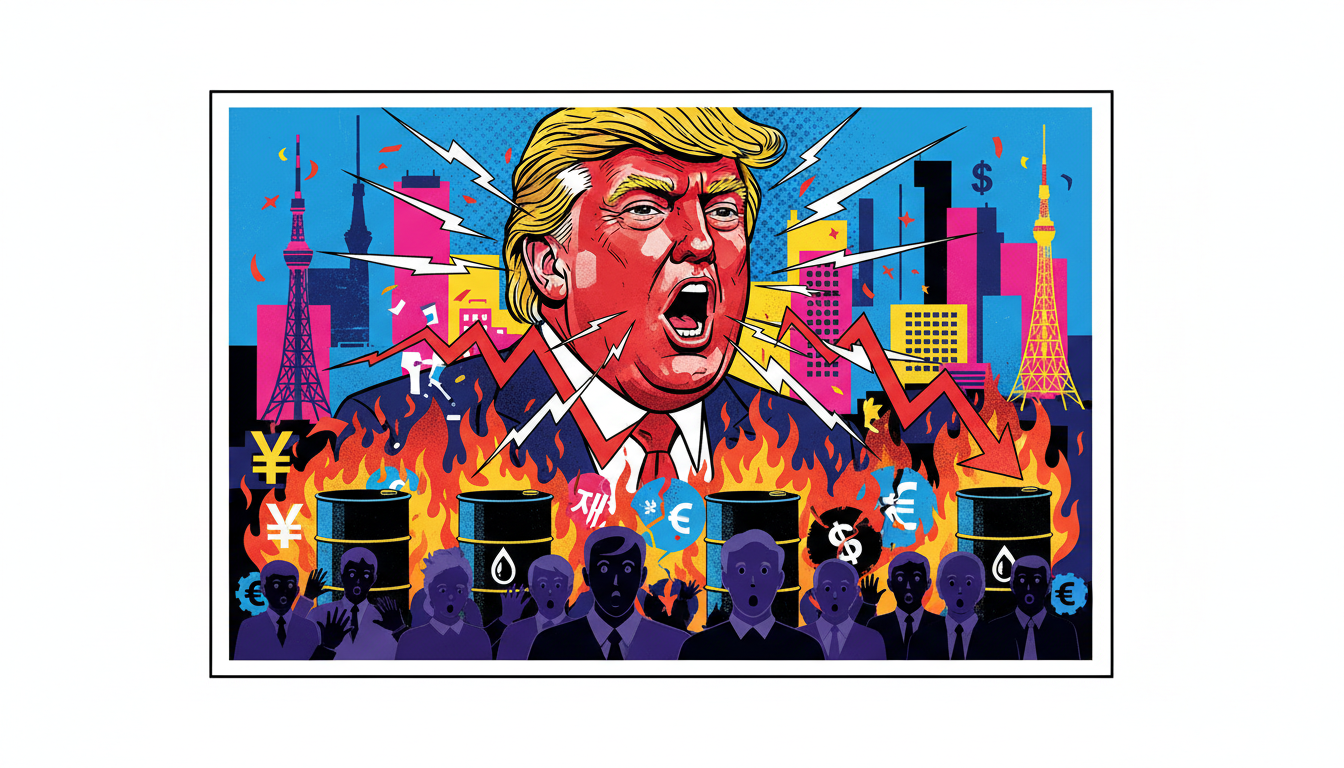
Before Iran launched missiles at Israel, Trump's high-pressure statements on Middle Eastern issues had continuously raised market expectations for an escalation of conflict. According to traditional logic, such an upgrade from rhetoric to action would typically push up buying for safe-haven assets like gold and U.S. Treasuries, as investors increase positions to hedge against geopolitical uncertainties. However, after the missile action unfolded on April 2, the market did not fully respond according to textbook predictions, especially the reaction of gold prices was particularly abnormal.
Data shows that as of that day, spot gold dropped 1.42% during the day, trading at about $4690 per ounce, and not only failed to continue rising after the fuse was lit but instead showed a noticeable decline. This trend carries a key signal: some geopolitical risk premiums may have already been priced in during prior trading, and once the event actually occurred, it triggered "profit-taking" and liquidation. Safe-haven buying and speculative funds betting on earlier geopolitical conflicts were hedged at the same price level, squeezing gold's space for further upward movement.
Even more unsettling is that the market has yet to see a clear resolution path regarding the risks associated with critical passages like the Strait of Hormuz. Although Trump issued a hardline signal of "strong retaliation," he did not provide an executable plan to prevent ongoing disturbances to energy and shipping. This uncertainty, left unresolved at a mid- to long-term level, means risks have not truly cleared but are instead obscured and segmented by short-term trading.
In this context, risk assets and safe-haven assets exhibited dislocated volatility: gold fell while some stock indices and cryptocurrency assets rapidly tugged amidst fluctuating sentiments. This dislocation has planted new divergences in the pricing for cryptocurrency assets—some funds are trying to repackage Bitcoin and on-chain assets as "geopolitical hedging tools," while others still view them as high-beta speculative trading chips. This narrative tear will directly impact the valuation discounting and risk premium requirements for cryptocurrency assets in the near future.
Asian Currencies Under Pressure and Regulatory Game: Macro Liquidity and Cryptocurrency Speculative Desire
Alongside the flames of the Middle East, there has been a tightening tension in the foreign exchange market. Rob Subramanian, an economist at Nomura Securities, warned that as geopolitical uncertainties and U.S. Federal Reserve path games escalate, Asian currencies may weaken against the dollar, compelling central banks to increase intervention. This means that if the dollar strengthens again, Asia and a broader range of emerging markets will face the dual pressure of capital outflows and local currency depreciation.
A stronger dollar is not an isolated variable; it is often accompanied by tightening global liquidity conditions. For asset classes reliant on external financing and high volatility, this environment is particularly unfriendly. Whether tech growth stocks or cryptocurrency assets concentrated among high-leverage participants, both will encounter higher financing costs and lower risk appetites under the dual labels of "high volatility + high risk." The process of liquidity retracting from marginal assets back to mainstream assets often manifests through drastic price fluctuations.
On the other hand, in the context of overlapping geopolitical conflict and currency pressures, some funds have begun to view cryptocurrency assets as a composite tool for hedging and speculation. Some investors are betting on local currency depreciation and regional political risks by allocating Bitcoin, Ethereum, or on-chain derivatives to hedge against potential local asset price declines; others treat the cryptocurrency market itself as a trading venue for volatility, seeking higher returns amidst high uncertainty.
Regulatory actions have also become another hand restraining this impulse. During the unfolding of the Drift incident, Upbit took measures such as restricting trading on DRIFT-related tokens, attempting to establish a firewall between protecting investors and avoiding systemic risks. This top-down "de-leveraging" aligns with the logic of central bank intervention in the foreign exchange market: when macro and micro risks rise simultaneously, regulators prefer to set limits in advance rather than cleaning up the ruins afterward.
$285 Million Instantly Vanished: Multi-signature Breach and Oracle Hijacking
If the missiles in the Middle East added fuel to the macro narrative, then the $285 million level attack on Drift Protocol detonated another bomb in the on-chain world. Notably, the tragedy did not occur out of thin air; a week before the attack, Drift had made a critical modification to its core security architecture—the multi-signature mechanism was adjusted to "two-of-five," with four new signers introduced. At the time, this step seemed like an optimization of governance structure, but in hindsight, it was seen as a precursor to the accumulation of risk.
According to disclosures from security researchers, attackers are said to have forged CVT tokens, manipulated oracle prices, and deactivated some security mechanisms to amplify leverage and seize enormous profits within a very short time. Oracles should be the sources of price truth in the DeFi world; once manipulated, all clearing, lending, and derivative contracts relying on their quotations will operate on erroneous "reality," and risks will be instantly multiplied.
On-chain data shows that attackers ultimately exchanged the assets obtained for about 129,000 ETH (approximately $278 million), which aligns closely with the initially estimated loss of $285 million. For a single protocol, such a magnitude already carries a clear "systemic" implication: not only is the protocol itself put on hold, but the collateral assets, cooperative protocols, and even related tokens will bear discounts in valuation and liquidity for a long time.
The most cautionary aspect of this incident is that: once the multi-signatures and timelock, which are core security dependencies in DeFi, are simplified, rendered void, or circumvented, they transform from firewalls to new attack vectors. Lowering multi-signature thresholds, suddenly altering signer structures, and lacking sufficient delay reviews for crucial operations give attackers ample opportunity. Pursuing "governance flexibility" and "swift responses" on the surface, in essence, thins out the final layer of security buffer.
Unitas Proves Innocence and Exchange Firewalls: Trust Judged on and off the Chain
The impact of the Drift incident did not stop at a single protocol; its ecological partner Unitas Protocol quickly found itself in a whirlpool of controversy. Facing the spreading panic, Unitas officials hastily released a statement emphasizing that all collateral is secure, and user funds can be independently verified through reserve proofs, attempting to rebuild trust with on-chain verifiable data. The process of reserve proofs transforming from “compliance labels” to “lifelines” was reinforced in this incident.
Meanwhile, exchanges like Upbit took actions such as restricting trading, delisting, or strengthening risk control concerning related tokens, seeking a delicate balance between protecting investors and possibly amplifying panic. On one hand, a sluggish response can easily be criticized as "allowing speculation"; on the other, overly aggressive bans can be interpreted as declaring a death sentence on a certain sector, leading to instant liquidity drought.
In this tug of war, the market made its own choice: on one side, listening to project clarifications and proofs of innocence, while on the other side, using trading volume and price to cast a cold vote. As token liquidity gets compressed and prices rapidly break through support levels, a dual pressure of regulatory and market forces forces project teams to provide higher transparency and more timely information disclosures; mere emotional reassurances are far from sufficient.
At the same time, the real-time disclosure of attack paths and technical details by security researchers, while enhancing industry security awareness, also further undermined the trust foundation ordinary users had in complex DeFi strategies and cross-chain channels. After one technical analysis after another, many users intuitively deduced not that "the system is progressing," but rather "the barriers are too high, and the pitfalls too many," which will directly affect future willingness to allocate funds to high-complexity protocols.
From Near Funding to Discord Hijacking: How Multi-layer Vulnerabilities Amplify Black Swans
Even more alarming, this attack exhibited multi-point vulnerabilities exposed in the same direction. There are indications that attackers may have obtained some operation funds through Near Intents; while specific paths and technical details require more evidence, they reflect the potential risks of abuse associated with new cross-chain and intent routing tools. Once cross-chain bridges and intent routing are skillfully mastered by black markets, they serve not just as efficiency tools but also as hidden "fund distributors."
Simultaneously, the news that the official Discord link for Trust Wallet was hijacked added operational and social layers of shadows to this wave of security storms. Community entry points, announcement channels, and wallet distribution pages, if controlled or spoofed by attackers, can become hotbeds for phishing and spreading malicious links. Technically secure contracts, if users connect through hijacked entry points, will ultimately struggle to escape the fate of asset transfer.
When contract permission management, cross-chain fund entry, and community channels are simultaneously targeted, the cryptocurrency system displays a possibility of “multiple layers being breached at once:” on-chain logic being altered, cross-chain paths being abused, and off-chain trust being deceived. For ordinary users, distinguishing which layer is the true security boundary becomes difficult, forcing them to rely on intuition to make decisions amidst an overwhelming amount of information.
In such a landscape, any single black swan event is more likely to evolve into a chain reaction of trust and liquidity collapse across the entire market. An apparently isolated attack can be magnified into a collective discount for the entire sector, the entire public chain, and even the entire category of cryptocurrency assets through shared oracles, cross-chain bridges, market-making funds, and emotional transmission. What gets sold off is not just a particular token, but the trust premium in the very mechanism of "decentralized finance."
Black Swans Are No Longer Rare: Reconstructing Cryptocurrency Security Coordinates in High-Dimensional Risks
Returning to the timeline, the occurrence of Iran's missiles and the Drift explosion within the same time window sharply highlights that geopolitical risks and intrinsic DeFi risks are overlapping in frequency. The former stems from the rivalry between nations, while the latter arises from structural flaws in code, governance, and incentive mechanisms, yet both point towards a common outcome—global capital is reassessing the pricing and survival space of high-risk assets.
At a macro level, pressures on Asian currencies, the warming expectation of a stronger dollar, coupled with the potential for central banks to engage in heightened interventions, leave cryptocurrency assets caught in the pull between "safe-haven asset" narratives and "high-risk speculative" labels. Once regulation tightens and compliance thresholds rise, institutional funds will more likely prefer to bet only on assets with clear safety boundaries and transparent governance, leaving less room for imagination in the "gray area."
For future cryptocurrency investors, the most significant change post-event will be the elevation of safety indicators' weight: whether the multi-signature architecture is robust, whether timelock is fully executed, and whether reserve proofs remain publicly available will become more decisive than a single yield curve. Even the highest annual return can hardly offset the risk of capital obliteration from a single contract permission failure or cross-chain vulnerability.
For institutions and development teams, the key to shortening the shadow of each crisis lies not in repairing market capitalization with fancy narratives but in establishing more transparent governance structures and rehearsable emergency plans. Multi-signature adjustments must have sufficient disclosure and cooling periods; significant parameter changes need time for community and external security teams to review; the synchronizing of information, asset freezes, and user compensation processes when attacks occur must be as standardized and procedural as possible.
When black swans are no longer rare, what is truly scarce are the protocols and assets that can maintain resilience in high-dimensional risk environments. Those who can uphold the safety baseline under this series of overlapping shocks qualify to continue discussing growth and expansion in the next narrative cycle.
Join our community to discuss and become stronger together!
Official Telegram community: https://t.me/aicoincn
AiCoin Chinese Twitter: https://x.com/AiCoinzh
OKX Benefits Group: https://aicoin.com/link/chat?cid=l61eM4owQ
Binance Benefits Group: https://aicoin.com/link/chat?cid=ynr7d1P6Z
免责声明:本文章仅代表作者个人观点,不代表本平台的立场和观点。本文章仅供信息分享,不构成对任何人的任何投资建议。用户与作者之间的任何争议,与本平台无关。如网页中刊载的文章或图片涉及侵权,请提供相关的权利证明和身份证明发送邮件到support@aicoin.com,本平台相关工作人员将会进行核查。