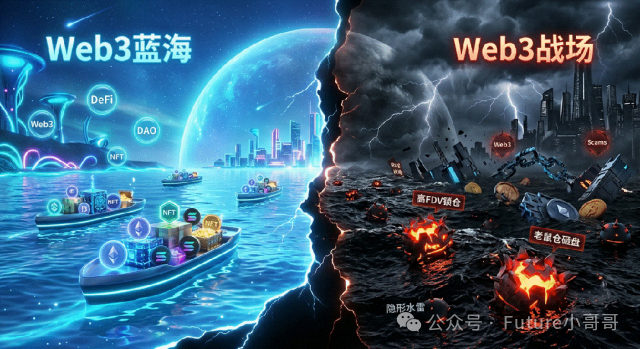
If the Web3 from 2017 to 2021 was a blue ocean, then the primary market investments in Web3 from the end of 2021 to the end of 2025 can be described as filled with minefields. The investment logic and environment have shifted from merely being driven by "future narratives of projects" to "economic models, further detailed analysis, and a dual drive of data and logic." The difficulty level has significantly increased, especially for primary capital, as the unlocking periods resemble Web2's Cliff policy, greatly impacting the activity of new projects. Among the 70 new projects launched by the largest cryptocurrency exchanges by 2025, 95% exhibited a consistent downward trend; what causes this? Based on the current market environment, we will elaborate on several key judgment factors for early rounds in this section.
1. The Essence of the Project: Changes in Entrepreneurs' Value and Judgment
In the Web3 domain, the team is the lone non-standardized variable and the soul of early projects. To judge entrepreneurs, it is not enough to look at their impressive resumes; one must penetrate their level of "crypto-native" understanding, the authenticity of technical delivery, and the moral bottom line in the face of extreme interests. In the primary market, many projects are still in their infancy, making the inherent abilities, vision, and ethical standards of the entrepreneur team critical. Having the insight to judge people has also become one of the most important talents and abilities for investors in this field.
- Github Submission Frequency: Do not just listen to the technical vision in the Pitch Deck. In the AI era, many business plans are even generated with a single click by AI, filled with AI fantasies. For technology-driven projects (such as Infra, ZK, L2), it is essential to have technical partners or other technology institutions review their underlying code GitHub. However, since many early projects have not yet begun to build products, this step also heavily relies on the past capabilities and reputations of the entrepreneurs. For example, regarding Algorand's then-technical vision, knowing that an MIT Turing Award winner was at the helm of this project's foundation naturally reduced the difficulty of the required technical Due Diligence.
- But by 2026, as the number of high-quality mature projects with new entrants gradually decreases, there will be more young entrepreneurs launching new projects, raising the bar for the requirements of human judgment and technical review.
- Activity Trap: Be wary of projects that rush to submit code before financing and then remain silent for long periods after financing. Data from 2025 shows that projects that have not undergone audits or have codebases that are long inactive have an 80% higher risk of rug pulls.
- Diversity of Contributors: Check whether the code is submitted by a single individual or by a diverse group of contributors. Large projects maintained by one person often indicate a very high "Bus Factor" risk. Although the number of OPC companies has increased in the AI era, the oversight by senior technical personnel of large projects and the screening of security risks remain very necessary.
- Risks of "Parachuted" Executives with Web2 Backgrounds: Be cautious of teams led by "parachuted executives" with impeccable Web2 histories but no trace on the Web3 chain. This type of parachuting can easily bring over Web2's poor management habits into the Web3 ecosystem, potentially leading to operational difficulties for the entire project. Unless there are other experienced individuals in the team to balance this, the risk factors in 2025-2026 become too high. Web3's decentralized governance and community culture are vastly different from Web2; they often lack practical experience in handling community crises (like governance attacks, fork threats, and economic models).
- Serial Entrepreneurs: Deep Attribution of Past Failures: Serial entrepreneurs enjoy a premium in Web3, but it is essential to distinguish whether they are “honorably defeated,” “maliciously harvesting,” or “purely inexperienced.” Soft Rug Detection: Investigate whether their previous project experienced a soft rug, where the team stopped development citing "poor market conditions" after raising funds but did not refund the money. Treasury Abuse History: Check the multi-signature wallet records of the previous project to confirm whether public funds were embezzled for personal investments or high-risk financial activities without community vote.
2. Judging the Resources Behind the Project
By around 2026, the primary market of the Web3 industry has also entered a new phase, leading to some confusing points. Major exchanges frequently listed meme and emotion-based coins in the past year, causing many technically foundational projects that do not pay much attention to marketing to fall out of favor. This situation may gradually improve (Note: as of the end of March 2026, Binance has begun optimizing the quality of listed projects, reducing purely meme categories, but the toxins created in the past two years will still take some time to detoxify. The market for new project valuations is already cooled, and the effect of project listing is no longer comparable to that around 2020; if even Binance is doing this, the aftermath for other major exchanges will be even more evident), but for new projects, it is essential to judge the resources behind them. The core of resource judgment lies in differentiating between "value-added capital" and "scam capital," the level of advisors, and whether there are familiar faces operating behind the scenes.
- Signal Noise from Top VC: While investments from a16z, Paradigm, Polychain, Coinbase are strong signals, one must be mindful of the difference between leading roles (Lead) and follow-on investments (Follow). Given the aforementioned Cliff dilemma, the actual returns of leading VCs have also dropped significantly, with many VCs facing bankruptcies and the need to initiate larger rounds of funding due to forced circumstances; moreover, most of their investments in the past four years have probably been under the surface. Thus, following top VCs is more likely a directional assist; the true value assessment still relies on the investors themselves.
- Follow-On Investment Assessment: If top VCs participate with very small shares (like $30k - $100k) without entering the board (Note: but attention is also needed on entry rounds and valuations, if they enter at a very low valuation like 3M, then even a few tens of thousands of U would represent a very high proportion), this is often an amount offered by the project for "branding," or merely a courtesy, as general investment institutions typically cannot obtain such favorable valuations. If, in subsequent high-valuation investments, they only participate in a small part, then this type of "Logo investment" does not imply that the VC will provide actual resource support (like recruitment, legal, or token model design). However, for particularly sought-after projects, a small share of undervalued tokens may also provide strong backing; this needs to be evaluated based on specific circumstances.
- The Value of Grants from Public Chain Foundations: Compared to VC investments, obtaining grants from large public chains like the Ethereum Foundation, Solana Foundation, or NEAR and BSC Foundation typically indicates a more rigorous technical endorsement. The due diligence involved with these grants often focuses more on code implementation than with VCs. Yet this is only relatively true, as the increase in applications due to industry heat and the influx and movement of new Web2 personnel mean that the judgment levels among foundation staff vary widely; changes in leadership can lead to vastly differing evaluative standards. For instance, both Binance Labs (now renamed YZI Labs) and Algorand have faced quality investment issues due to large-scale personnel shifts. However, Binance's robust cash flow from exchange operations provides them with a level of trial and error tolerance that typical VCs lack.
- Direct Transport via Exchange Relationships: Assess if early investors have direct relationships with Binance, Coinbase, Upbit, etc. Institutions with strong ties to exchanges typically enjoy priority in trust and review. These resources can significantly increase the chances of projects being listed on Tier 1 exchanges (Listing), which is crucial for exit liquidity.
- Identifying Scam Capital and Advisors: Conduct thorough research on VC brands and individuals that have previously had fluctuations in reputation. While there are no overt insider listings in the Web3 industry, there are still occasional instances where projects are launched due to personal connections; hence, it is crucial to fully understand whether the participating projects involve poorly regarded institutions or those that have continuously harvested investors, and to avoid them as early as possible. (Note: Due to the emergence of Cliffs, the level of VC involvement has actually decreased, being replaced by a proportion of project ecology tokens and airdrop rats that are more unregulated and hidden, leading investors and VCs to be jointly harvested by projects, resulting in long-lasting negative impacts on industry launches.)
3. Evaluating the Heat of the Relevant Sector
The timing of investments and the choice of sectors are key determinants of the upper limit of investment returns (ROI). This dimension of judgment cannot solely rely on market sentiment; it requires a comprehensive use of Gartner curve positioning, on-chain data disproof, and macro geopolitical arbitrage strategies to identify real value depressions amid the noise.
- The essence of investment is the monetization of cognition, and the quality of that cognition depends on evaluating the cycle. Recovery phase sectors (stable growth type): Sectors such as DeFi lending and RWA (real-world assets) have passed the phase of concept FOMO bubble burst and entered an "enlightenment climbing phase." The characteristics of these areas include generating real income (Real Yield), having clear business models, and maintaining a professional, sticky user base. At this time, primary market and some secondary market investment strategies should focus on finding undervalued leaders or middleware that has a large user base but has not conducted sufficient web3 promotion or is dedicated to solving specific efficiency problems, primarily pursuing highly deterministic Beta returns.
- Expectation Expansion Phase Sectors (High-risk speculative type): AI x Crypto (decentralized computing power/proxies) and DePIN (decentralized physical infrastructure) were at the peak of a typical "expectation expansion phase" in 2024-2025. Current valuations generally include significant narrative premiums, with severe crowding of capital. Investing in such sectors requires exceptionally strong quick-entry and exit capabilities, striving for high-explosion Alpha returns; however, given the current cliff cycle, participation should be in projects with long-term leader potential capable of withstanding the tests of time and bull-bear cycles. One must also remain vigilant against the risks of narrative bubble bursts.
- Differentiating the Technical Moat from the Narrative Moat: In judging heat, it is important to differentiate whether a project builds barriers based on hardcore technology (such as ZK-Rollup's new proof mechanism) or relies on marketing rhetoric (such as "intent-driven architecture") to maintain heat. The former retains living space after the heat wanes, while the latter tends to be fleeting.
- Deep Penetration of On-Chain Data and Narrative Disproof: Noise from social media is often a contrarian indicator; only on-chain data does not lie, although there can also be false short-term data that guides trends.
- Structural Differences Between Real and False Heat: When using Dune Analytics or Nansen to track fund flows, one should not only look at the absolute value of TVL but also examine its composition and retention.
- Structural Heat is reflected in: When token incentives stop or the market declines, TVL and active wallet numbers continue to remain stable or grow (such as in the Layer 2 sector from 2024-2025, relying on real demand within the Ethereum ecosystem).
- Identifying Indicators of False Prosperity: If data fluctuates violently with token prices or is primarily supported by a few whale addresses, then it is likely to be false prosperity built on marketing activities (like "vampire attack" style mining). Attention should be paid to retention rate analysis (Cohort Analysis): What is the retention rate of the first batch of users who came for airdrops after 3 months? If below 5%, it indicates that the product lacks real usage value (Product-Market Fit).
- Monitoring the Flow of Smart Money: Track wallets marked as "Smart Money" or those belonging to well-known institutions. If they quietly build positions in a certain sector, this is usually a leading indicator that the sector is about to explode, more effective than any research report.
- Timing Regulatory Arbitrage and Macroeconomic Liquidity Cycles: Web3 is a global market, and geopolitical factors and macroeconomics profoundly affect the ceiling of sectors. Regulatory Sensitivity and Geopolitical Arbitrage: Different sectors have vastly different sensitivities to regulation. Privacy Sectors (Privacy Pools, Mixers) face very high compliance risks due to pressures from global anti-money laundering (AML) regulations in 2025, requiring extreme caution in investments. However, by the end of 2025, some compliance regulatory policies inadvertently stimulated extra heat and market trends in certain privacy sectors;
- In contrast, the RWA sector benefits from compliance frameworks as traditional financial institutions enter, enjoying a "compliance premium." Additionally, keep an eye on policy dividends in different regions (such as changes in policies in Hong Kong and mainland China, the US, the EU, Dubai, and Singapore); investing in projects that align with local policy direction can provide policy protection.
- Accurately Positioning in Macroeconomic Liquidity Cycles: Primary market investments are cyclical, requiring forecasting the macro environment 2-3 years ahead. Avoid making heavy investments during the "distribution phase" (the peak of the bull market, the eve of rising interest rates), as primary market valuations are highly overdrawn, and the probability of listed projects breaking upon release is very high. The best allocation point is often at the end of the "accumulation phase" (beginning of a rate-cutting cycle or early expectations of QE), when market noise is minimal, valuations return to rationality, and projects have enough time to hone their products in a low-cost environment, waiting for opportunities. (Note: VC’s deep investment in 2021 should be a particularly poignant experience.)
4. Evaluating Experience in Successful Investments or Large Project Operations
The mortality rate of Web3 projects is exceedingly high. The "survival skills" of the founding team—namely operational capability, crisis management experience, and understanding of Web3-specific play styles—are critical determinants of project lifespan. The current market situation in 2026 has already undergone significant changes. During the period from 2013 to 2019, many were primarily exploring the blockchain industry, with many inexperienced individuals transitioning into it. However, by 2026, the market business has gradually matured, and the pace of trends and dissemination has become very rapid. If entrepreneurs do not possess relevant Web3 startup or investment experience, or have not personally participated in operations, the difficulty level and the probability of project failure will dramatically increase.
- The success rate premium for serial entrepreneurs known as the “Second-Time Effect” shows that the success rate of founders during second entrepreneurship is significantly higher than that of first-time founders (about 18% vs. below 10%). Teams that have gone through a complete bull-bear cycle (4-year cycle) have stronger control over cyclical risks and capital management. If a founder has previous successful listing and operational experience and their previous project did not experience a rug pull or collapse, then their understanding of compliance structures, listing processes, and market cap management, along with their reputation within the industry, represent a tremendous invisible asset, allowing them to avoid 90% of compliance and financial pitfalls.
- Operational Metrics and Go-To-Market (GTM) Execution Ability: Assess whether the team has the ability to "cold start" through meticulously designed growth strategies (such as Galxe tasks) to acquire real users, and maintain efficient networks and KOL relationships, rather than merely attracting "whale hunters." Additionally, teams with operational experience should perform diversified reserve management, holding 12-24 months’ worth of operating stablecoins (USDC/USDT) to ensure sufficient runway for survival during extreme market conditions and bear markets.
- Community Governance and Crisis Public Relations: If there are experienced members in the team, examine how the team responded to falling token prices in previous projects. Did they opt for transparent reimbursements and active communication (Post-mortem), or did they choose to turn a blind eye and go quiet? Transparency is the cornerstone of community trust and serves as a protective amulet for a project’s survival in a bear market.
5. Evaluating Reasonableness of Valuation
- Risk Discount and Audit of Anonymous Teams: While anonymity is part of the spirit of crypto, in the current institutionally dominated primary market, fully anonymous teams are often seen as red flags (Red Flag), with increased risks of rug pulls.
- Discount Logic: The valuation of projects led by anonymous teams should generally be 20%-40% lower than those with identifiable teams to compensate for trust risks.
- Compliance Requirements: If a team insists on staying anonymous, they must undergo private real-name verification (Private KYC) through a trusted third-party auditing institution (like CertiK, SlowMist) to ensure that in case of malicious rug pulls, there is the possibility of legal recourse.
- Valuations of different sector projects may also vary greatly. Hot sectors during bull markets, which are highly sought after, will have their allocations snatched up quickly, often requiring a robust network to secure beforehand. However, there are also some projects that, upon careful examination, are of excellent potential, but may take some time for institutions and individuals to react; these generally represent value depressions and gold mines within the primary market, heavily dependent on the investor's inherent understanding of long-term value and inspiration.
6. Judging Unlocking Cycles and Release Model Quality
Tokenomics not only concerns incentives but also directly relates to investors’ exit returns. Poor models can drive token prices into a "death spiral" or long-term negative pressure.
- Cliff Period and Linear Release is a locking period that has increased in projects following the 2020 bull market, typically comprising 1-2 years of Cliff (lock-in period) + 3-4 years of linear release. Linear releases (monthly/blockwise) are significantly better than quarterly or yearly large releases because the latter can cause periodic panic selling; however, this also depends on specific situations, as a fixed-period release means there is no selling pressure for some time before the release. The most dangerous is daily releases, which can create daily selling anxiety for secondary investors, thereby affecting their interest in directly participating in projects and encouraging nodes and private investors to sell tokens daily. A classic case is Algorand's early daily linear unlocks leading to long-term selling pressure, which was alleviated only after the project adjusted its incentive release model. (Although I really like Algorand and have fond memories of the industry, I still steer clear of daily unlock models.)
- If the team or early investors have a Cliff shorter than 6 months, or if the TGE unlocking ratio is too high (>20%), it creates significant "supply wall" risks. Personally, I believe that early, hefty TGE selling pressure can actually be beneficial for particularly high-quality projects, offering secondary investors who missed the private sale a direct opportunity to enter at relatively low costs and reducing subsequent selling pressure. (The most evident example is Solana's private sale release mechanism, which essentially gave VC 100% TGE, leading many VCs to dump, providing secondary investors an opportunity to enter at $1, while Solana later peaked near $300.)
- Inflation Rate and Distribution Structure Inflation Pressure Testing: This is crucial: if a project primarily relies on high emissions to attract users without a revenue destruction mechanism, the token will become worthless due to malignant inflation. The distribution ratio should have the community/project treasury at >50% to ensure long-term incentives; investors and teams typically occupy 15%-20% each. If investors hold too high a proportion (>30-40%), the project risks turning into a "VC token," leading to community backlash. However, all release ratios also need adjustment based on specific situations; there is no perfect model, only responsible project teams and the most suitable models. (Note: by 2026, projects being resistant to VC tokens has become rare; most backlash is directed at junk or irresponsible project teams; the recent backpack event is a clear example.)
- Most importantly, the moral level of the team itself: During the cycle from 2022 to 2026, newly launched projects have not exhibited many good trends; a key issue is that, although VCs' tokens are locked up by Cliffs, the opening price often spikes to a very high FDV, which encourages project teams to sell ecosystem shares or airdrop "rats" into the market early, thus creating difficulties for investors who are being harvested. This has been a common issue with new projects over the past few years. Many new projects have almost no profit aside from the project team and exchanges (transaction fees), undoubtedly leading to a vicious cycle that is detrimental to the healthy development of the industry.
Article Summary:
In summary, the primary market of Web3 in 2026 has long since bid farewell to the wild era of "blind investments and eagerly consuming narrative dividends." The current market environment resembles a ruthless "devil's mirror": extremely high FDV, complex Cliff unlocking dilemmas, and hidden rats have transformed investment logic from simply "looking at sectors and institutions” to a deep "human and economic model game." In this hellish cycle, the logo of major institutions no longer guarantees immunity, and the heat of narratives often conceals hidden dangers. For investors, returning to common sense is crucial—rigorously examining the moral bottom line of founding teams, dissecting the supply-demand life or death situation of token releases, and penetrating the truth of on-chain data are necessary steps to filter out genuine value amid minefields. There is no perfect model, only builders who respect the market and take responsibility.
免责声明:本文章仅代表作者个人观点,不代表本平台的立场和观点。本文章仅供信息分享,不构成对任何人的任何投资建议。用户与作者之间的任何争议,与本平台无关。如网页中刊载的文章或图片涉及侵权,请提供相关的权利证明和身份证明发送邮件到support@aicoin.com,本平台相关工作人员将会进行核查。


