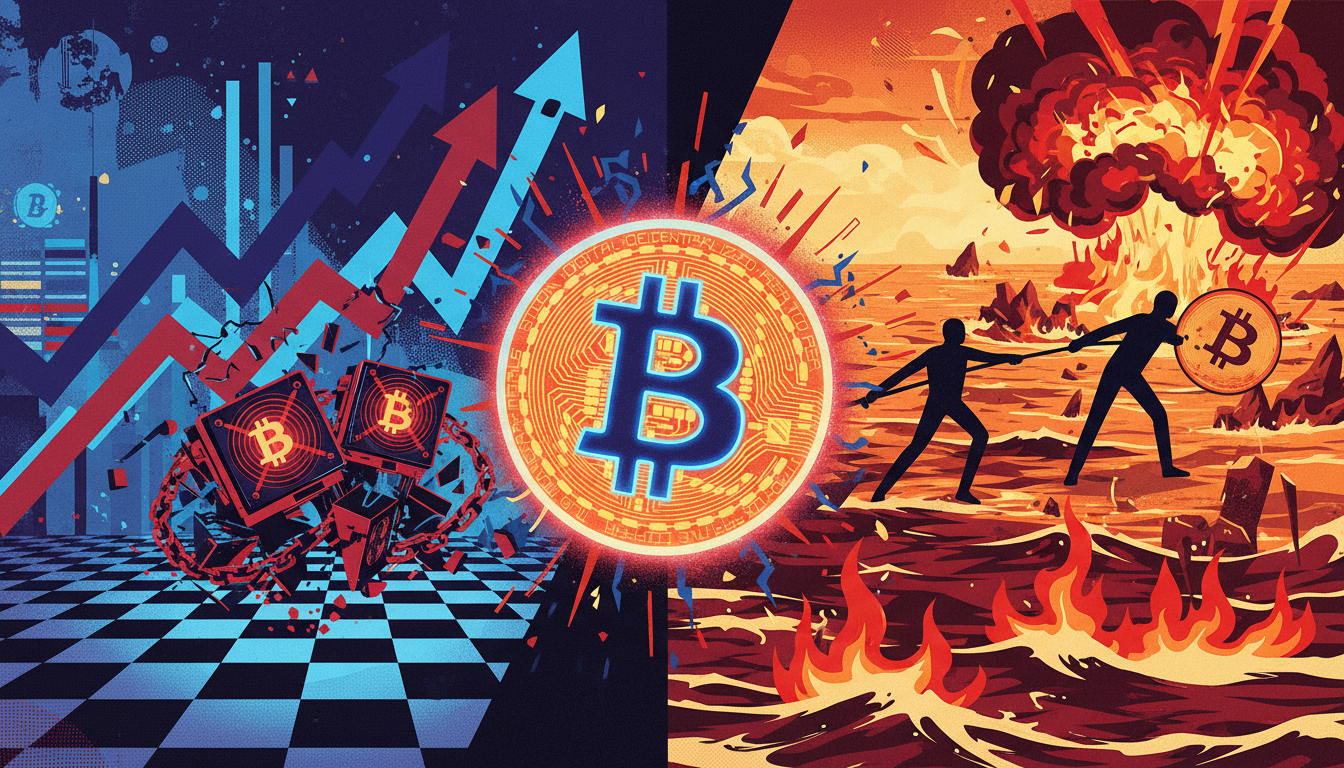
On March 21, 2026, Eastern Eight Zone Time, the Strait of Hormuz was once again thrust into the global spotlight: Iran launched its latest military operations in this global energy "throat." Market concerns about the escalation of the situation in the Middle East quickly intensified. On the same day, the crypto market did not provide a singular "answer"—$52.1 million net outflow from Bitcoin spot ETFs in a single day, as mainstream funds chose to reduce risk exposure; on the other hand, RDNT skyrocketed by 33.18% in 24 hours, while the number of small XRP wallet addresses surged to a historic high of 5.66 million, showcasing contrasting funding behaviors intertwined on the same timeline. This sense of disconnection poses the question for all participants: as local geopolitical black swans and Wall Street institution entrance expectations coincide, are Bitcoin and broader crypto assets being viewed as a new type of safe-haven asset under the looming shadow of war, or are they high-risk chips that can be discarded at any moment?
The Tense Moment at Hormuz: Funds are...
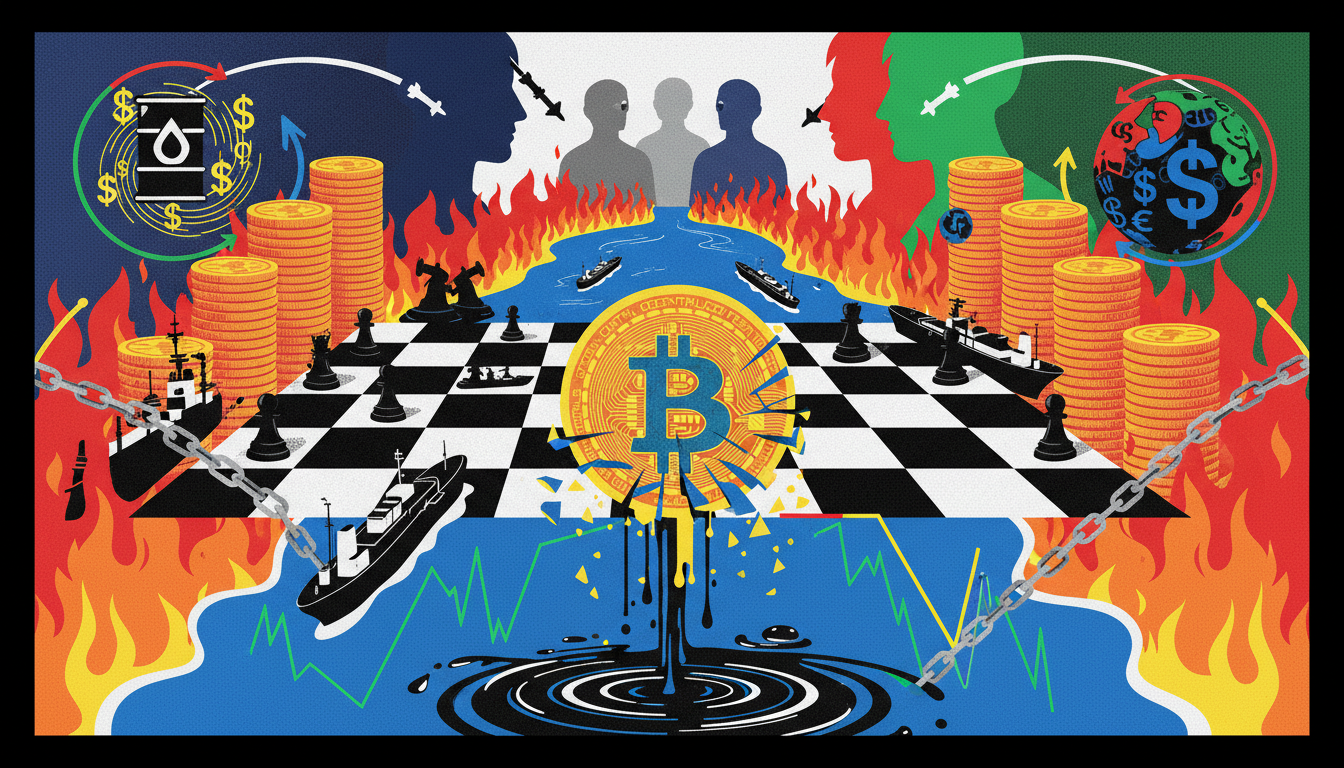
The Strait of Hormuz accounts for about 20% of global oil transportation and is traditionally one of the regions most sensitive to risk premiums. On March 21, Iran's latest military actions around the strait were confirmed by CCTV News, prompting the market to quickly recall the exceeding 15% volatility of Bitcoin during the U.S.-Iran standoff in 2019, as well as the historical instances in early 2022 when Bitcoin and gold’s 90-day correlation rose to 0.78 amidst the Russia-Ukraine conflict. At these junctures, the distinction between risk assets and safe-haven assets is not clear-cut, but is continually re-priced according to the shadow of war and liquidity environment.
From the market scenario that day, Bitcoin’s price was more volatile under the impact of geopolitical news, and sentiment was obviously tense. However, more significantly was the funding behavior: $52.1 million net outflow from Bitcoin spot ETFs. Compared with past periods of conflict when large amounts of fund rushed into traditional safe-haven assets like gold, this time it presented a more cautious attitude of “slightly reducing positions, buying a little more slowly.” The performance of the regulated main channel ETF showed a pullback rather than absorption that day, indicating that at least for some institutions, Bitcoin was more like a position that needed to reduce volatility exposure rather than a safe asset to increase investment in immediately.
This so-called "geopolitical premium" in the pricing of risk assets is reflected not only in prices themselves but also in on-chain and off-chain behavioral aspects. On one hand, short-term speculative traders may capture volatility opportunities brought about by geopolitical panic, switching directions between contracts and spot with higher frequency, attempting to arbitrage on amplified intraday fluctuations; on the other hand, some medium to long-term funds managing positions using risk budgets and VaR models may choose to slightly downsize or pause expansion, incorporating the tail risks of "conflict escalation" into position control. In the absence of specific account-level capital flow details, we cannot ascribe these behaviors to specific addresses or institutional tags, but the combination of the ETF net outflow and price response clearly shows: every shift in the winds of Hormuz is rapidly translated into Bitcoin's risk discount or premium.
Wall Street's Modeling for Bottom Fishing: $1600...
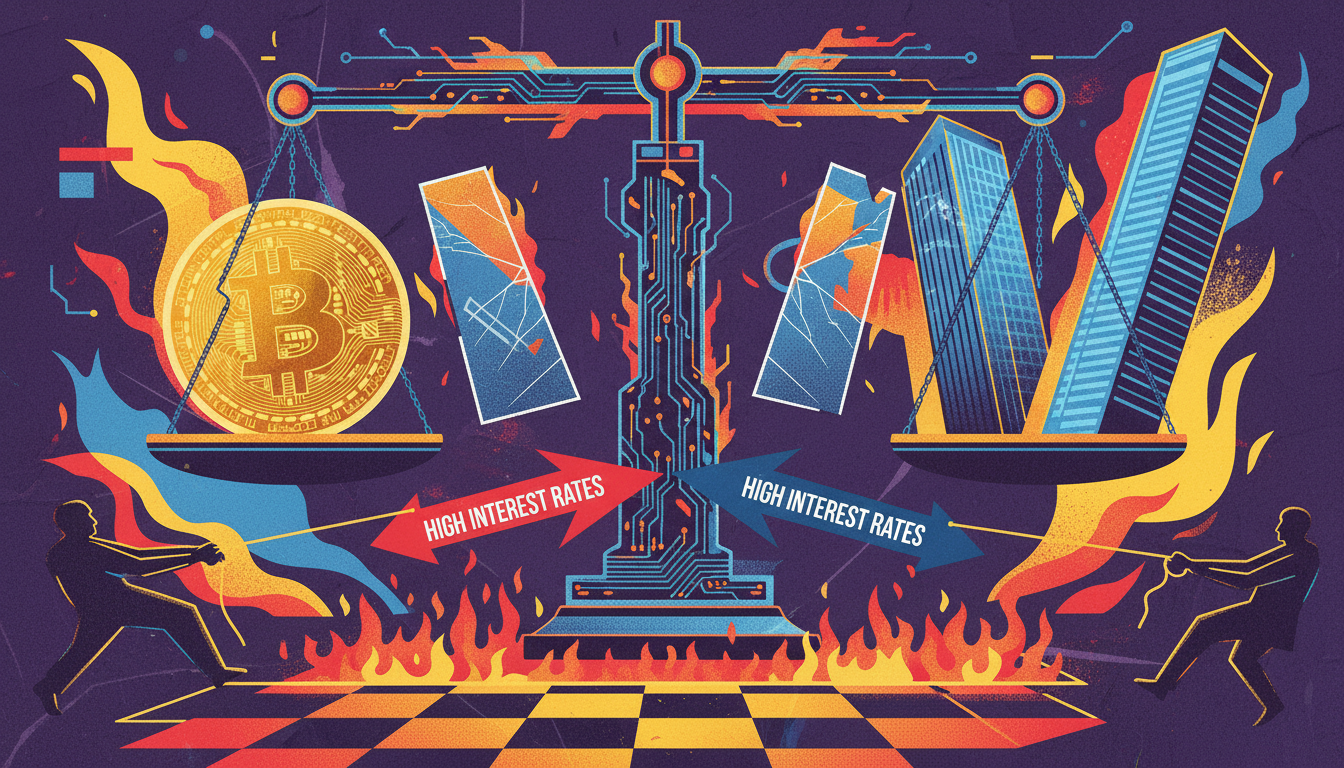
Parallel to the shadows of war, the presence of Bitcoin in Wall Street's asset allocation models is becoming increasingly prominent. Morgan Stanley currently manages approximately $8 trillion in assets, roughly four times the current total market capitalization of the entire crypto market and about 1.6 times the total scale of global gold ETFs. In such a volume, even a seemingly "scrappy" 2% allocation theory theoretically allows for about $160 billion to be shifted towards Bitcoin. Behind this is a standard logic of major asset allocation: in an environment characterized by high inflation and geopolitical risks, allocating a small portion of assets to assets that have a lower correlation with the traditional financial system aims to enhance portfolio resilience.
It is within this context that the CEO of Morgan Stanley Strategy proposed that “2% allocation will bring about a capital flow equivalent to 3 IBITs.” If roughly mapping this to the current size of leading Bitcoin spot ETFs, such a capital scale could significantly amplify the liquidity and price elasticity of Bitcoin once assumptions in the model are transferred to the chain—limited spot liquidity would be more prone to price acceleration under marginal buying pressure, and the absolute magnitude of volatility as well as the depth of single adjustments may also be further extended. However, it must be emphasized that this is still merely a theoretical extrapolation within the context of asset allocation models, rather than an investment decision confirmed by Morgan Stanley, and it does not include any public information on timelines or execution paths.
In contrast to the realities of funding trajectories, the disparity becomes increasingly prominent. One side presents a model world with potentially trillions in incremental capital, while the other is marked by VanEck HODL Bitcoin spot ETF’s historical cumulative net inflow of approximately $1.182 billion, which is not considered large for the entire crypto market. On March 21, however, all Bitcoin spot ETFs collectively registered a $52.1 million net outflow. Funds in the model are piling up, while funds in reality seem hesitant—this misalignment reveals the current true attitudes of institutions:
On one hand, geopolitical conflicts, sovereign debt pressures, and inflation expectations are providing increasingly more “macro reasons” for considering Bitcoin in long-term asset allocations; on the other hand, these same variables have dramatically amplified Bitcoin's downside risks in the short term, making any large-scale purchases contingent upon stricter drawdown tolerances and valuation discounts. Thus, from Wall Street's perspective, Bitcoin currently appears to require a “slow buy-in, pricing down with models”—supporting marginal increases with a long-term allocation narrative while seeking more favorable entry ranges during each geopolitical panic.
ETF Bloodletting and Altcoin Frenzy:...
If the single-day net outflow of ETFs represents a relatively restrained institutional attitude, then the simultaneous 33.18% surge in RDNT in 24 hours reflects another instinctual depiction of capital. Against the backdrop of escalating Hormuz tensions and Bitcoin's pressured volatility on March 21, the risk aversion of mainstream assets stands in stark contrast to the “frenzy” of certain high-beta, small-cap tokens. The rise in RDNT is widely linked to increased short-term attention brought by Binance’s observational labels, as such assets conventionally have higher leverage effects and thinner liquidity.
From a temporal relationship, when Bitcoin spot ETFs experienced an outflow of $52.1 million on that day and the overall spot market appeared more cautious, some active funds chose to withdraw from relatively stable mainstream asset exposures, seeking high-volatility returns in altcoins and assets with stronger narratives. This represents a classic pattern of “mainstream under pressure, capital rotating to high-beta assets”: as systemic risks rise, short-term participants prefer to stake their limited risk budgets on assets with greater volatility elasticity, hoping to cover the uncertainty of the portfolio level with the returns from single transactions.
Simultaneously, the fact that VanEck HODL and other ETF products still maintain a cumulative net inflow of $1.182 billion reveals two relatively independent but interrelated funding tracks. One track involves passive or semi-passive allocation funds entering through ETFs, trusts, and custody products, which have not collectively retreated amid this round of geopolitical volatility but rather exhibited phase reductions and adjustments; the other track involves active trading funds operating around exchanges, perpetual contracts, and high-volatility tokens, which demonstrate extreme maneuverability during instances of emotional amplification. This dual-track structure indicates that even if the “safe-haven narrative” strengthens on a macro level, Bitcoin will not automatically transform into a one-way safe asset; short-term funds will still leverage the combination of “safe-haven labels + altcoin premiums” to create more intense price fluctuations.
For ordinary investors, it is crucial to distinguish between these two entirely different logics:
● On one hand, medium to long-term allocation funds adjust their rhythm based more on macro conditions, regulatory progress, and asset correlations. Their buy and sell decisions often lag behind market sentiments but determine the “base color” of trends;
● On the other hand, short-term sentiment funds accelerate entry and exit under any event that can be packaged into a narrative, driving altcoins and high-leverage assets to experience price movements far beyond fundamentals. Confusing the two will only lead to losing direction in storm-like situations similar to Hormuz—mistaking short-term emotional markets as long-term trends or vice versa.
Retail Investors Quietly Accumulate: 5.66 Million...
In the sky above the plight of institutional ETF capital, there lies another relatively quiet yet significant curve on-chain: The number of small XRP wallet addresses has reached a historic high of about 5.66 million according to Santiment data. This indicator itself cannot directly indicate price direction but reveals changes in participant structure from another dimension—more small assets are continuously entering and remaining in this market, forming a broader “long-tail user” base.
Behaviorally, the growth in small addresses could correspond to multiple pathways: firstly, new users, after experiencing several rounds of macro and geopolitical shocks, still choose to tentatively buy in with smaller capital sizes to avoid suffering full volatility all at once; secondly, existing users may split their original holdings into multiple addresses for risk management or trading strategies, conducting position management or strategy isolation; thirdly, some new addresses may be related to automated participants such as market-making bots or strategy accounts. Given the current publicly available data is insufficient to pinpoint a single motive, we cannot simply attribute this increase to a marketing initiative or specific positive event, nor can we use a single narrative to explain the behaviors of all addresses.
Interestingly, when we juxtapose this “small address curve” with ETF capital flows and institutional allocation models, we can more clearly outline a "two-layer market" structure: the upper layer is the “model pricing layer” represented by asset allocation models from large banks like Morgan Stanley, Bitcoin spot ETFs, and custodial institutions, where discussions revolve around 2% allocations, $160 billion potential increments, and how to adjust risk budgets amid geopolitical conflicts; the lower layer is made up of the “fragmented buying layer” consisting of millions of small addresses, which quietly absorbs sell pressure and rebuilds positions after each significant price drop or sentiment panic.
This structure, on one hand, enhances the resilience of crypto assets against geopolitical shocks—when upper-layer funds choose to wait or reduce positions, lower-layer long-tail buy orders can provide a form of "buffer" over a longer period; on the other hand, it also amplifies volatility: long-tail users are more easily influenced by short-term prices and narratives, forming a herd effect of buying highs and selling lows, which leads to more frequent and intense emotional fluctuations in the market as macro and geopolitical winds shift repeatedly.
From the Middle East to Wall Street: Crypto Narratives...
Between the tense situation in Hormuz and Wall Street's model extrapolations, there lies another equally critical dimension: the attitude of policy and regulation towards crypto financial innovation. As Robinhood's CEO Vlad Tenev stated, “Stablecoin yield rights are a fundamental right of financial innovation,” such voices are increasingly common in global crypto discussions. For institutions accustomed to operating within well-established legal frameworks, environments where geopolitical risks and financial innovations progress concurrently present both an opportunity and a fundamental constraint—the extent to which regulation acknowledges and defines yield rights and compliance boundaries will directly determine whether they dare to consider crypto assets as formal allocation tools, and in what form.
Meanwhile, the war in the Middle East constantly reminds the market: crypto assets play a complex and multifaceted role in geopolitical conflicts. Iran’s public statement that “attacks on critical infrastructure will trigger asymmetric retaliation” implies that once conflicts escalate, asymmetric games will further amplify the tension between sanctions, cross-border capital flows, and financial infrastructure safety. In such an environment, crypto assets may simultaneously be used to circumvent certain traditional financial sanctions, facilitate cross-border value transfers, and serve as high-volatility speculative targets. Each occasion of escalating tensions not only drives up price volatility but also inadvertently raises regulatory vigilance and intervention intensity towards this asset class.
The issue lies in the fact that there remains a high degree of ambiguity globally regarding regulatory red lines and potential sanction logics for crypto assets. Aside from a few jurisdictions that provide relatively clear ETF norms and custodial standards, most countries are still exploring how to view and handle "wartime crypto capital flows." This uncertainty makes large institutions more inclined to adopt a “wait and see” approach: participating moderately through spot ETFs, regulated custodial solutions, and internal asset allocation models, under a controllable compliance framework, rather than directly mobilizing capital on-chain. This partly explains why, despite the grand narratives where crypto assets seem increasingly prominent, the actual capital flows appear cautious—narratives have already taken the lead from Hormuz to Wall Street, yet the funds are still awaiting alignment in regulation and systemic levels.
The Myth of Safe Havens and the Truth of Speculation: The Next...
Returning to the initial question, whose safe haven has Bitcoin become under the storm in Hormuz? From the developments over the past few days, at least three intertwining mainlines can be outlined: firstly, the escalation of Middle Eastern tensions has raised global risk premiums, with Bitcoin being viewed as a hedging tool alongside gold during certain periods, but on March 21, the more intuitive response was the $52.1 million net outflow from ETFs alongside increased volatility of mainstream assets; secondly, institutions like Morgan Stanley provided grand concepts at the model level with “2% allocation, $160 billion potential inflow, equivalent to 3 IBITs,” but the actual ETF capital flows reflected hesitation and differentiation, forming a divergence between the model and funding behaviors; thirdly, the historic high of 5.66 million small XRP addresses and the dramatic fluctuations of altcoins like RDNT reveal the expansion of retail and long-tail structures—“above” is the macro model and regulatory game, while “below” consists of fragmented buy orders and emotional trading.
In the foreseeable short term, as long as the geopolitical situation remains in a state of seesaw, Bitcoin and other mainstream crypto assets will likely continue to switch between “safe-haven narratives” and “risk asset sell-offs”—on one hand being viewed as alternative assets hedging traditional finance and geopolitical uncertainties, and on the other hand becoming high-risk positions that are first to be reduced when volatility is amplified. For prices, this means high volatility will become the norm rather than an exception, and a singular direction of “safe haven myth” is unlikely to concurrently hold in reality over the long term.
Looking at the longer cycle, once the asset allocation models of large institutions like Morgan Stanley truly move from PPT to the execution stage, even if the scale is far below theoretical limits, it will suffice to reshape the peak heights and drawdown rhythms of this cycle and possibly the next cycle. Coupled with the expansion of the global user base represented by millions of small addresses of assets like XRP, Bitcoin and the entire crypto market are more likely to evolve into a “structurally volatile asset”: macro funds and long-tail users continuously engage in the same price curve, perhaps with higher peak levels and deeper drawdowns, but the paths become increasingly dependent on the evolution of funding structures and narratives, rather than merely switching between “bulls and bears.”
For every participant, perhaps what is even more important is not to question whether Bitcoin is an absolute “safe haven,” but to learn to see clearly between Hormuz and Wall Street who is pricing, where the funds come from, and where they flow. In a market driven by models, emotions, and policies, shifting the focus from a singular price candlestick to the deeper funding structures and narrative evolutions may be the true starting point of risk management.
Join our community to discuss together and become stronger together!
Official Telegram community: https://t.me/aicoincn
AiCoin Chinese Twitter: https://x.com/AiCoinzh
OKX Welfare Group: https://aicoin.com/link/chat?cid=l61eM4owQ
Binance Welfare Group: https://aicoin.com/link/chat?cid=ynr7d1P6Z
免责声明:本文章仅代表作者个人观点,不代表本平台的立场和观点。本文章仅供信息分享,不构成对任何人的任何投资建议。用户与作者之间的任何争议,与本平台无关。如网页中刊载的文章或图片涉及侵权,请提供相关的权利证明和身份证明发送邮件到support@aicoin.com,本平台相关工作人员将会进行核查。