This may be the most symbolic milestone in Bitcoin history. Just this week, the Bitcoin network will see the birth of the 20 millionth Bitcoin. This means that of the 21 million total supply set by Satoshi Nakamoto, over 95% has already entered the market. The remaining less than 5%—the last 1 million Bitcoins—will be mined by humans at an extremely slow pace, expected to take as long as 114 years, until the next century’s next century.
This is not just a string of numbers in the code, but the ultimate verification of the scarcity of "digital gold".
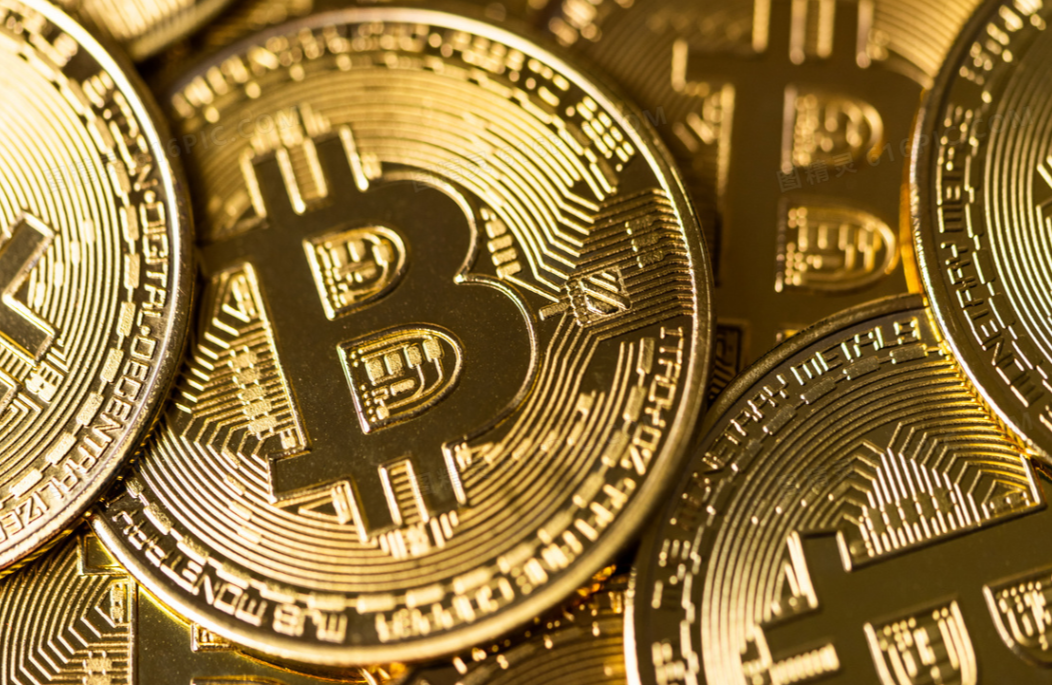
1. 95% of Supply Confirmed, Only "Last 3000 Remains"
● According to real-time on-chain data, as of March 3, approximately 19,997,001 Bitcoins have been mined, leaving less than 3,000 until the 20 million milestone. Based on the current network producing 6.25 blocks every 10 minutes, averaging about 450 BTC per day, this historic moment will be officially confirmed within the next week (about 7 days).
● From the 50 BTC mined by Satoshi Nakamoto in the Genesis block in January 2009 to the 20 millionth Bitcoin being mined today, we have walked this road for 17 years. However, the road ahead will be even longer.
2. A 114-Year Marathon: Why is the Last 1 Million So Hard to Mine?
If you think Bitcoin mining will get faster like gold mining, you are very mistaken. There is a cold rule written in Bitcoin's code: every 210,000 blocks (approximately every 4 years), the block reward halves.
Currently, the reward for each block is only 3.125 BTC. By 2028, this number will halve again to 1.5625 BTC. As the rewards continue to "shrink," the inflation rate of Bitcoin will be gradually compressed to nearly zero.
Based on this mechanism:
● 99% of the supply will be fully mined by January 2035.
● The last complete Bitcoin is expected to be mined by a lucky miner in 2105.
● And those fractional Bitcoins as block rewards will continue to be mined until around 2140, when the entire network will truly stop producing new Bitcoins.
This means our generation has witnessed the explosive growth of Bitcoin from 0 to 20 million, while our great-grandchildren may still be witnessing the final work of those last 1 million. This is what is called "century-crossing mining".
3. The Miners' "Endgame": From Gold Rush to Rent Collection
● The birth of the 20 millionth Bitcoin is not just a numerical milestone, but a turning point in the economic model of the Bitcoin network.
● In the past, miners' income mainly came from block rewards (newly issued Bitcoins). But now, as rewards become scarcer, transaction fees will gradually become the main source of income for miners. Experts have analyzed that the proportion of miner fees has risen from nearly 0% in 2010 to approximately 15% today.
● This is akin to miners slowly transitioning from "gold miners" to "landlords". In the future, their primary motivation for maintaining network security will no longer be the new coins that can be mined, but the fees paid by users for transactions. This also poses a new challenge to the Bitcoin network: if in the future transaction fees are insufficient to incentivize miners, will security be affected? But at least for now, there is still enough time for technology to evolve before that day comes.
4. Scarcity "Nailed Down": The Golden Rule in the Code
● The breakthrough of 20 million Bitcoins is, in the industry’s view, a strong reinforcement of its "verifiable scarcity".
● Unlike gold, which relies on the guess of "we don't know how much is still underground" for its scarcity, Bitcoin's scarcity is written in the code, running on thousands of nodes, and is a mathematical law that no one can tamper with.
● Analysis from BTCC Research Institute points out that considering about 4 million Bitcoins in early wallets may be permanently dormant due to lost private keys, the actual circulating Bitcoin is much more scarce than the data indicates. This adds a layer of "physical deflation" above the 21 million limit. Institutions like Grayscale have noted in reports that the logic of institutional allocation of BTC has shifted from "high-risk speculation" to "scarcity hedging," with holding periods significantly extended.
5. Market's Cold Reflection: The New Logic of Bottom Building and Hedging
As Bitcoin reaches its supply milestone, the sentiment in the secondary market is also quietly changing.
● Jan van Eck, CEO of VanEck, recently pointed out in an interview with CNBC that Bitcoin is experiencing a classic bottom-building phase in a four-year cycle. "Bitcoin has been increasing for three consecutive years and then significantly retraced in the fourth year. 2026 is that fourth year," he mentioned, noting that as the negative impacts of the halving cycle gradually dissipate, the market is at the starting point of recovery.
● Interestingly, geopolitical tensions have inadvertently stoked the fire for Bitcoin. As the situation in the Middle East escalates, traditional bank cross-border transfers are disrupted, and in regions such as the UAE and Dubai, cryptocurrency payment networks are becoming efficient alternative channels for fund transfers. This "decentralized hedging channel" function is being recognized by more and more people.
● Despite Bitcoin's price still hovering around $68,000, down 40% from its historical high, the inflow of spot Bitcoin ETFs remains strong, with products from institutions like BlackRock even trading at a premium. Smart money often quietly positions itself during pessimistic times.
The mining of the 20 millionth Bitcoin is like the sound of a starting gun: Bitcoin's adolescence is over, and the era of scarcity officially begins. For true long-term holders, the remaining 1 million must be mined over 114 years, which sounds like a distant legend, but it is precisely this extreme slowness and certainty that forms the foundation of Bitcoin belief.
In a world where the money printing machine never stops, an asset that cannot be emitted is, in itself, an answer.
Join our community, let’s discuss and become stronger together!
Official Telegram community: https://t.me/aicoincn
AiCoin Chinese Twitter: https://x.com/AiCoinzh
OKX Benefits Group: https://aicoin.com/link/chat?cid=l61eM4owQ
Binance Benefits Group: https://aicoin.com/link/chat?cid=ynr7d1P6Z
免责声明:本文章仅代表作者个人观点,不代表本平台的立场和观点。本文章仅供信息分享,不构成对任何人的任何投资建议。用户与作者之间的任何争议,与本平台无关。如网页中刊载的文章或图片涉及侵权,请提供相关的权利证明和身份证明发送邮件到support@aicoin.com,本平台相关工作人员将会进行核查。


