Author: Xie Yancen
1. Core Specific Information of the Hong Kong Derlin Building Real Estate RWA Project
This project is the first traditional commercial real estate RWA tokenization project approved in Hong Kong, initiated by Derlin Holdings (01709.HK), which received a "No Objection Letter" from the Hong Kong Securities and Futures Commission in February 2026, marking Hong Kong's symbolic project in the competition to become a global RWA center. The core information is as follows:
(1) Target Assets and Structural Design
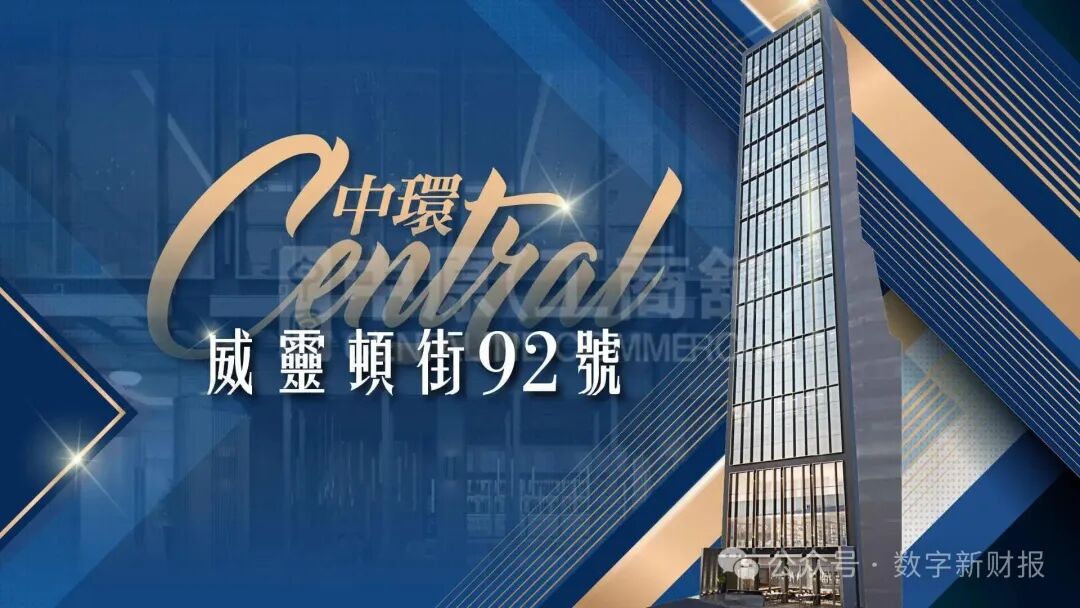
Underlying Assets: Derlin Building, 92-96 Wellington Street, Central, Hong Kong (a shopping center-style commercial building). In 2023, Derlin Holdings purchased the top five floors and naming rights for over 280 million HKD, with a price per square foot exceeding 25,300 HKD, representing scarce hard assets in the core business district of Central. Additionally, a tokenization project for a private equity LPF fund investing in Animoca Brands was also approved.
Core Structure: A dual-layer structure of LPF (Limited Partnership Fund) + Tokenization is adopted, without directly transferring property ownership, but digitizing the "LPF fund equity of holding Derlin Building." The LPF is a fund vehicle recognized by Hong Kong law, and its share splitting and transfer have mature legal basis, avoiding the complex procedures of property ownership disposal.
Technical Solution: For the first time, licensed institutions in Hong Kong adopted a dual-chain parallel approach using the HashKey Chain blockchain protocol + XRP ledger to issue tokens, with technical support from Asseto Fintech, balancing regulatory friendliness with the liquidity of public chains.
(2) Regulatory Approval and Compliance Basis
Approval Form: The Hong Kong Securities and Futures Commission issued a "No Objection Letter" on February 24, 2026, which is not a license/formal authorization, but a "no objection" statement on a specific business plan, reflecting the flexibility of case-by-case approval during the early exploration phase of RWA.
Regulatory Principles: Follow "same business, same risk, same rules" penetrative regulation, as the tokens represent fund equity, falling under the regulation of the "Securities and Futures Ordinance."
Licensing Requirements: Derlin Digital Family Office holds a Type 9 (Asset Management) license, and Derlin Securities holds a Type 1 (Securities Trading) license, forming the core basis for the project's compliant operation.
Approval Cycle: The plan was first disclosed in October 2025 and approved in February 2026, taking about 4 months, reflecting the balance between prudence and efficiency in Hong Kong regulation.
(3) Project Positioning and Investment Logic
Core Goal: To provide qualified investors with a new tool for low-threshold allocation of core real estate assets in Hong Kong, reducing the investment threshold for office buildings in Central from hundreds of millions of HKD to the tens of thousands of USD level, thus broadening the investor base.
Asset Selection Logic: Selection criteria that meet scarcity (core business district of Central), clear ownership (single property without complex ownership disputes), and moderate scale (valuation in hundreds of millions HKD, low pilot trial error cost), providing references for subsequent RWA projects.
Not Pure Financing: Unlike traditional real estate financing, the core is to enhance asset liquidity while achieving risk isolation through the LPF structure.
(4) Industry Significance of the Project
This is the first RWA project for traditional commercial real estate in Hong Kong, prior efforts at tokenization in Hong Kong were focused solely on financial products;
It provides a replicable real estate RWA compliance template, clarifying the full path for asset selection, regulatory communication, technology implementation, and risk control;
It verifies the feasibility of the "overseas assets issued overseas" model, paving the way for "mainland assets, Hong Kong issuance, global trading" and clearing uncertainties in the path ahead.
2. Analysis of Tax Issues Involved in the Derlin Building Real Estate RWA Project
Hong Kong's tax treatment of RWA follows the principle of substance over form; combined with the core structure of the project's "LPF fund equity tokenization," tax treatment is penetrative to the underlying assets (LPF fund + commercial real estate), while also applicable to Hong Kong's digital asset, fund, and real estate-related tax policies. Core participants include the project initiator (Derlin Holdings), fund manager (Derlin Digital Family Office), token investors, and trading platforms, with the tax treatments and core tax issues for each party as follows:
(1) Core Tax Principles: Penetrative Regulation, Taxes Belonging to the Bottom Layer
The Hong Kong Securities and Futures Commission qualifies this project as "digital expression of existing fund equity", without creating a new asset category; therefore, tax treatment does not target the "token" itself but is penetrative to the underlying LPF fund and Derlin Building real estate assets, subject to Hong Kong's "Tax Ordinance" and fund, real estate-related tax rules, while the tokens are merely technical carriers for the transfer of equity, incurring no additional taxes.
(2) Specific Tax Treatment for Each Participant
1. Project Initiator: Derlin Holdings
LPF Fund Establishment Stage: Derlin Holdings injects the Derlin Building it holds into the LPF fund. If it is a non-trading asset injection (purely for equity restructuring), no actual profit is generated, and no profits tax is required; if asset transfer premiums are involved, the premium portion is subject to Hong Kong corporate profits tax of 16.5%.
Token Issuance Stage: Tokens are issued through the LPF fund, considered the sale of fund shares. Management fees/profit-sharing obtained by Derlin Holdings as the fund sponsor, if generated in Hong Kong, must be included in business profits for a 16.5% profits tax.
Real Estate Holding Stage: As the underlying asset of the LPF fund, rental and other income generated by the Derlin Building belong to the fund. Derlin Holdings as a fund partner receives fund profits according to the partnership ratio; if it is capital gains (non-frequent trading), no tax is required; if it is operating income, it must be included in corporate profits for profit tax payment.
2. Fund Manager: Derlin Digital Family Office
Derlin Digital Family Office (holding a Type 9 asset management license) acts as the investment manager of the LPF fund in this project and is likely the fund's general partner (GP) or its designated manager. Its income from the LPF fund is primarily divided into two parts, subject to different tax treatments:
Regular Management Fees: Classified as operating income from providing asset management services in Hong Kong, subject to 16.5% corporate profits tax with no special concessions.
Performance Fees (with Income Rights): If this income meets the tax exemption conditions for attached income under Hong Kong's Tax Ordinance, it can enjoy 0% profits tax advantage. Specific conditions include:
The fund qualifies as a "certified investment fund" (or will apply simplified standards after legislative updates);
Derlin Digital Family Office provides substantial investment management services in Hong Kong, meeting the requirements of at least 2 full-time employees and annual local operational expenses of 2 million HKD;
Attached income arises from compliant investment transaction gains.
If the above conditions are not fully met, performance fees will be taxed similarly to regular management fees at 16.5%.
3. Token Investors (Qualified Investors)
Hong Kong has no capital gains tax; the core tax treatment for investors distinguishes the nature of token transactions (long-term investment/frequent trading), and as tokens serve as carriers of LPF fund equity, their income is tied to the earnings of the fund's underlying assets:
Token Buying/Selling/Transfer Stage: If it is a long-term investment (holding tokens for receiving fund dividends/appreciation of real estate, not frequent trading), the income from token transfer is regarded as capital appreciation, and as there is no capital gains tax in Hong Kong, no tax is required;
If it is frequent trading (trading tokens for arbitrage purposes), the gains are regarded as operating profit, with individual investors subject to 15% and corporate investors to 16.5% profits tax.
Token Dividend Stage: Dividends received by investors in tokens are essentially a distribution of LPF fund earnings. If the fund has paid profits tax on the underlying asset income, investors do not need to pay tax again (Hong Kong adopts a single-layer tax system where dividends/fund distributions are tax-exempt).
Estate/Gift Stage: Hong Kong has abolished estate tax and gift tax, meaning investors gifting tokens or inheriting them from heirs bear no tax obligations.
4. Token Trading/Distribution Party: Derlin Securities
Derlin Securities, as a licensed securities trading institution, earns commissions and fees from distributing RWA tokens, classified as operating income within Hong Kong and subject to 16.5% corporate profits tax; transaction fees collected by trading platforms are subject to the same rule.
5. Underlying Assets: Tax on Derlin Building Holdings
During the LPF fund's holding of Derlin Building, it must pay Hong Kong's regular property-related taxes consistent with traditional commercial properties, unaffected by tokenization:
Property Tax: levied at 15% of the building's rental income (the fund, as the property holder, is the taxpayer);
Rates: a regular tax levied by the Hong Kong local government on properties, calculated based on property valuation, borne by the fund;
Stamp Duty: If the fund subsequently disposes of the Derlin Building's ownership, stamp duty will be levied in accordance with Hong Kong's property transaction stamp duty rules (currently, the stamp duty rate on commercial real estate in Hong Kong is 15%), and the tokenized transaction itself does not involve property ownership transfer and incurs no property stamp duty.
(3) Hong Kong Tax Incentives Applicable to the Project
To promote the development of digital assets and RWA, Hong Kong has introduced various targeted tax incentives that this project can directly benefit from, significantly reducing the overall tax burden:
1. Token Trading Stage: No Stamp Duty
Hong Kong's "Digital Asset Development Policy Declaration 2.0" clearly states that RWA transactions receive stamp duty exemption, and the tax authorities have clarified in July 2025 that tokenized financial products (such as tokenized fund shares) traded on licensed virtual asset trading platforms (VATP) will be exempt from stamp duty (distinguishing from traditional fund share trades and stamp duty rules for securities trading in Hong Kong). In this project, tokens represent digitalized LPF fund equity, which is categorized as a tokenized financial product, and investors buying and selling tokens or platforms distributing tokens are exempt from stamp duty.
2. At the LPF Fund Level: Unified Fund Tax Exemption System Applicable
Hong Kong has introduced profits tax exemptions for privately offered funds through the "Tax Ordinance" and related amendments. According to the Hong Kong "2025 Taxation (Amendment) (Fund Attached Tax Equity and Other Tax Concessions) Ordinance" and relevant policy declarations, the unified fund tax exemption system has been extended to include private placement funds with digital assets, related amendments have been promoted since 2025 and will apply from the 2025/26 tax year. If the LPF fund in this project meets the definition of "private fund," its compliant trading income (including rent from Derlin Building and disposal appreciation gains) can enjoy direct profits tax exemption. This is the project's most critical and certain tax advantage, rather than a policy yet to be implemented.
3. Digital Asset Custody/Trading: No Additional Tax Types
Currently, Hong Kong has not established specific tax types for digital assets; the custody, trading, and settlement stages of tokens are taxed only according to traditional financial businesses without value-added tax/consumption tax, and as of the end of 2024, the Hong Kong banking system has already held over 14 billion HKD in digital assets, with related custody service fees taxed only based on regular operating income.
(4) Potential Tax Risks and Considerations for the Project
Cross-border investors face risks regarding tax information reporting. Hong Kong is promoting the Cryptocurrency Asset Reporting Framework (CARF), planning to collect digital asset trading information in 2027 and automatically exchange it with cooperating jurisdictions in 2028. If cross-border investors hold tokens for this project, their trading information will be reported to their tax authorities in their country of residence, necessitating attention to the global taxation rules of their resident countries (such as the USA, EU, etc.) to avoid double taxation.
Tax determination risks related to the nature of transactions. The Hong Kong tax authorities do not have clear quantitative standards for determining "capital appreciation/operating profits"; core criteria include transaction frequency, holding purpose, and trading model. If investors frequently buy and sell tokens, they may be recognized by the tax authorities as conducting "operating transactions," requiring reimbursement of profits tax; it is advisable to retain transaction records proving that the purpose of holding is long-term investment.
Cross-border tax risks for mainland investors. The mainland strictly regulates activities related to virtual currency; if mainland investors participate in this project, they must pay attention to:
The double taxation avoidance arrangement between the mainland and Hong Kong: after the Hong Kong fund pays profits tax, mainland investors can offset their mainland corporate income tax/personal income tax with tax payment certificates;
Mainland capital project controls: Mainland investors participating in overseas token trading must comply with foreign exchange management regulations; otherwise, they may face risks of foreign exchange violations, and tax reporting must also complete cross-border investment information filing.
Compliance risks regarding the eligibility conditions for tax incentives. The unified fund tax exemption system and attached income tax exemption both have strict substance activity requirements (such as local full-time employee numbers, local operating expenses, etc.). Project operators must ensure that the LPF fund and GP continuously meet relevant compliance conditions; otherwise, they may lose eligibility for tax incentives, leading to increased tax burdens.
3. Penetrating Underlying Assets, Substance-based Taxation; Numerous Advantages, Attention to Compliance
The tax treatment of the Derlin Building real estate RWA project is centered on "penetrating underlying assets, substance-based taxation," with tokenization not adding additional tax types but rather leveraging Hong Kong's low-tax environment (without capital gains tax, estate tax) and special incentives for digital assets/RWAs (stamp duty exemption, LPF fund profits tax exemption), resulting in significant optimization of the overall tax burden.
The core tax advantages of the project manifest in no stamp duty on token transactions, investor long-term gains being tax-free, and certain profits tax exemption at the fund level, which is a significant competitive advantage for Hong Kong in attracting global RWA projects; while potential risks are primarily focused on cross-border information reporting, transaction nature determination, and tax incentive compliance conditions, requiring all participants to carefully plan for compliance in accordance with Hong Kong's tax regulations.
This project also establishes a tax model for subsequent Hong Kong real estate RWA projects: through the LPF/SPV fund structure for the underlying assets, both achieving risk isolation and enjoying related tax incentives for Hong Kong funds (already confirmed applicable starting from the 2025/26 tax year), with tokenization merely serving as a technical means for equity transfer and not altering the tax attributes of the underlying assets.
免责声明:本文章仅代表作者个人观点,不代表本平台的立场和观点。本文章仅供信息分享,不构成对任何人的任何投资建议。用户与作者之间的任何争议,与本平台无关。如网页中刊载的文章或图片涉及侵权,请提供相关的权利证明和身份证明发送邮件到support@aicoin.com,本平台相关工作人员将会进行核查。