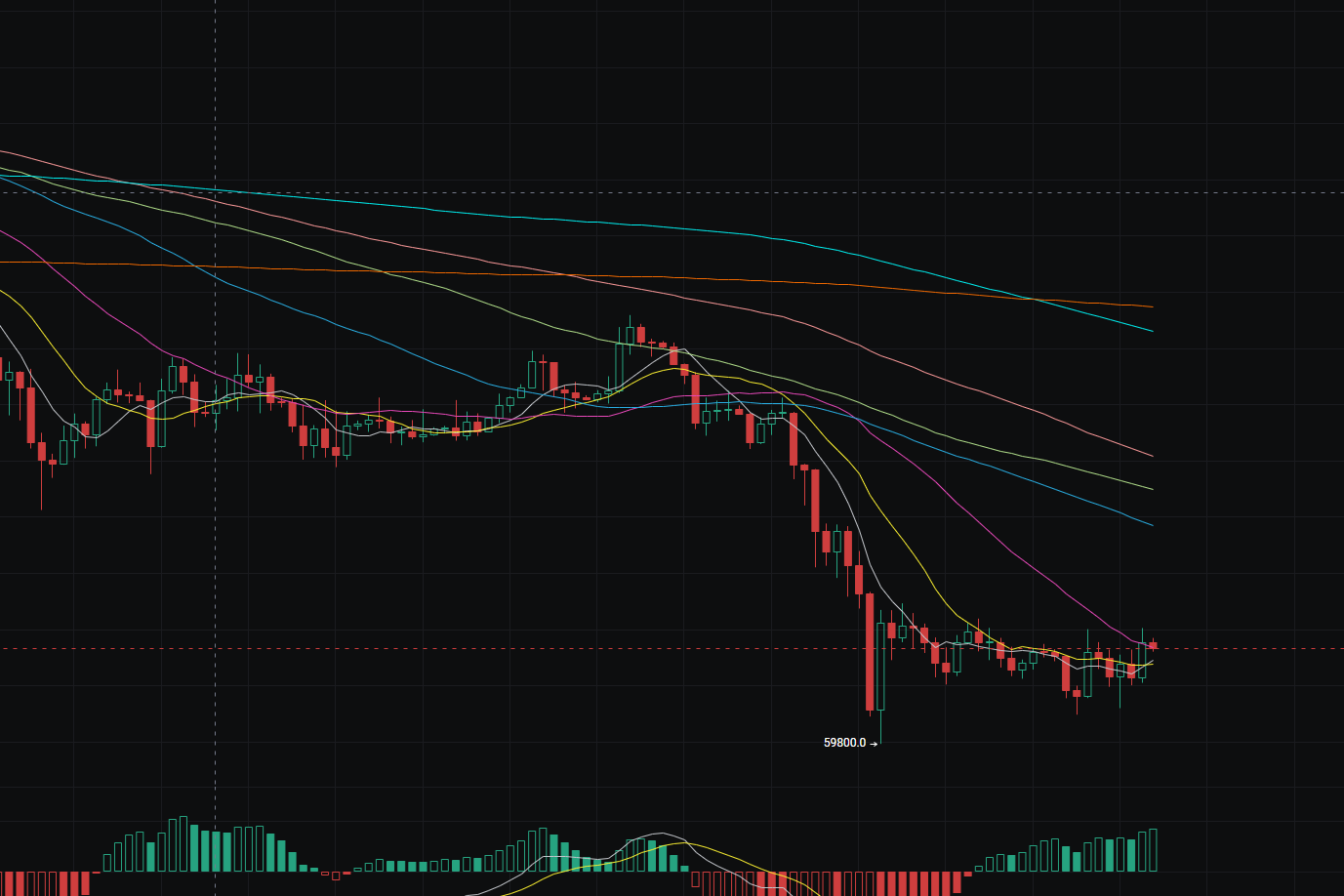
In early March 2026, under the shadow of weakening traditional stock indices, the crypto market exhibited a contrasting scene: on one side, the Aave community passed the "Aave Will Win" proposal with 52.58%, on the other side, cryptocurrency funds recorded a net inflow of approximately $1 billion in a short time. On Ethereum, the RWA asset narrative, approximately $15 billion in scale and accounting for about 58% of the global total, continued to heat up, while the tokenized gold market even surpassed $4 billion, providing institutions with new on-chain allocation tools. But beneath the surface of this capital influx, governance disputes, security incidents, and risk management games intensified simultaneously — as the community was torn over a $42.5 million "bet,” institutional funds quietly increased their positions. This misalignment of sentiment and behavior has become one of the most concerning signals in this cycle.
$42.5 Million Proposal: A Gamble and Rift Within Aave
● Proposal Outline: The "Aave Will Win" proposal passed by the Aave community is positioned as a concentrated bet on the future ecosystem. According to public voting data, the proposal was approved by a relatively narrow margin of 52.58%, indicating that the community is not highly unified in direction but rather presents a nearly "half to half" fragmentation structure. The barely crossing result itself lays a governance hazard for subsequent execution and accountability.
● Amount of Funds: The proposal requests approximately $42.5 million in dollar-denominated stablecoins and 75,000 AAVE. From both absolute figures and relative protocol treasury sizes, this represents a high-intensity resource allocation. Such a large-scale mobilization of funds and tokens indicates that Aave is not only paying for growth but also using real assets to "carry the sedan" for future narratives, which exacerbates the divide in risk tolerance between supporters and opponents.
● Trust Controversy: Surrounding this proposal, doubts about governance discrepancies and voting behavior emerged within the community, with part of the discussion focusing on issues such as "whether associated addresses affected voting fairness." Although there is currently a lack of complete evidence to support this, and it cannot be seen as a settled fact, the mere existence of controversy is enough to shake some participants' trust in the governance process, forming a clear rift for protocols like Aave that rely on community consensus.
Amidst Stock Market Pullbacks: Funds Quietly Flow Back to Crypto
● Net Inflows Repair Sentiment: Against the backdrop of weakening global stock indices and overall pressure on risk assets, cryptocurrency funds recently recorded approximately $1 billion in net inflows, becoming an important signal for market sentiment repair. The choice for funds to flow back on-chain during a period of macro uncertainty indicates that some institutional investors are beginning to view crypto as a "battlefield" rather than simply a high beta risk asset, contrasting sharply with the previous panic sell-off phase.
● Cycle Warning: VanEck CEO Jan Van Eck reminds investors to pay attention to the cyclical patterns of traditional markets — "Three consecutive years of upward movement, the fourth year usually sees a significant drop." This viewpoint cannot be simply applied to crypto, but it reinforces the cyclical linkage expectations between traditional and crypto: when the stock market is potentially in a high-level adjustment phase, crypto may be seen by some funds as a new volatility-absorbing space rather than merely a one-way hedging asset, and this "hedging + gaming" composite mentality is reshaping funding allocation paths.
● Institutional Allocation Logic: From the combination of weakening stock indices and capital flows, some institutions are increasing their allocation to crypto assets when "uncertainty is high and valuation adjustments are not complete," seemingly pre-positioning for the next period of high volatility. For them, crypto can provide richer risk management tools through highly liquid derivatives and on-chain protocols, and this "tradeability" itself is a reason for complementarity with traditional stock markets.
RWA and Tokenized Gold: The On-Chain Asset Puzzle Under Institutional Narratives
● RWA Carried on Ethereum: Currently, the RWA market on Ethereum is approximately $15 billion, accounting for about 58% of global related assets, transitioning from conceptual experimentation to an important carrier for institutional allocation. For traditional institutions, Ethereum is not just a technical network but also an on-chain asset ledger gradually aligning with compliance custody, audits, and clearing systems, paving the way for absorbing more off-chain assets in the next phase.
● The Dominant Position of Tokenized Gold: Within the RWA subfield, tokenized gold products such as XAUT, PAXG have become the main force for growth, with their overall market size exceeding $4 billion. Such assets anchor both traditional safe havens and on-chain liquidity, providing institutions and high-net-worth individuals with a middle option that is "not completely leaving the traditional system while participating on-chain," and also inadvertently introducing more stable collateral assets into the Ethereum ecosystem.
● The Imaginative Space of Lending Protocols: With the expansion of RWA, especially tokenized gold, lending protocols like Aave have gained new imagination in collateral structures and potential income sources: on one hand, higher quality on-chain assets can enhance capital efficiency and safety margins; on the other hand, with the narrative supported by "backed by real-world assets," protocols dare to carry out high-intensity resource allocations like "Aave Will Win," pre-discounting future income expectations into current aggressive expenditures.
Security and Risk Control: Another Front of Neutron and MistTrack
● Neutron's White Hat Handling: Behind the optimistic narrative of capital inflows and RWA expansion, security incidents remain frequent. The Neutron platform chose to suspend certain functions for repair due to security issues and prioritized risk control through white hat collaborations; this proactive risk management path of "braking first, then investigating" shows the project team's more conservative stance between reputation and user fund security, and also creates trust space for future operational recovery.
● MistTrack Skills and AI Risk Control: In contrast to Neutron's emergency response, the security company Slow Mist launched the MistTrack Skills tool, representing another kind of proactive defense approach: using on-chain tracking and AI risk control capabilities to help institutions and projects identify suspicious activities early in the flow of funds, reducing the erosion of hacker attacks and money laundering links on the ecosystem. Security is moving from "post-event investigation" to "pre-event recognition," becoming an industry consensus.
● Security Prerequisites for Institutional Entry: When approximately $1 billion of funds flow back to crypto funds, and the RWA market expands to the $15 billion scale, security incidents and compliance risk control are no longer just technical department issues but directly determine whether institutions dare to increase their allocation. For leading protocols like Aave, if governance disputes are coupled with security incidents, it is enough to prompt traditional institutions to reassess their risk premium, posing pressure on the entire on-chain financial narrative.
Pre-Market Trading and New Coin Gaming: XT’s Emotional Testing Ground
● Price Discovery Ahead of Time: The XT trading platform launched pre-market trading for CHIP and KAT, providing these early-stage projects with a pricing discovery and liquidity testing ground ahead of full launch. Such mechanisms allow some funds to capture expected differences early while exposing the optimism and fears of projects more quickly in the public market, forming a new normal of "accelerated pricing."
● Pros and Cons for Retail and Market Makers: For retail, pre-market trading means an earlier opportunity to enter while also entailing greater volatility risks in an environment with limited transaction depth and highly asymmetric information; for market makers and professional funds, it serves as a testing ground for increasing margin profits by providing liquidity and observing real buying intentions. The simultaneous occurrence of liquidity improvement and increased volatility puts the risk preferences of early participants under a magnifying glass.
● Track Choices of Different Levels of Capital: On one side is the pre-market gaming surrounding new coins on XT, attracting individual and quantitative funds with high-risk preferences; on the other side is Aave restructuring its treasury with a proposal in the $42.5 million range, layered with approximately $1 billion of net inflow into crypto funds, forming a full-spectrum capital track scenery from retail to institutional, from new coins to RWA. Different levels of capital seek returns in their respective tracks while jointly driving the volatility and expansion of the entire cryptocurrency asset curve.
Cycles and Games Intertwined: Who Is Paying for the Next Round of Volatility
Aave's gambling-type proposal, nearly $1 billion net inflow into crypto funds, Ethereum's RWA expansion to $15 billion, and tokenized gold surpassing $4 billion, combined with Neutron's security repair and the rise of risk control tools like MistTrack, collectively outline an ecological picture of “capital inflows but trust divides”: numerically, market sentiment is warming, but structurally, it is filled with governance cracks and security shadows. Echoing VanEck's cyclical warning of “three consecutive years of growth, followed by a steep drop in the fourth year,” it may be more important to maintain a high degree of vigilance on the transparency of the governance process and the robustness of the security system while the capital side warms up and institutional narratives strengthen, rather than simply chasing the next wave of increase. Looking toward the subsequent cycle, how institutions and communities recalibrate the boundaries of risk, return, and governance power before the next round of significant volatility arrives will determine who can emerge as the winner amid severe price fluctuations, and who will pay for this gamble in the gap between optimism and controversy.
Join our community, let's discuss and become stronger together!
Official Telegram Community: https://t.me/aicoincn
AiCoin Chinese Twitter: https://x.com/AiCoinzh
OKX Welfare Group: https://aicoin.com/link/chat?cid=l61eM4owQ
Binance Welfare Group: https://aicoin.com/link/chat?cid=ynr7d1P6Z
免责声明:本文章仅代表作者个人观点,不代表本平台的立场和观点。本文章仅供信息分享,不构成对任何人的任何投资建议。用户与作者之间的任何争议,与本平台无关。如网页中刊载的文章或图片涉及侵权,请提供相关的权利证明和身份证明发送邮件到support@aicoin.com,本平台相关工作人员将会进行核查。