What to know : Turkey's ruling AK Party has introduced a bill to formalize crypto taxation, revising tax and spending rules, and creating a new framework for cryptocurrencies. The bill proposes a 10% tax on gains from regulated crypto platforms, withheld quarterly, with the president having the power to adjust the rate between 0% and 20%. The bill also introduces a 0.03% transaction tax on service providers facilitating crypto transactions, and requires investors trading outside licensed platforms to declare gains annually.
The Senate Committee on Banking, Housing and Urban Development included a provision temporarily barring the Federal Reserve from issuing a central bank digital currency in its bipartisan bill to boost housing in the U.S.
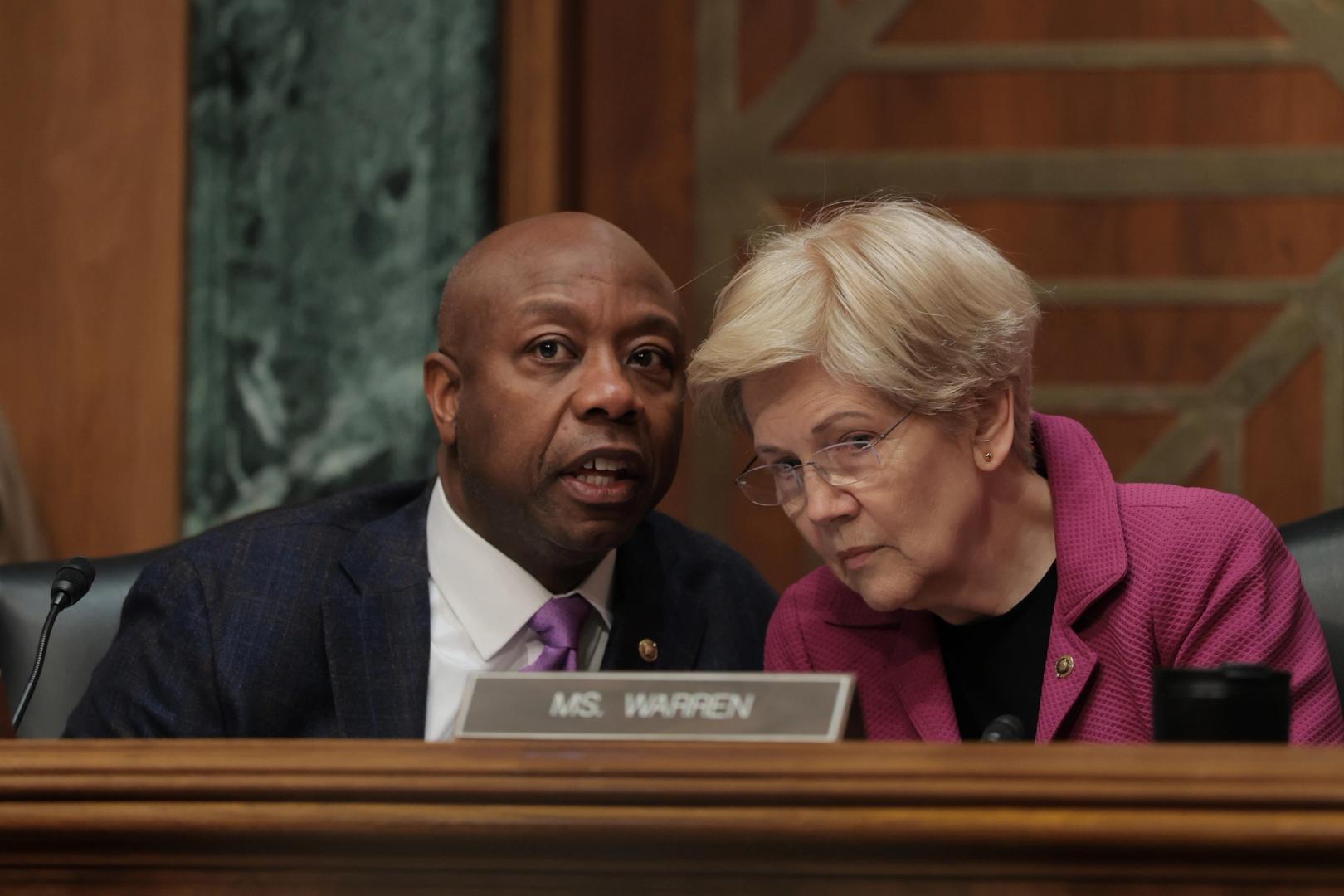
The "21st Century ROAD to Housing Act," introduced Monday by Committee Chairman Tim Scott and Ranking Member Elizabeth Warren, respectively the top Republican and Democrat on the committee, aims to make it easier to build houses in the U.S.
"Not only is this bill about cutting regulatory red tape, lowering costs, and expanding housing supply while generating no new spending, but it’s about making sure people like the single mom who raised me in North Charleston, South Carolina, have even greater access to economic opportunity and the American dream of homeownership," Scott said in a statement.
"The package includes the vast majority of the Senate’s unanimously supported ROAD to Housing Act, incorporates bipartisan housing ideas from the House, and takes a good first step to rein in corporate landlords that are squeezing families out of homeownership," Warren said in her own statement.
Neither lawmaker mentioned the CBDC ban, which occupies just two pages in the 303-page bill. Lawmakers have included the ban in previous bills, and the House of Representatives passed it as a standalone bill last year, but it has so far not made it all the way through Congress.
"Except as provided in subsection (c), the Board of Governors of the Federal Reserve System or a Federal reserve bank may not issue or create a central bank digital currency or any digital asset that is substantially similar to a central bank digital currency directly or indirectly through a financial institution or other intermediary," the section said.
It included a sunset provision for Dec. 31, 2030 and carved out an exception for permissionless, private "dollar-denominated" currencies that "fully preserve the privacy protections" of physical currency.
The White House published a "Statement of Administration Policy" supporting the bill, explicitly supporting the CBDC provision in the two-paragraph statement.
"The Administration highlights the inclusion of presidential priorities … to halt the development of a Central Bank Digital Currency that could be [sic] pose significant threats to personal privacy and liberty," the statement said.
免责声明:本文章仅代表作者个人观点,不代表本平台的立场和观点。本文章仅供信息分享,不构成对任何人的任何投资建议。用户与作者之间的任何争议,与本平台无关。如网页中刊载的文章或图片涉及侵权,请提供相关的权利证明和身份证明发送邮件到support@aicoin.com,本平台相关工作人员将会进行核查。


