Original Title: Distribution Advantage: how to set up GTM for your crypto product
Original Author: Mac Budkowski
Original Translation: Ken, ChainCatcher
If you closely observe successful crypto projects, you will find that their growth paths vary significantly.
Ethereum spread through the Bitcoin community.
Tether expanded through business partnerships with centralized exchanges.
Polymarket ignited discussions on Twitter (now X).
As the old saying goes, for a startup, finding the right channel for the product means success is halfway achieved.
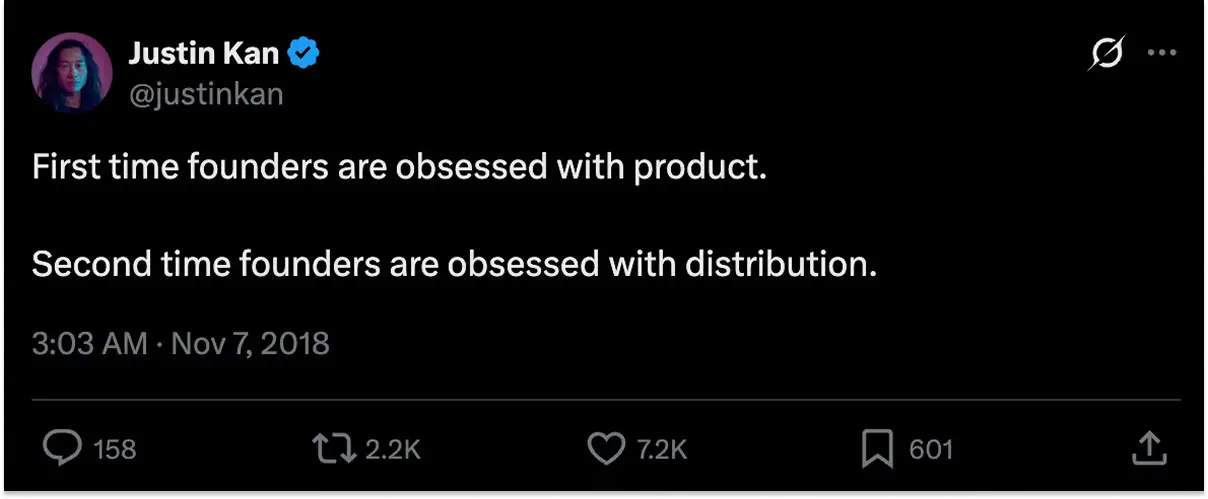
So, how can this be achieved in the crypto space? What paths can lead customers to your product? What can we learn from successful projects like Aave, Polymarket, and Lido?
Let’s get started.
The Best Products Don’t Always Win
The harsh truth is: people don’t always use the “best” products.
This seems unfair to engineers who prefer rational comparisons of features. Why do inferior products sometimes win?
But products do not compete in a rational vacuum. They compete in a complex network woven from social information flows, user habits, social pressures, anxieties, and extremely limited decision-making time.
Sometimes people use Google Docs simply because they haven’t heard of Obsidian; sometimes large companies force employees to use Teams instead of Slack; sometimes you choose Coca-Cola just because it’s within reach and you don’t want to bother searching the depths of the shelf for better soda.
The success of these products is not due to their superior functionality, but because they have better go-to-market strategies (GTM). This means they do a better job of reaching their target users than their competitors.
This situation also exists in the crypto space. That’s why people have been using MetaMask since 2017, and why projects need to use airdrop mechanisms to overcome user inertia in trying new things.
This also explains why marketing strategies that rely solely on handing out T-shirts and tweeting “gm” often end in failure. As the saying goes in Silicon Valley: you need a good product plus good distribution to win.
Uniswap is an excellent case in point. It is often thought of as a technical breakthrough, but it is also an outstanding execution of GTM.
Uniswap’s Year-Long Promotion Campaign
You might think that Uniswap grew into a multi-billion dollar giant in the decentralized exchange space because it was the first user-friendly platform. But if you look closely, you’ll find that founder Hayden started marketing activities a year before the product launch.
What happened?
Inspired by Vitalik’s article on automated market makers, Hayden built the first proof of concept for Uniswap at the end of 2017.
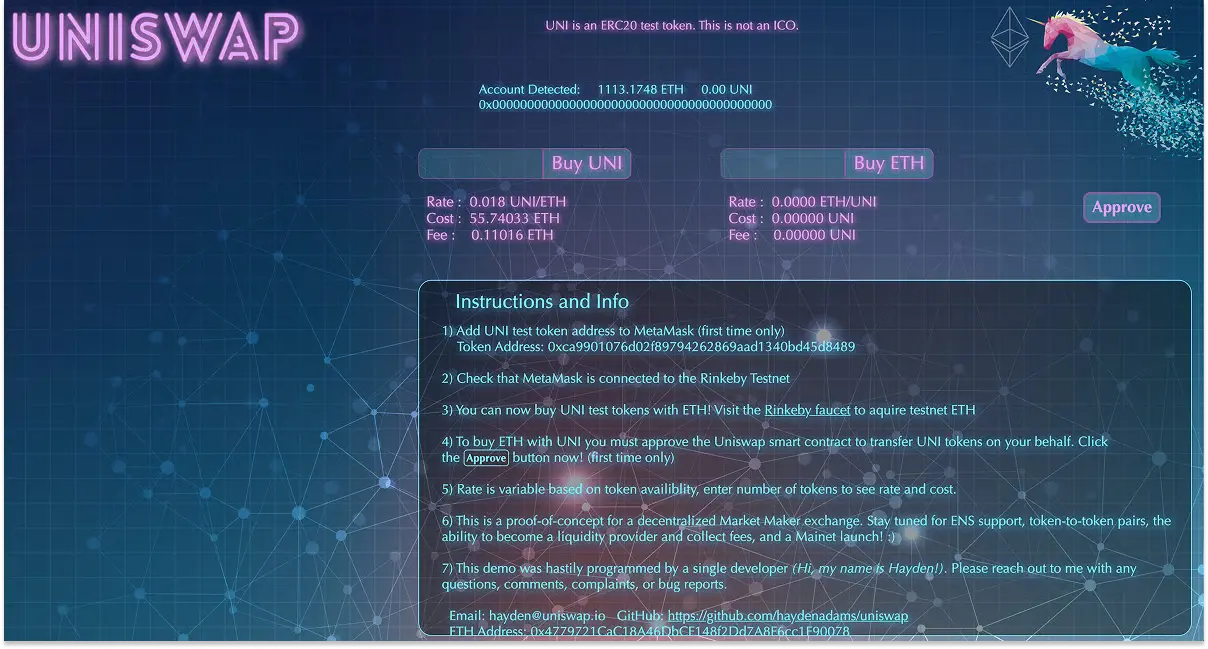
Uniswap PoC in 2017
Karl Floersch showcased this PoC at Devcon 3, garnering some early attention for Uniswap.
Subsequently, Hayden promoted Uniswap at NYC Mesh and discussed the concept with Vitalik. He conducted a three-day presentation at Edcon 2018, heavily promoted it during New York Blockchain Week, and applied for and won funding, making the Ethereum Foundation aware of Uniswap’s existence.
He also spent weeks working in the offices of Balance and MakerDAO, discussing the project with crypto-native users, and flew to Hong Kong for the ETHIS conference and Shanghai Blockchain Week. He even proactively reached out to anyone interested in providing liquidity at launch.
Thus, a significant portion of Uniswap’s promotion was through one-on-one interactions by the founder at conferences, crypto offices, and direct messages. This GTM channel perfectly matched Uniswap’s revolutionary qualities, as it provided ample educational space for end users.
So, when Hayden officially launched Uniswap at Devcon 4 in Prague, the project was already well-known in the community (which was much smaller back then).
As Hayden said:
“I sat alone in a beanbag chair for about an hour, repeatedly revising the tweet announcing the launch. Fortunately, my friend Ashleigh walked by and helped me review the tweet.
I hit the send button, both nervous and excited about the future. What happened next exceeded my wildest expectations—an overwhelming tide of support, ideas, and collaborations came pouring in.”
As you can see, Uniswap’s history is not a story of “developers hiding away to build, then becoming famous overnight after launch.”
A lot of promotional work was done before the product was launched. If Hayden had called it a “GTM campaign” back then, I would be surprised. I bet he was just talking about his product everywhere because he found it interesting.
But Hayden did realize the importance of marketing:
“Before that, I thought my role in Uniswap was mainly technical. When people asked how it worked, I usually started with the math behind it. Many walked away looking confused.
Richard [Burton] helped me understand that it was my problem that people didn’t understand Uniswap, not theirs. Developers are just a small part of the grand picture. If I want people to use my project, I need to communicate in a way they can understand, in their language. The biggest challenge Uniswap faced was social.”
Well, if even Uniswap, which launched in the relatively mild environment of 2018, needed GTM, then you clearly need it even more when launching a product in the noisy environment of 2025.
So how exactly do you do GTM? Is it about randomly grabbing people at conferences to chat? Well… it’s much more complicated than that.
Channels Cannot Operate in Isolation
Sometimes I talk to founders who ask:
“So should we do Twitter? Or find KOLs? Or just go to conferences?”
Unless you lay a solid foundation, it’s hard to determine which channel is best for your product. GTM is not about betting all your chips on the first marketing channel that comes to mind.
GTM only works when the following three things align:
The right market
The right segment within that market
The right channels for that segment
If you choose the wrong market and segment, even the best channels may be of no use.
For example: if Hayden had promoted Uniswap to Ethereum developers and OGs instead of pitching his DEX to consultants running enterprise blockchains in Europe, it would have been nearly impossible for Uniswap to take off.
Before building the funnel, you need to lay a solid foundation.
So, how do you execute GTM correctly?
Step One: What is Your Target Market?
Start with the market.
The core of a startup is finding product-market fit (PMF). However, most founders spend 99% of their time thinking about the “product” and only 1% thinking about the “market.”
They chat with a few people, feel a bit of resonance, and then think, “This is our market!” It’s like marrying the first girl you like. It might work out if you’re lucky or have great intuition, but it’s usually not a good way to make decisions.
What else can you do? Carefully evaluate your options and double down on the market that is the best fit for your product.
Look at Coinbase. They started by focusing on the Bitcoin market.
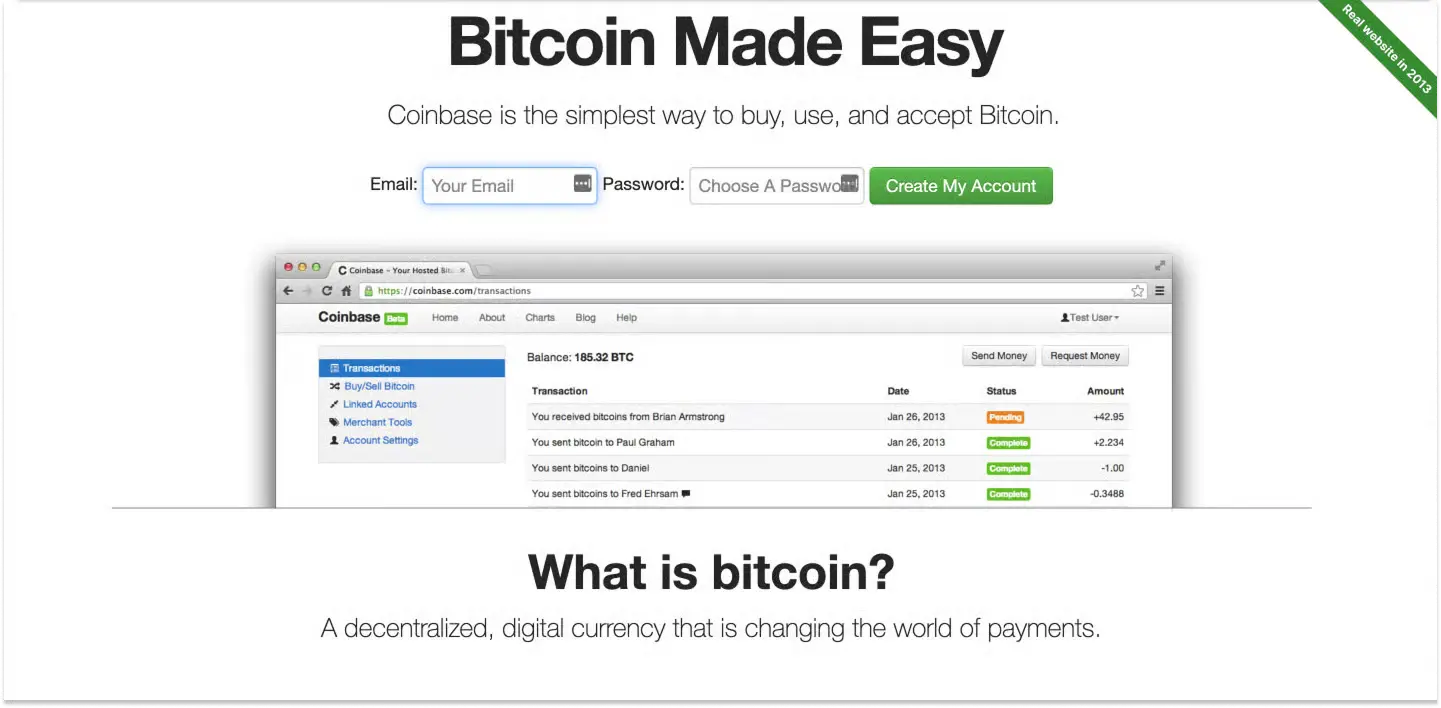
Coinbase 2013 Website
If Coinbase had chosen to support Litecoin, Namecoin, or Dogecoin back then, they would never have become the giant they are today. They chose the right market and were rewarded for it. They focused solely on Bitcoin for four years until they launched Ethereum in 2016.
Blur has a similar story. They focused on professional NFT traders, a group that contributed over 90% of OpenSea’s trading volume. By fully committing to bringing this group to Blur, they achieved escape velocity. If they had focused on retail traders who stopped trading after the 2022 crash, it simply wouldn’t have worked.
Another good example is Rainbow. They focused on Ethereum users looking for a mobile wallet that is both useful and doesn’t feel like a bank app. Rainbow is fun, colorful, and treats NFTs as first-class citizens. That’s how they captured a significant share of the mobile Ethereum market.
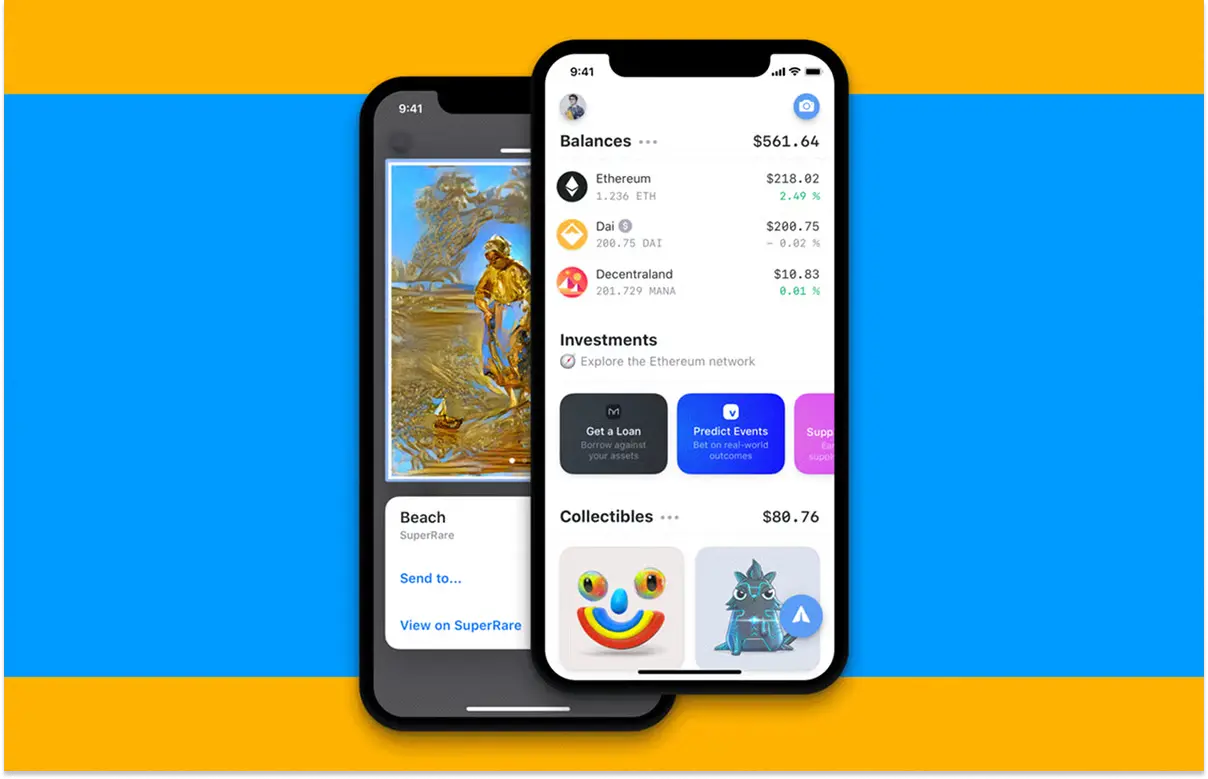
In 2019, Rainbow was more visually appealing, fun, and NFT-friendly than other wallets.
The framework for choosing a market is to answer three questions:
Where is the pain point? Where is the money? Where are the barriers (campaigns)?
Choosing a Market
No pain, no gain.
If users’ problems aren’t painful enough, they won’t bother looking for solutions.
When Coinbase launched in 2012, storing BTC was very difficult—Trezor and Ledger hadn’t appeared yet, and many people stored coins on hard drives. That’s why Coinbase’s first version was a Bitcoin wallet. Then they realized that buying Bitcoin was also hard, so they allowed people to buy, store, and later added trading features.
These were pressing problems, which is what made the market attractive.
Money makes the world go round.
If people feel the pain but can’t afford to pay, that’s also not a good market. They need to be able to pay for the product so you can build a sustainable business. If they have enough money, you can even succeed with relatively few users.
I provided an example in my previous article about building consumer crypto applications:
“Last month on Ethereum, Aave generated over $60 million in fees with just about 25,000 monthly active users. This means each user contributed over $2,400 in fees per month. This is due to some whales borrowing millions of dollars. Of course, not all fees go to Aave's treasury, but it's still an astonishing figure.”
Choose your battles.
Some markets have huge demand, and users are willing to pay, but the path is filled with obstacles. The best markets are those that present certain challenges (making it difficult for others to enter), but you know how to overcome them.
Polymarket decided to navigate the regulatory hell of the SEC; zkSync chose to spend six years on R&D to build the right technology; Sorare faced the complexities of signing agreements with Real Madrid and Barcelona. While these battles are tough, knowing what "life and death" agreements you are signing can help you determine if your team is ready (and qualified) to face such challenges.
In other words, you want to be like Portugal in the 16th century. Thanks to Vasco da Gama, Portugal established a lucrative spice trade with Asia (a market with significant pain points and a willingness to pay) and maintained a monopoly for decades because only they knew the maritime routes to Asia (a huge obstacle, but they knew how to overcome it).

This map from 1502, known as the Cantino Planisphere, was a national secret of Portugal. The map was soon stolen and smuggled to Italy, but having the map alone was not enough to replicate Portugal's advantage. The Italian states lacked the expertise behind these discoveries: Atlantic-class ships, mastery of the Volta do Mar sailing routes, deep understanding of the Indian Ocean monsoon cycles, and long-distance astronomical navigation experience. Without this expertise, the maritime routes to Asia could not be reliably reproduced.
If you choose the right battles, your advantages will be hard to replicate because you will gain a wealth of combat experience.
Step Two: Who Are You Actually Targeting?
Once you have identified the market, you need to focus further.
Your market is like a watermelon. If I asked you to eat it, you wouldn’t try to shove the whole watermelon in your mouth, right? You would (hopefully) cut it up. In marketing terms, these slices are called market segments. If chosen correctly, they amplify all your growth efforts.
There are many ways to segment the market.
If you pick up a marketing book from the 90s, they will tell you to segment based on demographics, geography, and some basic psychographics. So you would target “baby boomers living in New York who enjoy outdoor activities.”
This is a great way to segment for a brand like Coca-Cola, which has a 139-year history, a distribution network in nearly 200 countries, and a $5 billion annual marketing budget. But for a nameless startup with only a $5,000 marketing budget, this is a disaster.
It’s like you are a group of rebels hiding in the jungle with AK-47s, trying to mimic the strategies of the U.S. military. You can’t just send out F-16s and B-2 bombers to dominate the battlefield. You need to be more agile and precise.
You need a beachhead market.
How Satoshi Gained His First Users
When Satoshi Nakamoto released Bitcoin in 2008, he didn’t buy a Super Bowl ad.
He posted the white paper to the Cypherpunk mailing list and engaged in discussions with a few thousand privacy and tech geeks. This was his GTM—his way of finding the first users (and partners) for the project. Very narrow, very precise.
Even on HackerNews (which is already more hardcore than Twitter), the Bitcoin white paper was shared only after more than six months.
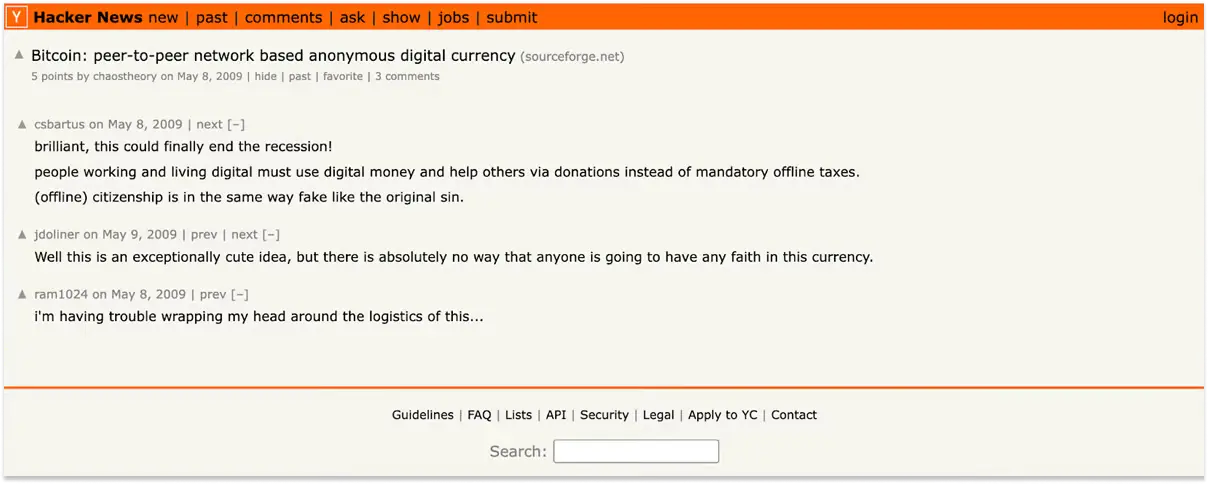
Look at comment #2 :)
This narrow way of promoting the project is an example of a beachhead—an idea inspired by World War II.
In 1944, when Eisenhower wanted to liberate Europe, he needed a good location for the Allies to land. But there was a problem: the Germans had established the "Atlantic Wall"—a 2,600-kilometer defensive line stretching from Norway to southern France.
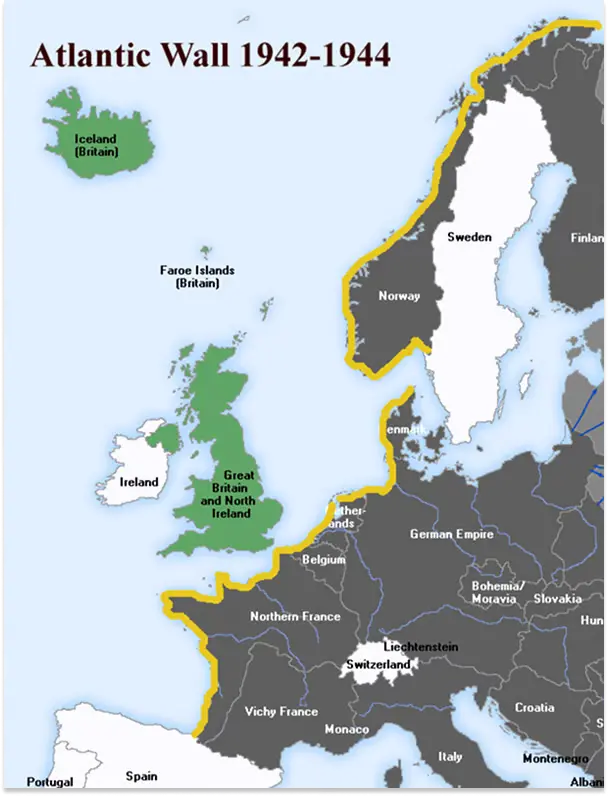
Fortunately, the Atlantic Wall was not impregnable. While places like the Strait of Dover had strong defenses, Normandy was relatively weak. This is why the Allies chose these beaches as the landing points for D-Day.
The Allies knew they could not win the war in one blow. The only way to victory was to secure a small strategic foothold to transport more tanks, soldiers, and supplies, thereby liberating France and all of Europe. They had to seize that small piece of land at all costs.
In entrepreneurship, this Normandy-style strategy is your beachhead. You want to establish the easiest entry point (for Satoshi, it was the Cypherpunk mailing list; for Hayden, it was Ethereum developers and OGs at conferences) and then expand from there.
So, just as the Allies did not directly attack Berlin, you should not aim for the mass market right away.
So how do you choose the right market segment?
Find Your Normandy
I have a group chat called Cryptotesters.
Since the chatroom is filled with DeFi veterans, we often exchange notes on different crypto products. Whenever someone asks for tools to track APY, everyone mentions Vaults.fyi:

So when you see Telegram mentioning the same product in the context of APY, you feel like “Vaults is the tool that all the pros are using.” Especially since you know these people are not paid shills—they just like the product.
Is this the right segment?
Well… that group chat is small—about 700 people hanging out there. But if Vaults decided to target “advanced DeFi users who want to maximize their risk/reward ratio and often hang out in Telegram and Discord group chats,” that could likely be thousands of users. Enough to drive momentum, especially if you include some whales.
So, a suitable segment for startups is a group of people:
- Who have similar pain points that your product can solve (how to find the best annual interest rate?)
- Who experience these issues in similar contexts (I’m an advanced DeFi user looking for advanced products)
- Who connect in similar ways (hanging out in 10 specific group chats, following the same 20 people on Twitter, attending the same 3 conferences each year)
- Who interact with each other (they meet at various events, group chats, and exchange letters, allowing you to spread word-of-mouth naturally).
Excellent segments are often geographic (“Let’s dominate the crypto meetups in Argentina!”), vertical (“Let’s target DAO finance managers with $1 million+ in assets under management!”), or focused on social clusters (“Let’s become more popular in these 5 DeFi group chats and conferences!”).
Zapper is a good example of choosing the right segment.
Their biggest user growth during DeFi summer did not come from integrating blue-chip protocols like Aave or Compound.
It came from integrating small yield farms with closely-knit communities that lacked good reward tracking tools. The Zapper team discovered these farms and integrated them quickly, and whenever these communities found they could see all their claimable rewards in one place, they became heavy users of Zapper.
There’s one thing to note. Sometimes the parts that seem easiest to enter are not the best.
The first event we held for Kiwi was “Finding Farcaster users for long-form content.” This channel seemed to work, and we gained our first 1,000 users from there, but… most of those people were “mixers.” That’s because our Ethereum-first content didn’t resonate with most people.
So knowing many crypto developers in Buenos Aires doesn’t always mean you should start in that area.
The right segment—just like the correct positioning of troops on the beaches of France—should not only be relatively easy to win but also help you expand further. Sometimes, the order is very important.
Start with the High Notes
Starting with a more ambitious market (advanced users, exclusive access, expensive products) and then moving into a broader market is easier than the reverse.
Gnosis Safe was initially a tool for ICO teams. When they expanded to regular users, it was easy to convince them that if Golem could hold 400,000 ETH on Gnosis Safe, then a $5,000 portfolio for the average Joe might be sufficient.
Farcaster was initially a closed community for virtual accounts and crypto builders. When they opened up to regular users, it was already a popular gathering place, so the initial onboarding process was simple.
Pudgy Penguins initially started with expensive NFTs. When they added Lil Pudgies, Rods, and the PENGU memecoin, they already had a prestigious brand, so many fans wanted to join the community.
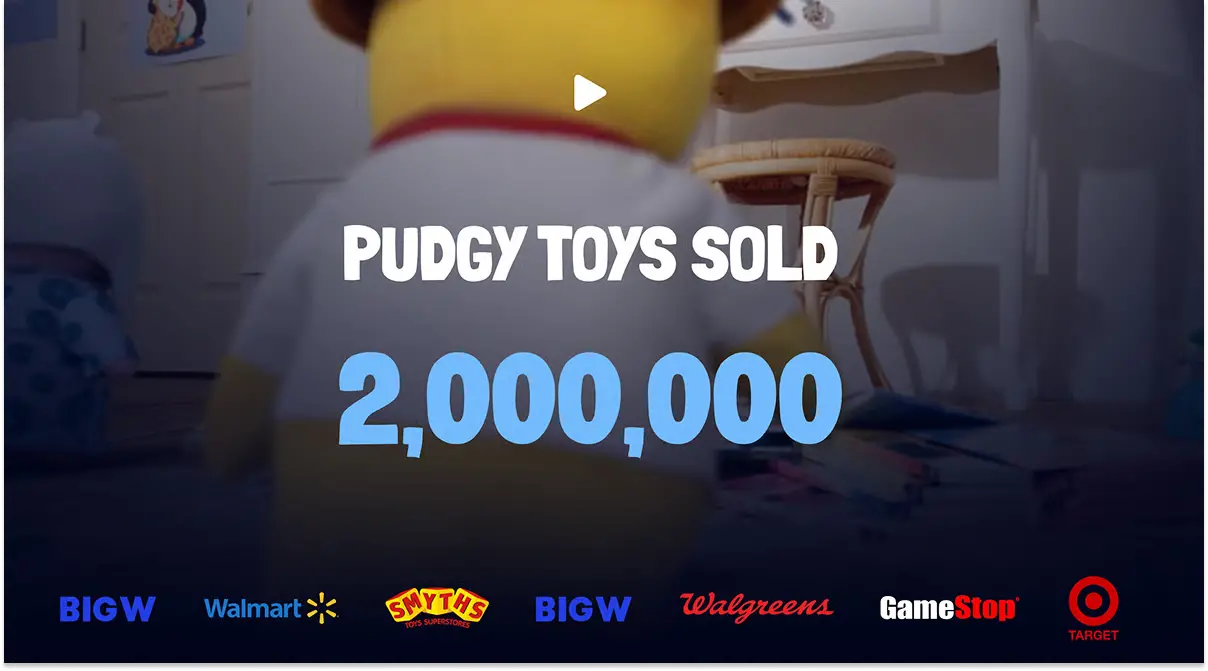
When your brand is already well-known, selling toys becomes easier.
Now imagine starting with a regular segment and gradually expanding to an ambitious segment. It would be much harder.
Alright, now that we’ve covered the basics, let’s talk about the most important question in GTM—where do you find these people?
Step Three: How Do You Reach Them?
Let’s say you want to learn programming. Would you learn a bit of C++, a bit of Java, Python, assembly, and Rust? Probably not.
Most of the time, you either choose a course focused on a specific language or pick a project you’re interested in and learn the language you need to complete it.
GTM is the same.
You don’t just “enter the market” by sending a tweet, releasing a podcast, posting a YouTube video, sending a direct message to potential partners, or making a TikTok video. Your efforts—just like programming—need to be more focused.
You need to find the right channels.
What Are Channels?
Channels are essentially the paths that guide customers to find your product.
There are many channels to choose from—conferences, business development, advertising, billboards, search engine optimization (SEO), and so on. A normative list is described in a book called "Traction."
Here are some examples of channels in the crypto market.
The main channels for Ethereum are Bitcoin forums, group chats, and conferences.
Vitalik, as a co-founder of Bitcoin Magazine, is quite well-known in the Bitcoin community, and he has discussed with many Ethereum white paper authors. Later, he shared information about Ethereum on Bitcointalk.org and showcased Ethereum at Bitcoin Miami. Even the Ethereum presale was denominated in Bitcoin. (Look at how focused they were on this content!)
Vitalik at Bitcoin Miami
For Tether, the main channel is business deals with centralized exchanges.
In 2016-17, CEX faced issues accessing the banking system, so they were eager to implement alternative dollar settlement methods. This is why Tether grew 1000 times in two years.
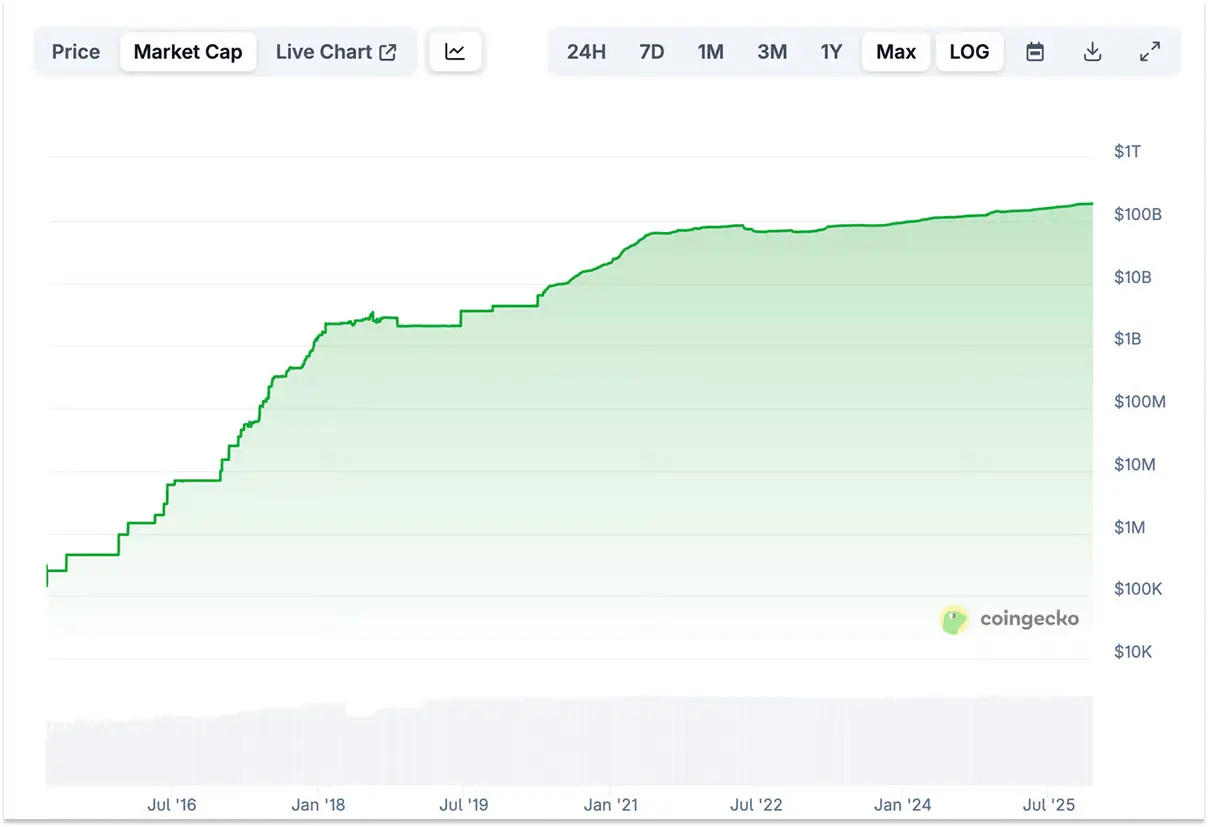
USDT market cap growth on a logarithmic scale (look at 2016-17)
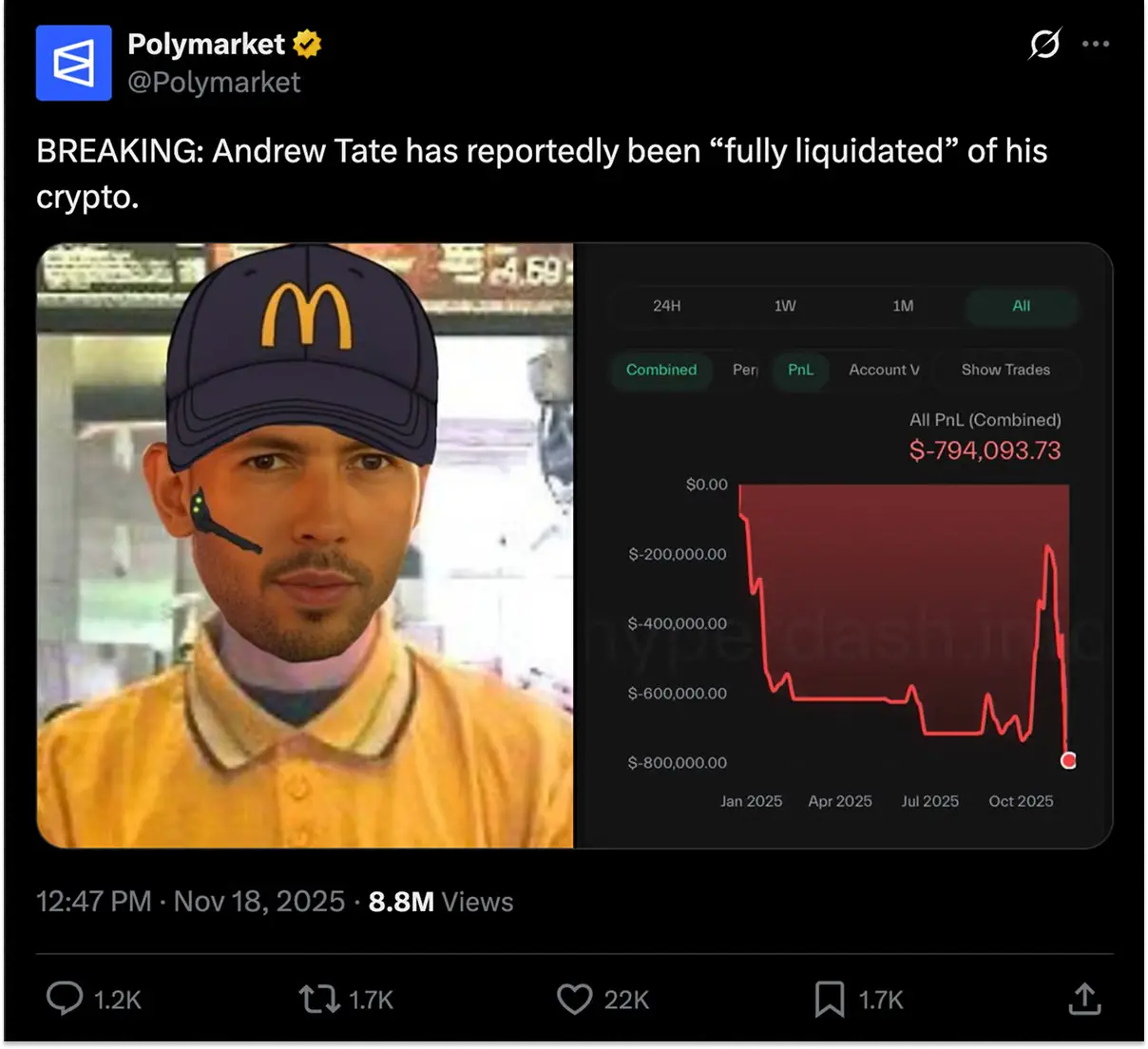
For Polymarket, it’s a world-class Twitter game.
Polymarket's positioning aligns well with current trends, making it very suitable for Twitter. They post memes. They share news. They share interesting betting screenshots. And they are great at replying. Then there's Shayne, who tweets.
For Snapshot, it’s product-driven growth.
During DeFi summer, almost everyone participated in multiple DAOs. So when they saw Snapshot performing well on Balancer, they said, “Hey, let’s use it for my DAO too!” When they implemented it for their own DAOs, others said, “No problem, I’ll share Snapshot with the other three DAOs I’m in!”
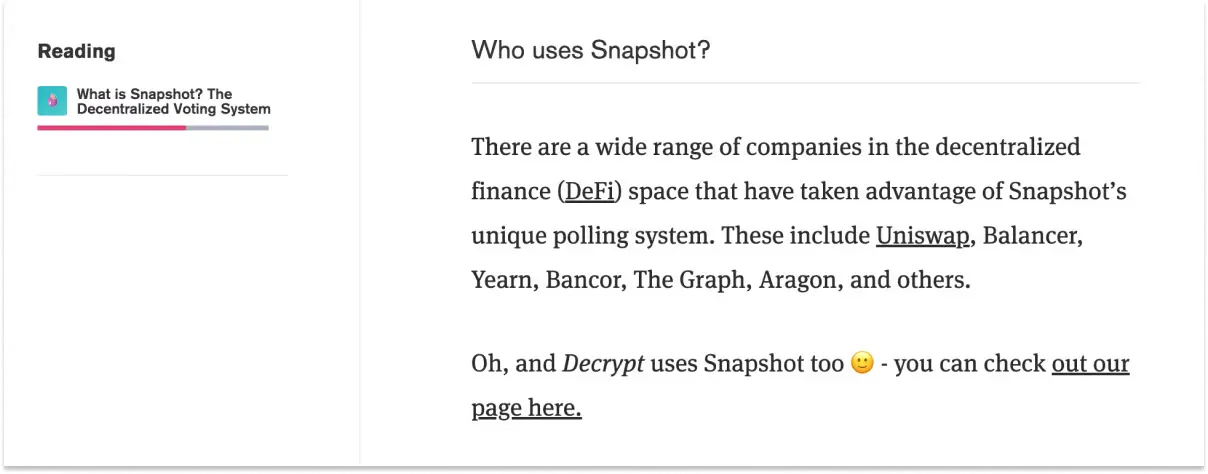
This 2021 Decrypt article guided new users to join Snapshot because they wanted to activate their communities. This is one of many examples of Snapshot's product-driven growth.
Zerion Wallet’s money is NFTs.
When Zerion launched their wallet, they created a Zerion DNA avatar, a dynamic NFT that evolves based on the assets you hold in your wallet. The more money in your wallet, the more "advanced" the NFT becomes. Many people started transferring funds to the Zerion wallet, and for a long time, their NFT was the second-largest NFT collection on the mainnet (after ENS), with over 300,000 holders.
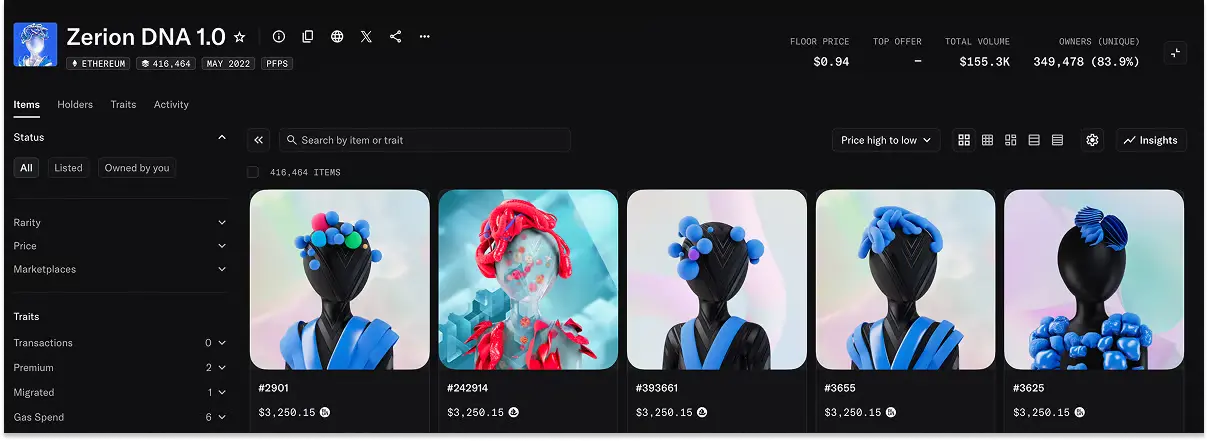
Example of Zerion NFT (they later migrated it from the mainnet to ZERO L2)
Lido is DeFi integration.
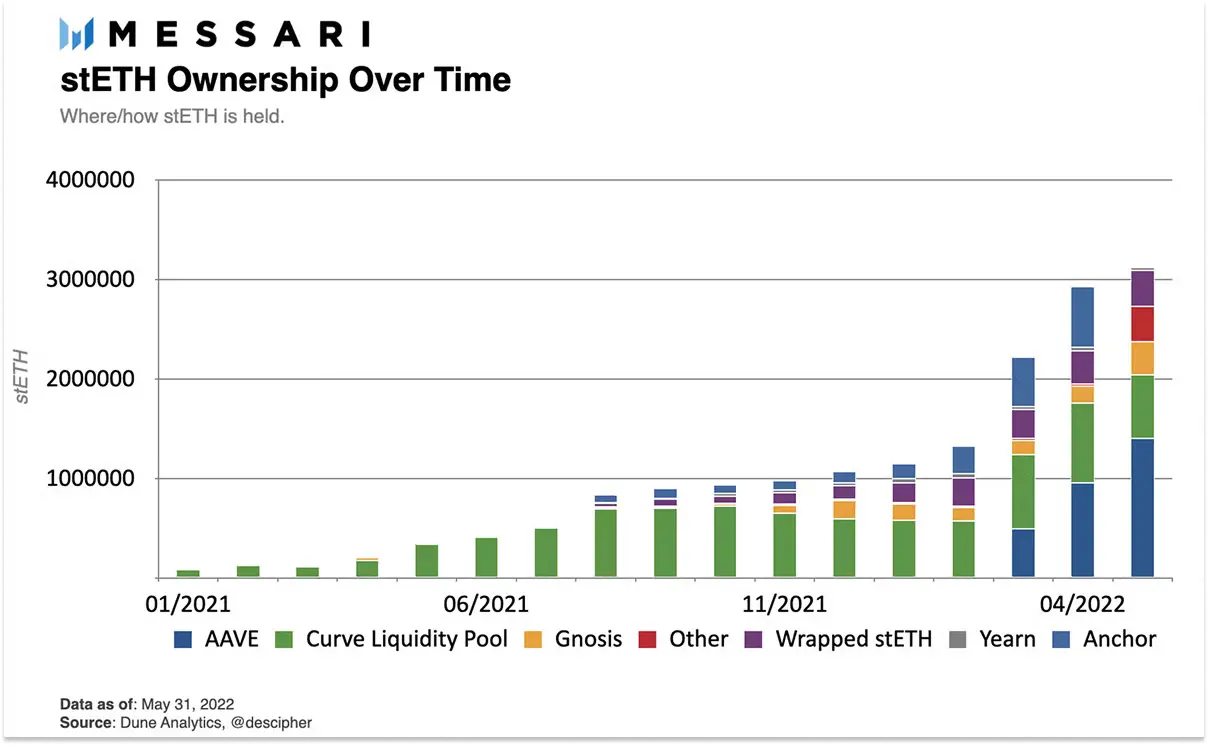
To make Lido work, they needed staked ETH to be convertible to original ETH. Therefore, they spent millions of LDO tokens to incentivize liquidity for the Curve stETH:ETH pool. Later, they established a strong stETH integration with Aave, as those staking ETH were also seeking additional yields, further promoting the project.
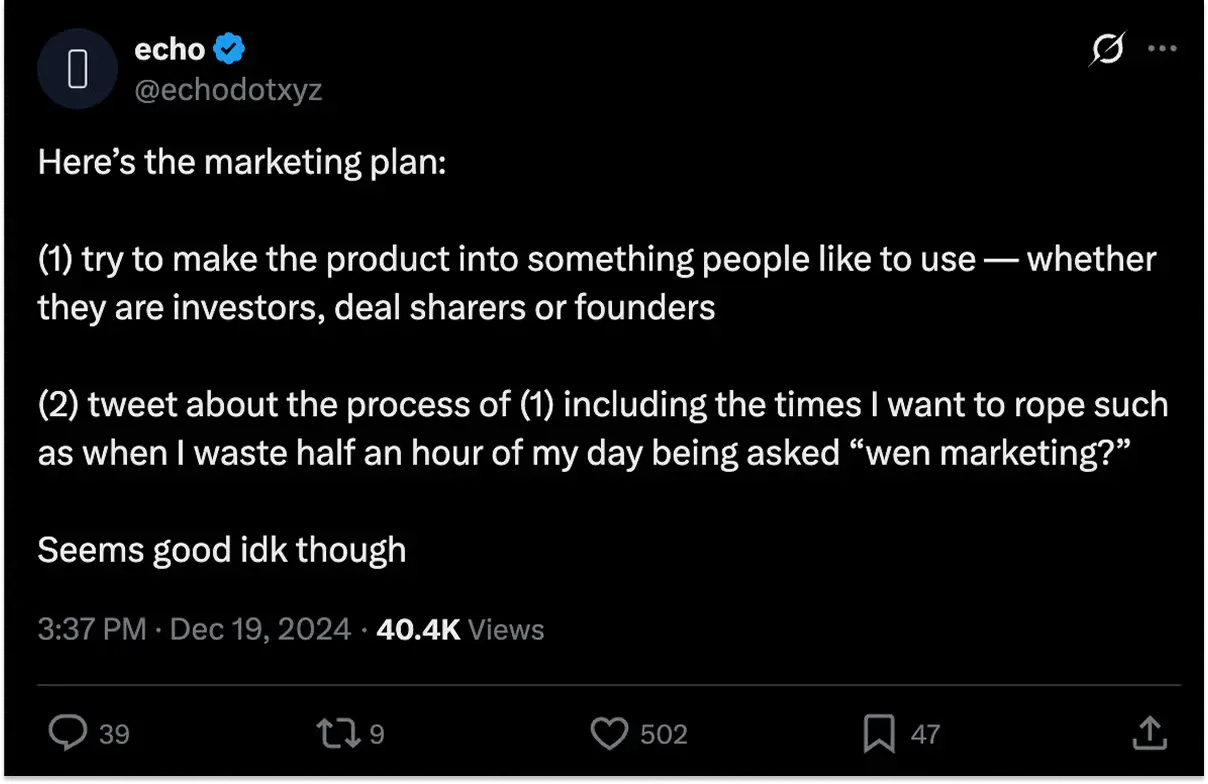
For Echo, it’s KOLs (Key Opinion Leaders).
Promoting Echo is tricky because relevant regulations do not allow people to share investment information outside the platform. But Cobie has been one of the most influential figures in the cryptocurrency space.
So he publicly shared content in his private and project profiles and described early funding issues on his Substack (which Echo solved). Additionally, curators (often well-known crypto investors) would send Echo invitation codes to those wanting to co-invest, helping new users join the app.
For SushiSwap, it was a vampire attack.
In 2020, SushiSwap forked Uniswap and offered high SUSHI rewards to users staking Uniswap LP tokens. With annual interest rates reaching ~1000%, liquidity providers moved their funds, and within weeks, SushiSwap accumulated about $800 million in TVL (approximately 55% of Uniswap's liquidity). This vampire attack propelled SushiSwap to become a top DEX platform, forcing Uniswap to respond by issuing UNI tokens.
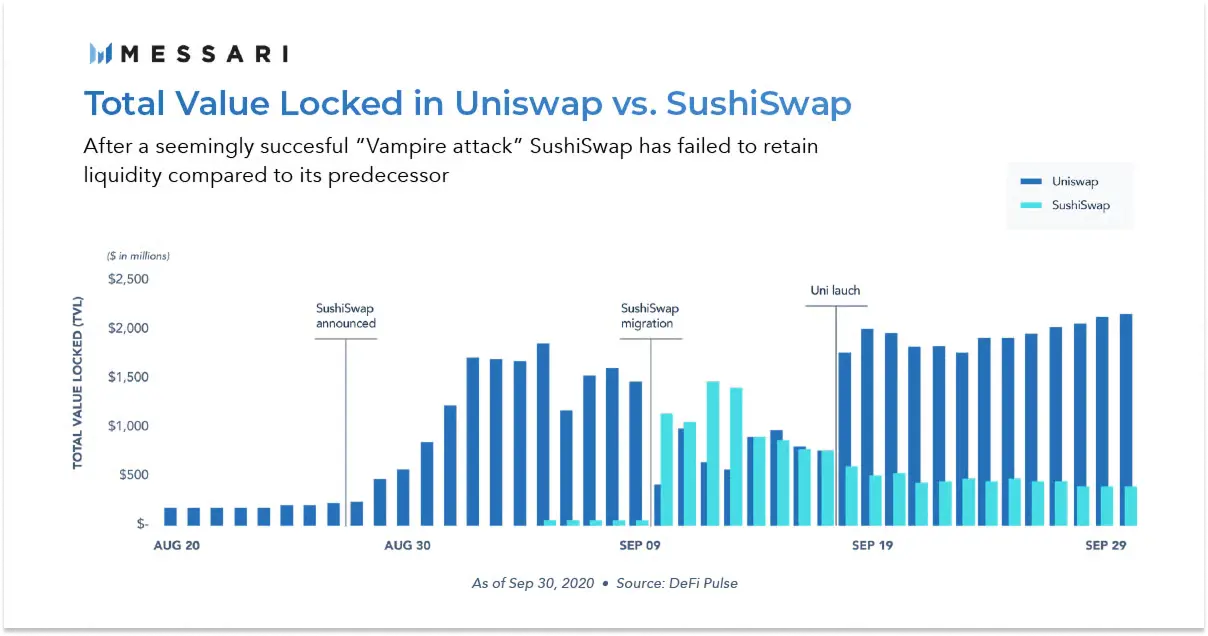
While Uniswap ultimately succeeded in defending their position, the surge in SushiSwap's TVL was quite significant.
For ZORA, it’s DMs.
When ZORA was very focused on art, Dee Goens began DMing people on Twitter and Instagram. He sought sneaker customizers, illustrators, and artists, trying to hard-sell them on why they should mint NFTs. Despite major brands flooding in during the bull market, years later, the Zora team is still DMing potential users.

Example of a conversation Dee had in 2025
For Safary, the key is building a community.
At the beginning of 2022, Safary launched a community for crypto marketers. It was done in batches, and you needed to apply and learn crypto marketing with a batch of 60 to 100 people. They received over 10,000 applications in three years, and when they developed an on-chain marketing analytics product, they already had many marketers they could easily reach.
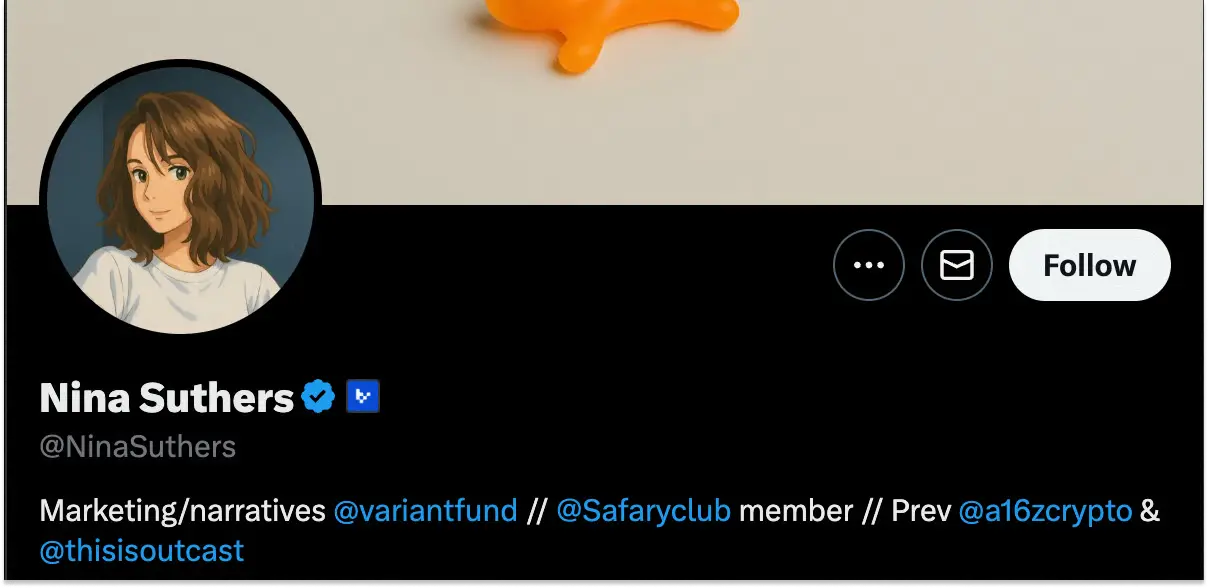
Safary requires community members to note “@Safaryclub members” in their profiles, which increases more distribution channels.
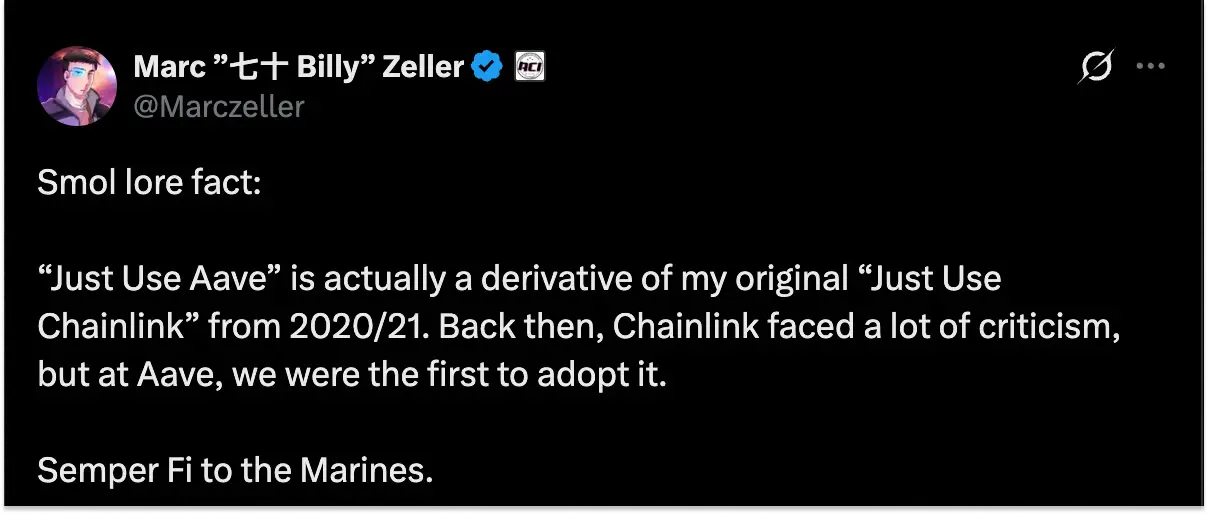
For Aave, it’s leveraging existing communities.
As early as 2020, Aave made a bold move. They chose Chainlink (which had only existed on the mainnet for about 7 months) as their oracle provider and allowed people to use LINK as collateral. This move turned (very passionate) LINK holders into big supporters of Aave, helping to promote the product.
For Fluidkey, it’s Farcaster.
When Fluidkey announced their product, they set up a framework for people to register for a waitlist. They had about 6,000 registered users, but they knew not everyone was a high-quality user.
So when the product was ready, Moritz began manually guiding the earliest 20,000 Farcaster users (which meant they were a carefully curated group). After they had a few hundred users on the app, they built a bot that would DM about 100 users from the list each day and share an access code.
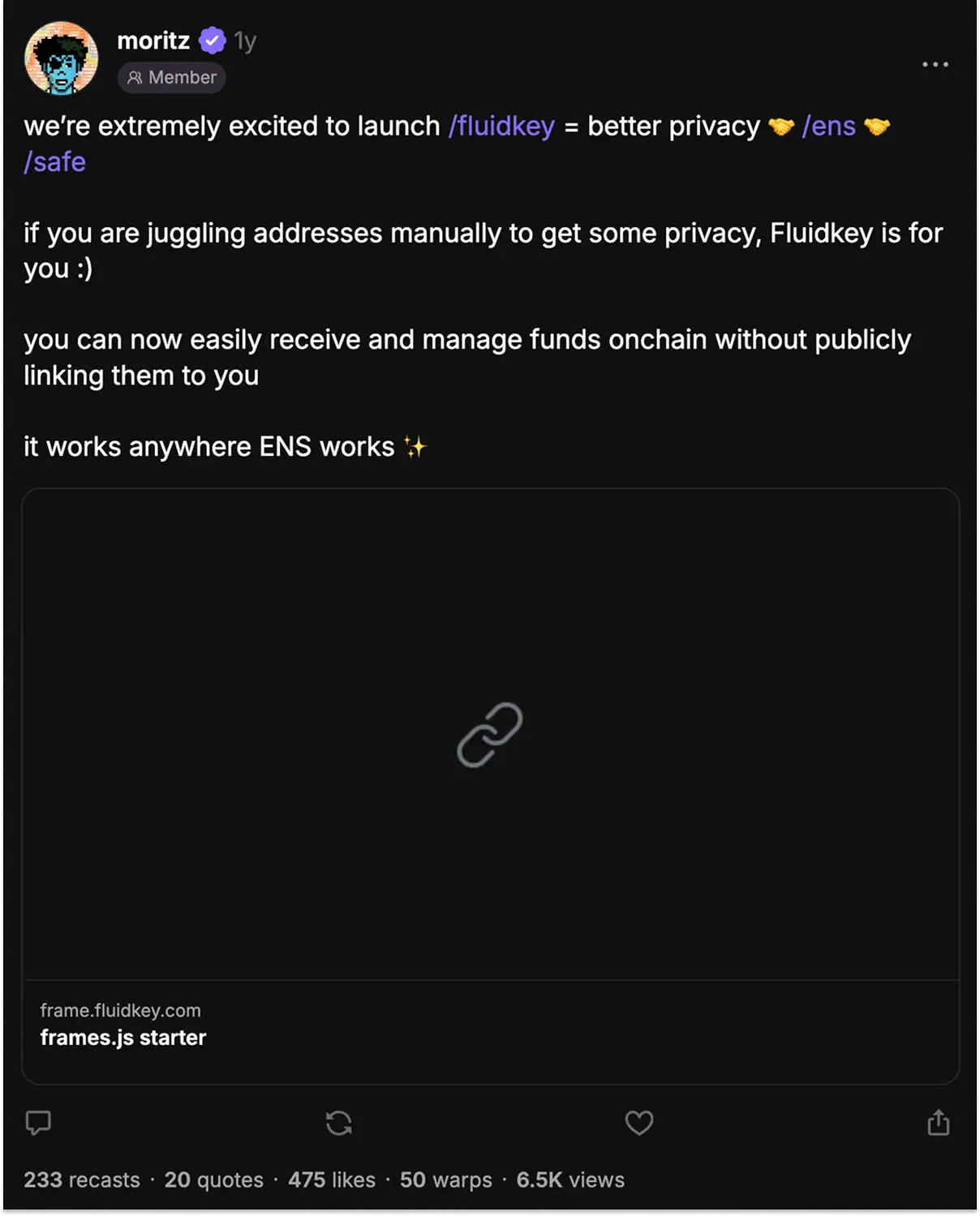
Fluidkey launch post (unfortunately, this framework has since stopped working)
For Rainbow, it’s the React library.
Rainbow developed a clean React wallet connection toolkit and gave it away for free. When developers implemented RainbowKit, their dapps would default to showcasing Rainbow as a top wallet. While developers could choose which wallets to display, most did not change the default settings, which helped build a strong Rainbow brand and attract new users.
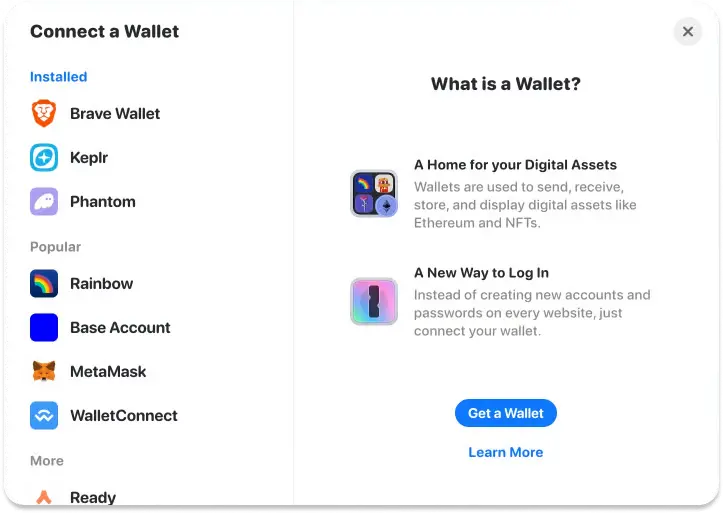
RainbowKit has been used by thousands of applications, and their GitHub repository has 2,700 stars.
POAP is real-time onboarding.
POAP was officially launched at the 2019 ETHDenver conference, where Patricio would ask people for their addresses one by one and manually create POAPs (which was difficult). But this channel has remained effective for them, and since 2021, over 7,000 real users have received the “I met Patricio” POAP.
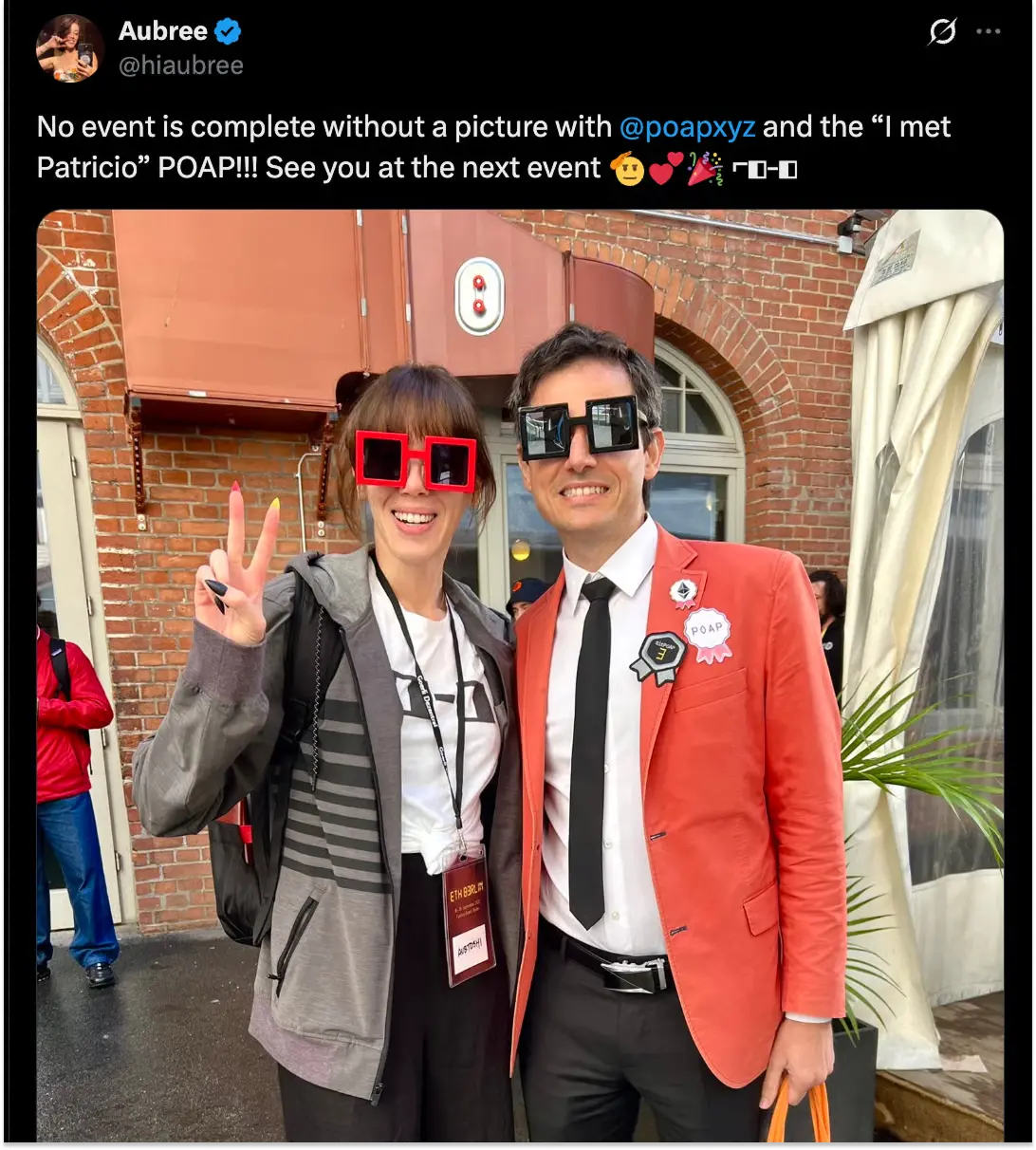
Meeting Patricio at the conference became a meme in the industry :)
Of course, mature products often have multiple channels.
Lido is very active on EthResearch, EthStaker, and r/ethfinance. Fluidkey has support from ENS and security departments. Polymarket has established close partnerships with top media companies. And so on.
But if you are a resource-constrained startup, it’s much better to master one channel before expanding further.
How to Choose Channels
A typical method for choosing channels is:
Browse a list of channels,
Come up with ideas that might suit your startup,
Score them based on cost, ease of testing, signal time, and fit with the product,
Select three channels to test,
Decide which channel to start with.
If you want to describe this process in more detail, just ask your favorite LLM about "Gabriel Weinberg's Bull's Eye Framework."
Channel Testing
Once you’ve selected a channel, you need to understand whether it can bring you users.
The bad news is—just like most product features don’t improve retention, most channel experiments won’t bring in more users.
In other words, growth is probabilistic, not deterministic. It’s a gamble. So you need to find the most certain (highest expected value) bets.
When I was doing growth for Kiwi, I thought our best options were newsletters, r/ethereum, and BD.
We felt newsletters were a good choice because we saw many blog posts about Kiwi. So if someone reads the newsletter, they might also like our app because they could discover more interesting content.
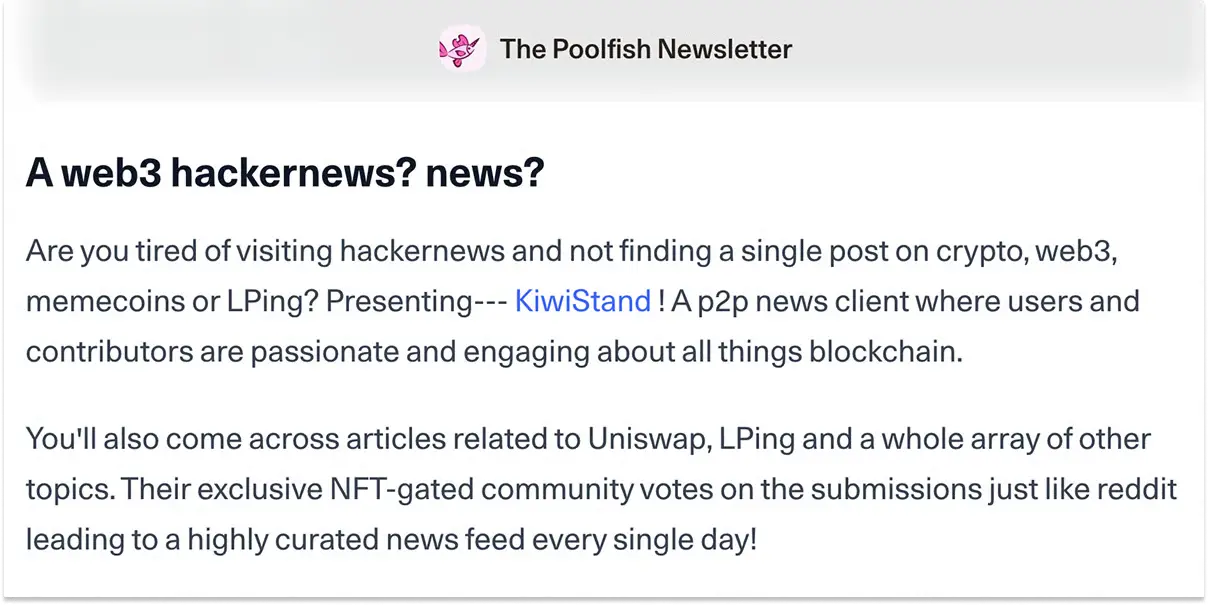
We were mentioned in multiple newsletters, including Poolfish, which focuses on Uniswap LP providers.
We thought since they are advanced DeFi users, they might enjoy our content.
The logic for r/ethereum was that these Reddit users enjoy discussing Ethereum content. Since they care about decentralization, they might be interested in Kiwi (a decentralized hacker news/Reddit-like app). So I would share recap posts there weekly and try to invite those people to subscribe to our newsletter, which would later introduce them to the app.
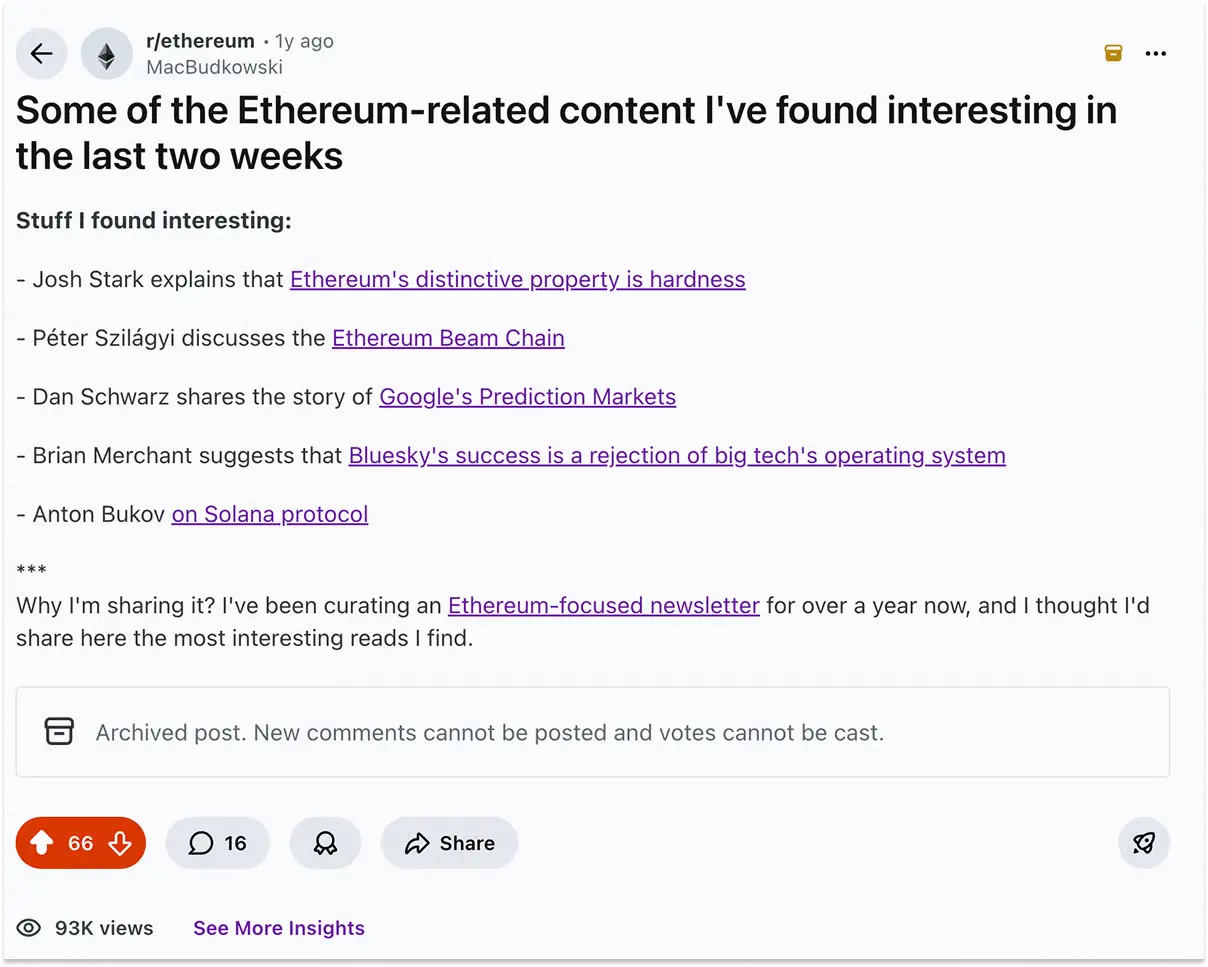
I posted a message—I always tried to find links that people on r/ethereum would be interested in.
In the BD project, we organized a writing competition with Gnosis, Nouns & Lens. We invited community members from Kiwi and our partners to write blog posts, submit them to Kiwi, and compete for a prize pool of thousands of dollars. Although it was a lot of work, the co-marketing with larger projects boosted our brand and allowed us to reach new audiences.
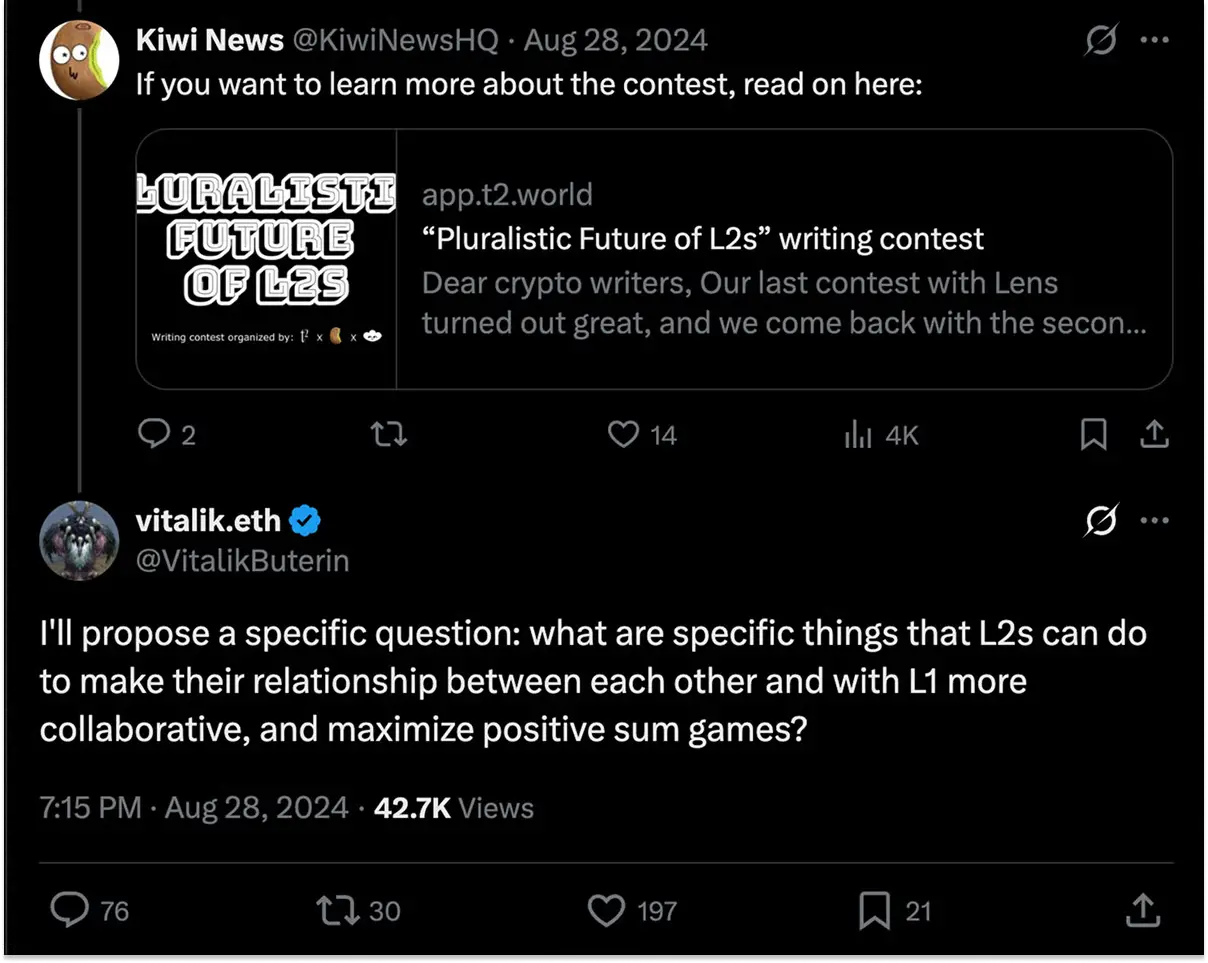
Thanks to the extra exposure from our partners, one of our competition prompts came from Vitalik himself.
My personal way of choosing these bets is that even if we ultimately fail to meet growth targets, we can gain better brand recognition, connections, or understanding of user needs.
In our case, the newsletter and r/ethereum experiments didn’t bring much growth. However, we reached new users and eventually received a podcast invitation and some new users. On the other hand, the writing competition worked very well, so after the first experiment, we doubled down on that channel and organized six competitions within eight months.
Typically, after 2-4 weeks of honest effort, you can judge whether a channel is working. So within a year, you can test 12 to 24 channels, which requires processing a lot of new information.
If you choose a channel, find someone who has had success there to chat with.
Imagine you want to test Twitter but have never tweeted. How good would your tweets be? Probably not very good. So you might think, “Ah, Twitter isn’t suitable for our startup!” But the problem lies in poor execution, not a mismatch with the channel.
The same reasoning applies to production, podcasts, KOLs, TikTok, DMs, and so on.
Channel Check
When you examine a channel, some details can make or break your success.
When we tested whether podcasts were suitable for New Zealanders, we found that most of our appearances didn’t have much impact. But once, at the end of an ENS ecosystem conference, we immediately had 10+ new paid users register. Upon further investigation, we discovered—because Kiwi integrated ENS— their community wanted to test and support our product.
There are many such details, which is why “by the book” testing of channels is essentially a full-time job.
Once you have results, a simple way to check your channel is to answer three questions:
1) How much does it cost to acquire a suitable user through this channel?
The cost here refers not only to how much money you spent but also includes time, effort, and other resources.
The suitable user I’m referring to is not a bot, not someone just looking for airdrops, and not someone who is “just browsing.” In other words, a suitable user is someone who can use the product long-term and fits your product stage. Fit with the product stage is important because you don’t want a lot of average users when the product is in the alpha stage and still requires some crypto expertise.
2) How many users can be reached through this channel?
If you have 10,000 users and need at least 100 new users weekly to meet your goals, then a group chat of 500 people might be too small for you. But if you’re just starting, it might be about right (like Satoshi).
3) If this channel can work, can it scale without exploding?
Can you double down on this channel, increasing from 10 users a week to 1,000 users while acquiring “suitable users” at roughly the same cost and effort? Or will it quickly become saturated and deteriorate? This tells you whether the channel can become your main growth engine or if it’s a small, sharp channel that quickly saturates.
Sometimes you know a channel will saturate quickly, but you just want to “pour more fuel on the fire.”
When BAYC started using CollabLand in 2021, the CollabLand team decided to strike while the iron was hot. So Anjali (one of its co-founders) began DMing all the new NFT communities she could find on Twitter, saying, “Hey, do you want all collectors to join a group together?”
A few weeks later, everyone started using CollabLand, so they stopped DMing users, but that extra effort accelerated user adoption.
Step Four: How to Make Them Understand They Need Your Product
Once you’ve selected the market, segment, and channel, you need to choose the message to convey.
The message is essentially what you tell (or show) users to persuade them to try your product. Your message is what users see in ads, DMs, landing pages, blog posts, presentations, and business development calls. What should you pay attention to?
When someone hears about a new product, they silently ask themselves three questions:
- Does this solve any problems I have right now?
- Does it meet my needs for this type of product?
- How do I know it will work as advertised?
If you don’t help users find answers to these questions, you’ll end up confused as to why people “don’t get it.”
I wrote a separate guide on messaging, so I won’t delve into this topic— you can read the guide here. However, I want to say that messaging is not just about what you write on the landing page (the guide emphasizes this), but also about what you express through channels.
When L2Beat launched, it immediately attracted attention from different teams, and everyone asked, “Why isn’t our project listed on L2?”
This sparked a broad discussion about what L2s are. Then Polygon tried to convince everyone they were L2, but the L2Beat team refuted that. Through discussions on Twitter, they educated the crypto community on the differences between sidechains and L2s, and how L2Beat helps everyone stay informed.
Another example of conveying messages through channels is promoting products to users via podcasts, as EigenLayer does. Or you can be like Hayden, who personally explained why Uniswap makes sense.
That said, a safer approach is to assume users visit your website and know nothing when you educate them from scratch. Remember, Coinbase once explained “What is Bitcoin” on their website in 2013.
Step Five: Handling the Emotional Side
Before we wrap up, there’s one thing to keep in mind—GTM often receives emotional blows.
This is tough because you have to make hard decisions and “go out” to face the cold feedback of the real world.
Here are some things to be aware of:
When you choose a market, you often feel it’s too small. That’s okay.
It’s usually a sign that it’s just right. But remember, a good market should grow as fast as possible—because when the pie is growing, it’s easier to get a slice. That’s why venture capitalists like to see “high compound annual growth rate” markets in proposals.
When you choose this niche, you may doubt whether it’s suitable. That’s normal.
Remember, you’re placing a bet—assuming your first attempt may not be perfect. So when you define your niche as: “DeFi whales doing $100,000 to $500,000 OTC trades in Hong Kong,” your intuition will push you to broaden the scope. Resist that. The real beachhead always feels too narrow—that’s exactly why it’s easy to conquer.
When choosing channels, you might want to do multiple channels at once. Don’t do that.
Validating whether a channel is suitable requires a certain skill. If you spend five times as much time on one channel, you’ll obviously be better at it than spreading the same time across five channels. Additionally, if you can complete testing in four weeks, you’ll have plenty of time to explore other channels.
When messaging, you may feel like you’re getting dumber. It’s not like that.
Ask your favorite large language model about the “curse of knowledge.” Making your message boring is very important. Not because your users are dumb, but because they are busy. If they’re quickly skimming your message in an elevator, they should be able to “get it right away.” You can also elaborate in documentation or on your website.
Your GTM efforts may seem awkward, slow, or uncertain. That’s okay.
It’s fine because you should feel awkward (when doing new things), slow (when learning new channels), and uncertain (when placing bets). The good news is, you just need to nail one channel to elevate your startup to a new level.
免责声明:本文章仅代表作者个人观点,不代表本平台的立场和观点。本文章仅供信息分享,不构成对任何人的任何投资建议。用户与作者之间的任何争议,与本平台无关。如网页中刊载的文章或图片涉及侵权,请提供相关的权利证明和身份证明发送邮件到support@aicoin.com,本平台相关工作人员将会进行核查。


