On the timeline of June 30, 2026, OKX launched the decentralized platform OKX.AI aimed at the Agent economy, shouting, "One person is a world-class company"; on the same day, Privy in collaboration with Stripe connected payment cards directly to DeFi vaults, JPMorgan expanded its enterprise-level on-chain settlement currency to 8 types, SK Hynix pre-ordered about 400 billion Korean won of testing equipment including HBM4, and eight departments including China's Ministry of Industry and Information Technology included the goal of "50,000 industrial 5G private networks by 2030" in policy opinions. NVIDIA opened recruitment for embodied intelligence and robotics teams in Beijing, Shanghai, and Shenzhen, and Morgan Stanley and TrendForce emphasized the sustainability of AI demand and wafer foundry price increases in their reports for 2027-2028; these actions, originally scattered among exchanges, payment giants, Wall Street banks, semiconductor factories, ministries, and chip design companies, were pieced together on this day into a continuous chain from computing power, industrial networks to Agent platforms and multi-currency settlements—traditional finance and payment systems began racing on the same infrastructural pipeline as crypto-native platforms, with the boundaries between CeFi and on-chain protocols intentionally thinned, while rising capital expenditures, policy planning, and demand expectations around AI and blockchain opened a new medium-to-long-term repricing window for BTC, ETH, and various AI narrative tokens.
OKX.AI Bets on Agent Economy: From Application to Intelligence
On this infrastructure chain lengthened by computing power and networks, OKX chose to place its bet on the "intelligence" itself. On June 30, 2026, OKX released the decentralized platform OKX.AI for the Agent economy, with the slogan "One person is a world-class company." The platform supports AI Agents to publish tasks, accept tasks, make payments, evaluate, and arbitrate. Star summarized this shift as "For the past twenty years, the world has been restructured around Apps; for the next ten years, the world will be restructured around Agents," further emphasizing that Agents will serve people, employ Agents, and pay Agents. OKX.AI introduces multi-party participation and arbitration mechanisms in its design, bundling task fulfillment, dispute resolution, and programmable payment within the same decentralized settlement architecture, meaning that part of future on-chain interactions will no longer occur in "human to contract," but in an automated network of "Agent to Agent."
From the perspective of transaction structure, this narrative provides a new risk preference anchor for the AI + crypto sector. The market has already divided AI + blockchain projects into independent sector trades, and the rhythm of OKX.AI's rollout and ecological expansion will naturally become one of the triggers for sentiment and valuation in this sector: once substantial tasks and funds begin circulating between Agents, there will be a motive for funds to rotate from traditional public chain narratives (generic L1, public chain expansion, etc.) to the "Agent infrastructure" track, shifting the valuation focus from simple throughput metrics to who can provide a more efficient settlement and arbitration environment for Agents. In the medium to long term, if automated Agents truly begin to autonomously publish tasks, make payments, and distribute earnings on-chain, they will become a new source of liquidity, creating a more sustained, machine-driven flow of funds among BTC, ETH, and various AI-related tokens, thereby altering the transaction structure, volatility paths, and cross-asset correlations of these assets.
Direct Card Connection to DeFi Vaults: Banks and On-chain Funds Shake Hands
If, at one moment, the money that Agents earned on-chain was still trapped in the vault, the Privy and Stripe co-branded card introduced a payment channel for this money. Users no longer need to perform a "manual withdrawal – fiat account – then consumption" three-step operation. Instead, at the moment of swiping the card, the card directly connects to the DeFi vault in the background to complete the settlement with on-chain assets. The change in macro variables is this: the inflow and outflow of funds is no longer a discrete event but becomes a continuous flow in daily consumption; DeFi income assets have obtained near-cash liquidity, and on-chain yield has shifted from an "investment product" to an instantly consumable "wage flow." This will elevate the marginal attraction of high-yield vaults, as the opportunity cost of holding these assets has been compressed to card swipe rates and a bit of settlement delay, rather than an entire set of complex withdrawal pathways.
Correspondingly, JPMorgan's Kinexys expanded the settlement currency on the enterprise-level blockchain to 8 types, newly including Australian dollars, Hong Kong dollars, Japanese yen, Chinese yuan, and Singapore dollars, transforming the on-chain settlement, originally centered on a single currency, into a multi-currency network. Kinexys targets cross-border settlements and fund transfers for institutional clients, and the macro variable it changes is the distribution structure of fiat currencies on-chain: the US dollar is no longer the sole settlement "main chain," but is surrounded by a basket of currencies. At the front end, the consumption card binds individuals to on-chain vaults; at the back end, the multi-currency settlement network allows different fiat currencies to interconnect directly on-chain. These two ends combined mean that the funding structure has the opportunity to migrate from a single dollar standard to a multi-currency, multi-chain coexistence pattern. For the crypto market, the monopoly premium of on-chain dollar assets may be weakened, and BTC and ETH's roles as cross-currency neutral collateral might be magnified, with the valuation gap between them and various on-chain dollar assets reflecting more the competition of global multi-currency interest rates and settlement networks rather than just a discount on single-dollar liquidity.
HBM4 Equipment Order Surge: AI Computing Power Capital Expenditure Increases
Looking upstream from the narrative of multi-currency on-chain settlement, SK Hynix's approximately 400 billion Korean won order for about 200 semiconductor testing devices (including HBM4 testers) sends a more straightforward signal: the physical capacity of AI computing power has not peaked, but is instead preparing capital expenditures for the demand surge expected around 2027. AI chips and high-bandwidth memory are the current key bottlenecks in infrastructure. By choosing to significantly secure testing capacity at this time, SK Hynix effectively shifts the market's narrative of "AI as a short-cycle bubble" to a medium-to-long-term story of "at least one complete manufacturing expansion cycle." Morgan Stanley emphasizes that the market has underestimated the sustainability of AI demand in 2027-2028 and the pricing power of TSMC; TrendForce reminds that new wafer factories will mainly go into mass production between the second half of 2027 and 2028, and the price increase effects of mature processes may extend into 2027. The intersection of these two studies and SK Hynix's orders creates a clear macro variable: in the next two to three years, the cost curve of computing power and supply will evolve along a "high CAPEX, high price, slow decline" path and will not quickly revert to the low-cost equilibrium of the past.
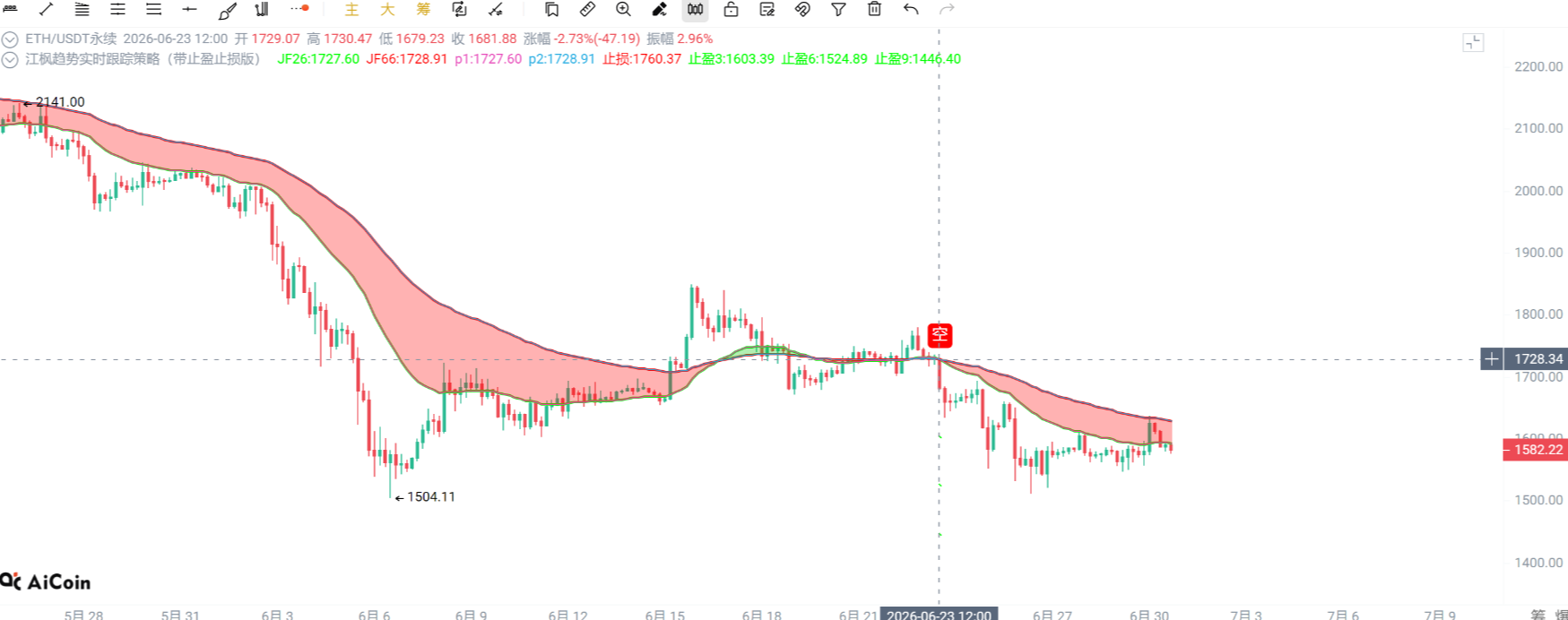
For the on-chain world, this supply curve is not abstract. The valuation of "computing assets" like ETH fundamentally anchors on two things: one is how much genuine computing and settlement demand it can bear, and the other is how high the corresponding physical computing cost is behind it. When AI hardware capital expenditures are firmly locked within the high-boom range of 2027-2028, the market will be more inclined to view ETH as a long-term contract linked to scarce high-cost computing resources, rather than a simple on-chain liquidity receipt; AI computing-related tokens and crypto assets strongly bound to AI themes will also be repriced as claims tools on "expensive computing," rather than mere narrative speculation chips. Specifically regarding transaction structure, this means that in a phase where hardware CAPEX is clearly on the rise, the risk premiums of ETH and AI concept tokens may no longer simply follow dollar liquidity, but reflect more the resonance strength between AI hardware prices, the cycle of wafer foundry price increases, and actual on-chain computing power demand.
50,000 Industrial 5G Private Networks: Machines Begin to Take Over Factories
When the Ministry of Industry and Information Technology and eight other departments stated in documents, "50,000 industrial 5G private networks to be built before 2030," the macro variable quietly rewritten is not mobile signals, but "machine access density" and "industrial data bandwidth limits." Industrial 5G private networks serve closed scenarios like factories and logistics, welding together previously sporadically distributed robots and sensors into a network that can be uniformly orchestrated. Coupled with the rigid demands of embodied intelligence and industrial robots for local computing, edge computing, and high-reliability communication, this essentially pre-books a "capacity curve" for the industrial internet and machine interconnection—by 2030, not only people will be able to connect to the internet, but there will also be an exponentially larger number of machine nodes.
NVIDIA has opened positions for embodied intelligence, simulation, deployment, and solution architecture for its robotics team in Beijing, Shanghai, and Shenzhen, adding a time coordinate to this curve: industrial and service robots are not abstract stories, but are engineering projects accelerating their landing in first-tier cities. The dual expansion of networks and computing power directly gives rise to the demand for automated settlement and data transactions between machines: robots will pay for task division, equipment rental, and data supply, with humans merely defining the boundaries. For the crypto market, this means that low cost, high throughput, fair settlement chains will transform from "optional" to being the infrastructure of the machine economy, with IoT-related tokens no longer just a conceptual theme, but a suite of long-term options reflecting the growth of "machine traffic" and "industrial data markets." General settlement layers like ETH will be re-evaluated in the narrative as the underlying clearing assets of the robot network and the intelligence economy, with their valuations increasingly constrained by the scale of machine interconnection and the actual realization of on-chain M2M settlement demand.
From Narrative to Profit: Crypto Bets in the Age of Intelligence
This round of multiple investments from OKX.AI, the Privy/Stripe card, to Kinexys’ multi-currency settlements, SK Hynix's procurement of testing devices, the Ministry of Industry and Information Technology’s goal for industrial 5G private networks, and NVIDIA's recruitment for its robotics team essentially pulls the "Agent economy" narrative from storyboard to production line. The 2027-2028 AI boom window provided by Morgan Stanley and TrendForce offers a tradeable timeline for this narrative and implies that capital expenditures around computing power and machine interconnection are likely to continue providing macro backing for BTC, ETH, and AI-related tokens in the coming years. More critically, the Privy/Stripe payment card directly connecting to on-chain vaults and Kinexys’ expansion to a network of 8 currencies start pushing on-chain income assets from "book income" towards "consumable cash flow": when the interest from leading DeFi vaults can be directly converted to real expenditures through card swipes, and when enterprises settle goods payments on a multi-currency network on chains, the valuational center of quality protocols and mainstream public chains will naturally gravitate towards "cash flow assets." For investors, the next key indicators to monitor should not be the thematic elasticity of a single token, but three sets of metrics: the real task volume and settlement scale of Agent platforms like OKX.AI, the penetration speed of the Privy/Stripe card, the adoption curve of Kinexys among cross-border enterprises, and how the capital expenditures rhythm of AI firms like SK Hynix feedbacks through risk preferences and liquidity premiums to the valuations of BTC, ETH, and the AI sector. In this arms race of the Agent economy, BTC remains the beta asset carrying the entire AI macro cycle, while ETH and infrastructure tokens around computing power, data, and robot networks are more directly pricing this new cycle's risk premiums and growth potential, with the key being whether they can steadily translate long-term AI demand and machine interconnection into sustained profitability on-chain.
Join our community to discuss together and become stronger!
Exclusive Hyperliquid benefits for AiCoin: https://app.hyperliquid.xyz/join/AICOIN88
Exclusive Aster benefits for AiCoin: https://www.asterdex.com/zh-CN/referral/9C50e2
On-chain Telegram community: https://t.me/AiCoinWhaleData
On-chain community: https://www.aicoin.com/link/chat?cid=N6OVMor5g
AiCoin on-chain Twitter: https://x.com/aicoinwhaledata
免责声明:本文章仅代表作者个人观点,不代表本平台的立场和观点。本文章仅供信息分享,不构成对任何人的任何投资建议。用户与作者之间的任何争议,与本平台无关。如网页中刊载的文章或图片涉及侵权,请提供相关的权利证明和身份证明发送邮件到support@aicoin.com,本平台相关工作人员将会进行核查。