In the same time window, several seemingly unrelated narratives intertwine: on one side is GameStop's continued push to acquire eBay for approximately $56 billion in cash and stock by around June 30, 2026, attempting to ignite sentiment in the U.S. stock market with the story of “merging to challenge Amazon”; on the other side, the USD/JPY broke the 162 level in June, a first since December 1986, coupled with the reduction of the U.S. strategic oil reserve by about 5.5 million barrels to 325.7 million barrels, reaching the lowest level since 1983, as macro pressures rise in foreign exchange and energy markets; meanwhile, the on-chain world digests bad debts on another timeline—the bankrupt Stream Finance has begun registering creditors, with “global reconciliation” entering the execution phase, as the crypto fear and greed index dropped to 15, labeled “extreme fear.” On the same day, Serenity publicly increased his stake in humanoid robotics companies like Agility Robotics and Unitree, as tech funds continued to bet on the next high-beta track. The stock market still chases high-risk stories, foreign exchange and commodities are repricing macro variables, but crypto assets collectively shrink into a high-volatility lightning rod. The true change behind this disparity is not the disappearance of “risk appetite,” but rather the way funds are requeued and reselecting risk exposure between U.S. stocks, foreign exchange, commodities, and on-chain assets.
GameStop's $56 Billion Gamble and Sentiment
When GameStop proposed an acquisition of eBay for about $56 billion in cash and stock in May, the market immediately saw that the size of this deal far exceeds its traditional game retail business. eBay had already issued a rejection that month, but GameStop reiterated its commitment to pursue the merger, alongside CEO Ryan Cohen's claim that “post-merger, we will more vigorously challenge Amazon,” which felt more like a high-risk sentiment pressure test thrown into the equity market: who is still willing to pay for such an imbalanced story that poses a significant integration challenge? In fact, GameStop forecasts that its EBITDA for the 2026 fiscal year will exceed $600 million, which adds a layer of “fundamentals packaging” to this gamble, providing a numerical anchor for interested investors to recount in investment committee discussions, rather than relying solely on emotional impulse.
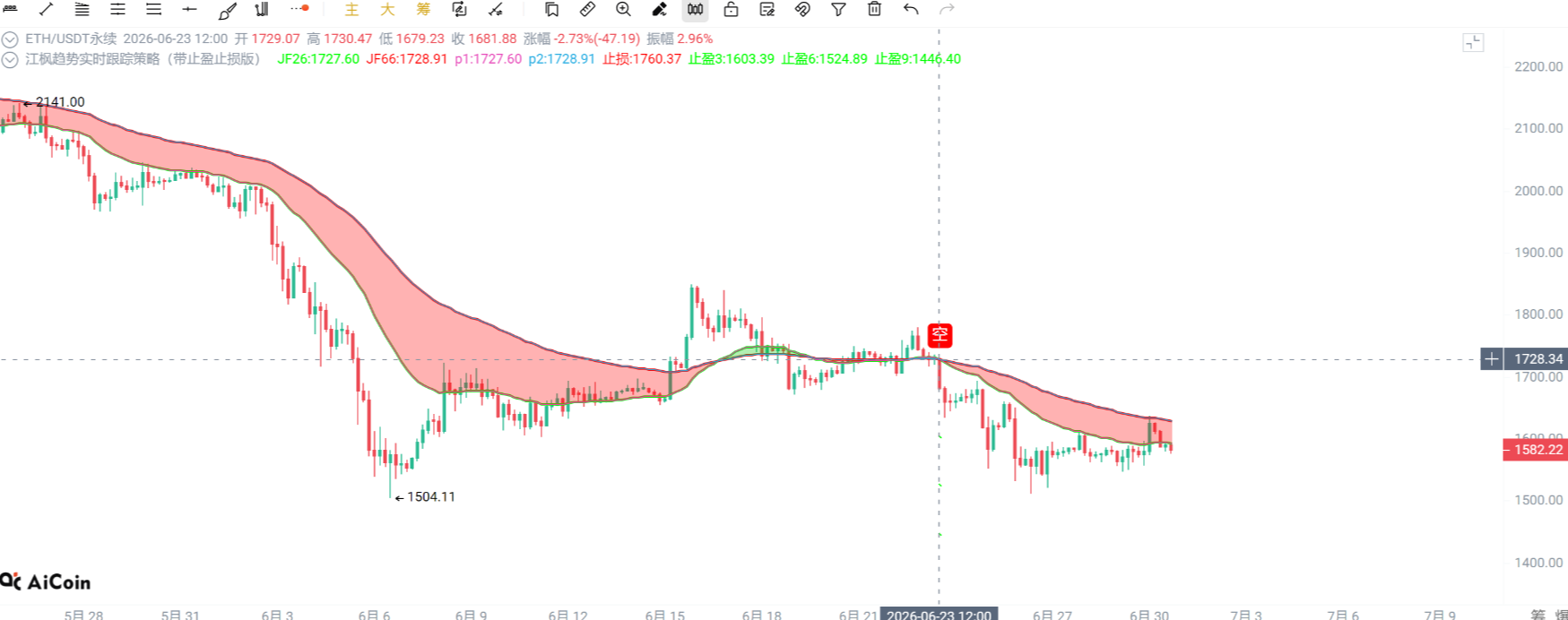
This structural signal sharply contrasts with the on-chain world: at GameStop, U.S. stock investors still pay a premium for future integration dividends and the narrative of “challenging Amazon”; however, at the same time, the crypto market's fear and greed index has dropped to 15, indicating extreme fear, with blue-chip on-chain assets like BTC and ETH being sold off as they are seen as necessary to quickly reduce volatility exposure. Venture capital has not disappeared from the global financial system but is realigning between compliant equity stories and high-volatility on-chain assets—some are willing to queue at the front for such a $56 billion gamble as GameStop, while others choose to reduce their positions in crypto. This lateral redistribution itself, serves as the starting point for subsequent changes in on-chain risk premiums and capital flows.
Yen Breaks 162 and Oil Reserves at New Low
When the USD/JPY broke 162 in June 2026, returning to a range not seen since December 1986, what the forex market truly triggered was a restructuring of global funding costs. The Bank of Japan maintains ultra-loose monetary policy, while the Federal Reserve has completed a cycle of interest rate hikes, stretching the Japan-U.S. interest rate differential to extreme positions, with the past few years' carry trades based on cheap yen passively amplifying the leverage exposure to dollar assets. Once the yen accelerates its depreciation to a psychological level like 162, fund providers begin to reprice “what currency and at what cost” to hold global risk assets. This rebalancing inherently raises the implied discount rate for all dollar-denominated assets, placing downward pressure on the valuations of high-volatility assets.
Simultaneously, U.S. strategic oil reserves fell by approximately 5.5 million barrels to 325.7 million barrels in late June, the lowest level since 1983, while prior to this, to address supply gaps related to conflicts in Iran, the U.S. planned to release about 17.2 million barrels of reserves. Oil reserves hitting a forty-year low means that every future geopolitical disturbance is more easily interpreted by the market as actual inflation and supply risks rising, resulting in higher demands for nominal yields. Under dual pressures from violent exchange rate fluctuations and dwindling energy security buffers, global liquidity is priced higher, and on-chain assets like BTC and ETH, viewed as high beta and long-duration, face rising discount rates and expanded risk premiums, which directly compress the stories that can be told and the valuation ranges that the market is willing to pay.
Fear Index at 15 and Crypto Sell Pressure
When the fear and greed index fell to 15, indicating an “extreme fear” level, the valuation compression from rising discount rates quickly gets magnified by a chain reaction at the emotional level. On a scale from 0 to 100, 15 means that most market participants have slid from “wait-and-see” to “survival,” with any negative news interpreted as a sell signal. Macroeconomic uncertainty and on-chain bad debts have combined into a single story: high leverage and high beta must be liquidated. Under this psychology, Altcoins and long-duration DeFi projects are the first to be reduced—these sectors, with the weakest liquidity and least compelling narratives, are used to “fill gaps” for margin and fiat positions, while dollar assets and relatively robust BTC and ETH become short-term safe havens. On-chain, we see high-risk token trading volumes drop, as redeeming dollar-pegged tokens and paths to exchanges change, with selling pressure concentrated on the segments least able to bear it.
But it is not only retail investors who view emotional scales as a “thermometer.” Hedge funds are more accustomed to treating such sentiment indices as contrarian signals: when the scale drops to extreme areas, it indicates that passive selling and panic liquidations are approaching a phase-bound extreme, making future incremental sell pressure more manageable. Historical experiences show that multiple times when the fear index was extremely low, BTC later recorded positive returns in the medium to long term, although the path is not smooth; therefore, capital begins to establish BTC and ETH long positions in batches within extreme fear ranges, or pairing with high-beta Altcoins to bring in the market's collectively “handed-in chips.” Emotional readings themselves do not reverse macro variables but rearrange who is forced to exit at this price range and who is qualified to become the counterparty in the next round of volatility.
StreamFinance Liquidation Spread
As emotions bottom out, it is truly events like Stream Finance's credit issues entering the liquidation phase that cause on-chain funds to recalculate their “price lists.” This protocol first disclosed its liquidation intentions in May 2026, with the market then mostly anticipating the scale of bad debts; by late June, Stream Finance officially initiated creditor registrations and so-called “global reconciliation,” meaning losses began to passively distribute among token holders and institutional borrowers. The on-chain version of “who pays the bill” is no longer an abstract discussion. From this point on, for observing funds, any seemingly safe yield farm and lending pool must mentally add a “Stream discount,” forcing the original yield curve to shift upward as a whole.
The direct consequence of DeFi bad debts and protocol liquidations is the sale of pledged assets and soaring yields in related pools, which corresponds to a sudden widening of spreads in traditional credit markets. On-chain lending rates are themselves real-time credit spreads: when a major protocol reaches the step of creditor registration, investors will demand higher risk compensation from all similar structured protocols, otherwise they prefer to only hold high liquidity core assets like BTC and ETH for their beta, rather than chase a few extra percentage points of on-chain yield. The result is a broad repricing of the DeFi sector, with long-tail project valuations and financing capabilities squeezed by the spread, leading funds back to mainstream assets that can be liquidated at any time. This round of liquidation spread triggered by Stream Finance will suppress DeFi valuations for a long time until the on-chain market provides an accepted “risk-free” yield curve.
Humanoid Robot Hype vs. On-Chain Chill
As on-chain yield curves are being rebuilt, risk budgets are quietly occupied by other narratives. Serenity’s article on June 30 straightforwardly stated: his largest position in the humanoid robot field is in Agility Robotics, emphasizing a preference for U.S. companies while also paying attention to companies like Unitree. From the funding perspective, this represents a typical “track migration”—moving from on-chain financial engineering to tangible, marketable humanoid robots and AI hardware. Especially in 2025-2026, this track is itself a focal point for global tech capital, interwoven with the bull and bear rhythms of crypto, making it hard for investors to ignore the discount on on-chain experiments when they recognize that the same risk budget can purchase robots, models, or factories.
This is also why, when the crypto fear and greed index falls to 15, entering “extreme fear,” the external world continues to drive up valuations for humanoid robots and AI sectors. The movement of funds within risk assets always resembles sector rotation rather than all high-beta assets igniting simultaneously: on one side, BTC and ETH are treated as “relatively safe assets” during position reductions, while long-tail DeFi is pressured by high spreads; on the other side, equity, private equity, and venture funds are transferring the portion of premium originally willing to gamble on-chain into bets on hard-tech companies like Agility Robotics. Consequently, the medium to long-term valuation premium for crypto no longer tells the story of “no counterparties” but must once again prove its worth in front of new competitors in robots and AI.
Crypto Chips After the Panic Cycle
In this current timeline, GameStop continues pushing its $56 billion acquisition of eBay, the USD/JPY breaking below 162 reflects the selling pressure under the Japan-U.S. interest rate disparity, U.S. strategic oil reserves have been consumed to the lowest levels since 1983, Stream Finance has entered the “global reconciliation” phase, and on-chain bad debts are beginning to materialize, while Serenity publicly places large stakes in humanoid robotics companies on June 30—within the same window, cross-market funds are continuously switching seats between high-risk mergers, currency depreciation, defensive energy allocations, DeFi credit repricing, and new hard-tech windfalls. The pricing framework for BTC and ETH is thus dismantled and reorganized: in the short term, the crypto fear and greed index falling to 15, with extreme fear compounded by a high interest rate environment, implies rising discount rates and shrinking risk budgets, with their volatility driven more by macro rate expectations and risk aversion sentiment; in the medium to long term, it returns to a more brutal question—within the spectrum of global risk assets, are BTC and ETH really “must-haves,” and can they continue to serve as the revaluation center for crypto blue chips in light of new narratives like robots and AI? Key variables to watch include: whether the yen and oil prices break the current trends, the next steps of the Fed and Bank of Japan regarding spreads and liquidity, the pace of resolving on-chain bad debts like those of Stream Finance, and whether technology tracks like humanoid robots can continue to attract incremental funds, as the true determinants of the next round of crypto chip values will be how these variables rearrange the global risk budget.
Join our community to discuss and get stronger together!
Exclusive Hyperliquid benefits for AiCoin: https://app.hyperliquid.xyz/join/AICOIN88
Exclusive Aster benefits for AiCoin: https://www.asterdex.com/zh-CN/referral/9C50e2
On-chain Telegram community: https://t.me/AiCoinWhaleData
On-chain community: https://www.aicoin.com/link/chat?cid=N6OVMor5g
AiCoin on-chain Twitter: https://x.com/aicoinwhaledata
免责声明:本文章仅代表作者个人观点,不代表本平台的立场和观点。本文章仅供信息分享,不构成对任何人的任何投资建议。用户与作者之间的任何争议,与本平台无关。如网页中刊载的文章或图片涉及侵权,请提供相关的权利证明和身份证明发送邮件到support@aicoin.com,本平台相关工作人员将会进行核查。