The American political arena and global financial markets have just experienced a severe "earthquake." Just this past weekend, three major events ignited almost simultaneously: the tariff stick that Trump was so proud of was directly interrupted by the Supreme Court, with over 100 billion dollars in taxes facing refunds; clouds of war gathered over the Gulf, with the US military carrier strike group on edge; and Bitcoin, which was supposed to serve as "digital gold" to hedge against risks, unexpectedly staged a high dive, forming a "horn shape" with soaring physical gold.
This series of abnormal signals is revealing a deep truth to global investors: when a real storm strikes, money recognizes only the oldest sense of security.
1. The trillion-dollar tariff policy "flips," and Trump rushes to patch it up
● On February 20, it was undoubtedly an embarrassing "Waterloo Day" for Trump, who held the "trade stick" high. The US Supreme Court made a significant ruling with a 6 to 3 result, determining that the Trump administration's previous invocation of the International Emergency Economic Powers Act to levy large-scale tariffs was an overreach and illegal.
● This is no small sum. According to the ruling, tariffs levied based on nine executive orders signed since February 2025 under this law will no longer be valid, meaning US Customs will have to stop collecting the relevant taxes and faces the embarrassing situation of having to refund over 100 billion dollars to businesses.
○ The White House attempted to downplay the impact in the public opinion arena, but the body was honest——the Customs and Border Protection under the Department of Homeland Security issued a notice overnight, officially ceasing the collection of the deemed illegal tariffs starting February 24.
● However, Trump clearly is not willing to admit defeat. On the very day the ruling was announced, he quickly signed a new executive order, attempting to "patch" according to Section 122 of the Trade Act of 1974, announcing a 10% temporary import surcharge on global goods, and quickly stated on social media that he would raise the tax rate to 15%.
● But this move is more like a political "tightrope walk." According to Section 122, this new tariff can only last for a maximum of 150 days, unless Congress approves an extension.
○ The market knows this very well: it is just a temporary "band-aid," and the uncertainty of US trade policy has been further amplified. As pointed out by Caitong Securities Research Institute, the rejection of the IEEPA act, while theoretically beneficial for risk assets in the short term, increases the sense of chaos in global trade.
2. Carriers and Negotiations: The US-Iran Situation Ignites the Gold "Powder Keg"
If the tariff issue merely left the market feeling confused, then the rapidly escalating US-Iran confrontation in the Middle East directly ignited the tinder of safe-haven sentiment.
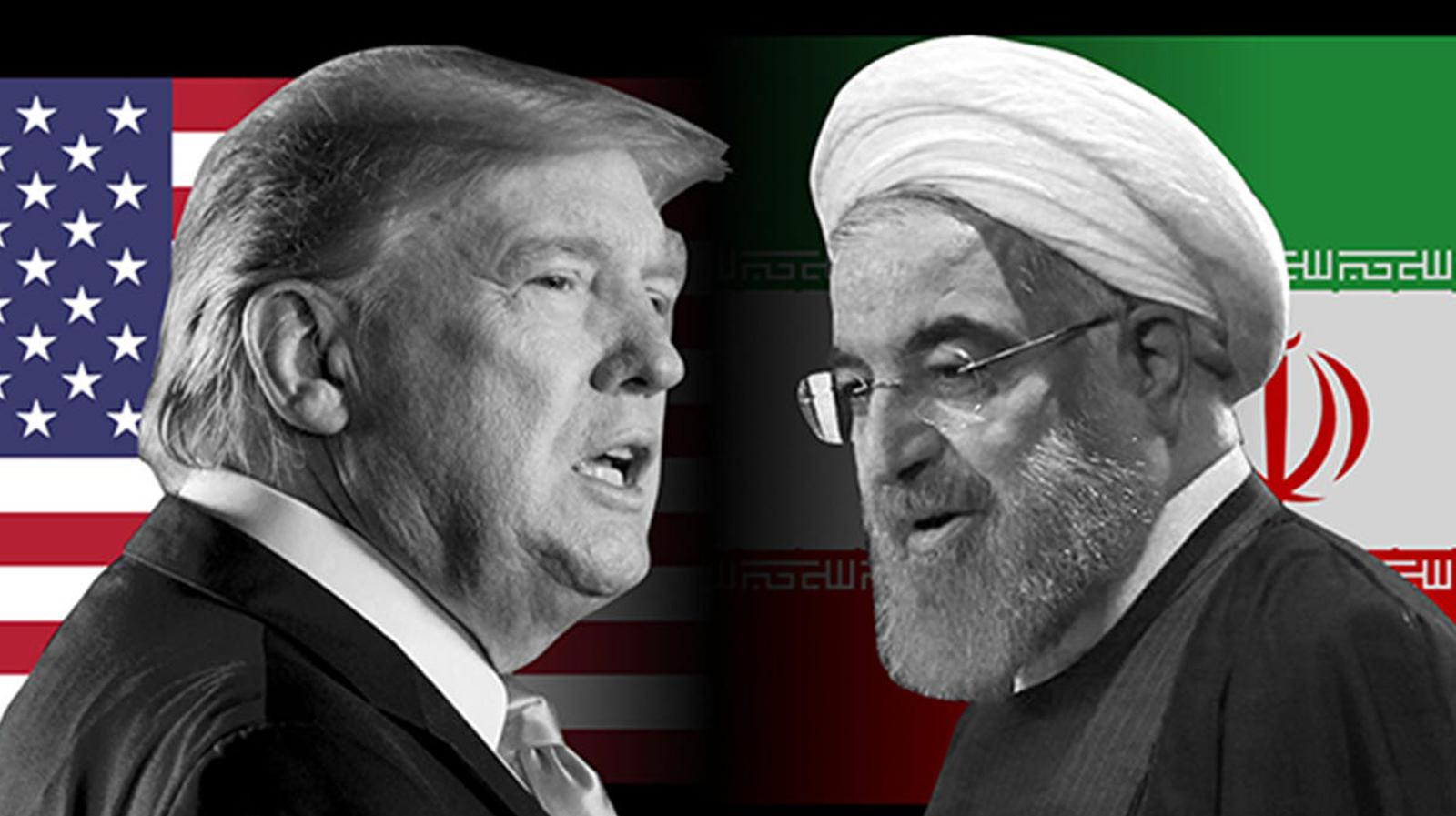
● As parties looked forward to the new round of US-Iran negotiations in Geneva on February 26, Washington was preparing for "two-handed readiness." On one hand, Presidential envoy and Trump's son-in-law Kushner were preparing to head to the negotiating table; on the other hand, the US military's largest aircraft carrier strike group, the "Gerald R. Ford," had arrived at an important base in the eastern Mediterranean, with several US military planes landing in Israel. The State Department even unusually issued a highest-level warning, demanding non-emergency personnel withdraw from Lebanon.
● According to insiders, Trump himself is inclined to consider a "preemptive strike" against Iran, although this plan was strongly questioned by the Chairman of the Joint Chiefs of Staff, who argued it could lead to a protracted conflict.
● This extreme pressure of negotiations coexisting with guns has made the market sense the strong smell of gunpowder. Iran responded strongly, stating that any attack would be seen as aggression. In this tense backdrop, gold, as the ultimate safe-haven asset, exploded instantly.
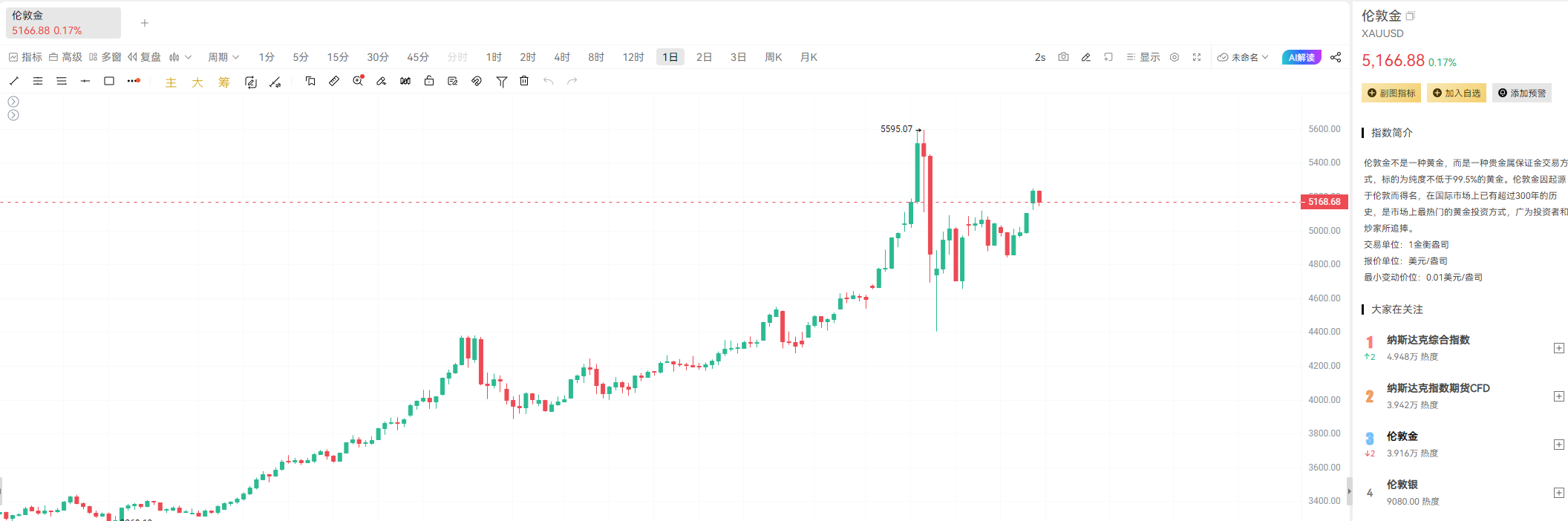
● On March 23, April gold futures on the New York Mercantile Exchange surged by 117.9 dollars, strongly breaking through the 5200 dollars per ounce mark, closing at 5247.9 dollars, with a rise of up to 2.3%. UBS analysts even boldly predicted that by June, gold prices could rise by another 1000 dollars. The market votes with real gold and silver, showing that in the face of potentially uncontrollable geopolitical risks, only physical precious metals are the true "Noah's Ark."
3. Bitcoin falls behind: Is the myth of "digital gold" shattered?
● However, the most heartbreaking scenario for crypto believers also played out simultaneously. Logically, with the US dollar weakening, policy chaos, and geopolitical warfare risks stacking up, this should be the shining moment for "digital gold," Bitcoin. But the reality is a bloody divergence.
● On the same day gold skyrocketed past 5200 dollars, Bitcoin plummeted, temporarily falling below the 65000 dollars level, reaching a low of 64232.8 dollars per coin, with a 24-hour drop exceeding 4.4%.
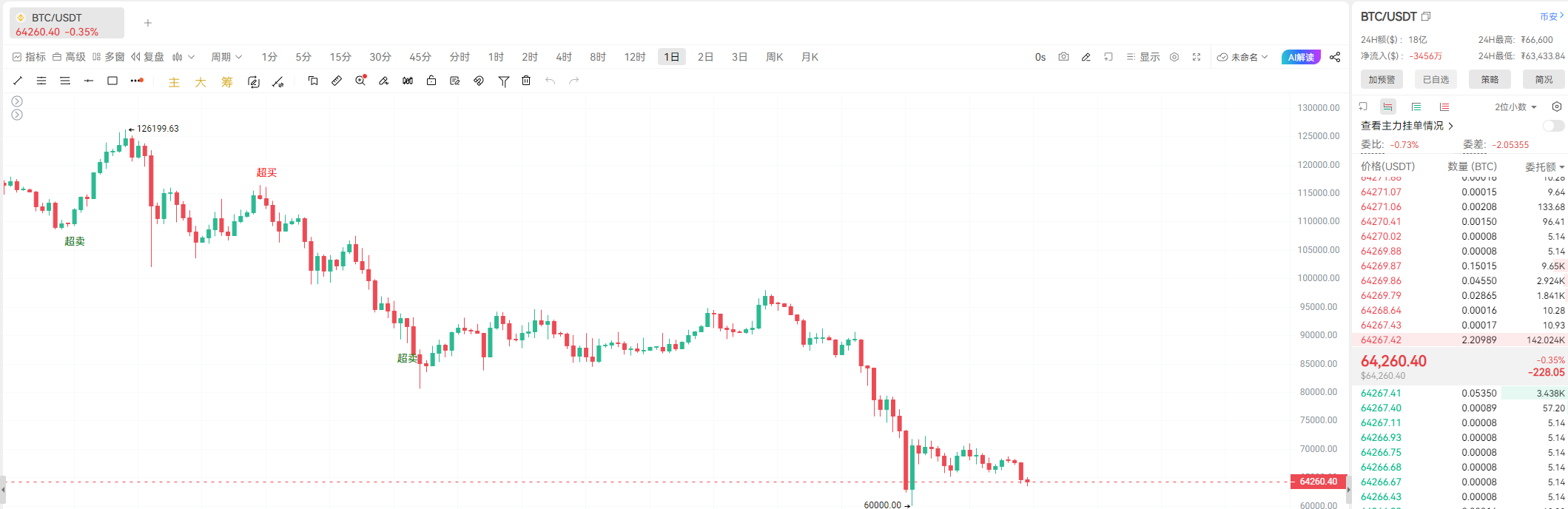
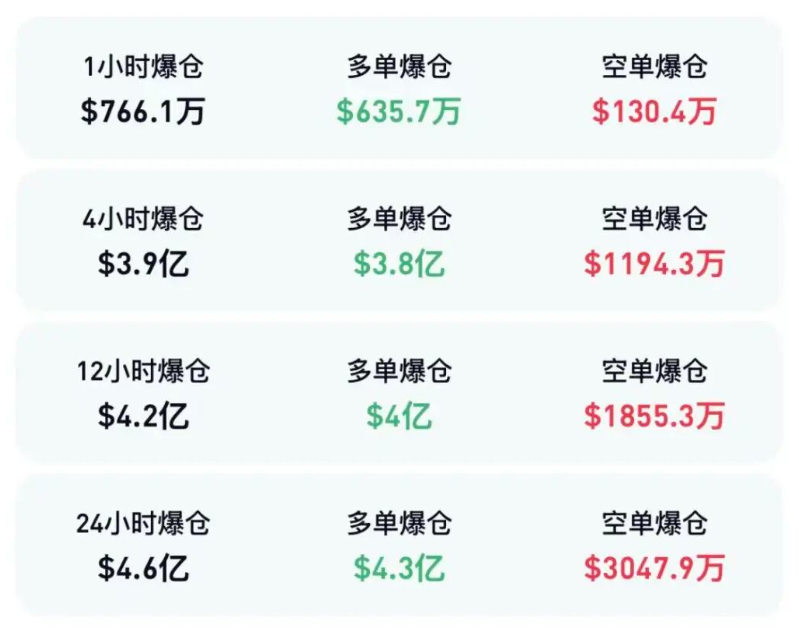
● The entire cryptocurrency market was in mourning, with over 130,000 people liquidated across the network, with total liquidations amounting to 463 million dollars.
● Why? Liu Jin, a professor at Cheung Kong Graduate School of Business, made a sharp analysis: although Bitcoin is known as "digital gold," its trend is significantly different from gold, and is in fact highly positively correlated with the Nasdaq index, and should be viewed as technology-driven assets. The previous surge was mainly based on expectations of strong policy support for digital currencies following Trump's election, but the reality is that no strong policies were introduced after taking office, leading to a substantial pullback from unmet expectations.
● Traders at the crypto analytics firm CryptoQuant are even pessimistic, believing that Bitcoin has entered a bear market, and even predicting that if the bear market evolves into a "winter," prices could be further halved to 31000 dollars. When real war risks and geopolitical upheavals arrive, funds choose not the ethereal digital codes, but the physical gold that has been passed down for thousands of years. The narrative of so-called "digital gold" seems especially pale in the face of this round of real crisis.
4. Reconstructing the Logic of Safe-Haven: Money Only Recognizes "Hard Assets"
If we piece these things together, we can clearly see the current logic of global capital flows: safe-haven demand is extremely differentiated, and funds are abandoning "stories" in favor of "physical assets."
● The chaotic situation caused by Trump's tariffs, combined with the Damocles' sword of US-Iran war, has led the market to form a typical "Risk-Off" model. But this time, money did not flow to the previously popular Bitcoin, nor did it entirely flow to the US dollar (the dollar index weakened after the news broke), but surged into the most traditional assets like gold and silver.
● On that day, silver even rose more than gold, reaching 4.06%, closing at 88 dollars per ounce. This reflects the market's true choice in the midst of concerns about the dual risks of recurring inflation and geopolitical conflicts. Even Trump's hastily announced 15% new tariffs are just adding a bundle of firewood to this fire——because it not only fails to solve fiscal issues but further exacerbates market concerns about stagnation in the US economy.
● From the dramatic reversal of the trillion-dollar tariff policy to the shadow of cruise missiles over the Gulf, and then to the ups and downs of gold and Bitcoin, this grand play at the beginning of 2026 gives all investors a vivid lesson in risk:
● In the face of real storms, the bubbles of stories are the easiest to burst. Only those "hard assets" that have traversed thousands of years of human civilization cycles are the final safe harbor. When Trump's executive order is rebuked by the Supreme Court and the aircraft carrier strike group reaches the front line, the market's physical reaction is the most honest——the "safe-haven triangle" remains the dollar, US Treasury bonds, and gold, while Bitcoin, for now, can only sit on the cold bench of tech stocks.
Join our community to discuss and become stronger together!
Official Telegram community: https://t.me/aicoincn
AiCoin Chinese Twitter: https://x.com/AiCoinzh
OKX welfare group: https://aicoin.com/link/chat?cid=l61eM4owQ
Binance welfare group: https://aicoin.com/link/chat?cid=ynr7d1P6Z
免责声明:本文章仅代表作者个人观点,不代表本平台的立场和观点。本文章仅供信息分享,不构成对任何人的任何投资建议。用户与作者之间的任何争议,与本平台无关。如网页中刊载的文章或图片涉及侵权,请提供相关的权利证明和身份证明发送邮件到support@aicoin.com,本平台相关工作人员将会进行核查。


