


xiyu|7月 29, 2026 17:12
This sentence is not a declaration, it is a fiery statement forced out.
On July 22, 2010, a post titled "Scalability and Transaction Rate" was created on Bitcointalk.
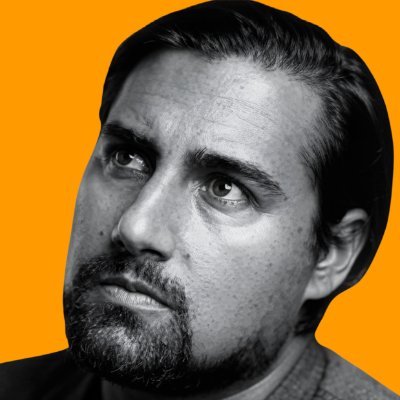
A week later, user bytemaster threw a question: Ten minutes is too long, verifying a payment must be as fast as swiping a credit card today. This bytemaster was later widely believed to be Dan Larimer, the founder of BitShares, Steem, and EOS.
That is to say, the first challenge in Bitcoin history of "TPS not fast enough" and the most radical high-performance blockchain faction later on were the same person.
Satoshi Nakamoto's reply at 2:00 am on July 29th, the complete version consists of three paragraphs:
The current configuration where each user runs a network node is not the expected configuration in large-scale scenarios. That's like each Usenet user setting up their own NNTP server. The design itself allows users to be just users. The heavier the burden of running nodes, the fewer nodes there will be, and the rest will be large server farms, while the rest will be client nodes that only do transactions and do not mine.
2. Ask the other party to read the post on "Snack Machine" - he argued there that payment processors can verify zero confirmation transactions to a fraud rate much lower than credit cards in about 10 seconds.
Then came the sentence: I'm too lazy to convince you, sorry.
Why was this post so important later on: The first paragraph became a repeatedly cited "biblical text" in the 2015-2017 expansion war - the Big Block faction used it to prove that Satoshi Nakamoto had already pre-set a server farm+light client, while the Small Block faction said that this was just an early idea and not a promise. The second paragraph is the earliest prototype of Layer 2 and zero confirmation payment ideas.
At that time, less than three weeks after the influx of Slashdot traffic, BTC was still a few cents, and Satoshi Nakamoto was overwhelmed by a large number of novice questions. Five months later, he completely disappeared.
So the phrase 'I don't have time to convince you' is not so much arrogance as a person's choice when bandwidth runs out - to spend time writing code instead of arguing.
BM criticized Bitcoin for being "too slow in 10 minutes" in 2010 and has been building faster chains for the next 15 years.
2013-2014 | BitShares established Invictus Innovations and invented DPoS (Proof of Stake) - his true technological legacy, which was later heavily referenced by early designs of EOS, TRON, Cosmos, and various high-performance chains. BitShares also made two groundbreaking innovations: one of the earliest centralized exchanges on the chain, and BitUSD - a synthetic stablecoin with over collateralization, which was over three years ahead of MakerDAO's DAI.
2017-2021 | EOS/Blockone collaborates with Brendan Blumer. EOS's ICO lasted for one year and raised approximately $4.1 billion, still the largest in history.
Claiming to have millions of TPS, no transaction fees, and the ability to govern arbitration.
The outcome is well known: the market value dropped from 18 billion to less than 800 million, the community deteriorated, and Blockone was heavily fined by regulators (in 2019, it settled with the SEC and paid $24 million).
In January 2021, he left Blockone to work on a personal project.
EOS itself has been renamed Vaulta and transformed into a "Web3 Bank" in 2025, but that is the foundation's business and has nothing to do with it anymore.
Places worth pondering:
Satoshi Nakamoto's response to the phrase 'I'm too lazy to convince you' back then was' 10 minutes is too slow '.
BM spent fifteen years, three chains, and $4.1 billion sucking blood from the market to prove that it can be faster. Technologically, he has indeed achieved (DPoS, sub second block generation, zero transaction fees).
But today, the total market value of BitShares, Steem, and EOS combined is less than one thousandth of Bitcoin.



Share To
Timeline
HotFlash
APP
X
Telegram
CopyLink