A few days ago, didn’t NVIDIA spend $12.9 billion to acquire Hugging Face? Just after the acquisition, within a week, Hugging Face submitted its first assignment: Microduck.
Microduck is an open-source AI bipedal duck robot priced at $399 and standing 25 centimeters tall, launched on August 27, and has been selling like crazy, with sales of $2.6 million in 24 hours, and the delivery time for the first batch has already been pushed back to after Christmas. It looks like this:
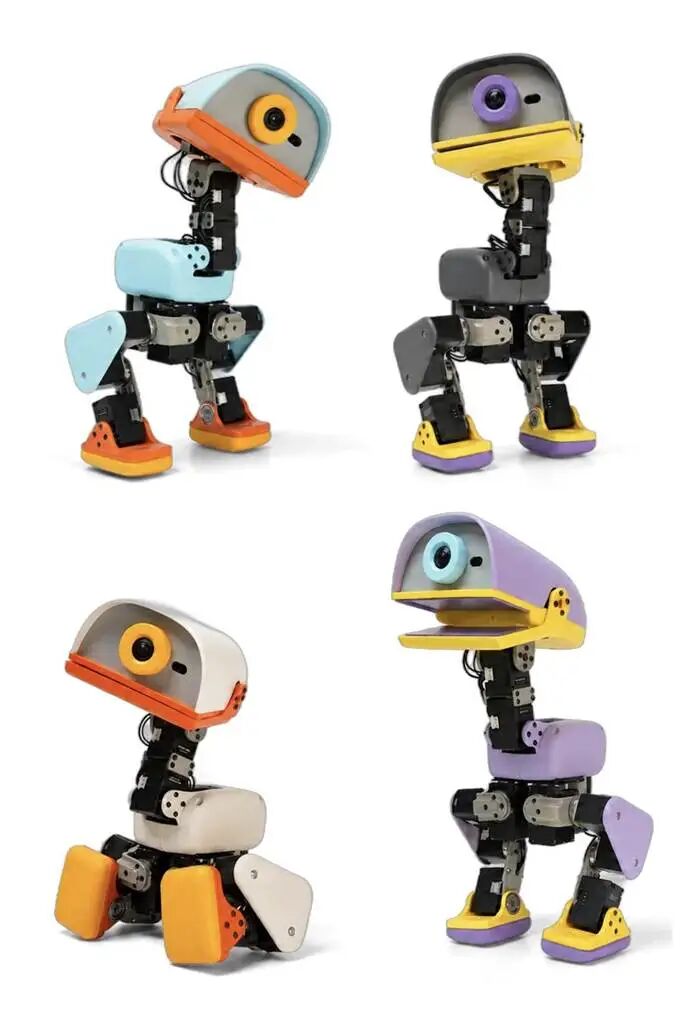
It is not just a toy duck; it is a Physical AI platform aimed at developers, AI/robotics enthusiasts, and educational use.
The official positioning is very clear: A small bipedal robot that you can teach new skills yourself.
The official statement mentions that it comes pre-installed with 7 sets of trained actions:
Waddle walking, speed can be controlled with a joystick
Sit down, squat, and get up by itself
Pick up objects from the ground with its beak (the demo includes a sock and a marker)
Kick a ball
Skate with wheels attached
Fall down and roll over to stand up
Chase a laser pointer, react to the environment, and can be triggered to perform actions with NFC tags
Each duck generates its unique sound identity when powered on for the first time, which tends to be more quirky than a voice assistant. Multiple Microducks can also interact with each other.
The most noteworthy aspect of Microduck is not whether it can be cute, but the route behind it: AI model → simulation environment → reinforcement learning → actual machine.
For example, if you want Microduck to learn a new action: train in the simulator on your computer → get RL policy → deploy to the real Microduck → the robot executes → collect data → retrain.
Hugging Face has already opened up the SDK, simulation environment, and reinforcement learning training toolchain. This means it hopes to turn robots into something like the AI models on Hugging Face:
When someone trains a robot skill, I can download it;
When I train a skill myself, I can also upload it for others.
This is essentially what Hugging Face aims to do: create an open ecosystem for Physical AI. The official statement also clarifies the wish to enable physical behaviors to be shared, replicated, and further developed like models.
To bridge the gap between simulation and reality, the training environment specifically simulates motor friction, battery voltage variations, control delays, and even considers the backlash in servo gears.
In short, Microduck is essentially a mini embodiment intelligence development platform, surpassing the dancing robots from the Spring Festival Gala by a long shot.
There are actually opportunities here, for example, the chips are provided by Rockchip, and of course there will be other opportunities for everyone to explore, which might just lead to the moment of embodied intelligence’s ChatGPT.
免责声明:本文章仅代表作者个人观点,不代表本平台的立场和观点。本文章仅供信息分享,不构成对任何人的任何投资建议。用户与作者之间的任何争议,与本平台无关。如网页中刊载的文章或图片涉及侵权,请提供相关的权利证明和身份证明发送邮件到support@aicoin.com,本平台相关工作人员将会进行核查。


