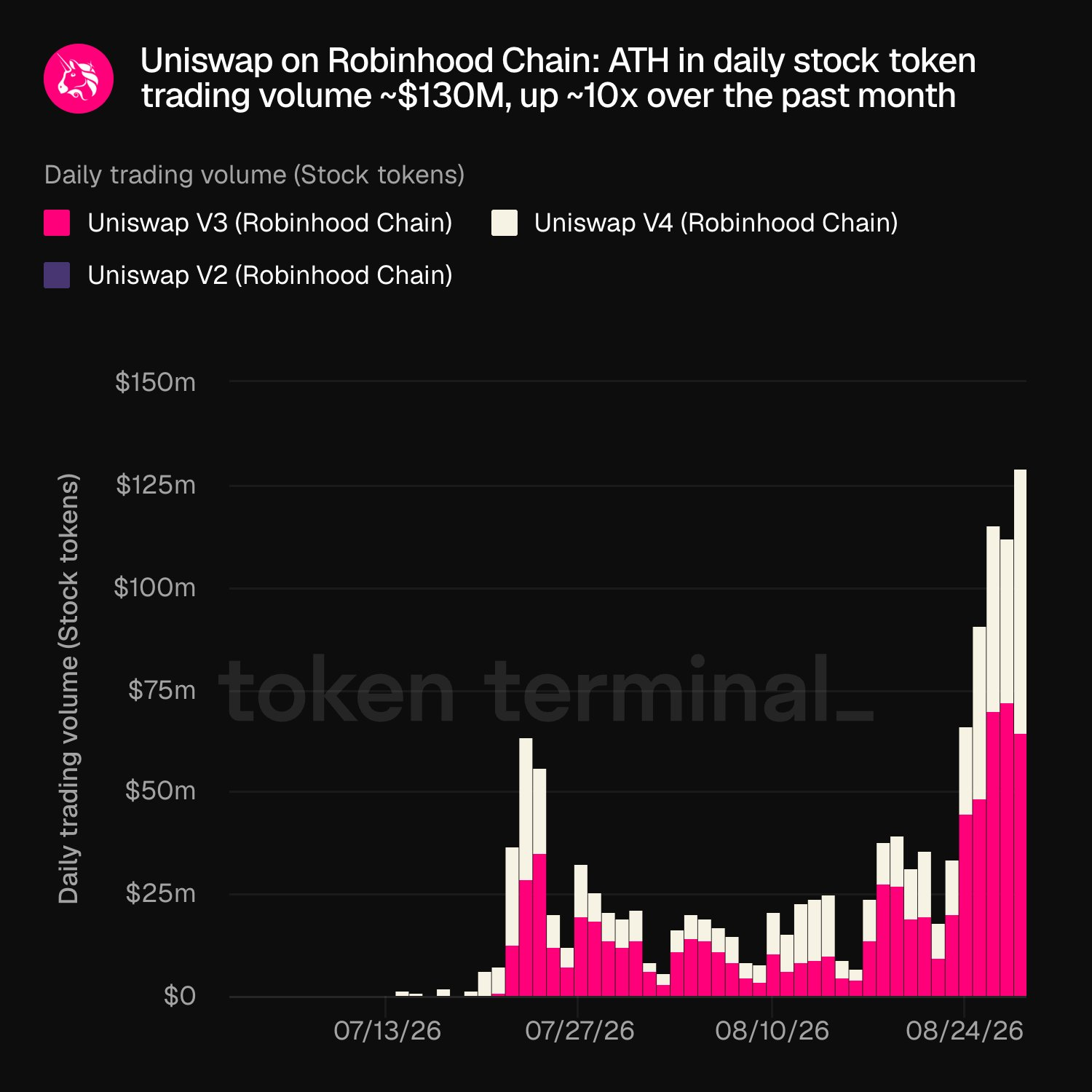
Uniswap processed stock tokens on the Robinhood Chain have reached a new daily trading volume high of about $130 million, rising nearly tenfold over the past month.
Written by: Maher, Foresight News
On August 31, UNI briefly surged past $5.40, setting a new price high since January 2026. After the price dropped to $2.31 in June this year, UNI has rebounded significantly, with its price increasing over 100% in the last three months. During the DeFi boom of 2020-2021, Uniswap was the top star DEX protocol, but in this cycle, it has fallen from grace, with little discussion and its price remaining in a long-term downtrend.
What has caused UNI to be favored by the market again?
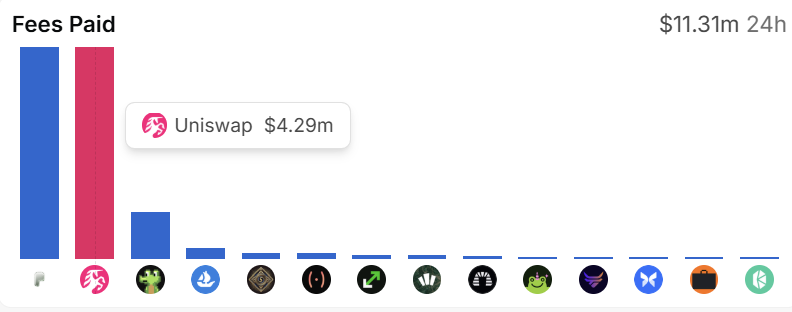
$4.29 million in fees earned in the last 24 hours, daily trading volume of stock tokens increased tenfold over the past month
The mainnet of Robinhood Chain launched in July this year, and as of August 31, DefiLlama data shows its total TVL has risen to over $700 million.
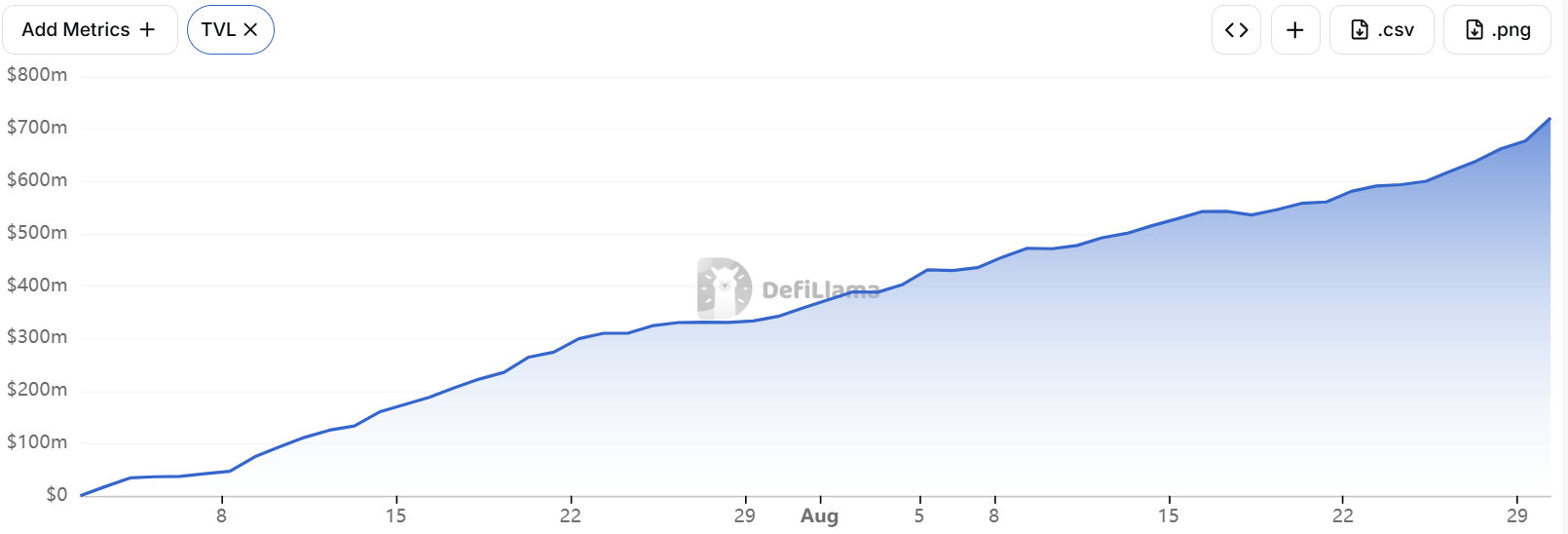
Uniswap officially announced that its v2, v3, v4, and UniswapX have been the public main AMM on the Robinhood Chain since its first day, with the web, wallet, and API available simultaneously.
Latest data shows that its revenue in the past 24 hours was $4.29 million, accounting for nearly half of the fee revenue on the Robinhood Chain in the past 24 hours, second only to the token issuance platform Pons, significantly ahead of other competitors.
Token Terminal provided even rarer data: the daily trading volume of stock tokens processed by Uniswap on the Robinhood Chain hit a new high of approximately $130 million, rising about tenfold over the past month, with trading volumes for v3 and v4 nearly equal.
Daily destruction of over $400,000 in UNI
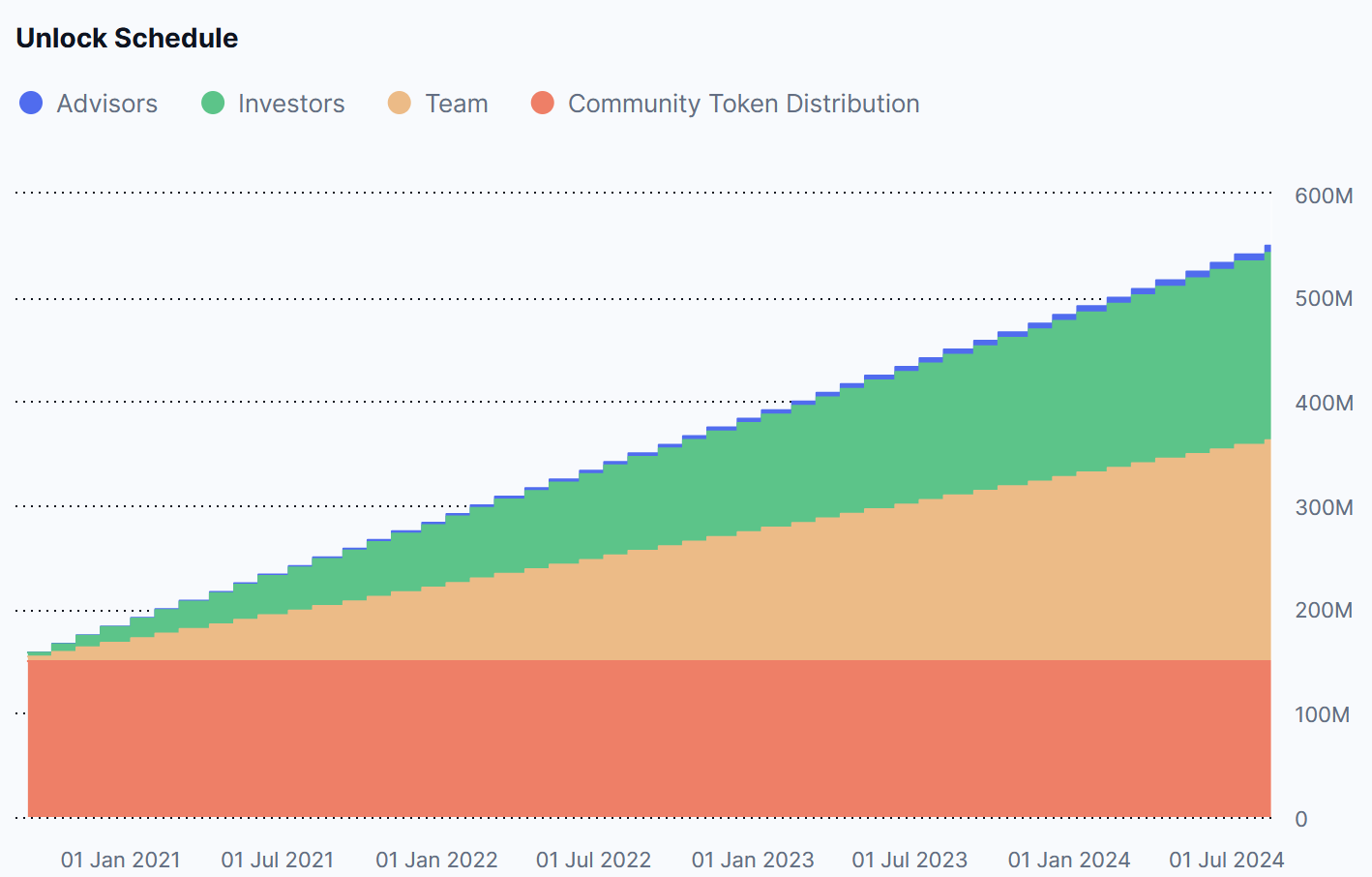
The UNI token was fully unlocked back in 2024, yet its price has consistently performed poorly.
There have always been transaction fees in the Uniswap pools. Between 2020 and the end of 2025, nearly all of this money goes to liquidity providers (LPs). UNI is only used for voting. The protocol can generate hundreds of millions to billions of dollars in fees annually, but the token itself has zero cash flow. This is the fee switch that has been debated for five years.
In December 2025, the criticized UNI token economics will undergo a final vote and be approved, with core content including: destroying 100 million UNI after approximately two days of voting and turning on the protocol fee switch.
Dune's latest data shows that as of August 31, the cumulative destruction amount is about 110 million tokens, with a total destruction value of $630 million.
Since August this year, it has frequently destroyed over 100,000 UNI in a single day, averaging a daily destruction value of over $400,000, with the Robinhood Chain contributing nearly half of that.
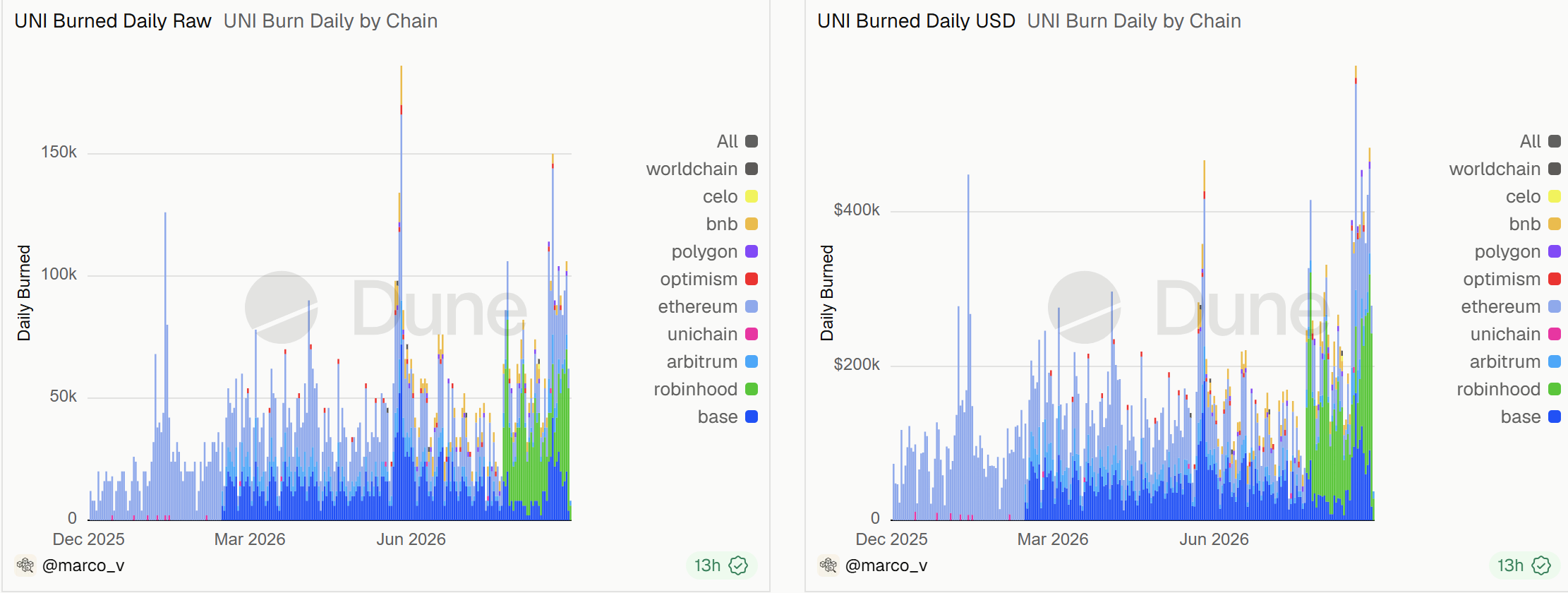
The destruction of UNI is not simply using USDT/USDC to directly repurchase UNI tokens.
The transaction fees in the Uniswap pools primarily go to LPs. Uniswap only takes a small cut. On Robinhood, it takes about 6%. The small portion taken does not go into Labs' bank account but rather into a contract jar called TokenJar. The jar contains ETH, stablecoins, altcoins, and stock tokens, depending on the pool. Anyone wishing to take something from the jar must first burn an equivalent amount of UNI.
This step is called Firepit.
Arbitrage bots monitor the net asset value within the TokenJar contract in real-time, burning equivalent UNI to extract fee assets, and complete risk-free arbitrage by selling on the secondary market.
On-chain transaction activity is positively correlated with protocol captured value, further driving more arbitrageurs to burn UNI to extract profits, creating a deflationary flywheel for the UNI token.
In other words, the official has transformed "company buybacks" into "on-chain auctions of protocol revenue."
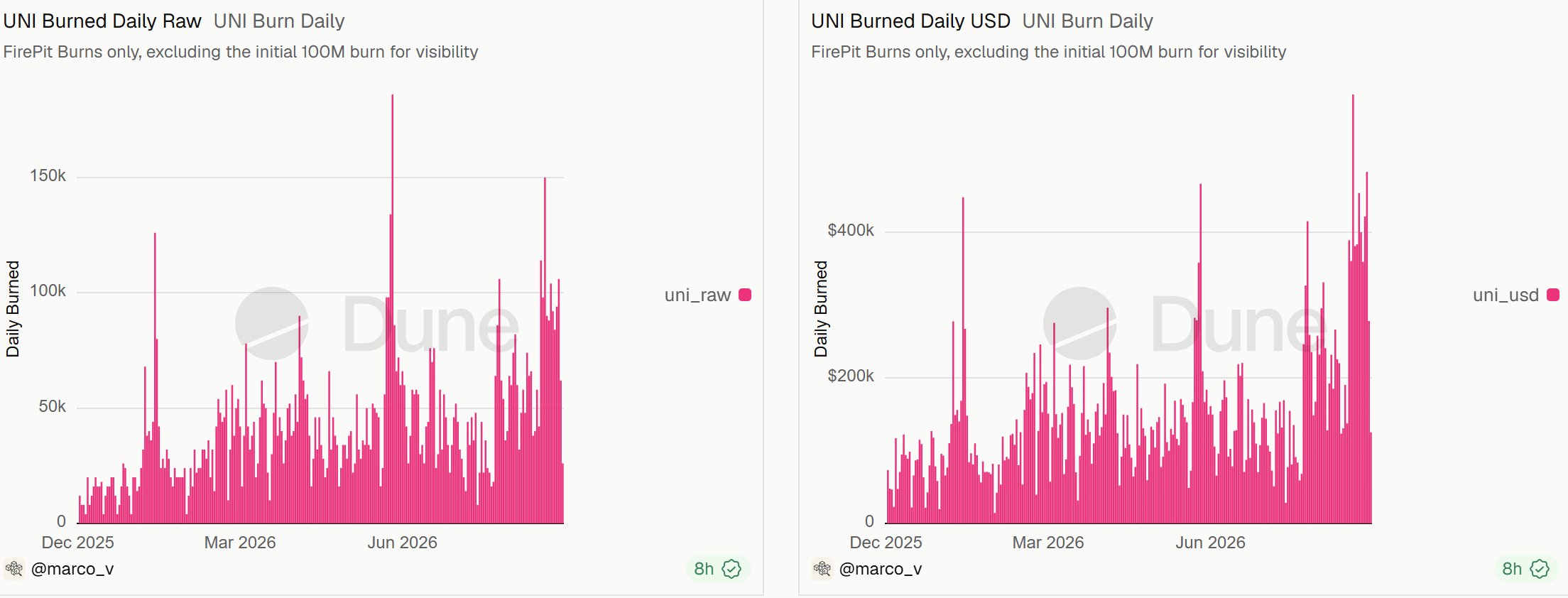
Dune data shows that its destruction data is still steadily increasing.
To avoid the costs of its own market makers and to mitigate the SEC's strict regulations on traditional broker-dealers listing tokenized securities, Robinhood has connected non-U.S. retail and stock tokens to the public AMM, rather than just keeping them in its own RFQ. Uniswap occupies an important position on the Robinhood Chain. The trading volume on the Robinhood Chain has steadily turned into a net reduction of UNI, thus driving the price up.
Uniswap has long suffered from being criticized for the UNI token having zero cash flow; it needs real external income to support its deflationary model, and Robinhood just happens to require a large, deep, and sufficiently decentralized settlement layer to handle its stock tokens.
TradeFi and DeFi are deeply integrating.
免责声明:本文章仅代表作者个人观点,不代表本平台的立场和观点。本文章仅供信息分享,不构成对任何人的任何投资建议。用户与作者之间的任何争议,与本平台无关。如网页中刊载的文章或图片涉及侵权,请提供相关的权利证明和身份证明发送邮件到support@aicoin.com,本平台相关工作人员将会进行核查。


