Author: Zen, PANews
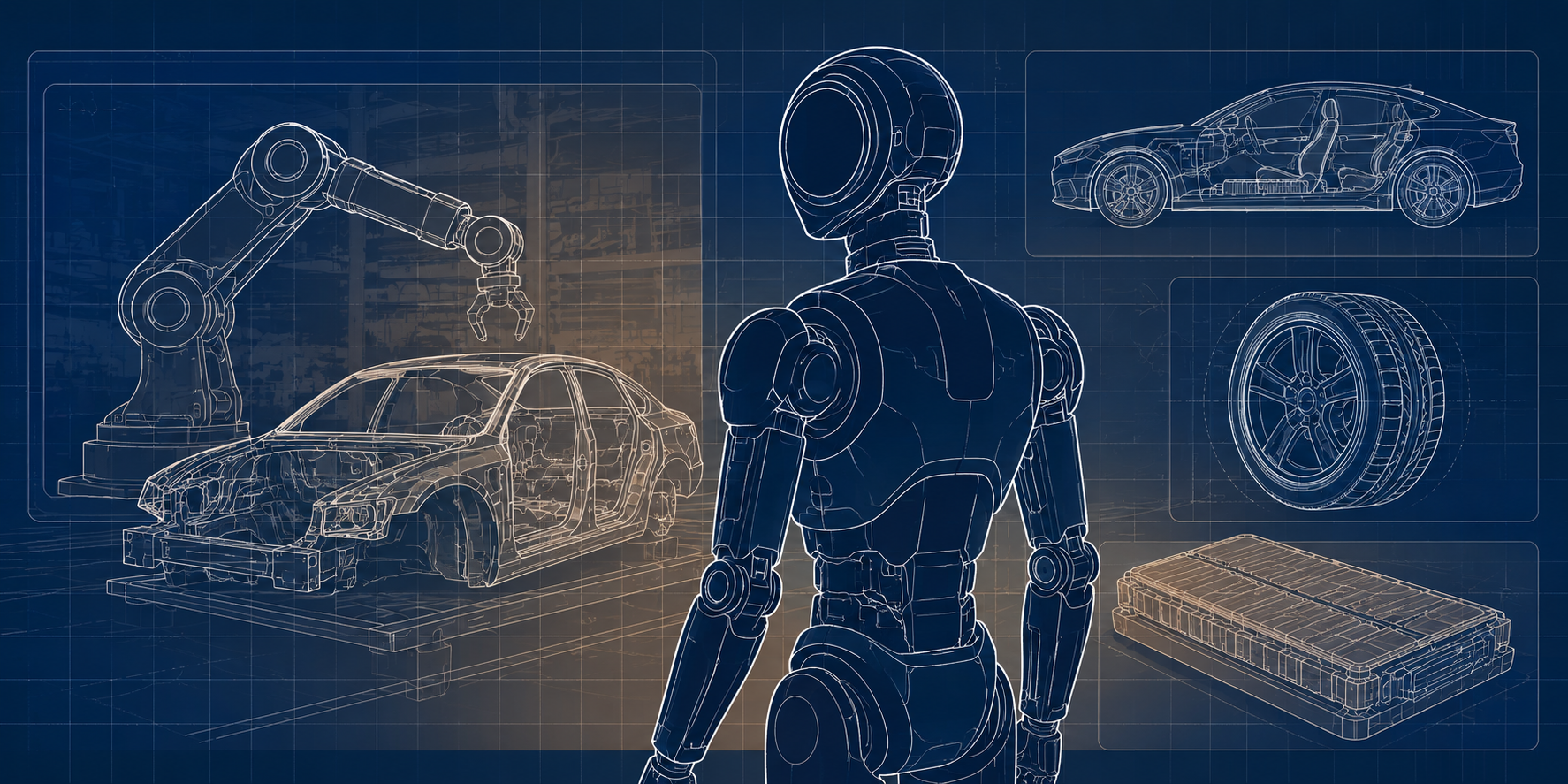
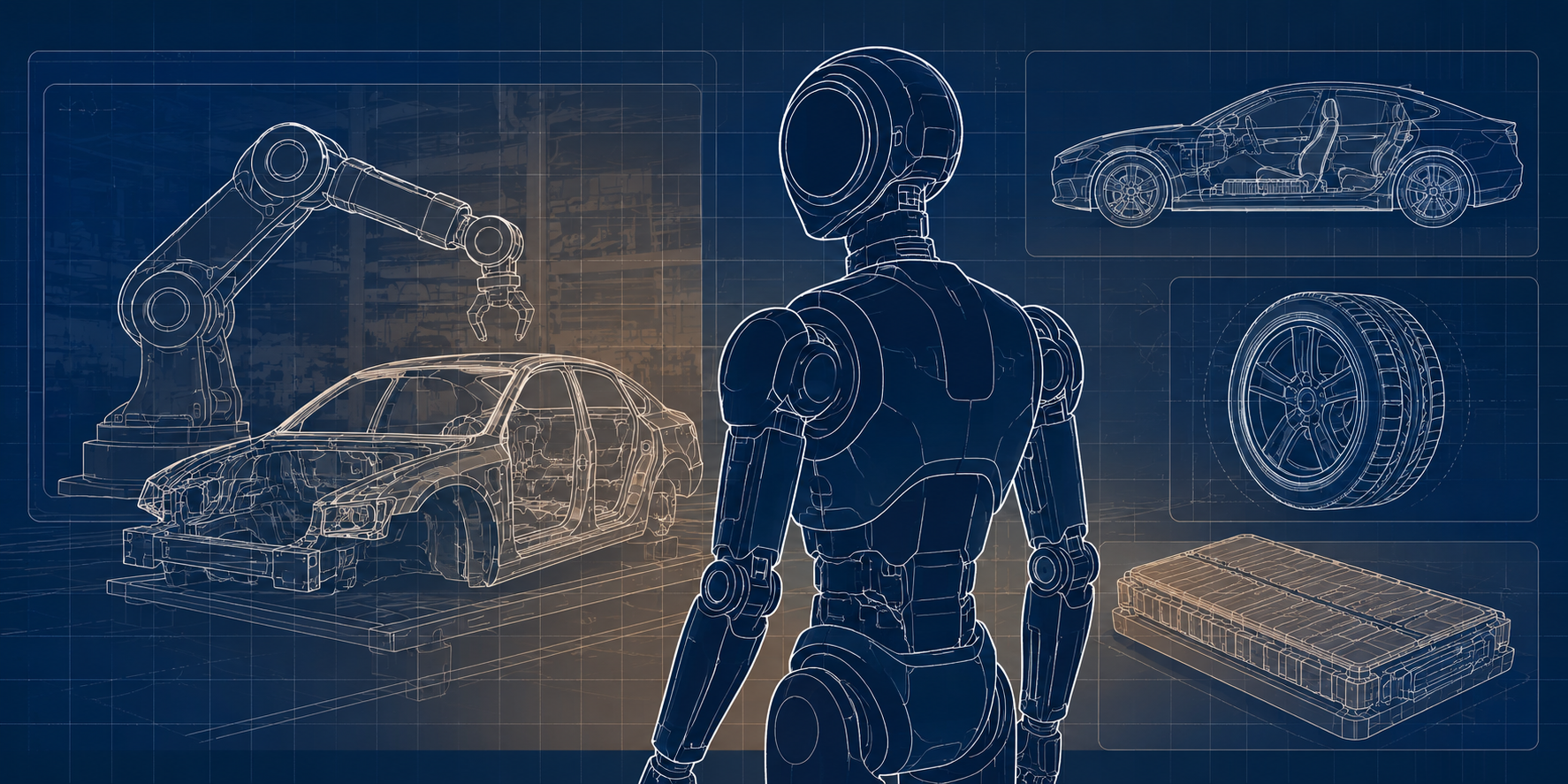
If we lay out the global landscape of the embodied intelligence industry today, we will find that automotive companies are almost everywhere.
Those who are building robots include Tesla's Optimus, Xiaopeng's IRON, and Hyundai Motor, which holds Boston Dynamics; automotive manufacturers like BMW and Mercedes-Benz are providing the first batch of real job opportunities for robots; even the shareholder lists of robot companies frequently feature automotive industry capital: Mercedes-Benz directly invested in Apptronik, while Zhiyuan is backed by companies like BYD and SAIC.
In other words, in today's embodied intelligence industry, whether it is building robots, training robots, purchasing robots, or funding robot companies, the automotive industry is an undeniable force.
This week, two events pushed this relationship to a new stage.
On August 24, Xiaopeng's robotics business completed its first round of financing exceeding $900 million, with a post-investment valuation exceeding $6.3 billion, setting a new record for single-round private equity financing in China's embodied intelligence industry. Then, on August 26, Hyundai Motor provided a more comprehensive robot roadmap on CEO Investor Day than many robot startups.
Robots are transitioning from experimental technical products to industrial goods that require mass production, long-term training, job placement, and ultimately procurement and financing by enterprises. Once competition reaches this stage, the massive system established by the automotive industry over the past few decades begins to reveal its value.
After robots begin mass production, the competition enters the automotive industry's home ground
Both automobiles and humanoid robots are extremely complex electromechanical products, and they share an important commonality: the importance of software is continually rising, but ultimately, results must be realized through physical machines.
The software and control systems for automobiles correspond to braking, steering, and body movement; the movements output by robot models will ultimately translate into joint movements, gripping, and actual operations. Deviations in precision will not forever remain in seemingly beautiful benchmark tests; they could eventually become damaged parts, halted production lines, or even safety accidents.
Therefore, when robots truly head toward mass production, the evaluation standards will also change. Several successful runs, grips, and transports can only prove that "it can do it"; what industrial manufacturing really cares about is whether the same actions can be repeated thousands of times while maintaining sufficient precision, reliability, and consistency.
The factory tests between BMW and Figure have already shown, to some extent, people's expectations and demands for robots participating in actual industrial production. Figure 02 has operated continuously for about 10 months at BMW's Spartanburg plant in the USA, performing the task of taking and placing metal sheets for welding. During this period, the robot has worked for approximately 1,250 hours, handled over 90,000 components, and participated in the production of more than 30,000 BMW X3 vehicles. BMW makes a special point of emphasizing that this process requires the robot to achieve millimeter-level positioning accuracy.
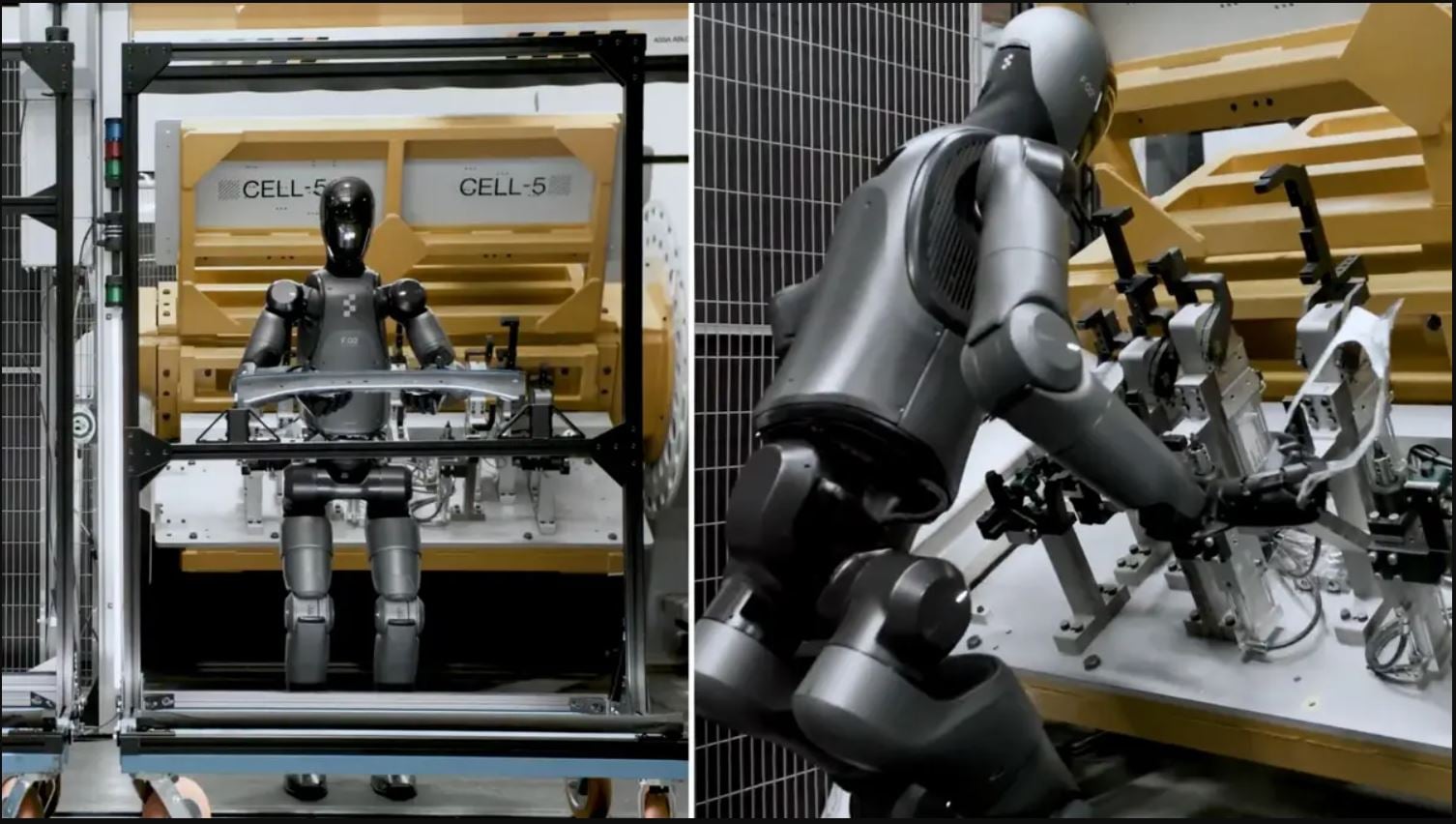
Being able to complete a millimeter-level operation is merely a technical capability; maintaining stability during continuous operations with tens of thousands of components begins to approach the challenges of industrial products.
What automotive companies can transfer to robots is far more than just a few ready-made component suppliers. The automotive industry has accumulated a complete set of methods for pushing complex products from designs to large-scale production over several decades: manufacturability design, supplier management, standardization of components, quality control, durability testing, and production systems established around production line rhythm, maintenance efficiency, and product traceability.
The production planning for Hyundai's Boston Dynamics robots is a typical case. During this year's CES, Hyundai Motor Group laid out its division of labor within the robot industry chain: Hyundai Motor and Kia provide manufacturing infrastructure, process control, and large-scale production data; Hyundai Mobis is responsible for high-performance actuators and promotes component standardization and manufacturability optimization using automotive component design and mass production experience; Hyundai Glovis handles logistics and supply chain.
The design changes of the latest generation Atlas reflect this "automotive industry thinking" in a more concrete way. To facilitate large-scale production, Boston Dynamics has significantly standardized the more than 50 types of actuators corresponding to different motors down to three core types, while also incorporating replaceable limbs and automatic battery-swapping capabilities.
These changes carry little science fiction flair but are directly related to whether robots can truly become commodities. Once products enter the scale of thousands, each additional specialized part signifies new procurement, inventory, quality inspection, maintenance, and supply chain risks; shortening maintenance time equates to higher equipment utilization rates and lower operational costs for customers. As scales expand from dozens to tens of thousands, the value brought by component standardization, yield rates, and maintenance efficiency will be magnified exponentially.
Thus, if the first round of competition in embodied intelligence is about who can build robots, the next round is likely to be about who can produce robots stably in mass production, which is precisely the game the automotive industry excels at.
Autonomous driving doesn't just leave algorithms; it's a whole Physical AI infrastructure
After resolving the "body" issue of the robots through manufacturing capabilities, the next, more important, and costly question is how to keep iterating its "brain."
In this regard, the investments made by the intelligent automotive industry over the past decade have provided some companies with a significantly rich "legacy."
The development of autonomous driving has effectively forced companies like Tesla, Xiaopeng, and Hyundai to build a complete set of real-world AI infrastructure ahead of time: vehicles collect real environment data, valuable data and failure cases are filtered in the cloud, training sets enter computing clusters, and models are redeployed to vehicles after training and validation, which subsequently continue to generate new data.
The cycle of reality, data, model, deployment, and then back to reality forms the core mechanism that Physical AI relies on for iteration, and it is also the largest technical advantage for automotive companies entering embodied intelligence.
Hyundai's latest announced roadmap showcases this investment quite thoroughly. Atria AI will begin collecting real road data in South Korea this year, and Hyundai plans to deploy an L2+ system on the first mass-produced SDV in collaboration with NVIDIA by 2028, while a 100MW AI data center is slated to be operational by 2029, planned to accommodate over 50,000 GPUs. Hyundai Group has previously announced an investment of over $500 million for AI infrastructure and talent and has established collaborations on Physical AI with Google DeepMind, NVIDIA, and others.
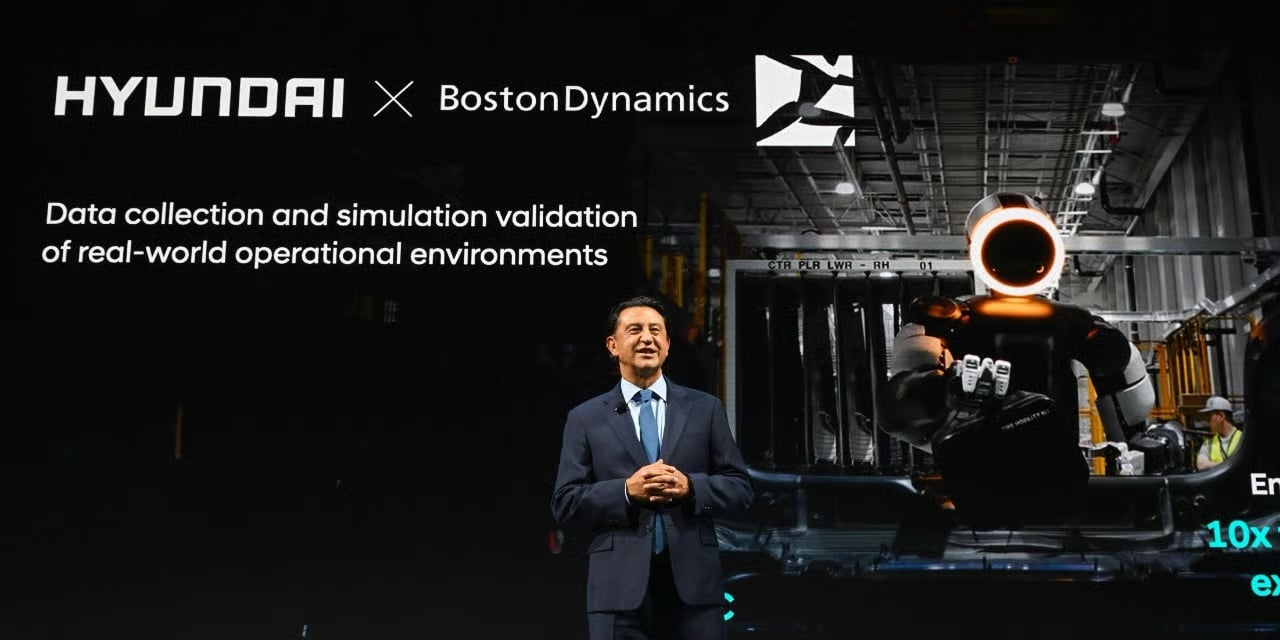
Although these assets primarily initially serve the automotive industry, they do not exist within a "only for automotive training" wall. High-performance computing clusters, data engineering platforms, simulation tools, model deployment systems, edge computing capabilities, and OTA systems are essentially the general infrastructure needed for training and operating Physical AI. With the addition of the robotics business, it is equivalent to adding a new product line to an already built AI factory.
Xiaopeng's roadmap is more direct, as it has unified VLA 2.0, Robotaxi, and IRON within the Physical AI framework. In this recent round of robotics financing, model development itself is one of the uses of funds. Xiaopeng's description of its advantages also includes edge AI chips, Physical AI base models, training computing power, and high-quality data closed loops.
This also explains why in recent years, a number of intelligent automotive companies have entered the robotics industry, which cannot simply be understood as seeking a "second growth curve."
For companies that have invested years in autonomous driving and built large AI teams and computing infrastructure, robots offer a very tempting possibility: to extend the Physical AI capabilities that could previously only control four wheels to machines that possess hands and feet.
Of course, this does not mean that automotive companies can seamlessly transfer into the robotics industry; it's just that relative to startups starting from zero, the expensive data and training infrastructure behind it does not need to be built from scratch.
Automotive companies appear to have paid a portion of the admission fee in advance, but they still need to raise hundreds of millions in funds to establish data, computing power, training tools, and model teams.
Automotive factories are becoming the "leveling grounds" for robots
With a body and the infrastructure to train the "brain" in place, the next challenge arises: where does the data come from? In this regard, the factories in automotive companies begin to turn into another trump card.
Strictly speaking, manufacturing enterprises have factories, and Foxconn, Amazon, and large logistics firms will also be very important participants in embodied intelligence. The uniqueness of automotive factories lies in the fact that they are perfectly interconnected with the preceding manufacturing system and Physical AI capabilities.
For humanoid robots that have yet to truly realize general capabilities, the positioning of automotive factories is just right—they are far more complex than laboratories, yet not as uncontrollable as homes and commercial streets. Workers move, components vary, production processes change, and robots need to recognize the environment and respond; meanwhile, workstations, materials, workflows, and evaluation metrics are relatively stable.
More crucially, automotive manufacturing provides a vast array of high-frequency repetitive tasks. Grasping, transporting, sorting, assembling, and inspecting can be repeated hundreds or even thousands of times daily. The results of whether the same action was successful or failed, how long it took, whether manual intervention was needed, and whether it impacted production rhythm are all clear.
Therefore, the factories at automotive companies are not merely "robot application scenarios"; they are also machines capable of continually manufacturing experience for robots. This is also why Figure 02 is practicing at BMW's Spartanburg plant in the USA, and why Zhiyuan is collaborating with SAIC to let robots work on-site.
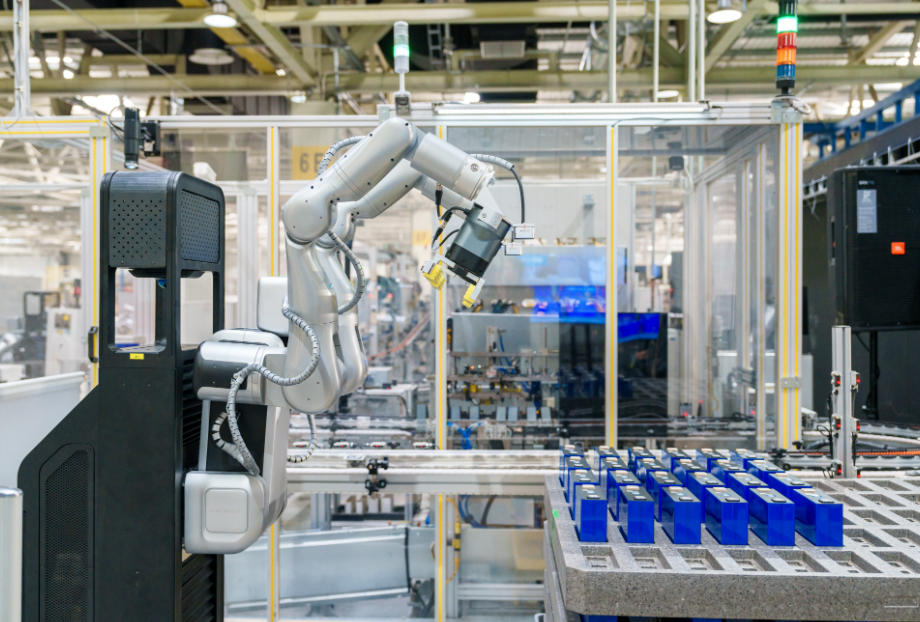
Hyundai has specifically built a training ground for this purpose. In June of this year, its Robot Metaplant Application Center (RMAC) was launched in the United States, with plans to expand its scale tenfold by the end of the year. RMAC simulates a real production environment, allowing manufacturing robots to first complete training, data collection, testing, and validation before entering the formal production line. Hyundai's designed closed loop is that the real operational data of robots in the Software-Defined Factory continues to return to RMAC for retraining and optimization.
This contrasts sharply with the development models of many robot companies in the past. Previously, capabilities were honed in laboratories before seeking clients. The strategy of such automotive companies is to link robot R&D, simulated training, real factories, and mass deployment into a cohesive loop. When robots are not mature enough to sell to everyone yet, the group first acts as the initial batch of customers.
As the leading car sales company, Toyota has directly integrated this advantage into its robot strategy this year. The company notes that its global factories produce about 10 million cars per year, with skilled workers and the Toyota Production System, and that these production sites will become key foundations for robots to continuously learn and improve. The scenarios currently demonstrated by Toyota include component transportation, picking, and medical equipment handling.
This actually reveals a very unique position for automotive companies within the embodied intelligence industry; usually, if robots are not mature enough, ordinary customers will choose to wait rather than buy. However, automotive groups can first put robots to work in their controllable factories, using internal demands to gain deployment scale, and then continue to improve products using the data generated from the deployments.
Early in the embodied intelligence field, a kind of vicious cycle existed—without customers, there is not enough real data; without data, robots struggle to improve rapidly, and when robots are not mature enough, customers are even less willing to purchase. Automotive companies' factories can, therefore, tear open a gap in this cycle.
When robots begin to become an "asset business"
However, even if robots are capable of mass production, models are continually improving, and factory deployments are running smoothly, there remains a more practical hurdle to truly forming a large-scale market: how to sell them?
This is also a key aspect worth paying attention to during Hyundai Motor's investor day this week. Hyundai Motor CEO José Muñoz did not only discuss the technical roadmap of Atlas but also delved into dealers and Hyundai Capital: the existing Dealer network may take on the distribution and sales of robots in the future, while the group’s financial department is researching corresponding financing solutions, including leasing and installment payments as potential tools.
This implies that Hyundai has already begun to consider robots as industrial assets that need to be procured, financed, and operated long-term. If in the future a high-performance robot is still valued at tens of thousands of dollars, 500 units represent a capital expenditure of tens of millions of dollars. This also involves deployment, maintenance, software, component replacement, and downtime losses.
For enterprise customers, factors influencing procurement decisions include not just the robot's capability itself but also financing costs, depreciation cycles, maintenance efficiency, software charging methods, and how residual value is calculated. These issues determine whether robots will simply remain stuck at small-scale trials or can enter the regular capital expenditure budgets of enterprises like forklifts, servers, and other industrial equipment.
The automotive industry has long been adept at handling these sets of issues. Global sales networks, enterprise customer systems, loans and financing leases, maintenance points, spare parts management, asset residuals, and second-hand circulation are just part of the complete lifecycle that vehicles face once they leave the factory.
Hyundai is now attempting to replicate this system for robots. According to the group's earlier announcements, after robot delivery, they can continue to receive OTA software updates, hardware maintenance and repairs, remote monitoring, and further provide complete solutions in a Robotics-as-a-Service manner.
This layer of capability is particularly easy to be overlooked in the embodied intelligence industry. Startups typically spend extensive effort discussing models, degrees of freedom, and target market sizes but rarely highlight "after-sales networks" and "equipment financing" in the most prominent position. However, once robots start selling tens of thousands of units annually, these aspects suddenly become crucial.
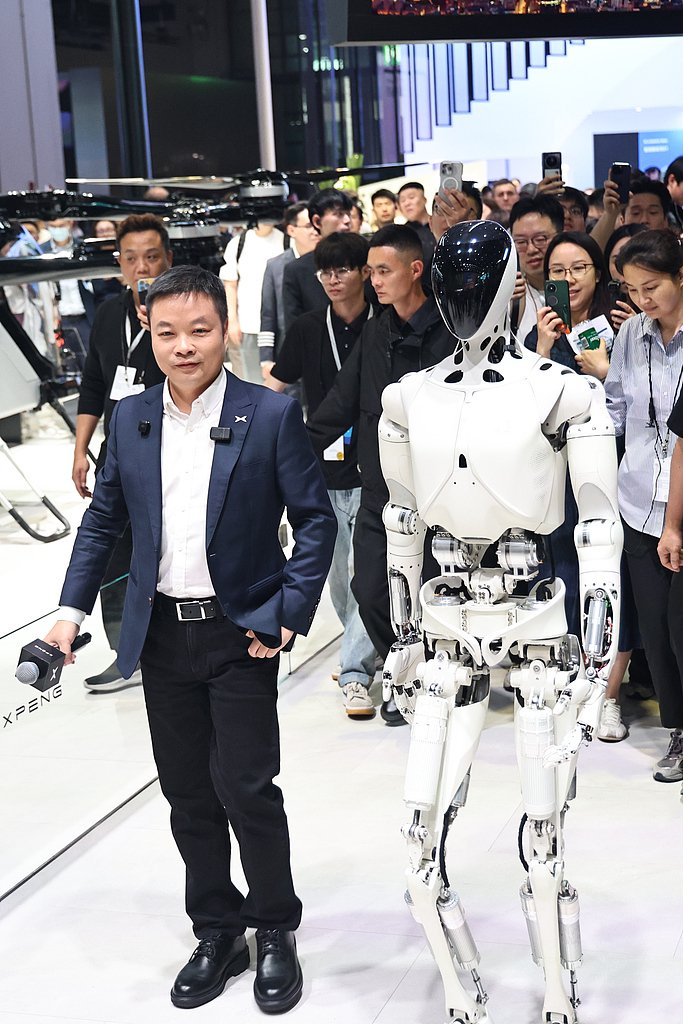
Xiaopeng Motors CEO He Xiaopeng with IRON
Xiaopeng has already begun to move toward this stage. IRON plans to first enter Xiaopeng stores and parks, and then aim for large-scale delivery to external customers in China and overseas by 2027. For a car company that already has manufacturing bases, store systems, overseas channels, and enterprise collaboration resources, this commercialization path is evidently shorter than that of a robotics startup with only a research and development team.
At this point, "automakers entering robots" is no longer just about opening another robotics business department. What they genuinely bring into the embodied intelligence industry is the manufacturing, channel, service, financing, and asset management systems established around automobiles in the past.
When robots transition from a single product to thousands of industrial assets that require financing, maintenance, and continued operation, this capability, which does not rely on "AI," will become increasingly important.
Embodied intelligence may not belong to automotive companies, but it is increasingly inseparable from the automotive industry
Of course, the possession of these resources by automotive companies does not necessarily mean that the future robotics industry will be ruled by automotive giants.
BMW does not have to become Figure itself, and Mercedes-Benz can also collaborate with robot startups. In the future, it is entirely possible to see a batch of independent robot body companies and foundational model companies, while automotive enterprises take on roles more like large customers, manufacturing partners, data fields, and commercial channels.
However, the standards of competition in the industry are changing. In the early days of embodied intelligence, what was most scarce was a functioning robot, which naturally led the market to pursue motion control, dexterous hands, and stunning demos. As more companies cross this threshold, the scarce elements and key points will gradually shift, which coincidentally represent the deepest moats of the automotive industry.
Hyundai's planned capacity of 30,000 units, Xiaopeng's investment of over $900 million in robots, and the continuous deepening investments by automotive companies like BMW and Toyota in production line robots all point to the same reality: embodied intelligence is increasingly transforming from an AI laboratory issue into a complex industrial engineering task.
For the robotics industry, automotive companies may not necessarily become the ultimate winners. However, as the competition for robots progresses to the next stage, the automotive industry has quietly brought the race to its own home ground.
免责声明:本文章仅代表作者个人观点,不代表本平台的立场和观点。本文章仅供信息分享,不构成对任何人的任何投资建议。用户与作者之间的任何争议,与本平台无关。如网页中刊载的文章或图片涉及侵权,请提供相关的权利证明和身份证明发送邮件到support@aicoin.com,本平台相关工作人员将会进行核查。


